
You don’t usually shoot love stories at 5,000 feet. But that’s where our story — and our lens — had to go.
Surrender, Not Spectacle
James Hyde – The Very Thought of You is an epic short film: a World War II romantic thriller based on true events, centred on a real dogfight fought during Operation Market Garden in 1944 by Trinidadian RAF pilot James Hyde.
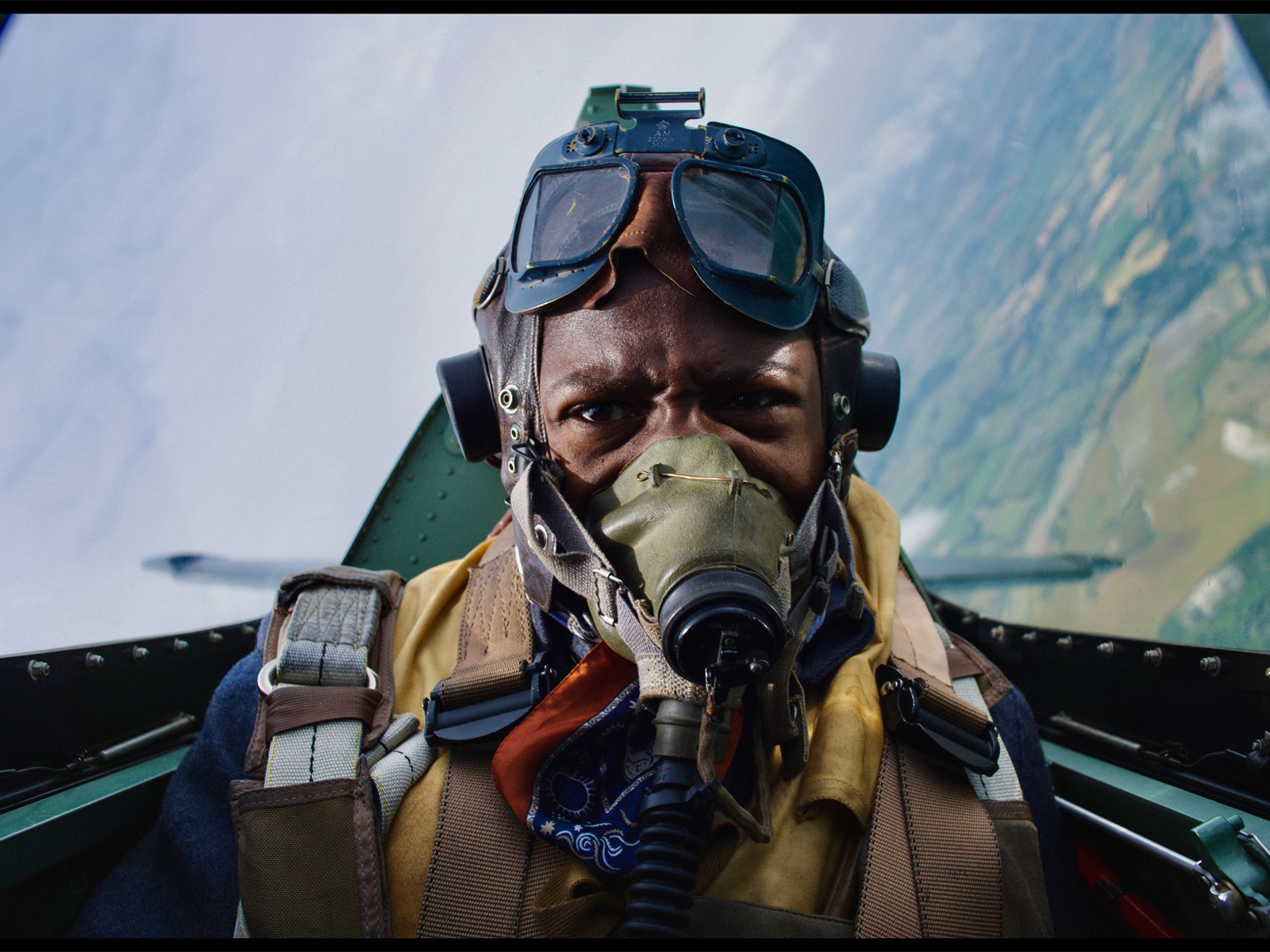
The film’s emotional centrepiece is a one-take aerial sequence shot in a real WWII Spitfire, flown by a record-holding pilot, with our lead actor under G-force, performing in character, without playback or coverage. We didn’t simulate the moment. We strapped ourselves to it.
This wasn’t about spectacle. It was about surrender.
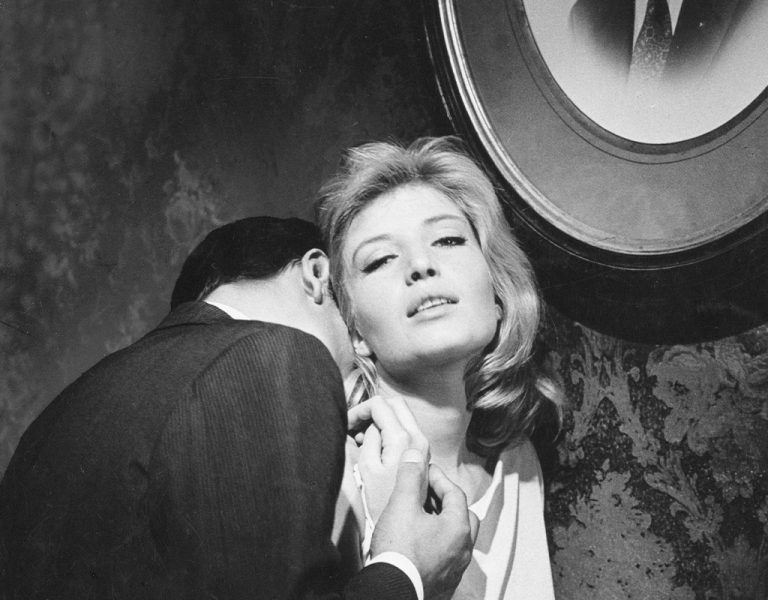
We didn’t want the audience to witness the battle through the usual IMAX-style spectacle or action-driven POV tropes. Instead, we wanted them to feel it — unedited, unbroken — through the emotion of a great performance by a great actor. One of our key references was the final scene of The Long Good Friday — a fixed lens, a single face, and everything said in the eyes. That was our goal. To carry the audience into the heart of this moment through presence, not pyrotechnics.
To portray James, we knew we’d found our leading man in BAFTA Award-winning rising star David Jonsson (Alien: Romulus, Rye Lane).
The Spitfire as a Memory Palace
The entire dogfight takes place inside a Spitfire — and inside the mind of our hero. The cockpit becomes his sanctuary, his battleground, and his memory palace. By the time we reach the sequence, it’s not just another aerial set piece — it’s his final act of clarity. James Hyde isn’t flying to survive. He’s flying to let go — of fear, of the future, for the woman he loves.
He’s fighting for freedom — and for love. The antithesis of fascism.
We wanted the audience to experience that not as mere observers, but as participants. Not a reconstruction. Not a simulation. But a window into the soul of a man flying into history and oblivion at the same time.
We looked to A Matter of Life and Death as a tonal touchstone, borrowing the emotional boldness of Jack Cardiff without ever claiming to match it. We shot using the full sensor and native aspect ratio of the Sony Venice II, which gave the image a timeless, painterly quality — vintage in tone, but emotionally immediate. It wasn’t just an aesthetic decision. It placed the audience in a frame that felt dreamlike, suspended — as if memory and mortality were sharing the same space.
Rigging the Impossible
The aircraft was an original WWII Spitfire, provided by Spitfires.com and flown by Matt Jones — a world-record-holding pilot with a deep emotional connection to the plane. Matt didn’t just fly the aircraft. He helped choreograph the aerial sequence and coached our lead actor, David Jonsson, on how to physically fly the plane — which he did, taking the stick during key moments of the flight while performing in character, under G-force. His guidance ensured the moment felt lived-in, not staged.
To complement the Sony Venice II, we used a Cooke SP3 32mm lens, chosen for its compact form, painterly rendering, and realism. The 32mm focal length gave us a natural field of view — placing the audience in the cockpit, not watching from outside. We removed the rear instrument panel entirely to ensure a clean eyeline and full emotional proximity. There was no playback. No live monitoring. No control from the ground — just a precisely mapped flight path and trust in our rehearsals and preparation.
We had been told on numerous occasions this was an impossible shot. We had a custom rig designed and installed by specialist Jon Shepley.
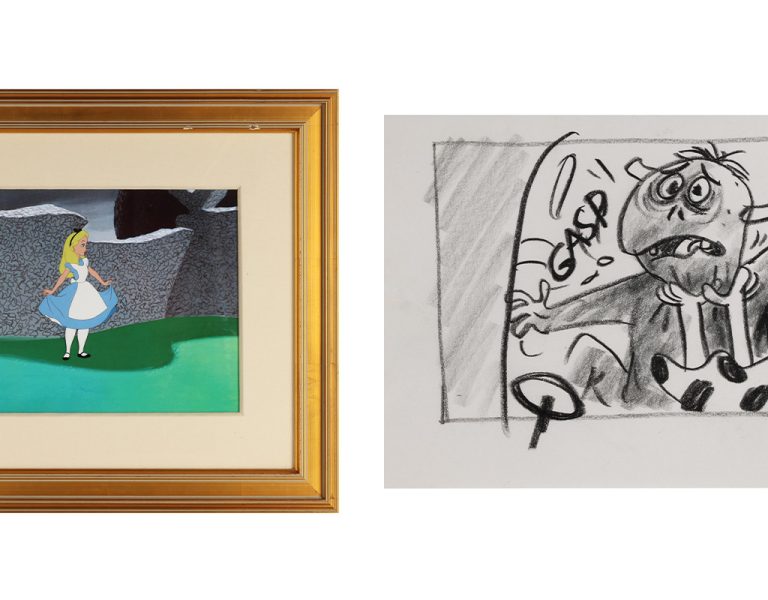
Once in the air, we had pre-determined three distinct story beats, as laid out by the storyboard: Hunted, Hunter, and Letting Go. Matt could cue each transition with a single word over radio — and David would take the performance forward in sync.
There were no marks to hit. No direction mid-take. Just real G-forces, real sky, and a performance that had to land entirely on instinct.
Performance Under Pressure
As a self-funded independent film, we knew the implications of retakes. Everything — performance, emotion, light, timing — had to align in that single flight.
David Jonsson was flying blind — emotionally and almost literally. Once the Spitfire left the ground, we had no contact, no coverage, and no playback. He had to carry the emotional line of the entire scene — fear, control, surrender — in sync with a choreographed flight plan. He had to feel when to take the stick, when to turn to the light, when to let go.
Most people would have blacked out or thrown up.
David didn’t flinch. He gave us vulnerability and precision — all in one unbroken take, under extreme physical pressure. It was a high-wire act, performed in the sky.
There’s a moment — near the end of the flight — when he turns into the sun. It hits his face just as the plane begins to climb. He knows he’s been hit. He knows it’s over. But the light says something else: peace, maybe. Love, definitely.
We couldn’t have planned that moment. But the camera caught it.
I doubt there are many other actors on the planet who could have done what David Jonsson did that day. The pressure — physical, psychological, creative — was enormous. But when we finally checked playback on the ground, the crew was silent. What we’d captured wasn’t just technically ambitious — it was emotionally transcendent. We knew we had our take.
Ask anyone who was there. They’ll tell you.
You could feel the story in the vibration of the aircraft. You could see the truth in his eyes.
No cheats. Just one man, one machine, and a moment suspended in air — fighting for freedom, and for love.