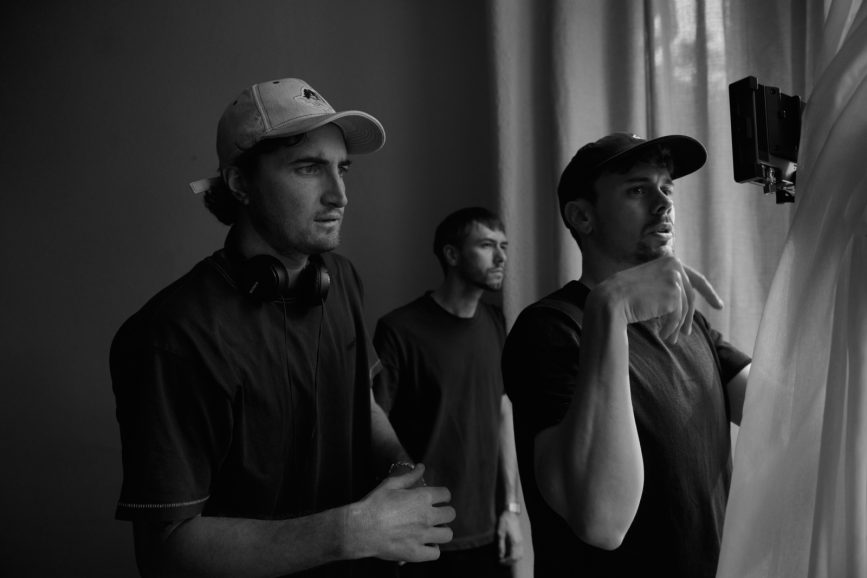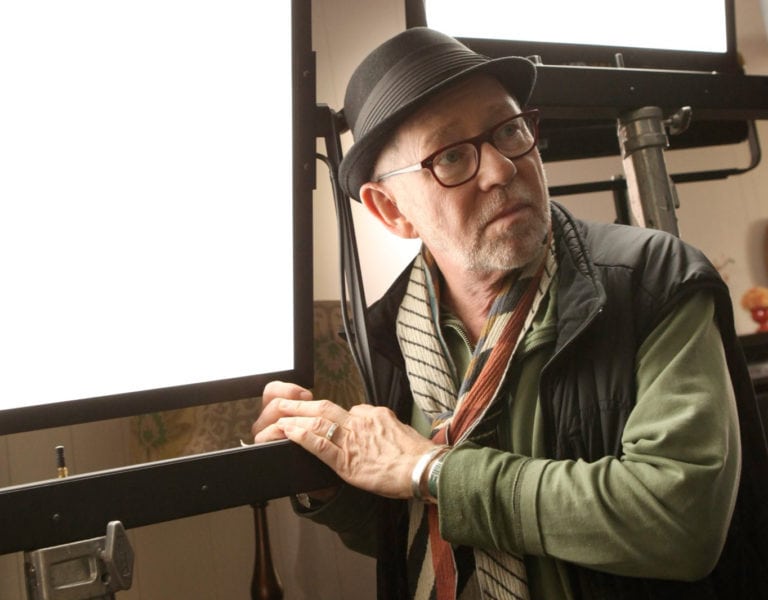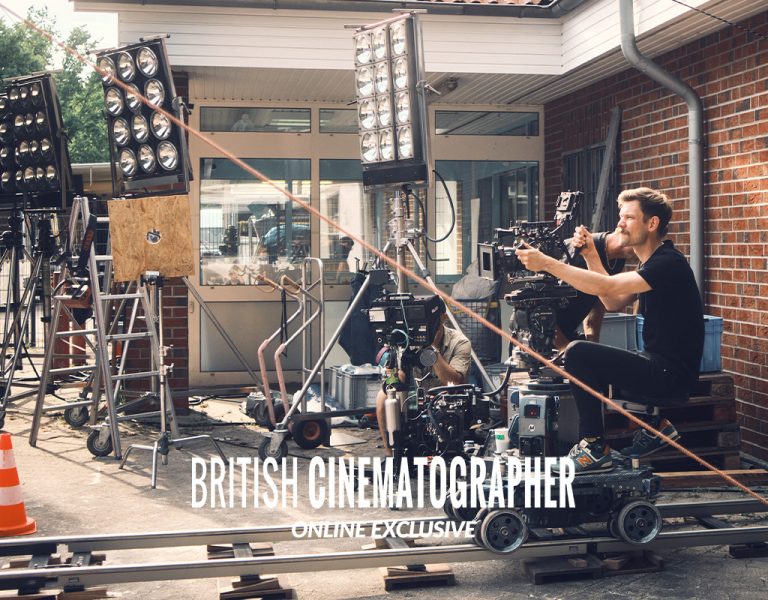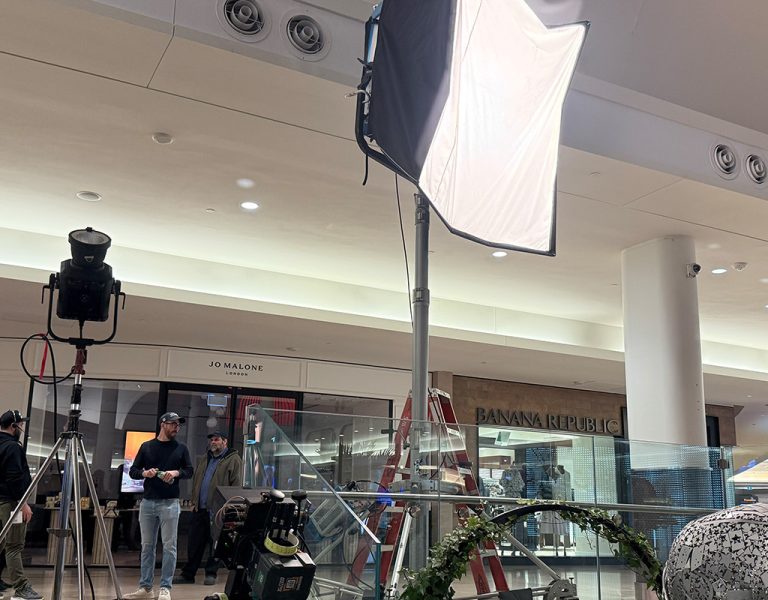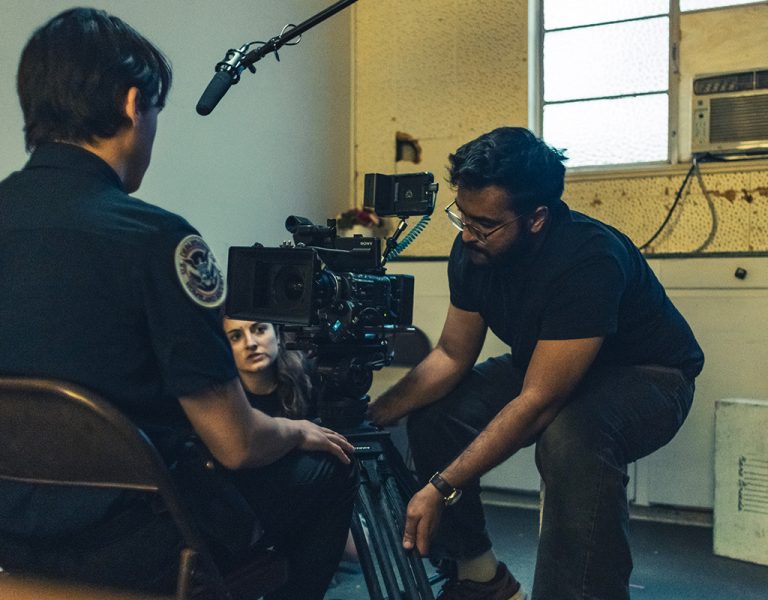


When Tim Nathan contacted me about shooting his short Thoughts and Prayers I was tremendously excited – he is a good friend and I know he had been working away on the script for a while.
From our early conversations, I was very aware that he had something very specific in mind for the project. He came to the table with a detailed lookbook and had very clearly had done his homework! The work of Roy Andersson and Terry Gilliam were places we came back to frequently – both of whom proved to be really useful launchpads for discovering our own visual language for this surreal dark comedy.
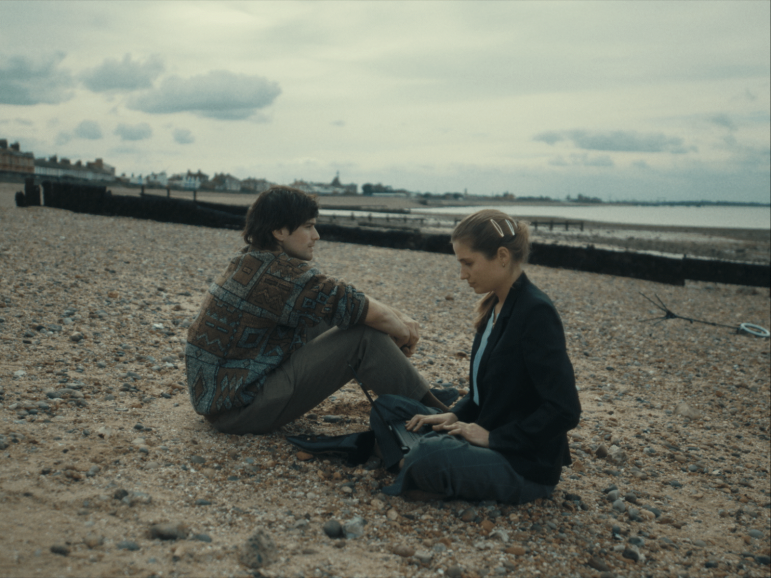
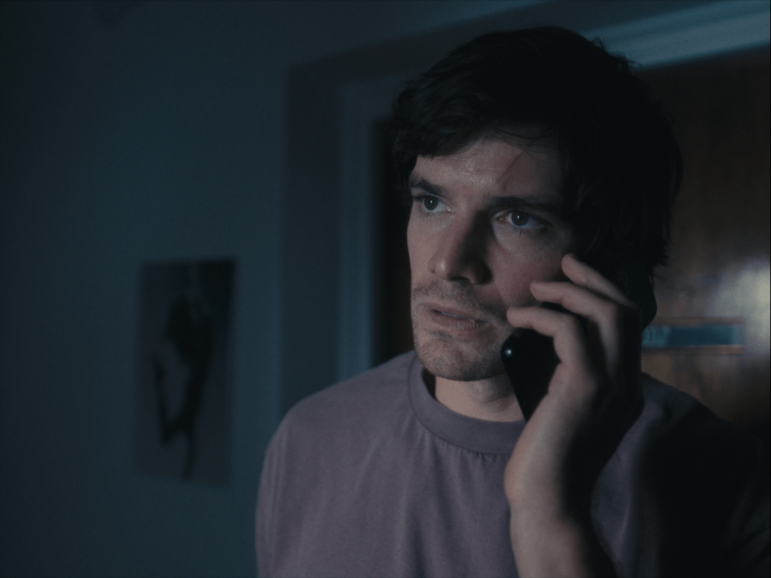
The film is about ‘T’ – a man whose life spirals out of control after an unexpected visit from two strange licensing inspectors, who threaten to remove all of his possessions. Our lead actor, Jackson Gallagher, who plays T was also a fantastic creative collaborator, bringing so much to the project on-screen and behind the camera. Jackson does so well to communicate the absurdity of his character’s world, while keeping his performance grounded and empathetic. ‘Thoughts and Prayers’ is T’s journey – we understand everything about the strange world he lives in through his interactions with it.
Tim, our director, is also quite an accomplished Ronin operator, and I love shooting handheld in my own work – so naturally we chose a locked-off camera for our film (haha!).
We wanted a feeling that the world was stark and uncompromising, and when we spoke initially about shooting the film, we always came back to long, bleak, locked-off images. We didn’t want the camera to feel integrated into T’s emotional journey – no handheld or moving with him – we wanted the camera cold and unsympathetic.
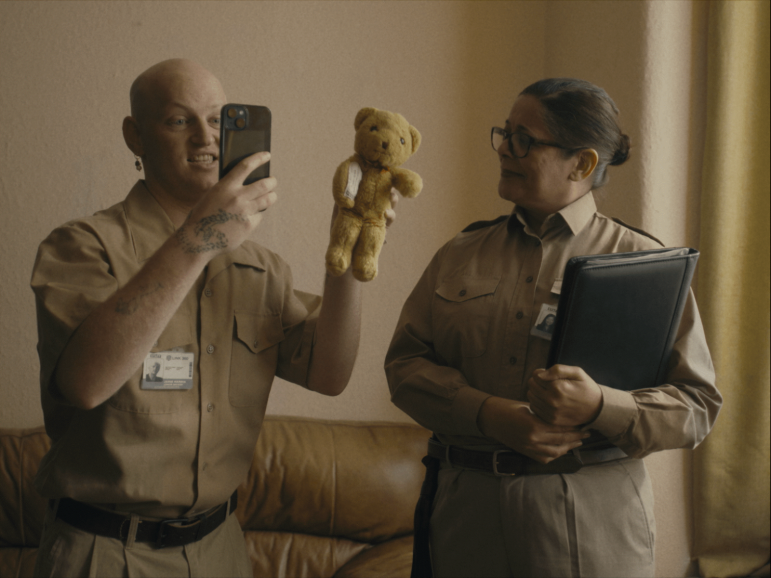
A 4:3 aspect ratio gave us a boxy and specific frame. It felt right that the walls of our image were closing in on our cast. This choice did prove tricky at times, as 4:3 framing for multiple cast members means you’re going to see a lot of the floor and ceiling – but we leant into this sparseness. In this way, the trickiness was a boon and forced us wider and wider – we’d often be in the corner of the room shooting on a 20mm; which only further emphasised the stilted observational tone of our shooting approach.
Largely our camera setup was as low profile as possible, made especially nimble in the deft hands of our 1st AC Arthur Attenborough. We shot on small, clinically sharp and fast lenses – a set of Sigma primes, and the absolutely tiny Red Komodo. I would usually turn to larger camera builds for my work, but this little but powerfully combo afforded us plenty of low light flexibility, a raw codec workflow with speedy camera position changes.
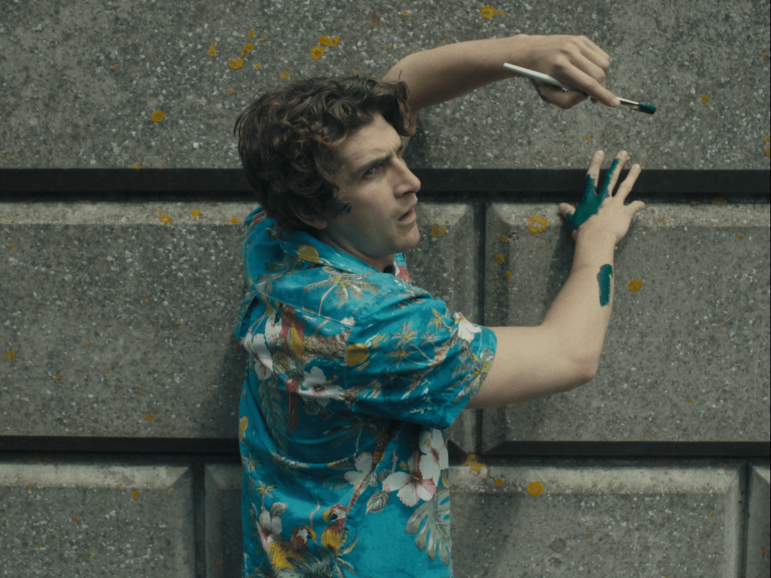
Although we shot digitally, I really wanted our on-set monitoring to be informed by our intended final colouring look. I love working with a Kodak 2383 film print emulation look, I love that it immediately puts you in a visually compelling space and how much it does to harmonise your colour palette. Nevertheless, it wasn’t quite right for our starting point on ‘Thought’s and Prayers’ as it was just a little too clean; so over a couple of sessions of feedback with Tim, I built out a more bespoke look in DaVinci Resolve prior to the shoot. Our modified look was based on a 2383 print emulation but had more green and warmth pushed into our highlights and whites, less contrast, and some skin tone saturation tweaks. I exported the look as a LUT and loaded it into our viewing devices on set. We felt the slightly bleak and sickly look better reflected what we wanted from our visuals.
With this as a monitoring base, we immediately felt like we were ‘in the film world’ when were on set. It feels so much more collaborative, especially with other departments, when our costume and design choices can be informed by the visual intention – not some surprise later in the grade.
On our shoot we had a wonderful lighting team, Joe Nkadi and Misha Panov, who did a spectacular job moving efficiently and intelligently for our setups. Like most smaller modern productions, we relied on a mixed bag of harder Aputure/Nanlux lights augmented with some soft LED panels. The lighting approach was grounded in naturalism, lighting through windows as much as possible and only bringing lamps inside to reinforce the direction of our outside lights. The ability to change the colour and intensity of our lighting through windows was instrumental in keeping us shooting quickly. Specifically it allowed us to move nearly instantly from our warm sunny opening scene to a cooler overcast look for our ending scene – set in the same location.
One of our scenes involves filling a room with dancers and cheap self-shooting style ring-lights that appear in shot as props. For our wide shot we filmed entirely using the ring-lights as our key lights, creating soft frontal pools of light for each actor. As we moved into our closeups, instead of bringing in matched colour LED panels to create extra shape and contrast, I repurposed several extra ring lights as our supplemental lighting. This made for perfectly-matched lighting units, as we didn’t have to worry about dialling in the right amount of strange green/blue shift the cheap ring-lights had.
I’ve had a lovely collaborative relationship with colourist Dom Phipps from Company 3 over the years, so I knew we were immediately in safe hands taking the project to him. The team over at Company 3 are always so supportive – especially Ellora Soret who is a superstar in making great colour work happen. While we had set quite a substantial part of the look already in our shooting LUT, Dom masterfully re-built our look with the shooting LUT as a reference – allowing us far more creative flexibility in the grade. For my own work I find it really important to understand where technology is driving image creation and manipulation, what these new tools are giving us, and how can they empower DoPs rather than remove them from conversations.
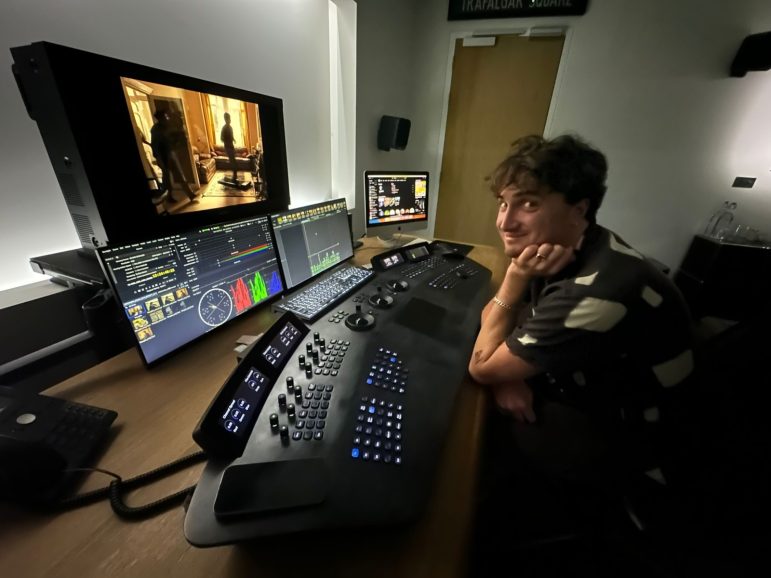
With this in mind, tools like X Grade in Baselight have been quite impactful on the way Dominic and I approach grading together. You can see in the chromaticity point cloud viewer of X-grade how gentle and intuitive selective colour correction work can be – a more visually understandable tool like this opens the door to deeper collaborative language between DoPs and colourists. Creatively aligning is much easier when you can move fast, explore new ideas quickly and don’t need to be concerned with the image easily breaking underneath your changes.
Shooting ‘Thoughts and Prayers’ was an absolute joy – short films like this are only made possible by the hard work of truly passionate and thoughtful film-makers across every department.
Thoughts and Prayers has its world premiere at SXSW London in June.
Catch it at Curzon Hoxton on 3rd June at 6pm or 6th June at 4:15pm.