

THE GLOBETROTTER
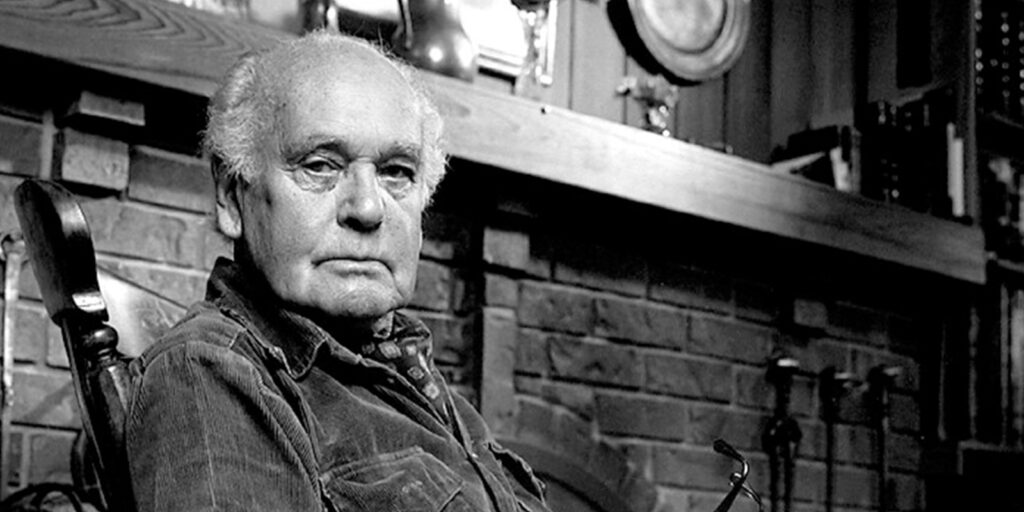
Osmond Borradaile BSC, a pioneering cinematographer, captured epic moments across continents, from war zones to Hollywood, earning accolades and a legacy in film history.
Osmond Borradaile BSC was born in 1898 in Winnipeg, Canada, the youngest child of prairie pioneers. By age two, his family had moved over a thousand miles to Medicine Hat. At seven, he saw his first film in a Chinese restaurant turned into a cinema for the night. The nitrate film caught fire, causing an explosion and he fled in shock.
By the time he was 16, both his father and his elder brother had died of tuberculosis, so his mother got tickets to sail south to southern California where the climate was more conducive. Though he didn’t know it yet, Borradaile was on his way to Hollywood.
Living in America
They settled in La Jolla, where Borradaile worked as a tour guide in caves and processed tourist photos. Later, he befriended a crew member on a Mary Pickford film and was advised to work in a film lab. He ended up cranking film, feeding carbons into the arc lamp, and selling tickets at a local theatre.
In 1915, a family friend at Famous Players-Lasky arranged for Borradaile to join the lab as an apprentice. He started by sweeping floors, eventually becoming a lab technician. With World War I underway, he enlisted in the Canadian Expeditionary Force, serving in France. After the war, he returned to Hollywood and soon became an assistant cameraman on Beyond the Rocks with Rudolph Valentino and Gloria Swanson (1922 dir. Sam Wood, ph. Al Gilks ASC).
Famous Players-Lasky became Paramount Pictures and Borradaile was now a camera operator. While the studio was being converted for sound, he helped shoot aerial scenes for Howard Hughes’s aviation epic Hell’s Angels (1930). He was one of 24 uncredited aerial cameramen who worked on the film.
The French connection
In 1929, Borradaile joined Paramount’s studios in Joinville as director of photography for the talkies. He met Alexander Korda, who invited him to London Films, where he worked with Korda’s cameraman, Georges Périnal BSC, on The Private Life of Henry VIII (1933), the first British film to win an Oscar.
Borradaile’s adventures took him to the Belgian Congo and Uganda for Sanders of the River (1935) and to India, where he discovered Sabu Dastagir for Elephant Boy (1937). In 1937, he filmed the Coronation of George VI and shot exteriors for The Drum (1938). After enduring extreme conditions in the Sudan for The Four Feathers (1939), which earned an Oscar nomination, he worked on The Thief of Bagdad (1940), which won the Oscar for colour cinematography. After Périnal’s death, his family gave the Oscar to Borradaile.
From Africa to Antarctica
In May 1940, just before the Nazi invasion, Borradaile went to Holland to shoot exteriors for Alfred Hitchcock’s Foreign Correspondent (ph. Rudolph Maté). He was arrested and flown back to England, where he was debriefed by British intelligence. He returned to Canada with his family to shoot second unit on the U-boat drama 49th Parallel (1941 dir. Michael Powell, ph. Freddie Young OBE BSC).
As a captain, Borradaile was commissioned to photograph The Lion of Judah, a propaganda film about Ethiopian emperor Haile Selassie. During a sea crossing, his ship came under attack. He captured the action, but a bomb struck too close, knocking him unconscious. Two officers saved his life, but the ship exploded, killing 38 people.
He returned to England injured, but his camera had saved his face. Next, he went to Canada to work with the National Film Board, though he struggled to connect with the commissioner, John Grierson.

To his relief, in 1944, the Rank Organisation asked Borradaile back to make a film about the RAF, Signed with their Honour (dir. Vernon Sewell), which was a difficult production and never completed, even though the aerial material had been shot.
Borradaile’s next job was photographing Harry Watt’s The Overlanders (1946). Set in Australia in 1942, it told of an epic cattle drive from the Northern Territories to Queensland to prevent the herds falling into the hands of the Japanese army.
He had no sooner returned to England than Korda sent him to Africa for The Macomber Affair (1947 dir. Zoltan Korda, ph. Karl Struss ASC) and then to Antarctica to shoot exteriors for Scott of the Antarctic (1948 dir. Charles Frend, ph. Jack Cardiff OBE BSC and Geoffrey Unsworth OBE BSC), travelling 30,000 miles in six months. Two years later, he was chief cameraman on the National Film Board of Canada’s Royal Journey (1951), a behind-the-scenes view of Princess Elizabeth and the Duke of Edinburgh’s Canadian tour. It won a British Academy Award.
Filming to farming
In 1952, he retired from the film industry and moved with his family to an 80-acre farm in British Columbia, where he became a dairy farmer. In 1966, Robert Krasker BSC asked him to come out of retirement to shoot second unit on The Trap (1966 dir. Sydney Hayers). His last credit is for the music documentary Travelin’ Light (1971 dir. Jack McCullum).
Borradaile eventually sold his farm and moved to Vancouver. In 1983 he was made an Officer of the Order of Canada. Before his death at 100 in 1999, he was also made a Chevalier de la Légion d’honneur for his services to France during the First World War.
OTHER CREDITS: Say it with Music, The Lion Has Wings, I Was a Male War Bride, Saints and Sinners
SELECTED AWARDS: Oscar nomination: The Four Feathers (1939 dir. Zoltan Korda) shared with Georges Périnal BSC Officer of the Order of Canada 1982
L’ordre National de la Légion d’Honneur 1998 (for his service in World War 1).
This piece was adapted from the book, Preserving the Vision, Compiled and edited by Phil Méheux BSC and James Friend ASC BSC.