

When my wife confessed she’d never seen Breaking Bad, I knew that had to be fixed. A few binge-filled weeks later, just as we were nearing the final episodes — my phone rang.
It was my agent, sounding upbeat — always a good sign. She’d sent my reel to Universal, who were prepping the sequel to Nobody, and they wanted to set up a call with director Timo Tjahjanto and the producers.
A day later, I was on the call — slightly nervous, as usual, but trying to play it cool. I had bullet points open, visual references, and notes from my lightspeed read of the script — plus a cup of tea, mostly for optics.
To my relief, Timo and I clicked immediately. We’d both spent time in Sydney, so we traded stories. He was relaxed, open — the kind of energy you hope for when starting a creative partnership.
Exactly two weeks later, I was flying to Winnipeg — home of Nobody. (Also home to great steaks, golf courses, friendly locals, and mosquitoes with serious attitude problems.)
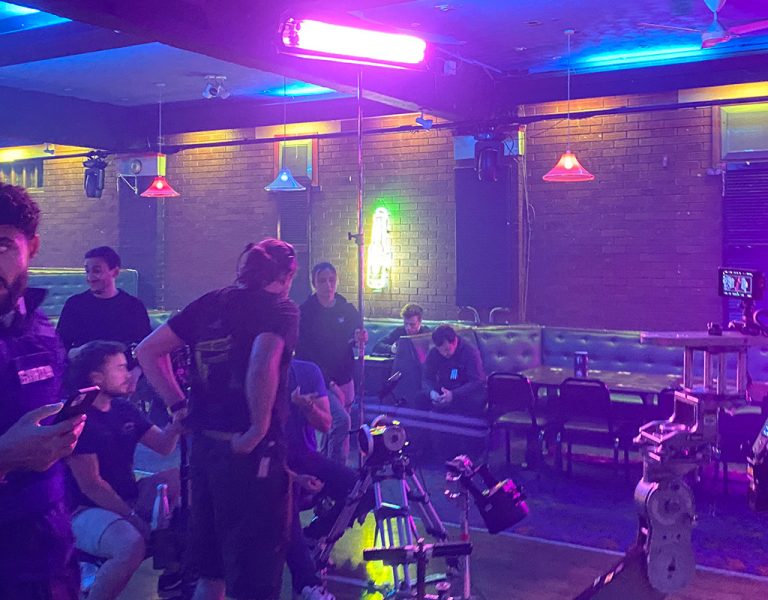
Within hours of landing, Timo and I were in a recce van, scouting locations selected by our exceptional production designer, Michael Diner.
From my first read of the script, it was clear Nobody 2 would be a summer film — a mischievous, sunlit cousin to the darker, wintry tone of the original, so perfectly shot by Pawel Pogorzelski.
BLOWING HOT AND COLD
Winnipeg’s extreme climate shaped both the look and the logistics. With temperatures ranging from -40°C to +40°C, everything — from crew planning to lighting — had to adapt.
Hearing the crew talk about filming in -40°C felt like listening to mountaineers. As a Kiwi from Wellington, NZ – it was surreal. It also explained the massive walk-in wardrobes in every apartment I viewed.
This was my first sequel as a main unit DP, so I had a lot of questions going in: How much should it match the original? What could we do differently? What were the studio’s expectations?
Initially, I overthought it. You want to honour the first film and support a potential franchise. But I realised we weren’t just maintaining the world — we were evolving it. That unlocked the creative freedom Timo and I needed.
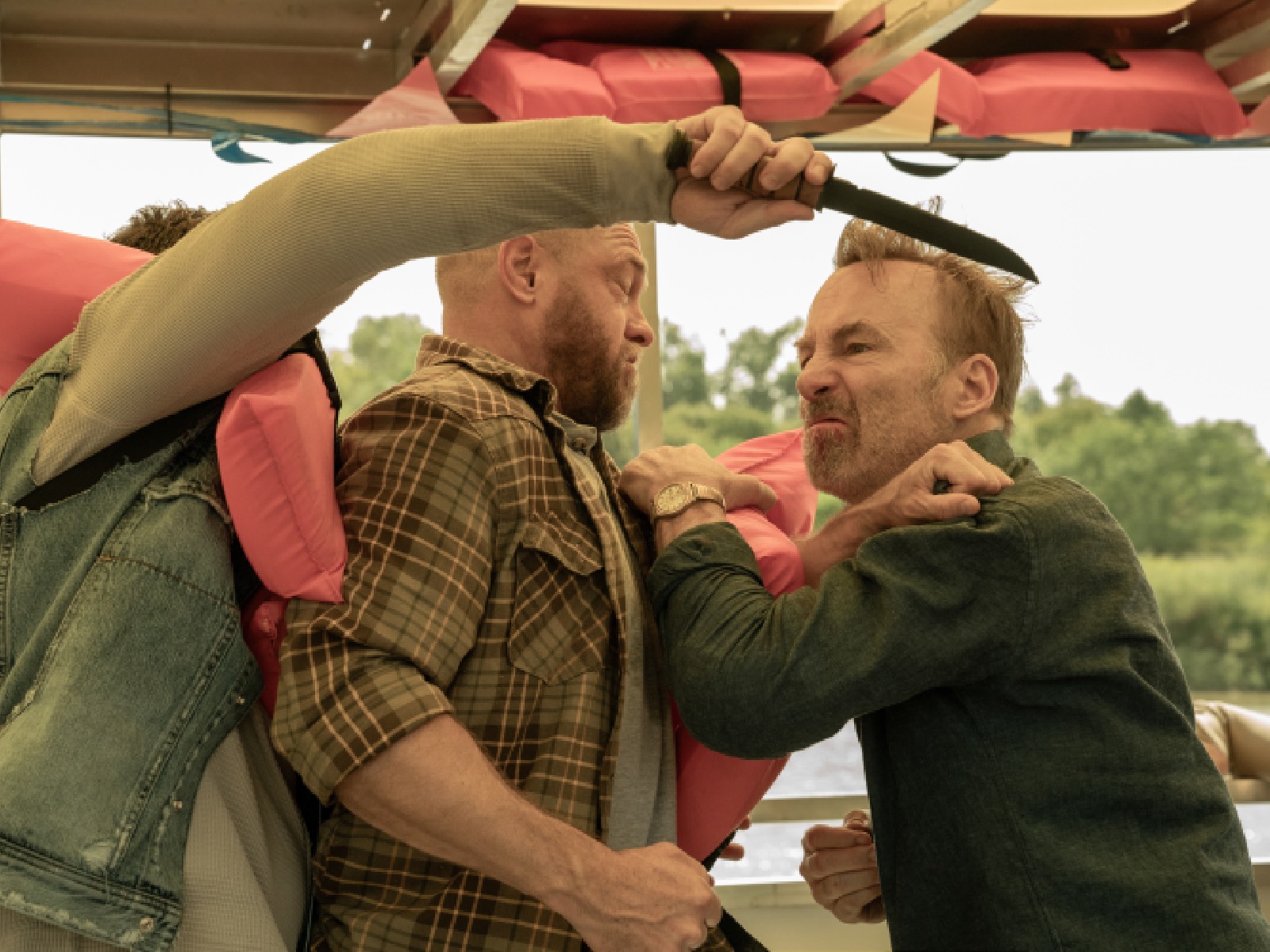
We leaned into the contrast: summer instead of winter, mischief instead of menace — but still grounded in grit. Thanks to stunt coordinator Greg Rementer, we had some wildly inventive action sequences, and we wanted the visuals to punch just as hard. We also pushed for colour wherever we could — to build a world that looked like a cheerful waterpark resort on the surface, hiding a darker underworld beneath. We shot for six fast-paced weeks — Nobody 2 is what I’d call a “Big-Little film”: ambitious in scale but always battling tight schedules, budget constraints, and real-world logistics.
Timo and I spent weeks crafting a lookbook from photo references. Since we hadn’t worked together before, this gave us a shared visual language. We shot-listed every scene and storyboarded about half the film. That prep was essential — especially with multiple cameras and changing locations.
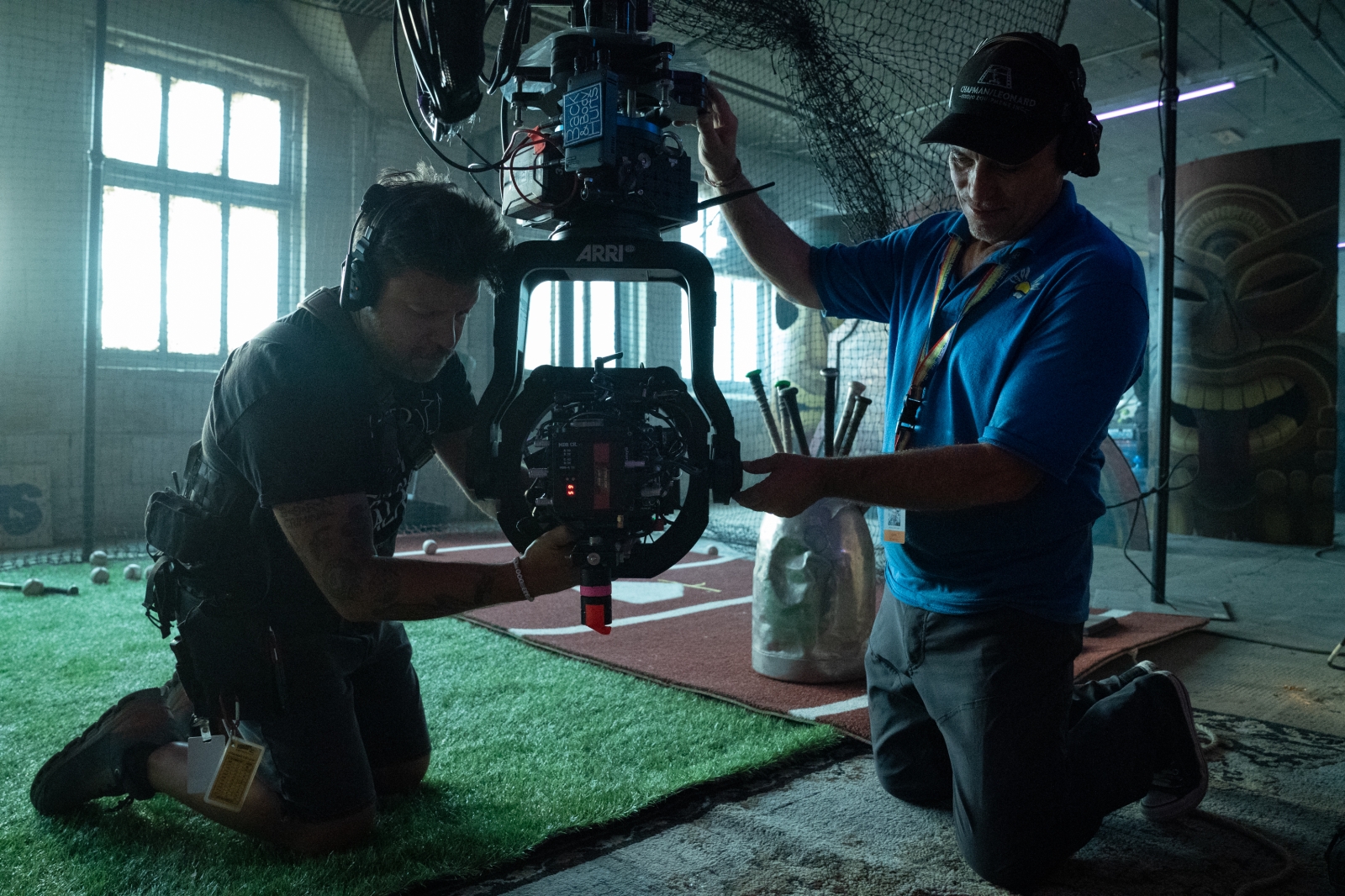
We shot on the ARRI Alexa 35 with Panavision T Series anamorphics. Paired with a vibrant, light-hungry LUT from Dave Hussey at Company 3, the combination gave us a rich, cinematic look with just the right tone to reflect Hutch’s descent into chaos.
Three scenes stand out for me: the elevator fight, the arcade, and RZA’s katana duel in the forest. The elevator sequence began in a real hotel foyer. Once the doors closed on Hutch’s close-up, we picked it up on stage a few days later.
Michael Diner designed a near-exact replica — but larger and with hinged walls. This let our A-camera operator, Matt Schween, move fluidly without getting knocked out mid-rumble. Matt was brilliant — blending energy and subtle shake to sell every hit.
All the lighting was built in — full-spectrum LED rope lights and a soft, semiopaque overhead panel. Most finishes were rubber for safety, letting us shoot full tilt. The polished brass walls looked incredible but brought reflection issues. Our fix? Matt wore a full ninja suit — and the rest disappeared into motion blur or soft focus.
The arcade was split across two locations. The exterior was about an hour north of Winnipeg, while the interior scenes were shot on stage back at the studio.
This was our largest set, but once we packed it full of machines and merchandise — including a rather large basketball game — we were surprisingly limited on space.
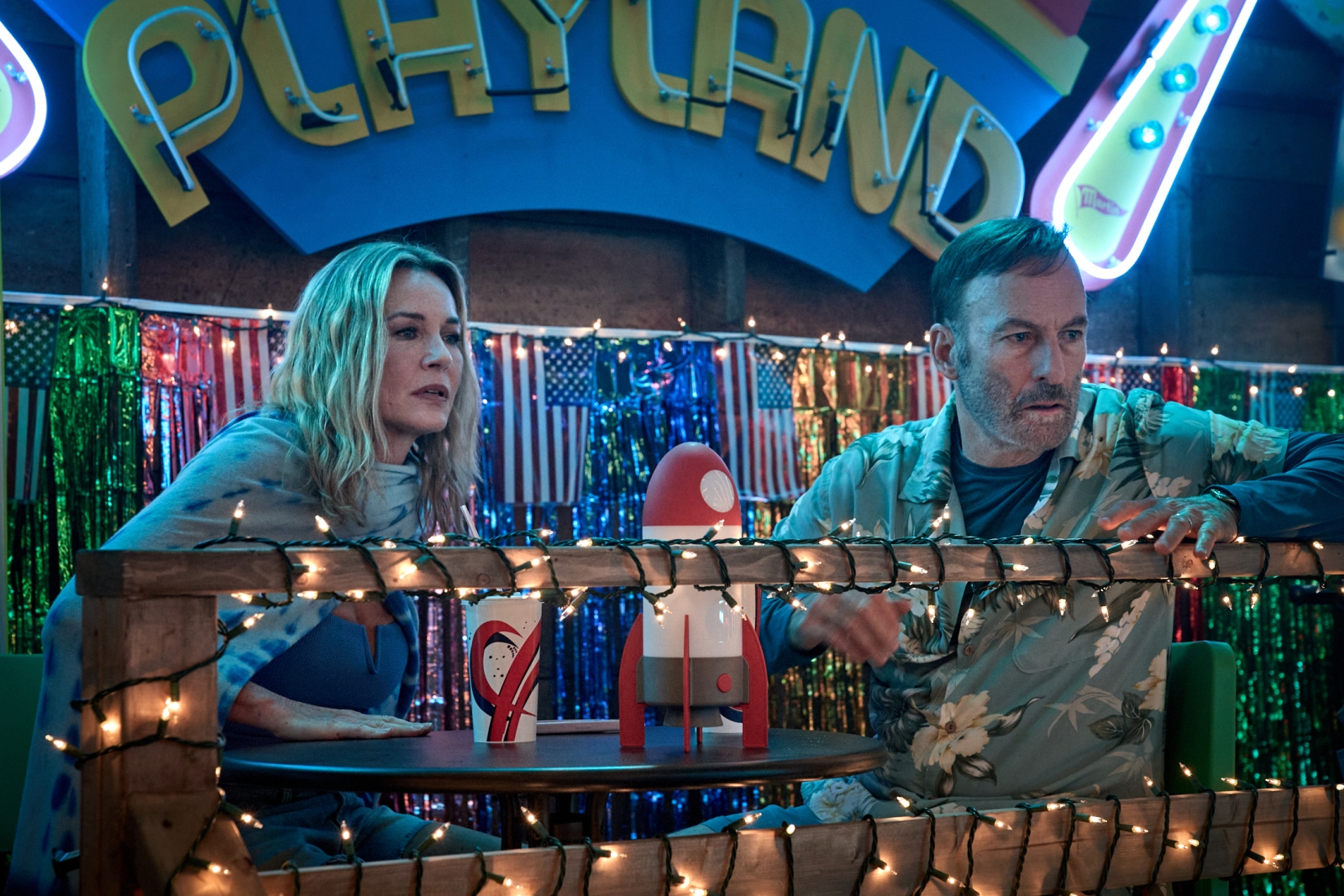
The best thing about shooting in the arcade was that it allowed us to go all-in with our colour palette — and that’s exactly what we did. My gaffer, John Clarke, suggested using a new version of LED rope light that could be linked back to the lighting desk. This gave us the ability to create all kinds of dynamic lighting patterns on the fly.
In this scene, Hutch’s daughter is slapped across the head by a security guard, which sends him into a vengeful spiral of ultra-violence. Timo and I wanted the fight to feel like a oner, which we achieved with the help of a few invisible cuts.
Then there was RZA’s sword fight in the woods — a true highlight. Watching him face off with Daniel Bernhardt (also Bob’s trainer and stunt coordinator) was epic. Two legends, in the forest, at night, with katanas? Say no more.
But it was a challenge. The location was remote, surrounded by tall trees, and only accessible via a 300-metre footpath. Our intended 360° lighting setup became 220°, and due to the thick trees our crane light that we’d hoped would provide god rays ended up lighting the sky more than our set.
Gaffer John Clarke and I pivoted to a low-angle plan B — bouncing Vortexes into unbleached muslin on the forest floor. I worried it would feel like a horror film, but it worked beautifully — even giving us razor-sharp reflections off the blades. Then came the lightning storm. And the tornado. We were shut down several times that night. Still, that’s filmmaking. You battle through chaos, solve problems on the fly, and hope it all ends up in the cut.
Nobody 2 was an absolute blast to shoot. I think we managed to deliver a sequel that stays true to the tone audiences loved in the first film, while adding a bold, colourful summer twist of our own. I’m deeply grateful to the crew — and to the Winnipeg locals — who made us feel so welcome during those four intense and joyful months. It’s a wild, fun summer film, and one I genuinely look forward to watching with my daughter when she’s old enough.
By Callan Green ACS NZCS