

Back at Universal after two decades, Cine Gear 2024 grappled with AI, visual legacies and cinematic futures—where cameras shrink, emotions persist, and stories evolve.
The last time Cine Gear was on the Universal lot, Barack Obama hadn’t yet become president and “AI” was only a plot device – but a lot can change over 20 years, during which Cine Gear covered different parts of the LA map, from Paramount studios to downtown’s Convention Center, to last year’s show at Warner Bros.
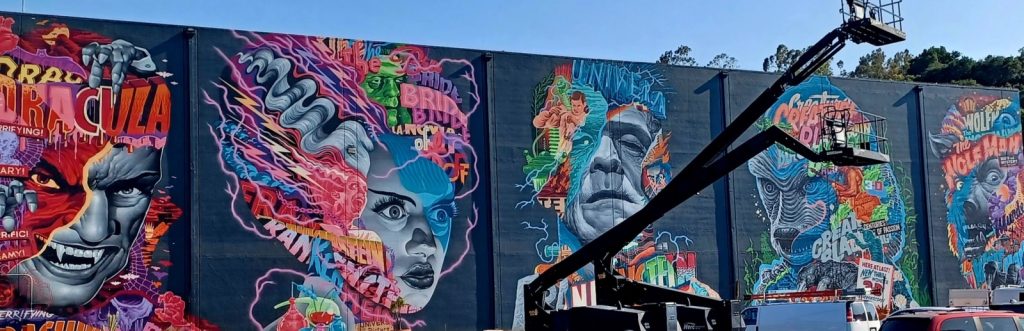
Whether Universal represents a homecoming of sorts, or another stop in an increasingly unsettled century, remains to be seen. But there was some comfort in gathering just yards away from a mural featuring Universal’s iconic monsters updated with psychedelic colors – Elsa Lanchester’s Bride of Frankenstein hair being especially noteworthy – a reminder that studio IPs, at least, can survive world wars, earthquakes, and economic meltdowns, awaiting their next incarnation. (As the host studio’s spotlight on their own return to Oz, in Wicked: For Good underscored.)
But the event was not without its existential questions: AI was now the subject of an ASC panel on how to work with the technology arriving like a tsunami, a subject that also came up at the ASC’s traditional “Dialogue with ASC Cinematographers” panel, which seems to grow in scope each year. Moderated once again by Emmy-winning George Mooradian ASC, during the Q&A at the end, one camera operator said they were “terrified” of AI and “wondered if there’ll be an industry” when they finished training for Steadicam.
Some of the respondents, like Markus Forderer ASC said to “embrace it where it makes sense,” noting AI was “a form of cheaper visual effects in a way… but I don’t think it’s the end of cinema,” as audiences still “want to feel something human,” technology notwithstanding.
Which anticipated the answer from Nicole Hirsch Whitaker ASC, who likened the present moment to the transition from film to digital, observing that after the predicted death knell of celluloid, it’s still very much part of the mix (as Autumn Durald Arkapaw ASC and her first AC, Ethan McDonald, would make clear both toward the end of the show and this column).
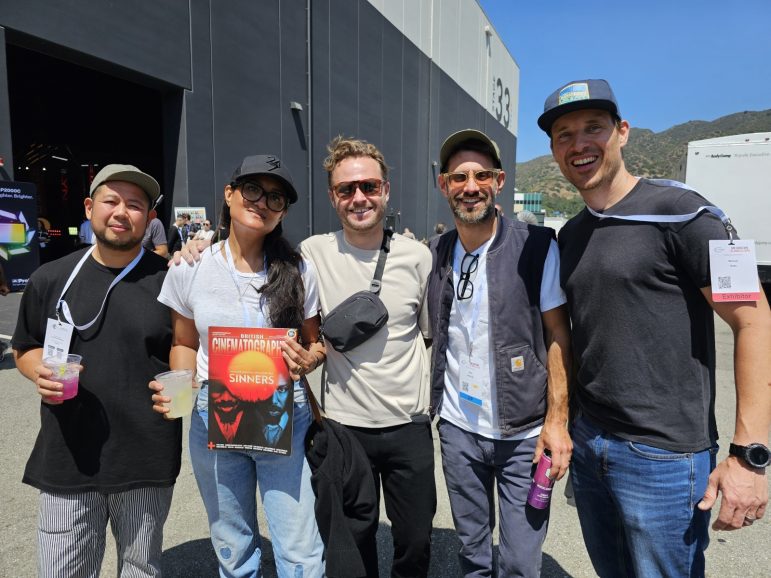
That mix, Whitaker said, is “going to be a collaboration and an amalgamation of things over time,” much like this latest edition of Cine Gear, with its streets and stages of vendors, and where perhaps the best visualization of generational overlap came during a stroll with The Last of Us DP Ksenia Sereda, one of many cinematographers kind enough to come by the BC booth and say howdy, as the regional parlance would have it.
In originating the lauded series’ visuals, Sereda talked about wanting to maintain the iconic look of the game, as well as the show’s first season, while pushing things further for season two – including its award-tendered sixth episode, “The Price,” involving a string of post-apocalyptic birthdays for lead character Ellie Williams, played by Bella Ramsey.
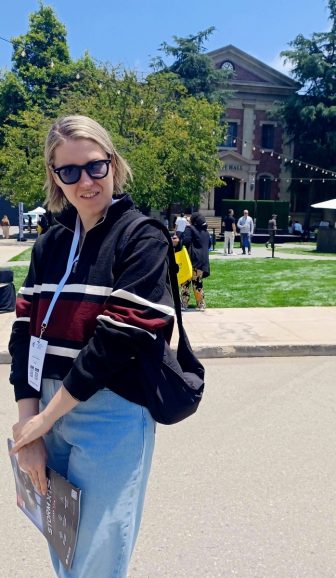
With its June arrival, Cine Gear is regularly at a crossroads of Emmy-season conversations – and many of those started at show-connected events held earlier in the week, or in its wake. Sereda, for example, was not only at ARRI’s Cine Gear booth (the next stage over), but further expounded on the episode a few days later, at the venerable camera maker’s Burbank facility, in conversation with Neil Druckmann, co-creator of both The Last of Us game (at Naughty Dog Studios) and TV series.
After a showing of “The Price,” in ARRI’s screening room – its visuals not only holding up, but perhaps richer on the large screen – Druckmann, also the episode’s director, helped kick off the discussion by calling Sereda a “badass who operates their own camera,” adding to the kind of handheld-in-a-war zone look of the show, which he said was a visual decision when rendering the game “to avoid a CG look.”
But of course, Sereda wasn’t the only series DP, and not all is literally “hand-held” – she referenced Steadicams, cranes, and “so many small things” that replicate the game’s look, while still, of course, providing the series’ its own visual and narrative template.
She also referred to those aforementioned Cookes, which Arri customized in Germany, adding the iris blades, so that source lights – after all, post-apocalyptically, there would really only be source lights – could be even more distinct on screen. Sereda said she gets “very nerdy” talking about such things, though later, Druckmann got nerdy on her behalf, in response to a question about how the showrunners – like him – decide when to stick with the game’s narrative, and when and how to break away from it.
He laughed and called The Last of Us “the most expensive previs ever made,” and proceeded to tell about Sereda creating the biggest source light of all for the episode – the sun – as it was setting when the body of Joe Pantoliano’s Eugene is taken back to the settlement of Jackson, by both Ellie, and Pedro Pascal’s Joel. The redolent light adds to the mournfulness of the moment, much as Sereda also added rain to one of Ellie’s birthday segments, to give it additional emotional layers.
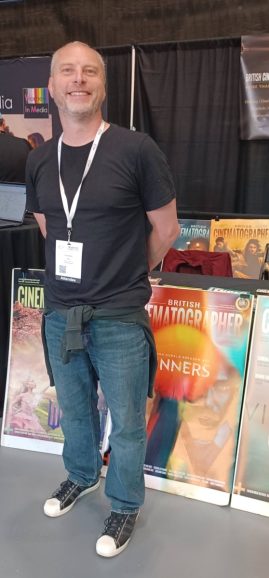
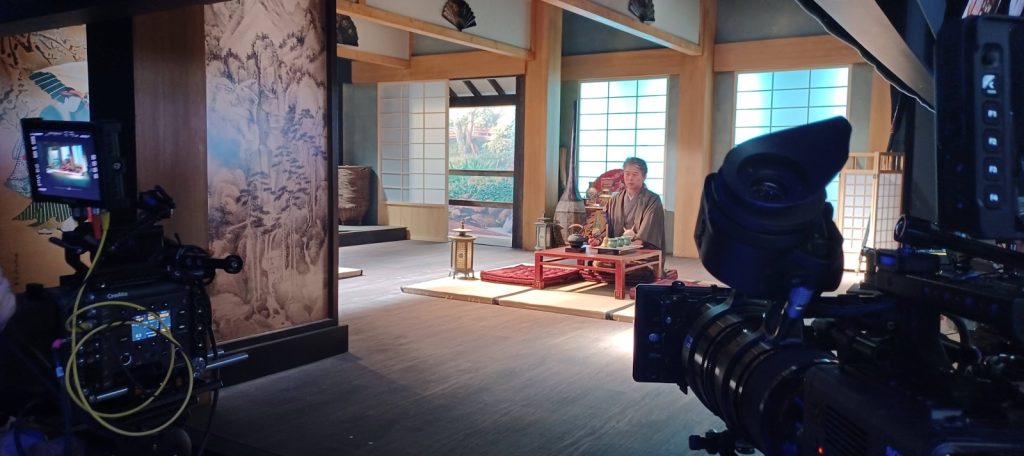
The sun, however, was rather shiny the afternoon that brought Sereda by the booth, which also gave us Christopher Ross BSC, looking remarkably chipper for a man who had reportedly been up in the wee small hours on Zoom to help run a meeting of that same BSC as President. Ross – and indeed our own booth – were in the shadow of a previous Emmy triumph, as neighboring Sony’s large display was decorated to honor the Venice-shot Shogun, for which he and colleague Sam McCurdy BSC were lauded with various Emmy, BAFTA, ASC and BSC nominations and wins.
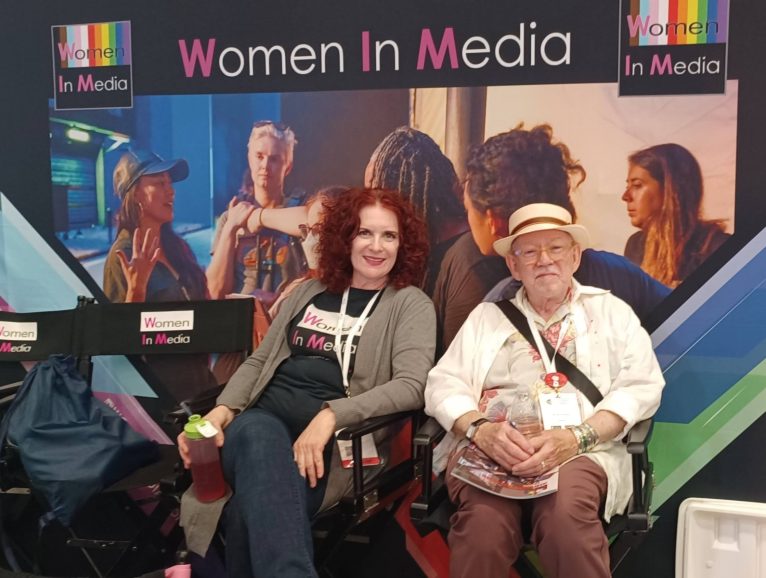
In our corner of the soundstage, we found ourselves next to our old pals at Women In Media, who also began their own programming in a busy Cine Gear week, by presenting their Altitude Awards the weekend prior. Our neighborliness made joint visits easy for friends of both enterprises, such as Steven Poster ASC.
As for the chat with Ross, that was more about Peacock/Sky’s The Day of the Jackal – for which he, like Sereda, helped set the series tone, shooting once again on a Venice (this time the second one) with Arri Alfa anamorphic lenses. He talked about awaiting word – currently as elusive as the Jackal himself – on a firm start for season two, which could possibly go into production just ahead of next year’s Cine Gear.
Back to the Future indeed and that was the juncture of film histories we found ourselves in with Sereda, as we paused our walk at Universal’s storied Courthouse Square, that iconic piece of backlot real estate where Dean Cundey ASC CSC filmed the Michael J. Fox/Christopher Lloyd time travel opus for director Robert Zemeckis (among the many other movies shot there).
It was a throwback to a time when “film” and “TV” were a lot more distinct than they are now – not only in terms of where an audience finds a digital stream (or projection) of the finished work, but even how they’re shot. At the Canon booth, Senior Technical Specialist Matthew Irving was calling their new EOS C-400 and C-80 “cameras for all seasons,” as the midrange priced units shoot in 6k, and are both “Netflix approved.” Which will be helpful as the cameras, already a favorite of documentary filmmakers, seek to “dive back more into narrative work.”
Which, in an era where even features can be primarily shot on iPhones (see: 28 Years Later), is a dive into waters that remain intriguingly uncharted.
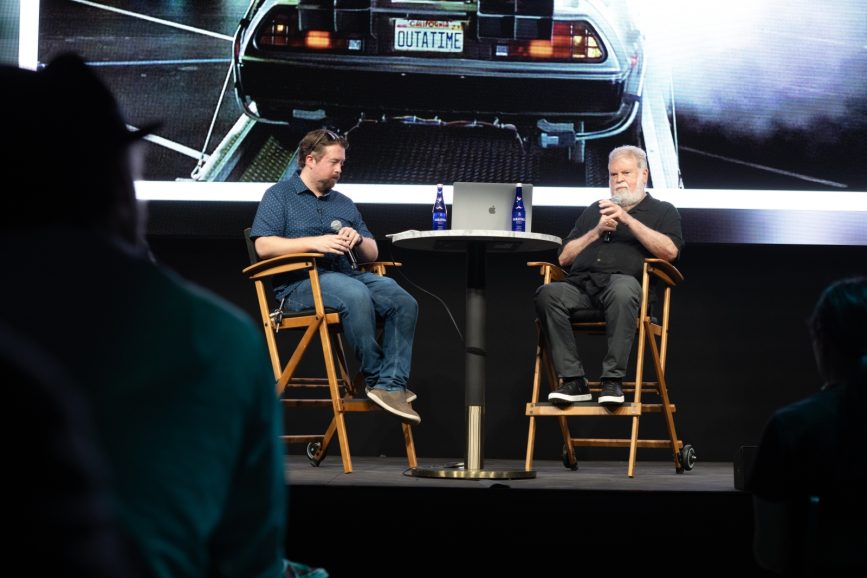
It wasn’t always so, and Cundey, along with Alice Brooks ASC, had one of the back-to-back Q&A’s in an adjoining pavilions, where he announced if you were there to learn about F stops, you’d come to the wrong place. He then proceeded to launch into a history of the film biz, and how it wound up in sunny Southern California – a tale that involved fleeing Thomas Edison’s East Coast patent enforcers for those newfangled moving picture cameras (speaking of technology shifts).
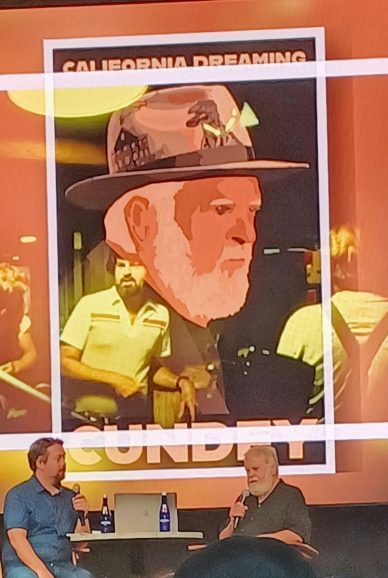
As for Cundey’s own journey, that began in earnest as a young UCLA film school grad who wound up working for Roger Corman, along with other unknowns like Francis Ford Coppola. The celebrated director, Cundey recounted, was later asked whether Corman in fact “exploited” all the young talent working for him, and Coppola answered “no, we exploited him,” as Cundey said the Corman years were like a continuation of film school that they were getting paid for – however minimally.
It was also where he met a young script supervisor named Debra Hill, who’d later go on to produce an early John Carpenter film called Halloween, and for Cundey (and everyone else), the rest was cinema – and genre – history.
As for Brooks, she spoke of the loyalty of Wicked director John Chu, a friend since they were at USC film school, being on the film’s “magic” set, and of her own journey, raised in a somewhat bohemian family with artist parents, where she and a sister had become child actresses to help with household expenses. An eventual move to L.A. sparked its own magic, as she “fell in love with soundstages, lighting,” camera crews, and everything that went with them. “Never for a moment do I take for granted how incredibly lucky I am.”
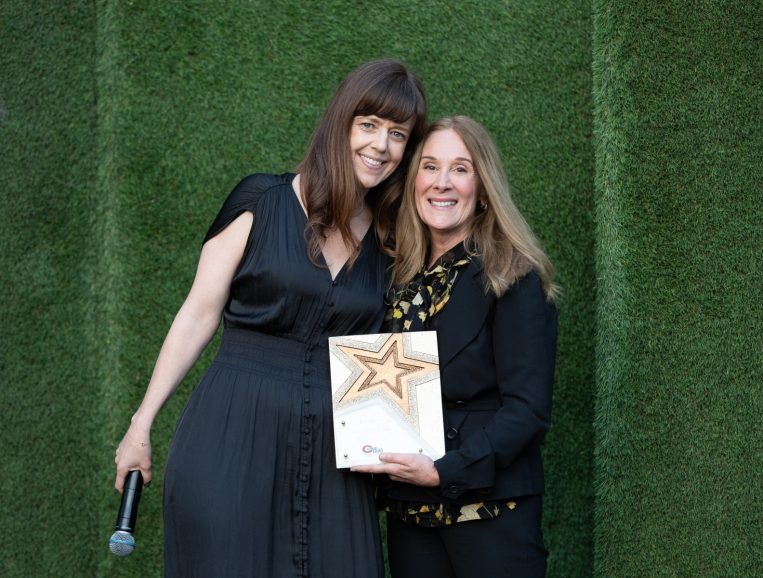
Brooks was also honoured at the Expo’s Opening Night Awards Show and VIP party, with Cine Gear’s Visionary Award, along with George Mooradian, ASC, for the Heart of the Community Award, named for late Cine Gear co-founder Karl Kresser, and presented by his wife, and “co-co-founder,” Juliane Grosso. Cundey, too, was fittingly bestowed the California Dreaming Award.
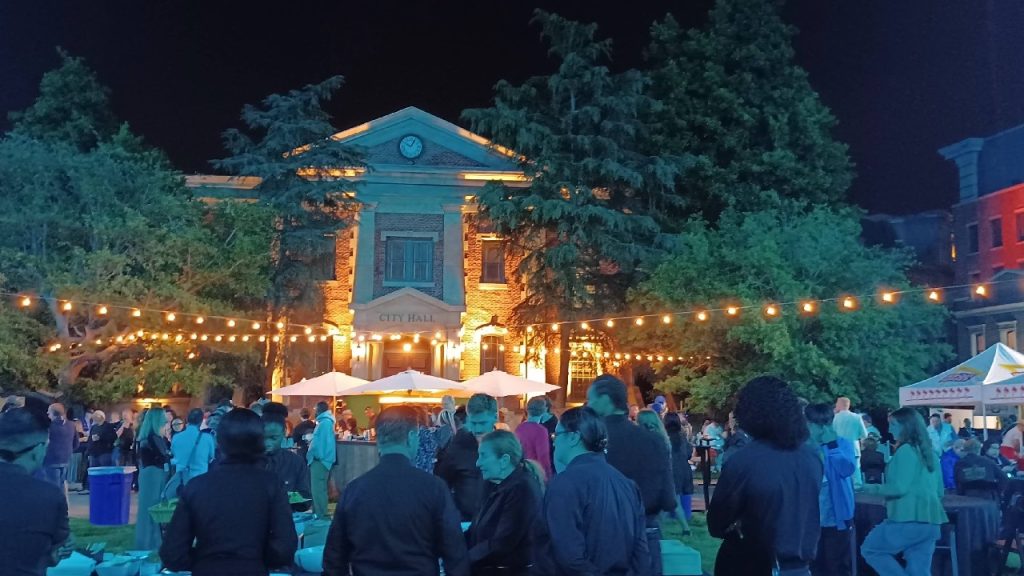
The event was held at that same Courthouse Square, and when Cundey was getting his award, presented by his son, Chris, the younger Cundey noted that he’d “grow(n) up watching the DeLorean get struck by lightning in this very spot.”
This followed on the heels of one of the day’s last programmed conversations, about other cultural icons, namely the Man of Steel, who dons cape again – along with his too-neglected pooch, Krypto – in director James Gunn’s Superman.
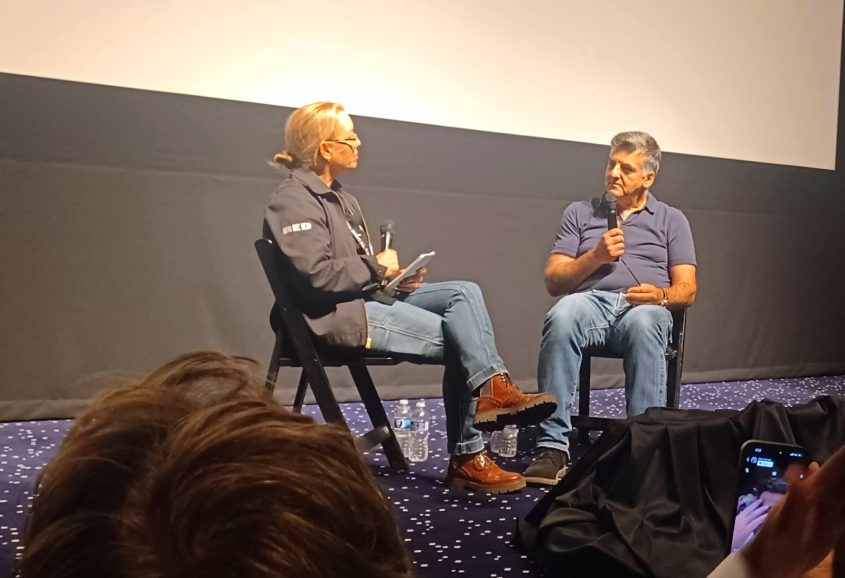
For the current film version of Clark Kent’s alter ego, Henry Braham BSC was in conversation with RED’s Senior Director, Global Strategic Relations, Naida Albright, about shooting the film and when replying to a question about the job of a DP, said “the real answer is the DP is responsible for putting the director’s vision on screen.”
He talked about Gunn’s Hitchcock-like approach to that vision, as an “assiduous” storyboarder, and also the various generations of technological change he’s seen, like “small cameras with large formats,” bringing a reduction in size, never mind the iPhones, that increasingly allows the camera to be a “participant” in scenes.
“Miniaturisation is revolutionary,” he continued. “If Buster Keaton were around, he would use previs! It becomes a useful tool for all the collaborators.” Braham had just finished some collaboration of his own, telling the audience he’d just wrapped the last VFX session for the film earlier “this same week.”
Also earlier that week – perhaps while Braham was finalizing those very shots – we found ourselves at another pre-expo gathering, also sponsored by RED, and hosted by Albright. The event was chockablock with cinematographers, and, as conversation ensued over egg rolls and orange chicken, we found ourselves seated between The Pitt’s DP, Johanna Coelho, and Stranger Things cinematographer Caleb Heymann.
Heymann is helping creators, co-directors, and twin brothers Matt and Ross Duffer bring the whole series in for a final landing over the holidays (whether in the upside down or not remains to be seen) – as Netflix plans to keep viewers entangled with batches of episodes released over Thanksgiving (where Americans will also have holiday entanglements), Christmas and New Year, and we will hope to catch up with him again then –and follow up on tales of Duffer brother shorthand, glances at least one brother’s ear-budded playlist to discern the intended mood of a scene, and more – later this same tangled fall.
Invited to do a pitch by the producers, she created one with a lot of non-doctor show references – including the work of a certain Sir Roger Deakins in 1917. Deakins was at the show too, and as someone noted at the ASC’s own booth, where Sir Roger and James sat for a book signing, Cine Gear was one of those places where the storied cinematographer was axiomatically “treated like a Beatle,” as the hour-long Saturday morning queue to hear him attested.
And as with 1917, Coelho also found herself using an Alexa Mini LF, allowing both camera and audience and “see and feel what they see in the [show],” critical for the twin senses of exhaustion and exaltation the series engenders, in its fictive Pittsburgh-area ER ward, dealing with all too real problems – in particular the mass shooting that culminates not only the doctors’ over-extended shift, but the show’s first season.
“You do not get a break,” Coelho says of the viewing experience (particularly if you binge it), “because they do not get a break.”
She was also after as much of a “documentary feeling” as possible, and towards that end “we actually do not carry tripods on the truck.”
Instead, Coelho credits the ZeeGee rig as their main tool. Invented by cinematographer Charles Papert. The device uses a Steadicam arm and vest to help transfer weight to the operator’s body, allowing for more booming and overall movement, even if the operator is shorter than the actor.
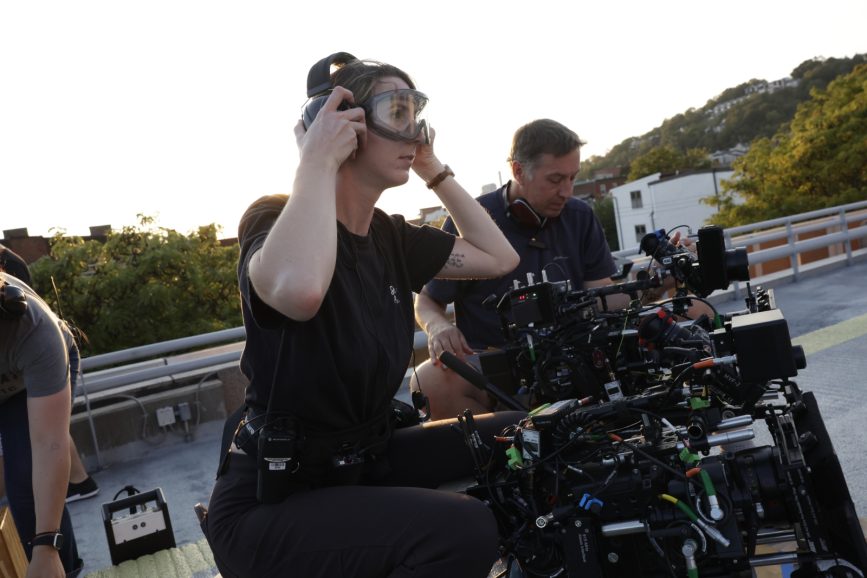
She is also quick to credit the operators using those ZeeGees, Erdem Ertal on the A camera, and Aymae Sulick on B, both part of a process involving blocking rehearsals with the AD (it’s not just the cameras that are constantly in motion in the ER). They, along with focus pullers Jacob Depp and Kristen Celo also help decide which scenes should remain distinct, or can plausibly flow directly from one to the other. As part of that plausibility, even the crew is dressed in scrubs, should the camera’s wandering eye (in this instance, 50 and 75mm Angénieux Optimo Primes) take in a glimpse of something more than doctors or patients in crisis.
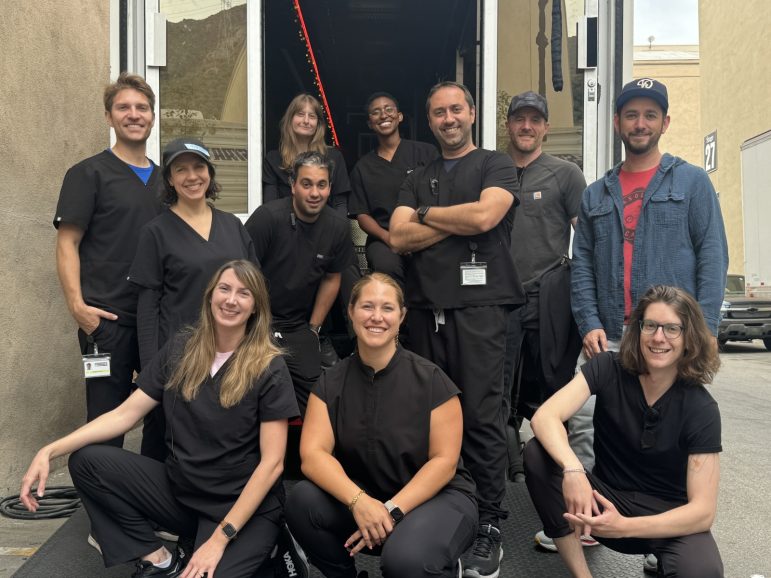
Coelho likens it to live theatre, referencing the immersive Sleep No More which not only infuses noir with Shakespeare’s Scottish Play (and perhaps gives an entirely new meaning to a line like “I am in blood, Stepp’d in so far”) but, as with The Pitt, puts the audience in the middle of the action as well. “I had never shot [this] way,” she says of the concluded first season. But that wasn’t stopping her from anticipating a fall start to prepping the second one, when we talked.
As for the small cinematic footprints both she and Braham alluded to, back at the expo, it’s possible many attendees would have wanted a larger one for Cine Gear itself, as there wasn’t enough time (or room) for everyone to see or hear everyone they wanted to. (This also applies to journalists attempting to synopsise the event!)
One example was the other very long wait for the Sinners conversation with Arkapaw and McDonald, toward the end of the second day. A huge part of the Sinners line couldn’t get in, and the frustration was palpable. Perhaps such widely-embraced shows might warrant an extra day of programming? Inside, Durant talked about the inspiration that writer/director Ryan Coogler inspired on set, and how both cast and crew energized each other during a “hard shoot.”
But it was one of McDonald’s observations, about the IMAX cameras – used along with Panavision 65mm cameras for the film – as “the greatest image making machines anyone has ever made,” that helped sum up the expo, as the same thing might be said of motion picture cameras in general, rigged, tripoded, large or small footprints, or however they’re found, phone-sized through IMAX, recording their stories, both real and imagined.
Certainly this year’s Cine Gear showed that once again, a huge number of people are hoping to be part of that image-making, no matter how tentative the industry – or world – around them.
And we’ll see you further into Emmy season, as the world wobbles, next month. [email protected] / @TricksterInk