

GREEN SHOOTS
Sustainability in film and TV production is no longer optional but essential—and technology, planning and mindset shifts are the keys to making it work without compromising creativity.
Going green has become the mantra in recent decades—an essential talking point across nearly every industry. From fashion to food, construction to computing, the pressure is on to adopt eco-friendly practices.
Closer to home, filmmakers are adapting to the growing demand for greener practices, technology is emerging as both a creative ally and an ecological asset
LED-ing the way
We know sustainability is crucial, but how do you balance that with creative demands like big lighting setups and power use?
“These days, there are so many renewable options available for powering large lights as well as cranes, DIT/Playback etc., so I don’t find it difficult to balance a strong creative vision with sustainable production practices,” explains Mattias Nyberg BSC (The Girlfriend, War of The Worlds, Britannia), co-chair of the BSC Sustainability Committee. “There are plenty of ways to work sustainably— I use a lot of LEDs, but even when I need to run larger fixtures like tungsten or HMIs, I can power them with large batteries or hybrid generators that run on HVO fuel. I have a substantial battery setup, so there’s very little compromise.”
Nyberg says “around 90–95%” of his work now involves LED—though, of course, every project is different. “LEDs today are incredibly versatile—you can get anything from tiny nodes to huge fixtures capable of lighting stadiums,” he adds.
David Raedeker BSC (My Brother the Devil, Unicorns, Sanditon), who is also a member of the BSC Sustainability adds that “in terms of technology, LEDs have been a game changer” for the industry.
“We recently used the Aputure Storm instead of traditional 9K HMIs on 12 12 12, which is a major leap forward,” he explains. “LEDs are now powerful enough to replace larger units and though some argue they don’t render skin tones as beautifully as tungsten, the gap is closing. For me personally, the flexibility and efficiency of LEDs outweigh the minor aesthetic compromises.”
David Katznelson BSC DFF, also a member of the BSC Sustainability Committee, is about to go into pre-production for Mob Land season two, which involves some reasonably large setups.
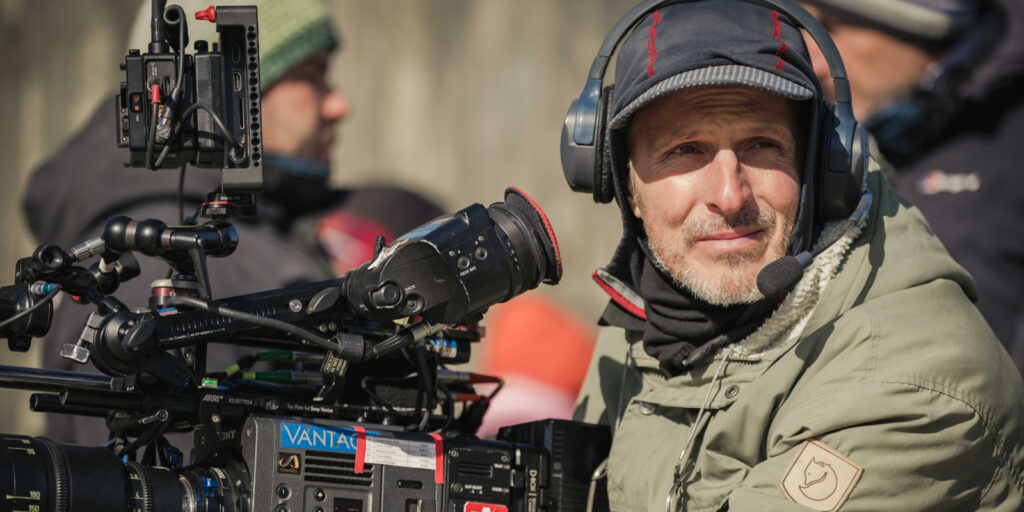
Last season he used 12Ks, but now the team plans to switch to versatile, powerful LEDs for faster, flexible lighting.
“The one hurdle we face is cost,” he explains. “Older tungsten lights are relatively cheap and easy to get, while the newer LEDs are more expensive. But overall, it’s becoming easier to approach lighting in a more sustainable way, and I think that if you’re mindful of it, there are increasingly viable options.”
Sustainable kit
DP Sheldon Chau spends much of his working life shooting in Asia and Africa — thousands of miles from his home in California.
He says he has found certain cameras, lenses and lighting technologies to be more environmentally efficient without compromising image quality.
“Lately I’ve been leaning on cameras like the Sony FX3 and FX6 – they’ve quickly become my favourites,” he explains. “They’re more environmentally friendly, running on smaller batteries and drawing less power, which keeps the whole footprint nice and lean. Pair that with my go-to Aputure LED lights (many of which can even run off batteries), and it’s a package that’s very efficient. Recently, Nanlux let me test some of its new power-efficient units too and I was impressed. None of this comes at the expense of image quality; in fact, I find it pushes me toward faster setups, more flexibility and even more creative choices on set.”
Nyberg adds: “I’m also using cameras like the Sony Venice 2, which lets you shoot at ISO 3200 with no loss in image quality, no grain. That means you don’t need massive output levels, so you can get away with using smaller fixtures powered by batteries or mains.”
Balazs Bolygo BSC HCA (Suspect: The Shooting of Jean Charles de Menezes) tends “not to jump on the bandwagon of the latest and flashiest technologies” unless there’s a clear creative reason to do so as he’s “perfectly happy” shooting with cameras and lenses that have stood the test of time.
“That said, I do look for tools that offer more creative flexibility. In terms of cameras, that often means something with high sensitivity and a small form factor, which in turn influences how I approach lighting on set and its respective infrastructure,” he adds. “Lately, I’ve really embraced prosumer cameras that combine portability with professional-grade reliable colour science—cameras like the Sony FX3 and the RED Komodo have become key tools in my kit.”
Clearly, the industry is doing its part where it can, but in reality, obstacles remain.
“The Fuel Project (Film London, Sept 2024) reported that ‘Portable batteries available today have sufficient power output to cover 99% of production use cases [in London],” says Bryony Harrison-Miller, head of sustainability at Get Set Hire. “This research shows it is already highly feasible for the vast majority of productions to operate entirely on renewable energy. This study also showed that while over 80% of the Film & TV supplier fleet in London could run on HVO fuel, only 14% do. Get Set Hire is part of that 14%, we have been fuelling our vans with HVO since 2021.”
She adds that the main challenge is planning. “Pre-production schedules are often compressed, leaving departments such as lighting without enough time to research, test, and roll out new technologies,” Harrison-Miller adds. “Giving these teams the time and resources to prepare properly is key to successful adoption.”
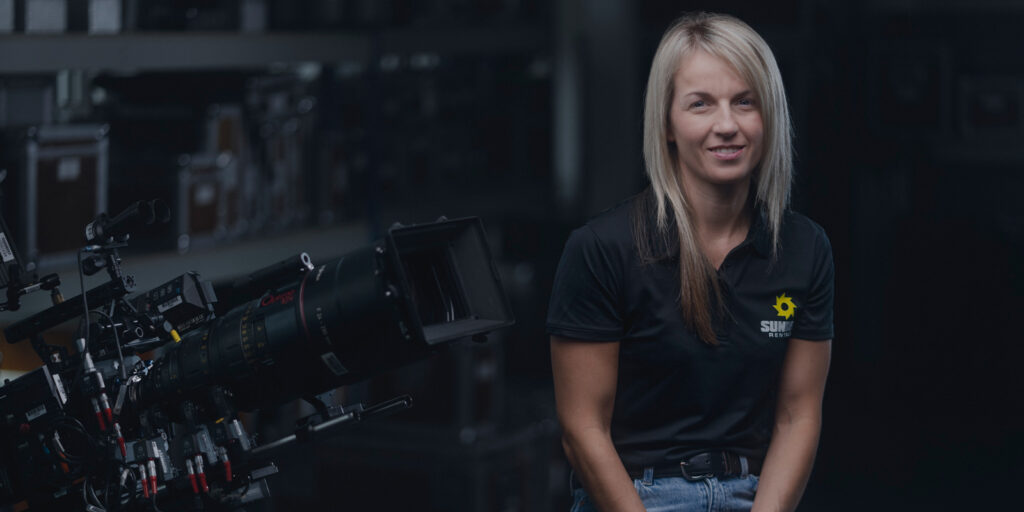
While adopting greener technologies is crucial, understanding their actual impact requires accurate data. Jenny Clark, partnerships and sustainability lead at Sunbelt Rentals Film & TV, explains how the company uses real-time monitoring and industry benchmarks to measure and improve sustainability on set.
“We measure the impact of its sustainability initiatives through a mix of recognised industry benchmarks and real-time data from its power and energy systems,” she says. “Using Victorn and COMAP monitoring technology, the company provides productions with transparent data on energy use, fuel consumption, load efficiency and CO₂ savings, helping crews understand exactly how effective each setup is in cutting emissions and improving efficiency. Performance is also benchmarked against wider industry frameworks, including BAFTA albert for sustainable screen production, as well as Scope one and two emissions reduction targets and the increased adoption of low-emission and renewable power technologies”
Net-zero
While fully renewable productions may be a distant goal, reaching net-zero carbon emissions within the next decade is surely within reach.
“At the current pace, it might not be feasible— although a lot of effort is being put into reaching that goal,” says Dom Aronin, co-founder of independent battery supplier, Evis Energy. “Right now, laws around transporting certain renewable technologies add extra costs and limitations. That has to adapt if we want real progress. I think we need changes in legislation, more investment in next-gen products and a mindset shift to embrace new technology and partner with the innovative companies leading the way.”
Harrison-Miller believes reaching net-zero within 10 years is achievable, but it will require coordinated action across the entire industry. “Commissioners, broadcasters, and streamers, together with suppliers of all sizes, need to collaborate and invest in decarbonising production at scale. We are already working directly with our suppliers as part of our goal to halve carbon emissions by 2030.”
On a broader scale, the responsibility should lie with the streamers, according to Raedeker. “From what I observed in practice they don’t enforce sustainable standards across productions anymore,” he adds. “I’ve worked with some of the biggest platforms and their approaches vary wildly. There seems to be no real incentive or framework for producers to put in the extra work unless they personally care – and even then, they get no recognition or support for it. Streamers could mandate sustainable practices the same way they do for so many other things, but for some reason, they don’t. An allocated budget for sustainability measures would be a start.”
However, Harrison-Miller adds: “Sustainability co-ordinators and consultants are increasingly present on productions. They play a vital role in driving the industry forward. By working closely with all departments during pre-production, they can help to introduce greener alternatives in a way that supports, rather than restricts, creative ambition. We have been collaborating with sustainability co-ordinators, as well as other heads of department, to support the integration of green power solutions and other sustainable initiatives.”
As noted earlier, sustainability isn’t unique to film and TV. Harrison-Miller says the industry is already learning from others—and applying those lessons.
“Our Instagrid 2.1kWh battery has a wide variety of industries that have taken it on,” she says. “Being small, easily portable, splash proof and robust the construction industry was an early adopter. Adopting a ‘decentralised power’ approach to planning electricity provision can have a dramatic effect on a shoot, by reducing both power use and cabling requirements.”
Sally McEnallay, marketing director at Greenkit, a London-based film hire company that specialises in energy-efficient lights, says “there’s always more to be learned and it’s so important that we share our mistakes” as well as celebrate successes. “For comparison it’s useful to look at the work (creative green programme) Julie’s Bicycle has achieved across the creative sector but we should also be prepared to look wider for examples of good practice,” she explains. “Producers and suppliers can lobby the government to improve the EV infrastructure and support the development of larger EVs – reducing transport emissions would be a huge win for our industry and the planet.”
It can’t be questioned that most are doing their best In the sustainability space, but there will come a point when it is expected for major productions to run entirely on renewable energy
“Unfortunately, I don’t think we’re anywhere near that stage just yet,” says Aronin. ”While people are making great strides toward that goal, there are still many factors that make it challenging. The supply chain is still geared toward portable, refillable and fast solution, things that are the natural go-to in high-pressure situations. Renewables as with electric vehicles, require forward planning, care and management, which not everybody has mastered yet.”
McEnallay has a similar view. “It’s hard for any production to run on 100% renewable energy yet because the UK grid is not always sourced from 100% renewables,” she explains. “However many studios have already committed to offering the best available renewable tariff as part of (BAFTA) albert’s Sustainable Studios Standard.”
What’s more, Aronin believes “we’re still waiting for the next generation of products that could really tip the balance” in favour of renewable opportunities. “That said, the more power we can get onto the grid—and ensure that grid is supplied by renewable providers—the bigger the impact it will have on making the shift possible,” he adds.
The elephant in the room
Let’s not ignore the obvious: transport and travel are major sustainability challenges. Remote or multi-location shoots contribute to over half of a production’s carbon footprint, according to Raedeker.
“Crew flights, unnecessary air travel and a reluctance to use ground transport are some of the most irresponsible habits I’ve witnessed,” he says. “I’ve seen productions fly people for two-hour journeys that could easily have been done by bus or train. Switching to economy class or supporting electric transport options would make a massive difference, yet it’s rarely prioritised and sometimes stigmatised.”
Nevertheless, when filming extends beyond controlled sets, Nyberg emphasises that meticulous efficiency is essential to ameliorate the situation.
“For example, if we go to a location, I try to make sure we shoot it out completely so we don’t have to return,” he explains. “When a script changes and we need to go back for reshoots or new scenes, that adds significantly to travel, rebuilding of sets, redressing, the whole circus has to come back and ultimately, the carbon footprint.”
Chau agrees, noting that most productions try to cluster locations to reduce the carbon footprint.
“One location can often double, even triple, as different spots on screen,” he says. “The trick is staying flexible and keeping an open mind as it saves time, energy, and keeps the shoot moving smoothly.”
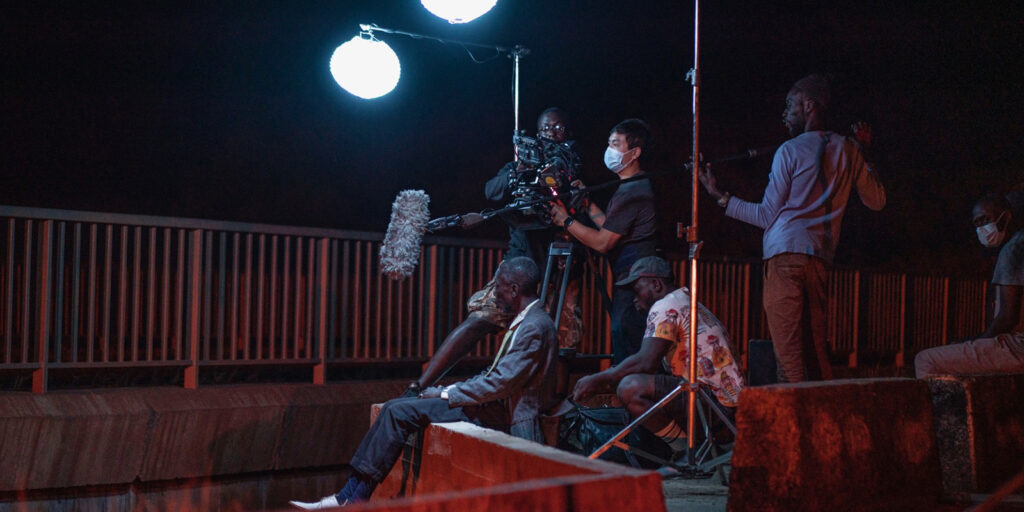
Furthermore, “large-scale location work” is moving in the right direction, according to Bolygo. “Battery-powered systems have become the norm, not just for environmental reasons, but because they offer a vastly simpler and more efficient infrastructure with fewer logistical challenges,” he continues. “So, in a way, my pursuit of flexibility and creative freedom is leading me toward a more streamlined and sustainable workflow.”
Keeping that creative edge
Sustainable filmmaking is often seen as a creative compromise—but for many on the ground, it’s proving to be a catalyst for smarter, more innovative ways of working, without sacrificing artistic vision.
“LED lighting has come so far over the last decade that there is absolutely no need to choose between these two,” adds McEnallay. “We would argue that LEDs, with their increased connectivity, colour performance and efficiency actually free gaffers up to be more creative.”
Katznelson says sustainable choices can spark creativity. On The Tattooist of Auschwitz, a field-set interior was lit using mirrors to bounce sunlight instead of traditional lights. “It was time-consuming, but it worked brilliantly,” he continues. “We followed the sun for hours, adjusting the mirrors and it gave us the hard light we needed. Sometimes, the natural light can be the most beautiful and effective tool.”
On Mob Land season one, an overcast sky in Hackney set the perfect mood, so he and his team skipped big lights and used natural light with flags and negative fill.
“There’s nothing that beats God’s own light—nothing compares to the beauty of natural sunlight when you can harness it creatively,” adds Katznelson. “Ultimately, when you embrace the environment in your work, you open yourself up to new possibilities, not just in terms of sustainability, but also creatively.”
Nyberg also reframes the assumption that sustainable practices involve compromise, highlighting the innovative opportunities they present.
“Sometimes your resources are limited and you have to get creative—but that’s often when you come up with the most interesting and innovative solutions,” he says. “I also want to make it clear: sustainable solutions are not limiting in any way. For example, when we shot in Westminster for The Girlfriend, one of the main character’s homes was located in Maida Vale, a very affluent area. We were based there for around five weeks and there was absolutely no way the neighbours would tolerate a traditional diesel generator running the whole time—nor should they. From the outset, I pushed for a hybrid battery solution.”
The production had an Evis 160Kwh second life battery) parked on site for the entire shoot that powered everything. “It was a huge advantage—not a limitation,” Nyberg adds.
Bolygo says filming in global cities has shown him how a sustainable mindset can boost creativity and put more money on screen. Using high-capacity batteries, for instance, avoided permits and parking issues.
“Likewise, using hotel suites and function rooms instead of building unit bases from scratch meant the actors spent less time stuck in traffic and more time on set,” he adds. “I’ve also embraced LED walls as a production-friendly alternative to driving around on low loaders for days on end—undeniably a more ecological and efficient approach.”
Looking ahead, the general consensus is like a school report: steady progress, but still room for improvement.
Still, Harrison-Miller believes the industry is fortunate to have the right people driving change. “It is full of people with a ‘can-do attitude,” she concludes. People who are willing to work long, gruelling hours and are always happy to go the extra mile to get the best shot, so, adapting to a new way of powering a shoot is not really the challenge, it’s in the very nature of the crew.”
Raedeker argues that planning centralised power distribution from the outset – something that spans lighting, costume and all departments – can lead to a massive reduction in fuel consumption. “There are systems and software available now that allow you to balance and streamline energy usage, but this isn’t yet common practice,” he continues. “Still, it’s entirely possible – the technology is here and it’s been successfully implemented in some cases. The real challenge is people’s resistance to changing how things have always been done.”
Raedeker sums it up when he says “sustainability in film production really has to begin at the very start” – right in pre-production. “You need the full backing of the producers from day one because once you’ve committed to a certain setup, especially with generators, lighting and location logistics, it’s difficult to retrofit sustainability into the process,” he continues. “Productions that prioritise flexibility or fail to plan properly make sustainable practices almost impossible to implement. There’s also often resistance to upfront costs, even though these investments can lead to significant savings down the line, like reduced fuel consumption. Unfortunately, many producers understandably prefer to keep things simple rather than make that extra effort.”
Earlier this year, BFI, BAFTA albert and ScreenSkills launched the UK’s first sustainability standards for production—further proof that progress is happening. But green shoots need deeper roots. Real change takes more than tech—it demands time, planning, and full backing from the top.