

At Cine Gear Expo, Hollywood’s tight-knit crew spirit shines—lifelong friendships forged through trust, pranks, and shared cinematic battles.
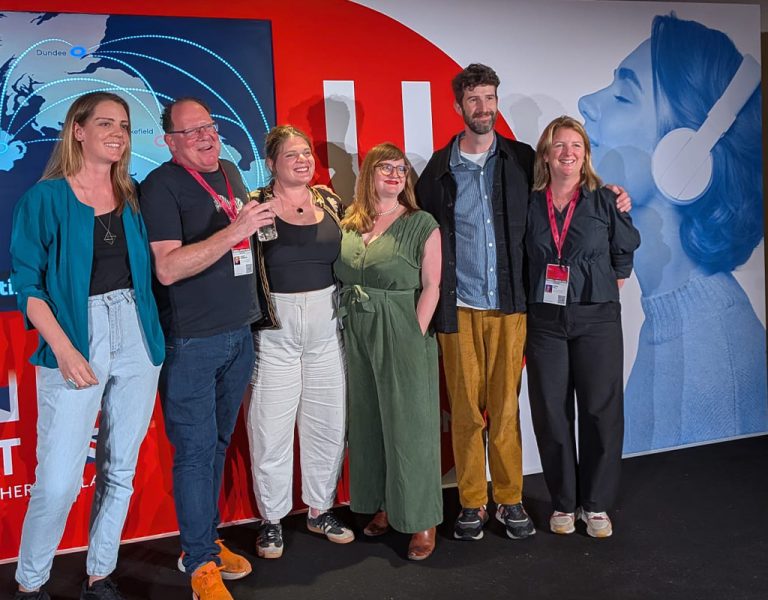
Two weeks ago I was walking the streets of the Universal Studios’ New York backlot where this year’s Cine Gear Expo was taking place. The two-day event hosted many guests and participants. The weather was great for an event like this, dry and not too hot. And in spite of the lack of employment this year, the mood at the event was still really great.
The feeling was strong. Almost as if attendees were feeling that work was coming back to Hollywood. But the best part was that, as usual, we couldn’t walk more than 10 steps without seeing people we have worked with or just friends we know from the business.
This got me thinking how much of a family we have developed over the years in this world of showbusiness that we love. Our crews become our lifeline to making the art that we create when the light rays stream through our lens systems to be recorded originally on motion picture film and now as ones and zeros.
I started to learn early on what part of my chosen career was important to me. Yes, the stories we were telling were important. Even the directors and producers were important. If they were the wrong people, they could make life very difficult just by being arbitrary or capricious. So, keep your eyes and ears open and use the eyes in the back of your head, that is your crew, to keep you aware of what’s really going on in video village.
So, it’s your crew that can be some of your most important allies; you really need to learn to trust them. That was one of the most important lessons I learned very early in my career.
On my first studio show as a cinematographer at Universal TV I was working for a director who was very indecisive and couldn’t move fast. After the first week he was brought up on the carpet to see why he was going so slow. “Well, it’s this young DP who doesn’t know what he’s doing,” the executive producer said. “The crew thinks he’s doing very well and you’re the one slowing us down. Now, what’s your problem?” That could have been the end of my studio career. But my crew saved me from that disastrous fate, all because I was respectful to them and I knew who to ask for help.
Our crews are behind the scenes, but they are our lifeline. And sometimes, if we are lucky, they become lifelong friends. I am very fortunate to have many of those. But there are two that stand out for me: Jim Plannette, who has worked with me as the gaffer on 10 shows and many commercials, starting with Blue City in 1986 and continuing until recently on a fun little horror movie called Scared To Death that will be released this autumn. I still am amazed watching him run up a 12-foot ladder to fix something. From the beginning of our work together we have had a language.
Jim’s dad, Homer, was one of the great legendary gaffers in Hollywood from the 1920s to the 1970s. There are so many wonderful stories that Jim tells about his dad that I sometimes kid Jim that I like hiring him to hear some of the stories over and over.
Jim is also the only gaffer invited to become a member of the Motion Picture Academy. (Steven is confirming this.)
Then there was Norman Parker. I say ‘was’ because he left us recently, which leaves me with great sadness. I can’t tell you how many movies, TV shows, commercials and documentaries we worked on together. But I do know we were together as a team for over 25 years. He was crazy, irascible and one of the funniest human beings I have ever met. He had an ability to convince everybody of anything he wanted to. And he was an amazing prankster.
Most of our years together we worked out of Panavision. I can tell you that there wasn’t a department or executive there who didn’t try to ‘get’ him one way or another. It never worked. But he could turn that around in a flash. There were times on so many sets that we would crack ourselves up so badly that we couldn’t stop laughing. And usually an assistant director would have to separate us.
Norman once said in front of a famous commercial director that he could load a 1,000-foot Panavision magazine in under 15 seconds. The director thought it was such an outrageous statement that he pulled out $500 and bet him he couldn’t do it — with the whole crew and cast watching. He did it in 14 seconds. Of course, we never got to work with that director again.
All of that and he was an amazing assistant. In over 25 years I never saw him miss a shot.