

From flaming stunts to perfect horizons, this year’s Sci Tech Awards honoured ingenuity in motion picture tools. Mark London Williams reports from the Academy Museum, returns there for a trip to Barbie Land and talks about the shooting the gritty side of a galaxy far, far away.
“It’s a global community.” That’s not a sentiment one hears coming from the US too much lately – or at least its national government. But in this case, the speaker was a North American, namely Mark Elendt, the marvelously-titled “senior mathematician” for Toronto-based SideFX. Elendt helped develop Houdini, the invaluable “procedural” software that allows rendering, modeling, lighting and more in 3D CG environments, a huge part of the reason Elendt and the SideFX team have “proceeded” to win four Scientific Technical Achievement awards over the years, starting in 1999, and how he found himself as part of the Academy’s search committee for this year’s crop of awardees.
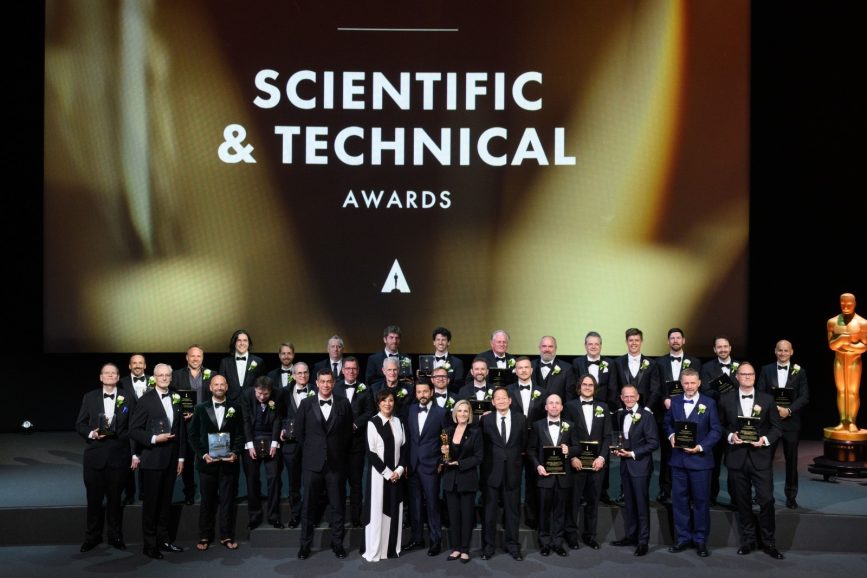
We’d caught up with Elendt at the Scientific Technical Achievement Awards, held once again at the Academy Museum, but not until late April – another delay occasioned by the year’s earlier firestorms. A few days later, when he was back in Canada, we caught up over Zoom, for further elucidation on how categories are picked, and how each achievement winds up with either a certificate, a plaque, or a bona fide bald-headed Oscar statue.
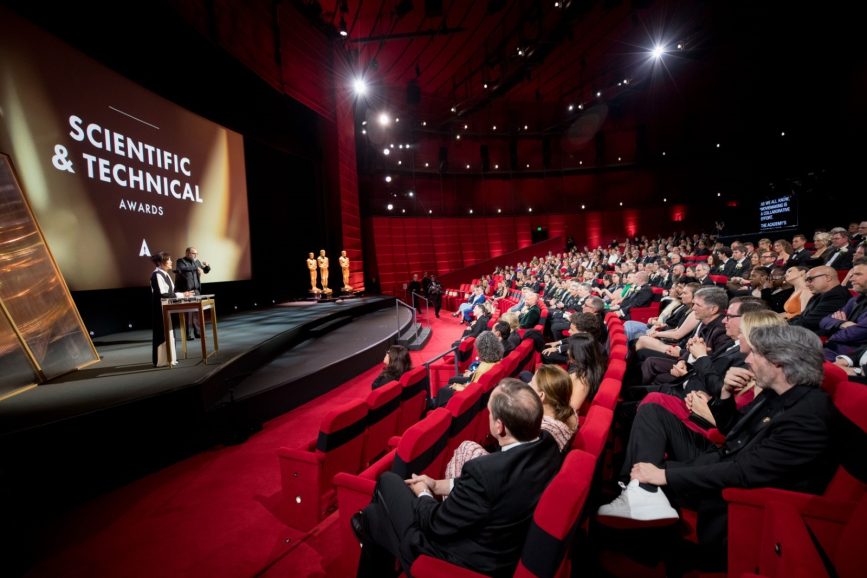
This year’s honourees included breakthroughs for burn gels (the video presentations for those were quite spectacular, as these are designed to allow “live burning” of whichever character happens to be getting immolated on screen, without any harm to the stunt person in question), denoisers (if only we had those for the proverbial public square!) and a favorite of DPs, camera crews, cinematography press folk, and fans of elaborate, auteur-crafted film sequences everywhere, camera stabilization systems.
The process for settling on this year’s crop of honourees was “very short,” Elendt told us. “Other years it can be four months.” By then, the Academy has been “petitioned,” with letters, etc., on various mechanical, electronic, and more recently, programming and software, breakthroughs, and so each year’s committee – it’s all volunteer, and fairly intense, and there’s no expectation of doing it year-after-year – begins sifting through all the worthy additions to the toolkit to decide which “achievements that have contributed to the process of making motion pictures,” as the Academy puts it, might deserve particular accolades at a given awards.
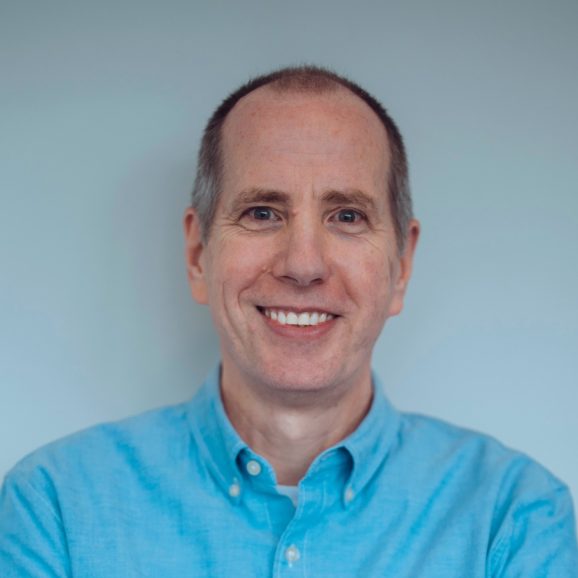
The process, Elendt says, “is like pulling a thread – chasing (them) and figuring out where to investigate.” Like many investigations, including those in iconic detective stories, the process involves “talking to as many people as we can,” which is to say, those who made the inventions, used them, or perhaps contributed an augmentary piece of the technology in question – or even who has been applying them in contexts outside of film production or exhibition, such as our “denoising” friends. As technologies have increasing numbers of applications in and outside the biz, “we will reach out to anyone we think has had influence on that area,” he continues, and thus the committee finds itself referred to other potential interviewees, users and tinkerers. “Sometimes it goes down a big rabbit hole,” he concludes (as those aforementioned detectives often find out).
THE HOLY TRINITY
But sometimes, too, comes the realisation how different breakthroughs in a category can involve all the developers, companies, and creatives in a kind of positive feedback loop that allows subsequent breakthroughs to occur.
Such was the case with the stabilising folk, whose work has allowed so many intense “oners” on both large and small screens. Ahead of the Sci Tech gathering, we were able to chat with ARRI’s Curt O. Schaller, their Camera Stabilizer Systems Product Manager, receiving accolades for the concept, design, and development of the Trinity 2 camera system. Co-developer Dr. Roman Foltyn was also recognized for his role in the software and hardware design of Trinity’s motorised stabilised head and also sat in on the Zoom with Schaller.
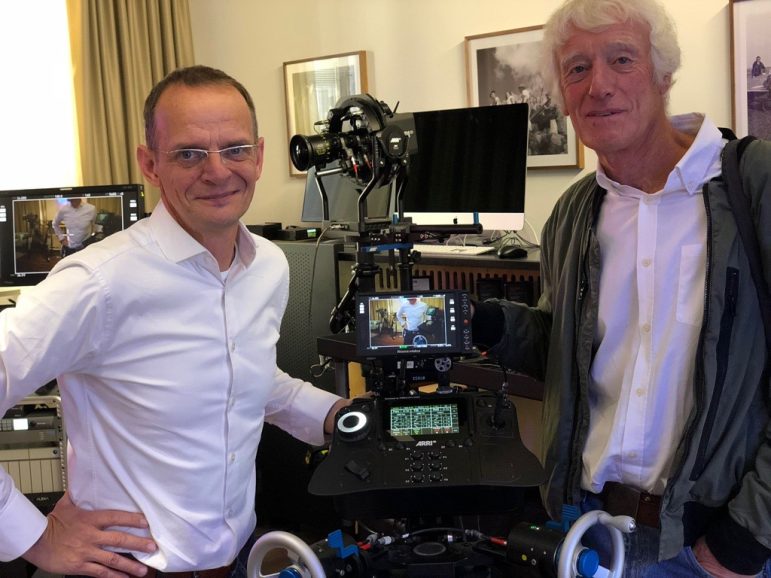
As Elendt alluded in our conversation, Sci Tech awards are given out once a technology or device has “marinated” a little – proven its mettle and utility over time – and Schaller began conceptualising Trinity around 2012, when “the first gimbals showed up.” He recalled thinking “as a young guy,” those first gimbals would “kill the Steadicam,” only to realize later, “no, this will not happen.” Still, with its neutral mass needing to be in the middle for a Steadicam rig, “you needed a lot of skills – a lot of sweat and love (for) a great camera move.” Though gimbals “can do things faster and cheaper” than traditional Steadicam rigs, “to me, it was clear we needed a hybrid solution,” one that “gives the DP and director their creative art,” while still providing the, well, steadiness that allows all those frame, scene and performance-redefining follow shots to happen.
Schaller pitched his innovation – “we put this electronic stabilized gimbal on top of my Steadicam system”– to “Sir Roger Deakins CBE ASC BSC – we know he wants to have a clean shot in any layer!” His almost metaphysical pitch? “I can give you a perfect horizon”
He explained that because there were tilt motors, with “full access to headroom –you can control (that) headroom all the time. With Trinity we can go from high mode to low mode and look right into your face… I can always see the eyes.”
Or to think of it in non-framing terms, he describes it as “like a little Super Techno Crane […] we can access the same angles as a crane (but) for way cheaper.”
Which, when added to the concept of perfect horizons, becomes nearly irresistible.
Hosting the Sci Tech honors was none other than Diego Luna, one of Emmy season’s people of the hour, as he’s returned to play the titular (Cassian) Andor in Disney +’s Star Wars-expanding series, with comments like those of SF Gate columnist Drew Magary – “Andor has been the best Star Wars work of the 21st century, perhaps ever, and now you’re telling me I only get two seasons of it?” – being not atypical. Luna came to the stage saying he knew his fee for hosting “was higher than normal this year. But it’s not my fault – everything coming in from Mexico is more expensive now.”
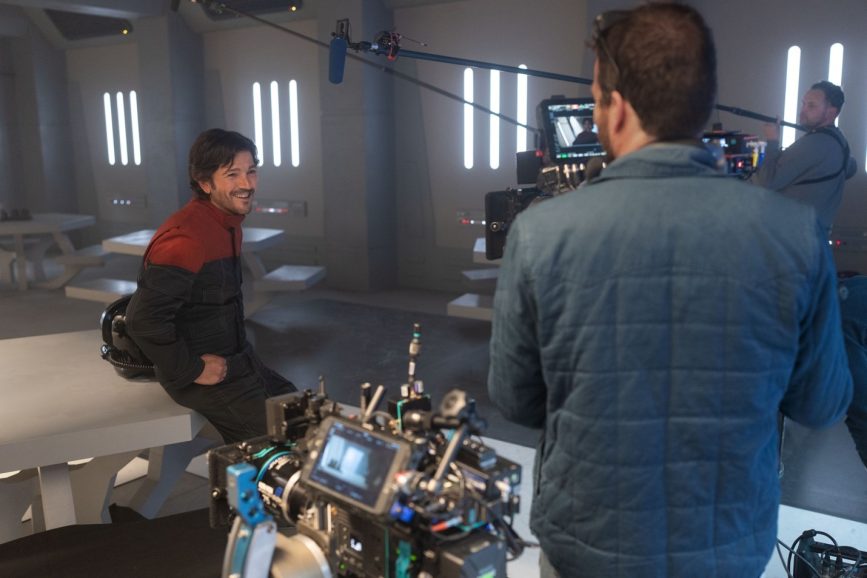
So too, it would seem, is everything coming into and out of Coruscant, what with rebellion brewing in the galaxy.
On that latter score, we talked with Christophe Nuyens SBC, the DP who shot the first half-dozen episodes in Season Two (with each trio of installments acting like its own film within the larger series).
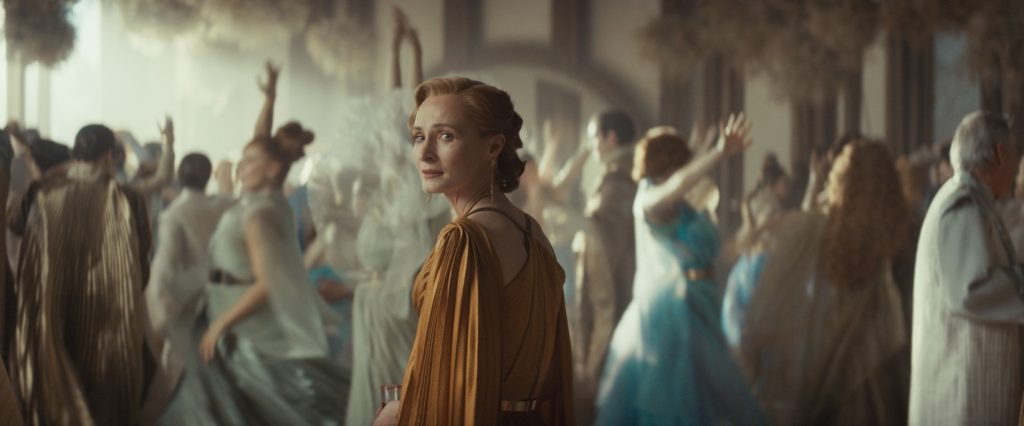
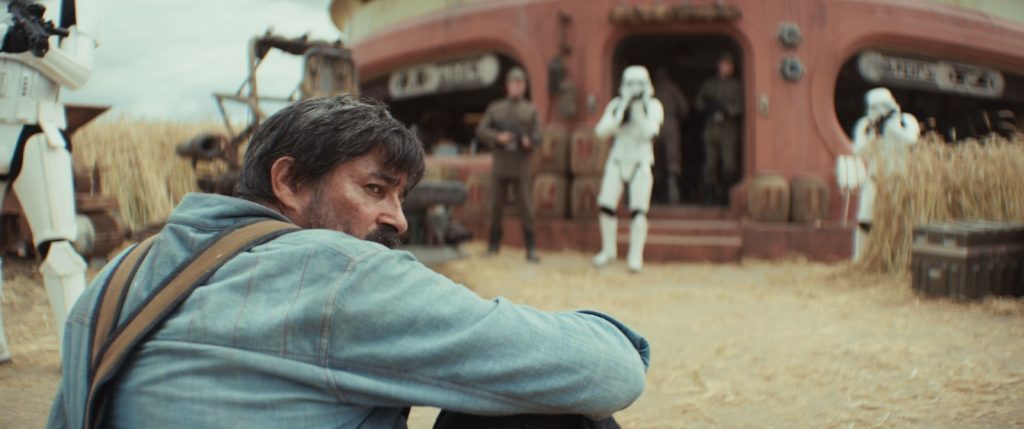
And it is the third of those episodes, Harvest, that’s being put forward for Emmy consideration for Nuyens’ work. Part of the story unfolds on an agrarian planet where some of Andor’s nascent-to-full-blown rebels have taken refuge, as they await his return from a particular mission. This is cross-cut with another subplot about rebel leader-to-be Mon Mothma’s daughter getting married within their “see no evil” caste of galactic one percenters. At the moment, however, Mothma is a senator in a legislative body rendered wholly corrupt – or entirely ineffective, at best – in the face of the Emperor’s depredations, while back where the harvest is, that same Empire is using a hunt for “illegals,” without documentation as a ruse to silence political opposition.
Viewers are free to mull any current off-screen comparisons.
Nuyens’ own voyaging with Cassian & co. almost began in the show’s first season. He’d met producer David Meanti “on an English series shot in France,” when Meanti was an assistant director, and the two hit it off.
Meanti “moved to the UK and started producing the first season of Andor,” and “tried to introduce me – (but) it didn’t work out. The second season,” Nuyens said simply, “it (did).”
And judging by the results, quite well. Nuyens started prep “by watching the first season. I think (DP) Adriano (Goldman) did a really great job on it.” And Rogue One, the film where Andor and his crew meet their ends, getting the Death Star plans to Leia, thus setting off the entire, um, enterprise – a story even more soberly re-contextualised by the time Andor ends — was already one of Nuyen’s favorites in the franchise (We might append “spoiler alert” to the previous sentence, but hey, that was, after all, a decade ago)
Nuyens also “started to build mood boards and looks,” most of which “came from general pictures and other movies,” outside the Star Wars canon. Indeed, the intense, political thriller aspects of the show sometimes feel as though a director like Costa-Gavras was suddenly working within this particular universe (though show creator Tony Gilroy had been a writer/director for the Bourne movies, and the George Clooney legal thriller Michael Clayton).
As for “Harvest,” “there are so many different things that are happening at the same time, it was quite a puzzle to bring all those things together,” Nuyens says. On the one hand, “the wedding had to feel quite chic and glamorous – the pitch was it should feel like a nightclub, but it’s daytime.”
This was contrasted with the grain fields, which were also planted in England, where so much of the filming took place at Pinewood. “The grain fields were so beautiful – they were planted especially for us,” Nuyens notes, and production designer Luke Hull built all the sets within them.
“Things were timed so that there was a window of four weeks where the grain was high enough and had the perfect color.” As fate would have it, things were also timed for there to be a concurrent SAG strike, so “we shot with the non-SAG actors.” And then they came back six months later with the SAG actors and actually recreated those great outdoors as “the greens team (had) cut the grains on the fields and put them on boards,” which could then be arrayed in the great indoors. Nuyens, who by then knew they’d be coming back in winter to finish those sequences, was also busy “measuring the color temperature of the ambient light all the time.”
But there was also the question of tying in the dissolute ambience of the gilded wedding. As much as he loves LEDs – being able to recreate specific, detailed lighting cues really helped with the indoor grain fields, for example – the nuptial sequence was the only one he lit with tungstens. They also “decided to ditch the green screens,” despite the ongoing and fruitful collaboration with the VFX crew – and instead “put a painted backdrop there, so I could light naturally. Because of that, I could overexpose the outside,” and thus, when they “needed a time lapse during the day – at the end of the episode when (many of the story’s intrigues were) all falling apart – the sun was just above the horizon.”
Leaving a somewhat frenetic and grieving Senator Mothma – left seeing both her personal and public lives starting to unravel – to try to dance her pain away with an almost panicked abandon, as the episode ends.
Nuyens captured it all on a Sony Venice – sticking with the same first version that season one was shot on, as “the Two had just come out” when they were prepping – though this time using a set of custom made Panavision Ultra Vista lenses that not only “fit” into this particular universe, having been previously used on The Mandalorian, but were in fact so bespoke that individual lenses had nicknames – one 40mm being good for closeups, for example, “and another 40 good for wide shots.”
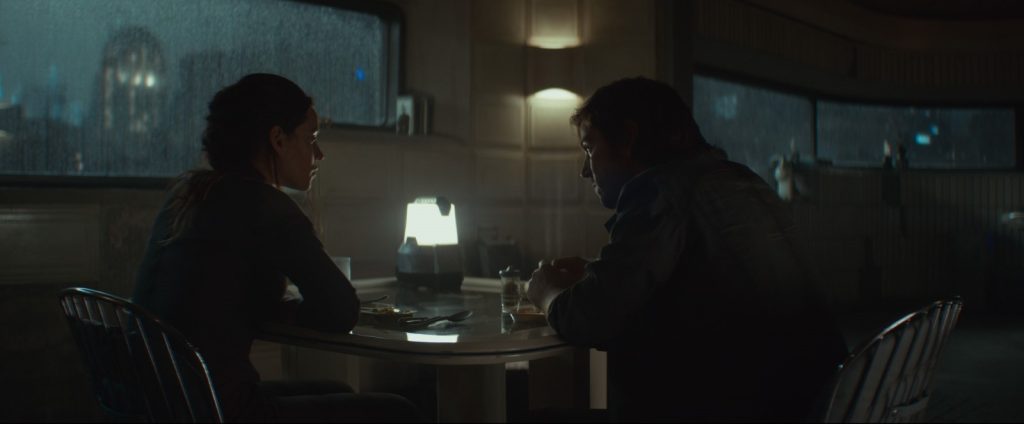
Of course, the conviviality didn’t end with assigning names to the glass producing all those deep-frame, vintage looks. “Every week we had meetings with (Hull) and (VFX Supervisor) Mohen Leo, discussing the prep we’d done in the week.”
Or sometimes before the week, as Nuyens was also part of the previs process, especially helpful in “all the dog fights with the TIE fighters… they had everything in the visual sets (and) we could look for shots,” helping to establish framing and the “field of view” for the nicknamed lenses, ahead of the actual filming.
Similar collaborations – though usually more focused on richly recreated historical settings, such as World War II or dazzling fantasy ones, such as Barbie Land – was the stuff of a brief conversation with storied production designer Sarah Greenwood and set decorator Katie Spencer, themselves close collaborators for the last quarter century, and most recently, the subjects of a retrospective exhibit, held fittingly at – yes! – the Academy Museum, and titled Barbie to Anna Karenina: The Cinematic Worlds of Sarah Greenwood and Katie Spencer.
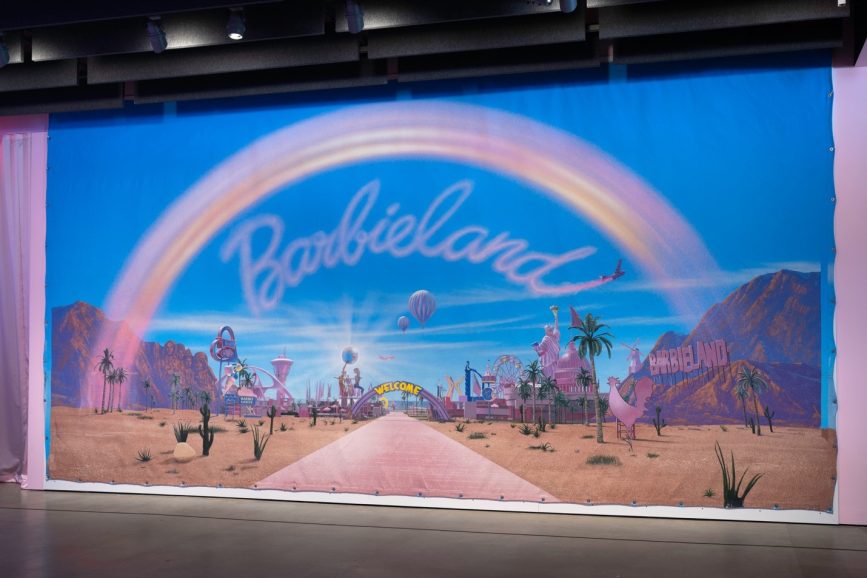
In the exhibit we ambled through the moody gothic/romantic settings of the Beast’s castle from the live action Beauty and the Beast, the not entirely dissimilar feeling of some of their brooding work on Anna Karenina, the period whimsy of the Guy Ritchie Sherlock Holmes – indeed, work from all seven of their Oscar nominated designs – culminating in the film that perhaps combines many of those elements, usually in dazzling pink: Barbie.
There were miniature Barbie villages – later used for set extensions by the VFX crew – painted backdrops, Weird Barbie’s house, the mini-fridges and equestrian designs from the Kens’ patriarchal putsch in Barbie Land, and more.
We asked how much warning cinematographer Rodrigo Prieto ASC, AMC had about what was headed his way, in terms of the lack of right angles and the-oh-so-much pink (one shade of which couldn’t be used because it “buzzed” too much visually), in their designs. They laughed about having made life hard on him but “he never said a word,” acknowledging “the amount of bounce around from the colors was excessive, even by our standards.”
Though they also talked about the effect the set had when filming during an English winter, with Spencer saying “it was incredible when the dark doors to the studio opened, “ and Greenwood adding that the effect of “the pink glow” made it “a really joyful thing to work on – it boosted one’s serotonin levels. It was like color therapy in a way.”
Though there were other lauded projects such as the wartime Darkest Hour, whose very title suggests how far away from a glowing pink aesthetic their design was.
They called their “reimagining of Buckingham Palace” in the film “the best period room we’ve ever done,” with Greenwood mentioning “an incredible reference of the Royal Family” she found in her research, where metal slots were added to the palace’s large window for protection from falling bombs. “Let’s put these shutters on the window!” she’d suggested, reporting that cinematographer Bruno Delbonnel AFC, ASC’s first response was “no, no! I must light it!”
But a version of the slots went up, and thus “the whole thing (went) down,” in terms of light. Greenwood continued. “We took it down five stops.”
But whether it’s shadow-strewn recreations or working with the “Barbie LUTs” Prieto created to light a doll’s house – and all the other parts of her journey into the human world – Greenwood says “we work with best DPs,” adding names like Seamus McGarvey ASC, BSC, ISC and Philippe Rousselot ASC AFC to the list, among many others. They have another upcoming collaboration with Delbonnel on a Joel Coen film, though they took a couple weeks off from prep to come to L.A. to help put the finishing touches on these particular pictures (and blueprints, models, renderings, props, and more) at an exhibition.
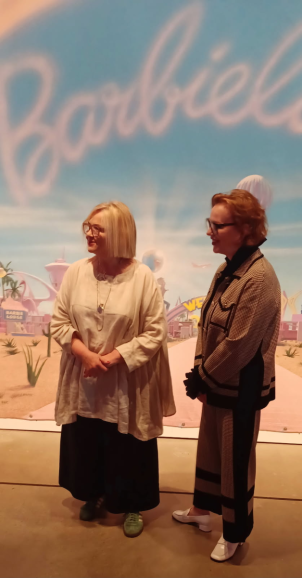
Coming as it did in the middle of writing this particular column, the conversation with Greenwood and Spencer was quite a welcome change from some of the other last-minute considerations before copy was filed, including the current administration’s resumed tariff wars – or “tariff pronouncement of the day,” which of course has recently included a 100% levy on “foreign-made movies.”
No one – including those making the pronouncements – is sure what this means. Will it include shot-in-England opuses about American icons like Barbie? Will it mean that anyone wanting to try out ARRI’s Trinity on a shoot will find the price to rent or buy one has skyrocketed, given the device’s Munich origins? Will one’s Netflix bill shoot up once again if they continue to stream Squid Game, any Scandinavian noir, or, perhaps, Adolescence?
Even the courts don’t exactly know where the daily policy shifts are headed.
You, though, can come ruminate about these or these other questions – or even just say howdy – in person, if you’re at this year’s Cine Gear Expo in L.A. We’ll all be at the British Cinematographer booth and will say howdy right back.
And we’ll have a full report on how the show went, and what the prevailing mood is, next time. Until then: [email protected] / @TricksterInk