

KINDRED SPIRITS
An artistic union flourished between Nicola Daley BSC ACS and actor-director-executive producer Elisabeth Moss while shooting season five and six of The Handmaid’s Tale. They share details of their partnership, processesand how, despite the series coming to an end, this tale of two creatives is far from over.
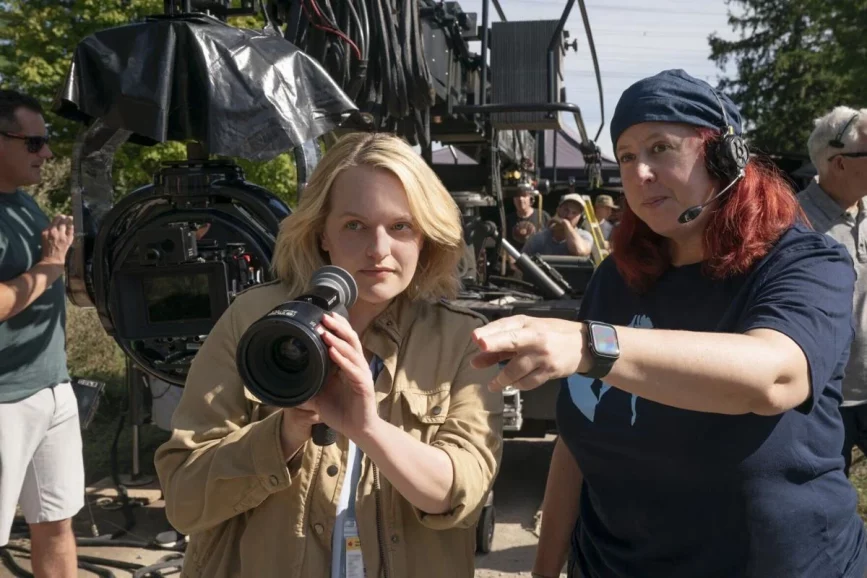
“Some cinematographers meet their director early on. It’s taken me 17 years to meet Elisabeth,” says DP Nicola Daley BSC ACS about the special collaboration formed with director-actor-executive producer Elisabeth Moss while shooting six episodes of season five and fiveepisodes of season six of The Handmaid’s Tale. “We think the same way — we’re creative soul mates.”
Daley was a “huge fan of the show” before interviewing for the hit series based on Margaret Attwood’s novel following June (Offred, played by Moss), a Handmaid in the dystopian Republic of Gilead, a totalitarian theocracy where fertile women are forced to bear children for the elite.
“The series is visually stunning,” she says. “Cinematographer Colin Watkinson ASC BSC [who won the Primetime Emmy Award for Outstanding Cinematography for pilot episode “Offred”] and Reed Morano ASC [the first woman to win the Emmy and Directors Guild Award for directing a drama series in the same year for the pilot] created a beautiful look.”
The opportunity to fulfil Daley’s dream of lensing the series arose when fellow Australian cinematographer Bonnie Elliott ACS worked with Moss on Shining Girls in 2022 and recommended Daley. She prepped for the interview for a week, rewatching all series and writing extensive notes. “We got on really well in my interview which was originally for the role of second DP. When I received a call saying Elisabeth wanted me to be lead DP, I realised the interview must have gone well!” says Daley, who had done second, third or final block, but never been lead DP on a series. “I was used to treading that balance between what a show should look like, and then putting my own stamp on it.”
Moss found Daley to be “so well researched, thoughtful and respectful of the show and cinematographers who came before her” — Colin Watkinson ASC (S1/2), Zoë White BSC ACS (S2/3), Stuart Biddlecombe BSC (S3/4/6), Stuart Campbell (S5), Bérénice Eveno (S4) — “and the language they established. She was also knowledgeable enough to say, ‘I would love to go further with that or go back to what this was like in an earlier season.”
Artistic growth
As the show has been such a large part of Moss’s life for the past nine years, it is difficult to separate the professional from the personal. “It’s been my main focus as also being an executive producer, I was involved in prep and post too,” she says. “Even before prep, you’re talking about scripts, outlines and story and do press for the series long after it’s finished.”
The series allowed Moss to grow more than any other as an artist and “discover who I am as an actor, what I like to do, and then become a producer and director.” When a director and DP click they become “partners, speaking the same language and adhering to the same standards,” says Moss, who highlights the importance of knowing not only when you have it right, but when you don’t.
“You push yourself and those are my favourite moments because one of us sort of saves the other. Nicola believes in me, expects me to be my best, and taught me to look at what the shot and scene are about, how to approach it from a story and character place, being honest with your choices. That expectation from Nicola pushes me to be better. There’s something very moving about having somebody believe in you like that.”
Both are inspired by bigger story ideas and allowing “for a little bit of magic”. “You have to be free enough to allow that to happen,” says Moss. “We get bored of coverage, instead looking at how to move camera to tell the story in a subconscious way.”
Moss’s talent as a director results from “coming from inside the scene and thinking like an actor, instinctively knowing what the story is,” according to Daley. The pair also commend the incredible crew on their role in creating the show’s distinctive look, including gaffer Tom Henderson who has now made the transition to cinematographer.
Despite the series’ dark subject matter, a light-hearted and fun atmosphere on set is essential in creating a supportive working environment. Experiencing firsthand the way Daley works, Moss was impressed by how she handles situations and how muchher crew respect and trust her: “She’s an example of leading with kindness, being willing to collaborate but not being a pushover and being able to say, ‘I’m the cinematographer, and this is what I would like to happen’.”
Making the shift
Before making the move from being in front of the camera to behind it (directing two episodes in season four, four in season five and four in season six, including the last two climactic episodes), Moss thought about directing for a long time, but wanted the time to be right. “I have a lot of respect for the position and have worked with many directors, so I know it can be done badly and I know how incredible it is when it’s done well.
“I never felt it was something I could just do or assumed, ‘I’m an actor, so I can do what I want and just step in and do it’. I didn’t feel I was ready for a long time and working closely with directors and cinematographers on Handmaid’s really helped.”
Moss is grateful to all the cinematographers who worked on the series — especially the lessons she learnt from Daley, Colin Watkinson ASC, Zoë White BSC ACS and Stuart Biddlecombe BSC — which helped her on the path to directing. “Although I’m an actor, I spent most of my time with the cinematographers, having amazing conversations with them and directors, including in season three when director Mike Barker and I worked closely.
“From there, I realised you’re supposed to tell stories you feel you know or you feel, as a director, you’re the only one who can tell this story. I felt like that with Handmaid’s.” Moss also believes a director’s role should involve planning effectively and providing a shot list to create space and time for crew to do their jobs. “If I’m asking them to do an amount of work in a certain amount of time and with a certain amount of money, I must set them up for success. Be respectful of your crew; it’s not about you, it’s about those 150 people who need to know what they’re doing each day.”
Palette perfection
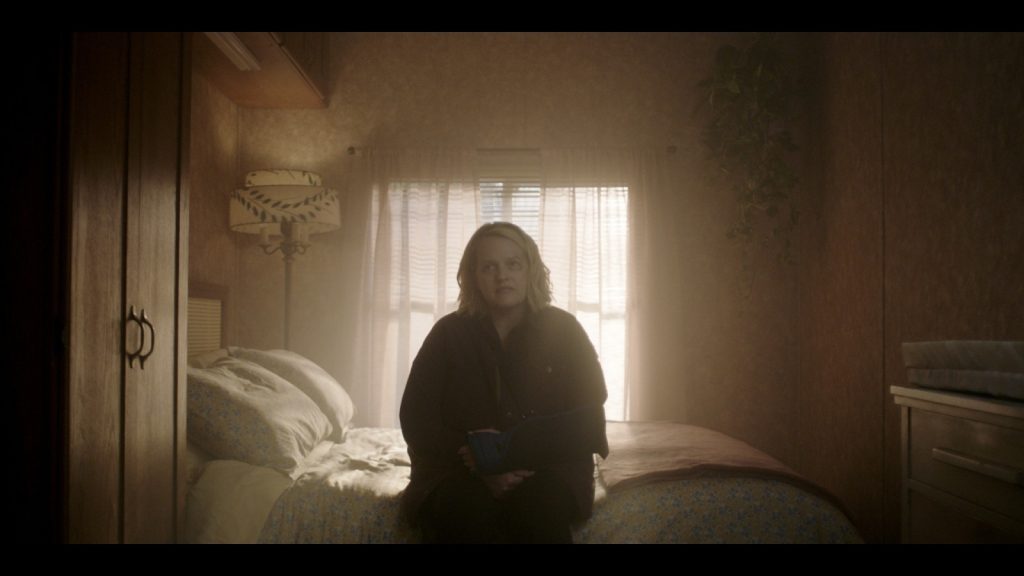
Moss welcomed Daley’s focus on colour as “we love colour on the series. Nicola has an incredible eye for it, making sure it’s not garish or taking anything away from the story”. The cinematographer wanted to revisit season one’s palette and “clashing red of the Handmaids with teal of the wives”, reintroducing it through lighting using moonlight and warm practicals to create colour contrast.
“Contrast is a massive character in the series. You try to light from the offside of camera so darkness falls off. In season six Nick’s character changes. He has a light and dark side, so in one shot we start on the light side of his face and track around to the dark side,” says Daley.
Everything the DP does is purposeful and “she never includes a shot just because it looks pretty or cool; it always tells the story,” says Moss. “She taught me as a director to always think like that. Be honest with yourself about the story you’re telling through the shot.”
This is demonstrated in a scene in season five which sees Esther poison fellow Handmaid Janine with chocolates. “The Handmaids sit on a bed and halfway through the scene the story flips. You think they’re friends but it turns out they’re not,” explains Daley, who drew the whole scene out with Moss, devising a slow tracking movement.
“As the scene flips in the script, we slowly track in one continuous crane shot, cross the line and push into Esther. Blood appears as Janine is poisoned and the visuals become crazier, and handheld. It’s a subconscious, subtle shock. You’re drawn in and it crosses the line. Every time I watch, I’m happy we made those creative decisions as the scene really works.”
Rules and reinvention
Visual rules of the show include“big, symmetrical, Kubrickesque wide shots” and “handheld close-ups of June with close eye lines”. Over the shoulders are used sparingly as they “feel disconnected from the show”.
Episode one of the sixth and final season takes place inside a train carriage and was shot on an LED stage, requiring more prep than any other episode. It felt instinctual to shoot everything handheld, bar one shot. “That was a new rule we invented that was specific to the story, so we constantly reinvented as well,” says Daley.
Scenes such as this were made possible thanks to skillful camera operatorsBrett Hurd and Sarah Mulholland and through drone pilot Chris Bacik’s “stunning work”. In one scene the drone soars over the top of New Bethlehem and he held the shot so steady, it was not necessary to shoot a wide shot.
“In the first episode of season sixhe achieves an extremely difficult shot because the drone flies up the river, finds the train, and the sun needed to be in the perfect position, so he had to get it right first time. When the drone moves to the back of the train, the wind made it very hard to fly.”
Tried and tested
As the series has always been successfully shot on ARRI Alexa Mini and Canon K35 lenses, Daley did not want to make drastic camera package changes.“The show won awards for its look, so you don’t want to reinvent the wheel. That combination is suitable because often we need to fit in small spaces and there’s a lot of handheld,” says Daley. “Those lenses are beautiful with a creamy roundness and nice halation.”
Additional kit brought in on occasions included ARRI shift and tilt bellow system lenses for a scene when June is run over at the end of season five. The Canon Dream Lens — designed to be shot wide open — created a blurry effect when June is on the train in season six’s opening. As the classic softs had been used before and interference showed up in the bokeh, Daley changed to Tiffen Glimmer Glass to rectify the issue.
Moss felt the 35mm lens Daley started using to shoot June “was a beautiful lens on that character”, noting that “Nicola proves you don’t have to make actors look bad to shoot interesting and groundbreaking images. No one has shot me quite like her. There are close-ups where I can see every pore on my face, but there’s a way she lights — which is also testament to gaffer Tom and his team — and shoots me that feels new and like groundbreaking cinematography while at the same time the actress looks pretty great. She’s shown me you can have beauty lighting and cool cinematography; it’s a unique skill.”
Brave new worlds
Now the final chapter of The Handmaid’s Tale has come to a close, Moss and Daley are looking forward to embarking on new creative ventures together, potentially feature film projects. “Making a feature is a large investment of time so when I do it, I want to do it right and make something that’s important to me and I’m proud of,” says Moss.
Collaborating on a project outside of the Handmaid’s world excites Daley too as Moss “is an excellent storyteller with a great eye for a story. People say, ‘Wow, she’s been in all these amazing shows,’ and that’s because when she reads scripts she knows which stories stand out.”
Moss adds: “I was coming into a world created by somebody else with The Handmaid’s Tale but I’m excited to see what happens if we start from scratch, and it’s just us creating from the beginning. I’ve been lucky to work with some beautiful cinematographers I adore and collaborate with the absolute best. But there’s something different when you’re so aligned in your taste and form a special relationship with someone like Nicola. It makes everything so easy and fun.”