

From following the rise of a young luchador to shooting drama on a farm, this year’s BSC Short Film Competition winners demonstrated the breadth and depth of filmmaking talent in the United Kingdom. Hear from each of them about their inspirations, goals and more…
Theo Hughes, Dogbone – Cinematography in a Short Film (Undergraduate Student)
What was the pivotal moment that made you choose cinematography as your career?
I think the point I knew I wanted to be a cinematographer was when I used to create cinematics in video games for montages. I’ve always had a passion for imagery but using those tools helped me understand it and fall in love with it even more.
How did you first get involved with your award-winning film?
The film was our third-year project at university and I had worked with a majority of the crew before on smaller projects and past academic films. Austen [Taylor Pease, director] and I had been talking about a collaborative project for a long time running up to this and it felt like the perfect opportunity to tell a powerful story.
Please share an outline of the film’s narrative concept.
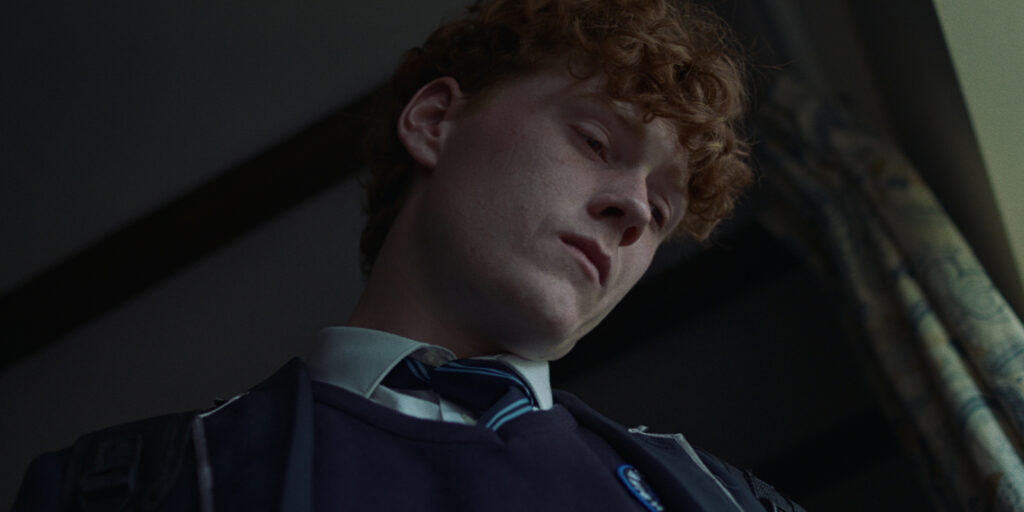
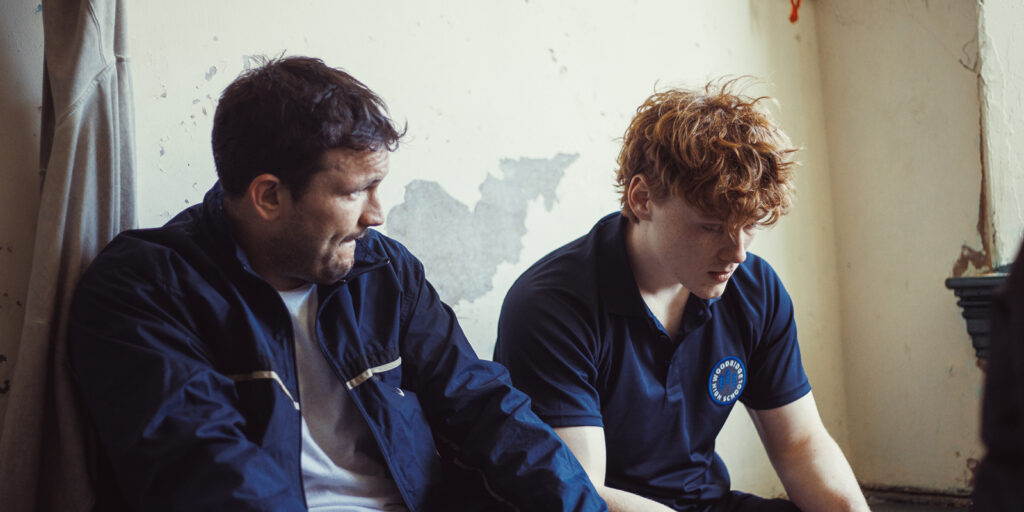
Sixteen-year-old Mark plays football to stay connected to his late father. But after a teammate’s suicide, the silence around him grows louder. Burdened by a brutal coach and the weight of buried grief, Mark begins to unravel, caught in a game that’s abused him rather than healed him.
What drew you to this particular story?
I feel the themes and emotions in the film are widely shared with a younger generation and, specifically the football aspect, with people who were involved in making the film. It seems to be a common thing of pressure to perform, specifically in a younger, male-filled environment.
Can you describe the visual language you wanted to create for the film?
For Dogbone, I wanted to create the feeling of separation not only between characters, but between the characters and their own mental states. The approach I used for this was mainly negative space and the use of holding moments longer than I usually would. I wanted the film to be naturalistic from a lighting point of view, so we only booked out one HMI and a couple of panels to really push me to make use of it.
What was the most challenging sequence to shoot?
The most challenging sequence was definitely the scene where Mark and his mum get back from the meeting and are in the window. We were running out of light quickly and used basically guesswork to hit focus. Also resetting actors took up a lot of time but we managed to sort out lights to keep the natural aesthetic.
What camera and lens package did you choose and why?
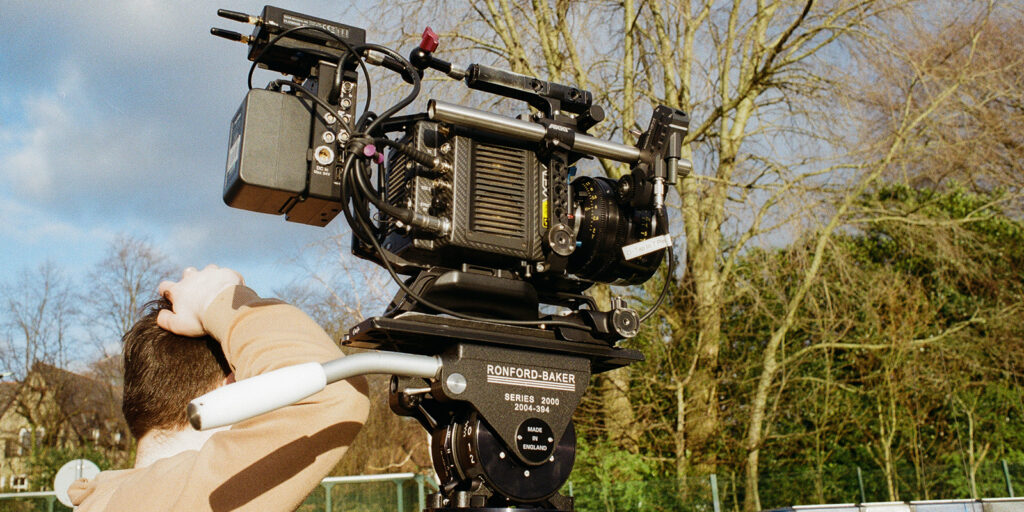
We used the ARRI Mini LF and a Cooke s4/i set with an Alura 18-80. The Mini LF was such a good choice for this film; it provided manoeuvrability and a lightweight rig which saved my back as the film was shot mostly on shoulder. Also the built in ND filters were a lifesaver for the field shoot. The Cookes were a choice of mine and Austen’s as we thought they provided the look closest to our references and had the natural rolloff needed to make it feel as real as possible.
What was your collaboration process like with your director?
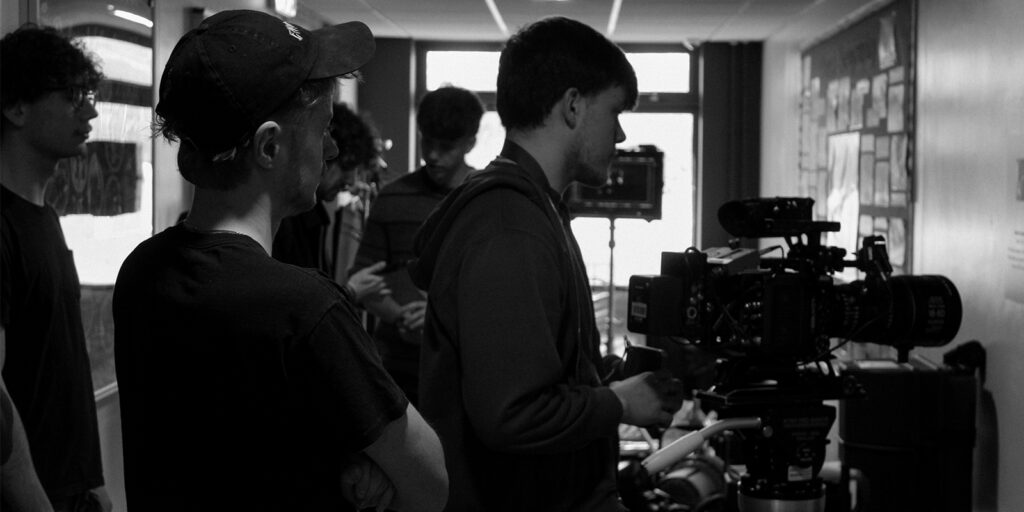
Working with Austen was wonderful and made the process 10 times easier. We were both on the same page for what we wanted story-wise and visually from the first day of preproduction. We worked on almost all planning collaboratively and had references that we both wanted to take from.
Can you describe a moment on set where you had to improvise due to unexpected challenges?
There were a few scenes on the first block of shooting where I had to manually focus whilst on shoulder which were definitely unexpected, but quite a few made it in.
How do you balance artistic vision with practical constraints on short film productions?
We were tied down to limitations set by our university, like insurance issues and budget, but we managed to crowd fund basically the whole film. The balance between what I wanted and what we could get was actually quite good, because I think with this story, the simpler you go technically, the more real it feels.
What does this recognition from the BSC mean to you personally?
It means so much – more than I thought it would when I submitted. I still don’t feel like I’ve actually won, the other nominees’ films were amazing. Very unexpected.
What advice would you give to emerging cinematographers entering competitions?
Keep. Making. Films.
What’s next for you in terms of projects?
There are a few projects I’ve had in mind for a while. But I think after hearing the feedback from Dogbone, I want to pursue a narrative short, most likely with the same director.
Are there particular genres you’re eager to explore cinematographically?
The genres I’m most interested in exploring are music videos and narratives. I think 2026 is going to be an exciting year for both.
Christopher Hudson, El Corazón – Cinematography in a Short Film (Postgraduate Student)
What was the pivotal moment that made you choose cinematography as your career?
I think my interest in visual arts started the moment I could hold a pencil and make a mark on paper. As I got older, that curiosity shifted from drawing to photography, and then filmmaking, which completely grabbed me. Realising I could put clips I’d taken on my dad’s compact camera and place them into Windows Movie Maker was a real milestone in the journey into making films.
I’d go out and shoot micro-action shorts and parkour videos with my friends, which gave me an excuse to learn the basics of camerawork and editing through YouTube tutorials. I went on to study digital arts, which gave me a chance to dive into different disciplines, from 3D animation to visual effects, with a bit of practical filmmaking mixed in. That’s where I truly discovered the role of the cinematographer. To be able to bring my love for filmmaking into a discipline that was entirely focused on shaping images without losing the storytelling side of it was a bit of a revelation. It felt like the craft I’d been circling around for a long time.
Please share an outline of the film’s narrative concept.
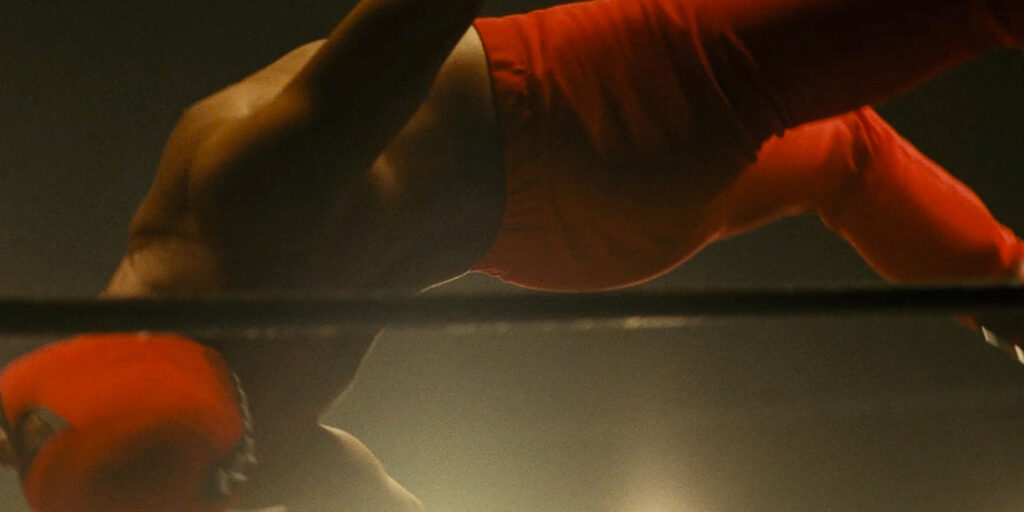
El Corazón follows the rise of a young luchador (wrestler) in 1950s Mexico as he strives to challenge the legendary El Tigre. Driven by a personal vendetta, he works his way up the ranks of lucha libre (Mexican wrestling), torn between legacy and identity and ultimately facing a choice that could define him forever.
How did you first get involved with your award-winning film?
I’d worked with Oscar [Simmons, writer-director] on our first-year film at NFTS, and we chose to team up again for our grad film. We’d really enjoyed working together and had built up a bit of a shorthand by then, so it made sense for us to dive into another project.
Oscar’s a really talented director, and uncompromising in the best way. He’s very clear about what he wants emotionally from a scene. I remember him first mentioning his idea of housing a story in the world of lucha libre and I was hooked from that moment. I knew he’d approach it with the same intensity and care he brings to every project. Of course, having our producer, Aidan Milburn, and production manager, Alice Fontana, on the team was a huge boost.
What drew you to this particular story?
I found the structure of the story really enticing. The idea of intercutting clues about our main character’s motive and intention felt exciting, and I realised it could make for a more layered and engaging experience – something that gradually pulls the audience in rather than revealing everything upfront.
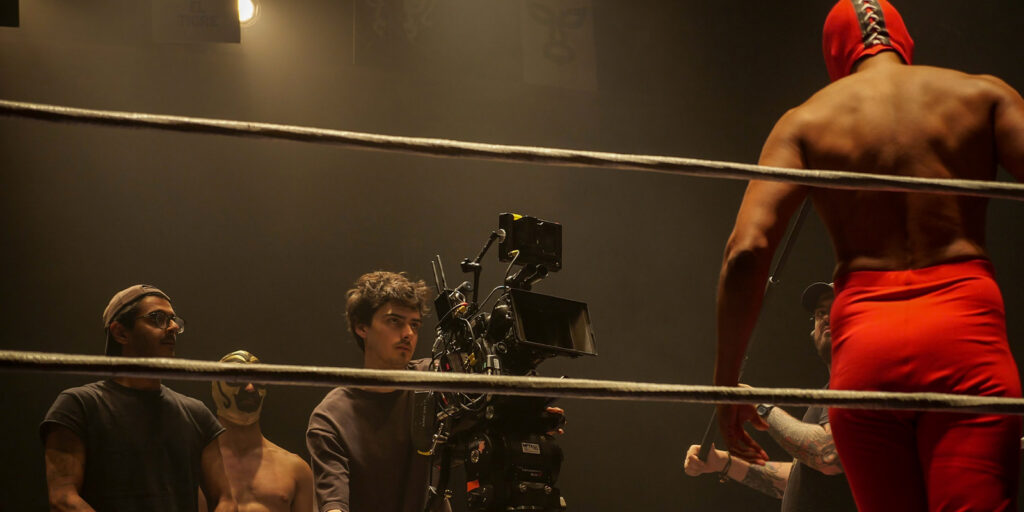
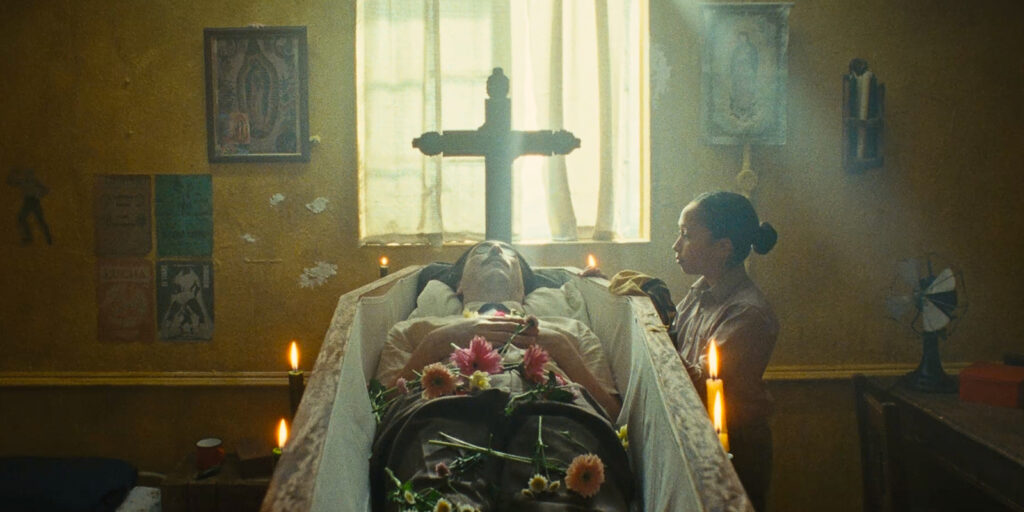
The setting itself was another big draw. I’ve always loved the idea of creating something much bigger than the resources suggest, and trying to emulate 1950s Mexico in the UK on a budget definitely felt like a challenge worth taking on. When we started researching old lucha libre photos and reading about the traditions behind the masks and personas, it opened up a whole realm of culture and mythology. The artistry and theatricality of their artform really pulled me in, and it also gave me a great excuse to collaborate again with our production designer, Aishwarya Narayanan, to build something with real personality.
Can you describe the visual language you wanted to create for the film?
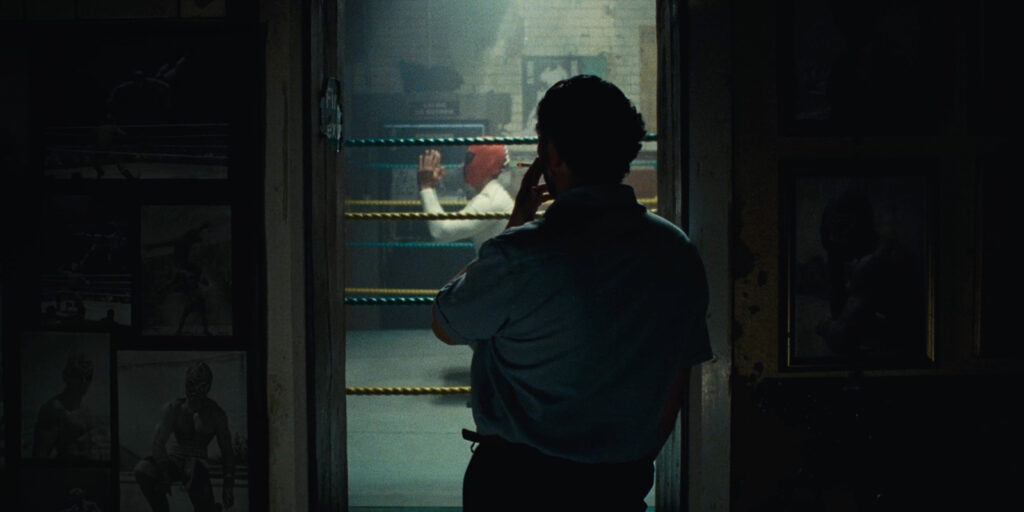
Our aim was for the film to feel a bit aged and rough around the edges – something that carried the texture of the time period without feeling overly polished. At the same time, lucha libre is full of colour and energy, so we really wanted to honour that vibrancy in the look. That meant putting a lot of care into choosing locations that already had some character, and lighting them in a way that brought out the warmth, the grit, and the theatrical quality of that world. The whole idea was to build an atmosphere that felt lived-in and expressive.
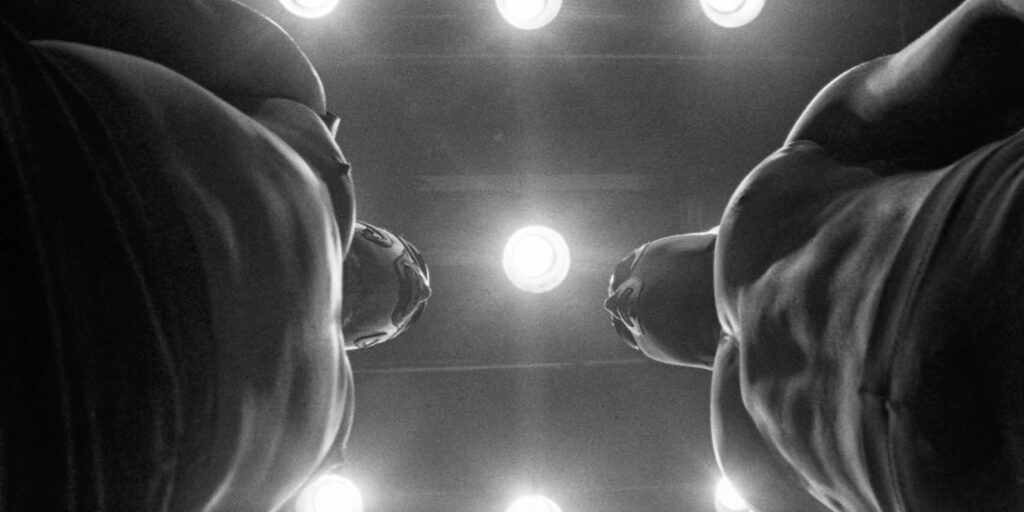
We used black-and-white to separate the timelines. The day of the fight lives in this stark, monochrome space, which feels much harsher and more unforgiving compared to the warmth and colour of the past. I spent a lot of time in the grade with our colourist, Ivan Michael, finding the right balance of contrast to really push that feeling. We wanted every bead of sweat, every mark on their bodies, to feel real and alive.
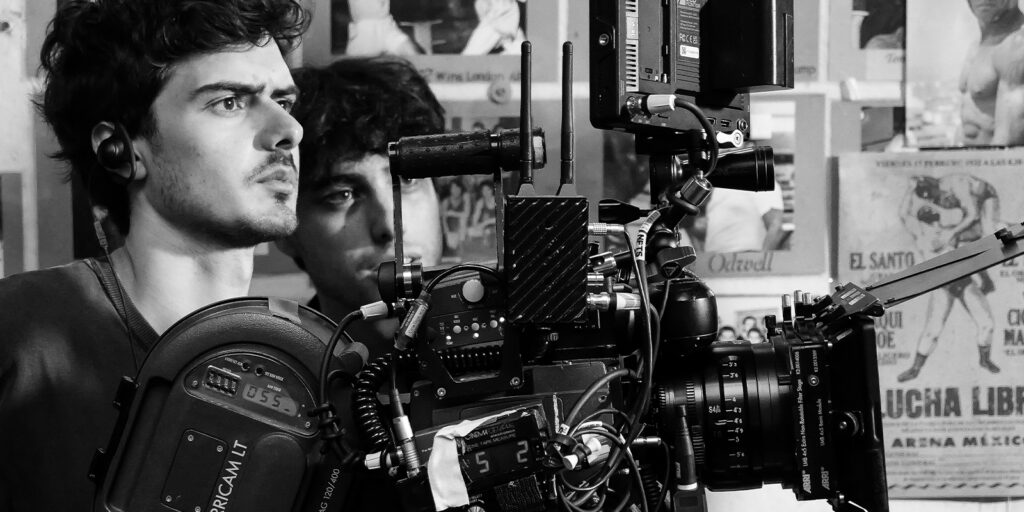
Switching into handheld for the combat was a big part of that shift. It let us jolt the audience into reality. We wanted the camera movement to break loose as they made contact, to bring a real human intensity to the moment and throw the audience into the fight with them.
What was the most challenging sequence to shoot?
The fight scene posed the greatest challenge. We planned as much as we could in terms of coverage and story beats, but our approach to wrestling on this film relied a lot on intuition and improvisation. We’d give Ed Gamester, our brilliant wrestling choreographer, the key story beats, and he’d build the movement around them on the day. We also spent time with him figuring out which angles would sell the action best and make every hit feel convincing.
Another big challenge was making the space feel huge. We searched everywhere for theatres that could house a full-size ring, but the moment you have a visible background, you suddenly need supporting artists, extra dressing, and a whole layer of logistics that would have pulled focus from the core story. In the end, we shot on the school’s TV stage, which allowed us to black everything out around the ring. We used this void, combined with Will Henley’s intricate soundscape, to multiply the sense of scale. It also meant we could approach the lighting much more creatively. Together with Fabio Alonso, our gaffer, we designed and rigged a grid of par cans kindly provided by Warner Bros Lighting above the ring and set distant lights around the stage to give the space more dimension and depth.
What camera and lens package did you choose and why?
I mainly shot on the Arricam LT, and the Arriflex 435 Xtreme for our 150fps moments. Thanks to Kodak and Digital Orchard, we could keep the whole project on 3-perf 500T, which felt right for the texture we were chasing. OneStop let us come in and test their range of vintage glass, and the Cooke S4s ended up being the sweet spot because they gave the right mix of clarity and character. They also handled the intense par can lighting really well, without overwhelming the image with flare.
I really liked the weight of the LT for handheld. It takes away that micro-shake you get with lighter bodies and makes the movement feel more deliberate. The 435 was essential for the slow-motion work. We needed to capture the elegance and impact of backflipping off the ropes and onto your opponent, so we set aside some stock to make that moment count. It thankfully only took the one take to get it. One of the more high-pressure moments of the whole thing! Of course, it was made a lot easier with Ran You on the sharps, Ben Geddes as our second AC, and Tvisha Shah loading.
How did your technical choices shape the film’s visual identity?
Shooting on 35mm film immediately pushed us toward the roughness and atmosphere we were going for. The stock gave the colour and grit that fit the world – it naturally softened and added a bit of wear in the image. It also meant being deliberate with every shot, which I think added to the discipline and intention behind the visuals. It’s a way of working we were already comfortable with as a crew, and I’m glad we embraced that workflow for this film too.
We looked to shape an environment that felt tense, introspective, and slightly surreal. We also talked a lot about the story feeling like an opera, something heightened and emotional – the lighting played a big role in that. A big thank you to Greenkit as well for helping us out with the bits of kit that made those lighting choices possible.
We used controlled pools of light to carve out our ring and highlight certain elements of production design, letting everything else fall away into shadow. We wanted this darkness to reflect the mindset of our protagonist, who enters the fight with a lot of emotional weight. By hiding what we didn’t have and embracing the negative space, the world naturally took on a moody, almost expressionistic quality. This approach also helped isolate the wrestlers and make the fight feel strangely personal, at times feeling like a contained argument between two people rather than a public spectacle, sort of suspending it in its own reality.
Can you share some creative solutions you used to overcome location or budget constraints?
We’d originally planned the first meeting between the grown-up Corazón and El Tigre to happen in a very specific type of location, but nothing we could access felt appropriate. So we pivoted and decided to reinvent the scene as a private cinema room. In reality, it was just a basic teaching room at the school, but once Ash and her team started dressing it, the space really transformed. We brought in a couple of DMG Dashes and used them as practicals in the back to add warmth and interest on either side of the frame. It was minimal, but it really helped sell the space.
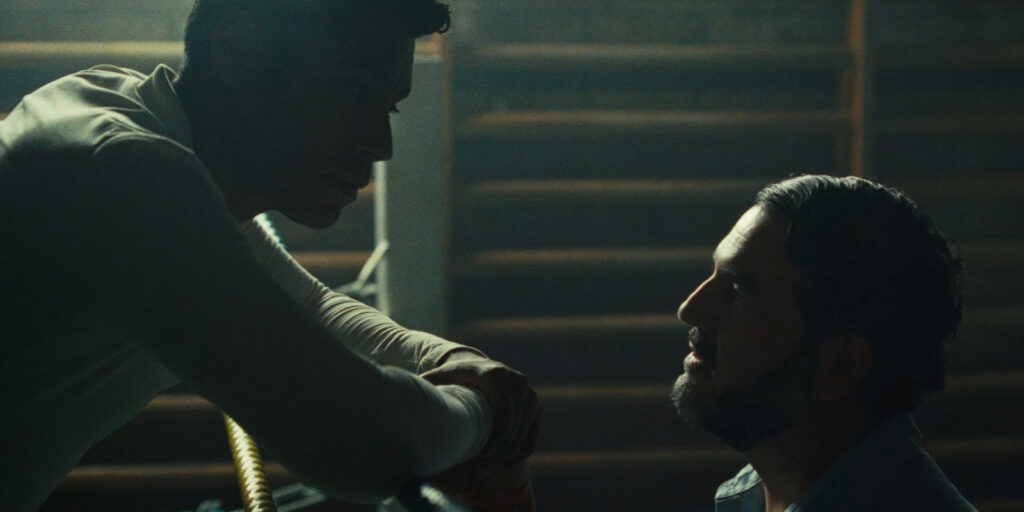
The projector content itself was another bit of improvisation. We shot the footage just a few hours before on my Sony A7III, then edited it quickly over lunch, broke the image down a bit with a quick grade, and played it back on a projector. Super DIY, but in the end, all the little workarounds solved budget and schedule issues but also gave the scene a personality that I feel we wouldn’t have found if everything had come easy.
What was your collaboration process like with your director?
Working with Oscar was pretty seamless, mainly because we’d already built a solid process from our first-year film together. We did a lot of pre-vis, filming rough versions of scenes on an iPhone and cutting them together to work out blocking, rhythm, and how much film stock we could realistically spend on each moment. Shooting on film forced us to be disciplined, so every day had a tight shot plan to avoid wasting stock.
One of my favourite parts of prep was booking out a room at the school and watching films like Amadeus, Nacho Libre, and The Wrestler as a group. It helped everyone tap into the same visual direction while we were still sketching the project out. Having that shared pool of references meant we weren’t just talking in abstract terms, we could point at things and understand what each of us responded to. That made the communication really open and instinctive and it gave each department something concrete to build from. It sort of set the tone for the whole collaboration.
We also put a lot of emphasis on recces. I’d make quick 3D LiDAR scans of the spaces we’d visit, which basically let us revisit locations long after we’d left. It was a big help in visualising shots, angles, and lighting positions properly without needing to physically return every time we had a new idea.
Can you describe a moment on set where you had to improvise due to unexpected challenges?
Our luchador masks – basically the central visual piece of the whole film – were being handmade by a small team in the US, and a few days before the shoot we found out they were stuck in transit on their way to us. There was a very real moment where it looked like we’d be walking onto set without the masks at all.
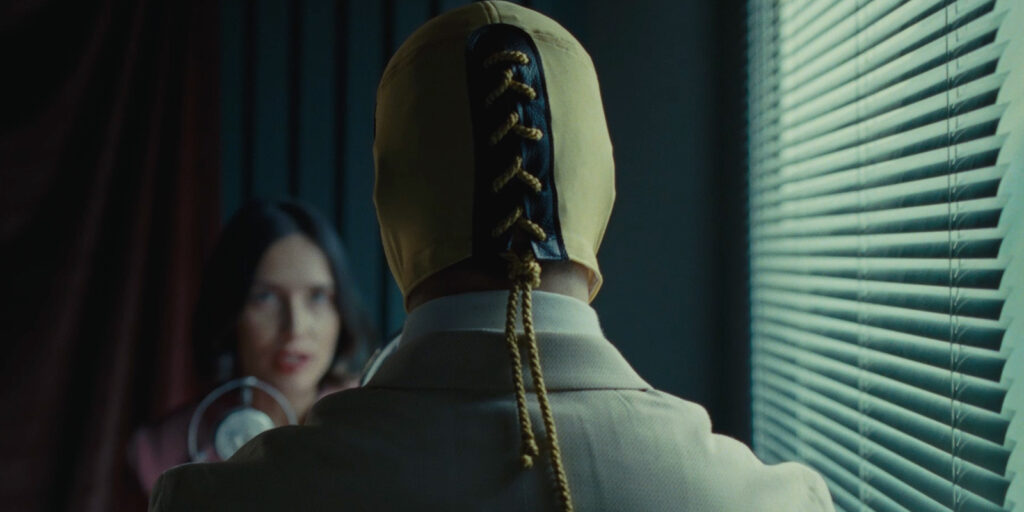
Thankfully, we had the amazing costume designer Akaibi Vine on board, who we worked with on our first-year film. She recreated the masks the night before we rolled, matching the details with a level of accuracy we absolutely didn’t expect given the time she had. She essentially saved the day. The official masks arrived later during the shoot and looked nearly the same. It actually felt pretty natural that a wrestler might have a couple of similar masks.
We also found little happy accidents along the way. While setting up a 90-degree “flat” shot, I noticed the rotation into that angle actually felt more interesting than the static frame we’d planned. So we leaned into it and let that movement become part of the shot. It flowed nicely into the beat and felt more alive than what we originally storyboarded.
How do you balance artistic vision with practical constraints on short film productions?
From the start of the journey I knew we had to be honest about what was actually achievable with the resources we had. On El Corazón, that meant shaping the look around what we could do well. So we leaned into stylisation, using shadow, colour and mood to build a space we could never afford literally. A lot of that came from clarity in prep so we tightly shotlisted, rehearsed, pre-visualised, and made a clear plan for how we were going to use the film stock so we wouldn’t burn through it and hit any walls.
I’ve always loved the process of finding creative workarounds, and a lot of the signature elements of the film – the black void, the projector trick, the faux cinema room – came from those limitations. They ended up strengthening the storytelling rather than feeling like compromises.
Close collaboration played a huge role in finding that balance. Being aligned as a whole team meant we could commit to ideas that were bold but still realistic for our resources. When everyone carries the same vision, it becomes easier to prioritise the shots that actually serve the emotional spine of the film and let go of the ones that don’t. I try to focus on what will land emotionally rather than what looks expensive – sound, movement, colour, and performance can often carry more weight than scale or spectacle. For me, the trick is accepting the constraints early and then designing a visual approach that thrives within them, rather than trying to fight them.
What does this recognition from the BSC mean to you personally?
This recognition from the BSC honestly means a lot. I’ve been fortunate enough to meet a number of BSC members over the past few years, and I really admire their work and the level of craft they operate at. To have a film I shot show up on their radar feels a bit surreal and it feels like a small step toward the standard I’ve always looked up to. You spend a lot of time stressing over the different elements just trying to make the world feel real – so it means a lot when people you admire pick up on that.
And to have the support of ARRI and The Look attached to the prize made it feel even more special – it’s really encouraging to know that companies you’ve respected for so long are backing emerging cinematographers.
What advice would you give to emerging cinematographers entering competitions?
I think the biggest thing is not trying to second-guess what a panel wants and make the film you actually care about, I feel like that always shows on screen. Keep the idea manageable so you can execute it properly, and prep as much as you can, whether it’s through referencing, pre-vis or whatever helps you walk onto set with clarity. If you’re working with limited resources, I might suggest leaning into those constraints and turning them into part of the style. Also, communication. One thing I’ve learned is that being upfront with your team really helps. When everyone feels included, the trust builds naturally.
What’s next for you in terms of projects?
I’m currently developing something with Oscar, which is a bit of a new chapter for both of us and something we’re genuinely excited to build out. Alongside that, I’m still shooting shorts and commercials, picking things up based on what feels creatively alive rather than the category they sit in. The plan is to keep learning, keep experimenting, and keep working with people who push me in good ways! I do want just want to say a huge thank you to Stuart Harris BSC, Oliver Stapleton BSC and Duncan Bruce for their guidance throughout my time at NFTS. Their support has shaped so much of how I approach this craft.
Are there particular genres you’re eager to explore cinematographically?
I’m not fixed to any one genre, really. What excites me is the chance to build a world and push a visual language in a direction that feels fresh. I’m drawn to projects that mix grounded emotion with a bit of stylisation, whether that’s in drama, action, or something more surreal. Anything that gives room for texture and atmosphere instantly grabs me. I’m also curious about stepping into genres I haven’t touched yet, mostly for the challenge of figuring out my own way of approaching them.
Linda Wu, Flock – Cinematography in a Short Film (BSC Club)
What was the pivotal moment that made you choose cinematography as your career?
Growing up, I always loved films but I didn’t think working in the film industry was something I could do. As an Asian woman, I never saw people who looked like me working behind the camera. I didn’t even know what a cinematographer really did until I went to film school. I had an interest in photography as a hobby, so when I ended up on a film set for the first time, and saw the cinematographer in action, it clicked for me that that was what I really wanted to do.
How did you first get involved with your award-winning film?
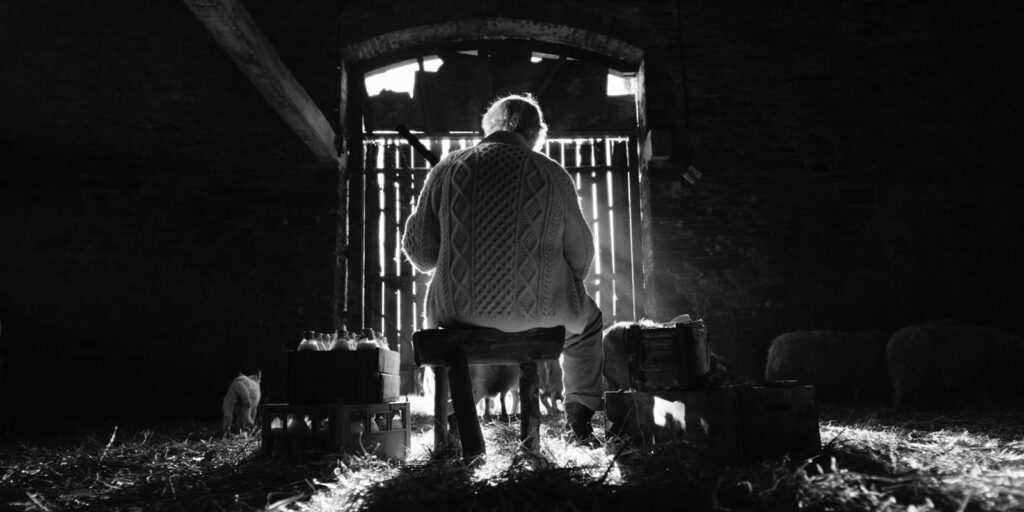
The producer Matt Ashwell first sent me the script and pitch for the film in autumn 2023. I loved the project from the moment I read it and loved the visual direction the director, Mac Nixon, wanted to take it in. I had a first interview with Matt and Mac where we really clicked over the kind of striking black-and-white imagery we wanted to create in this film. It was exciting for me to take on a project with such a strong visual identity from the script stage.
Please share an outline of the film’s narrative concept.
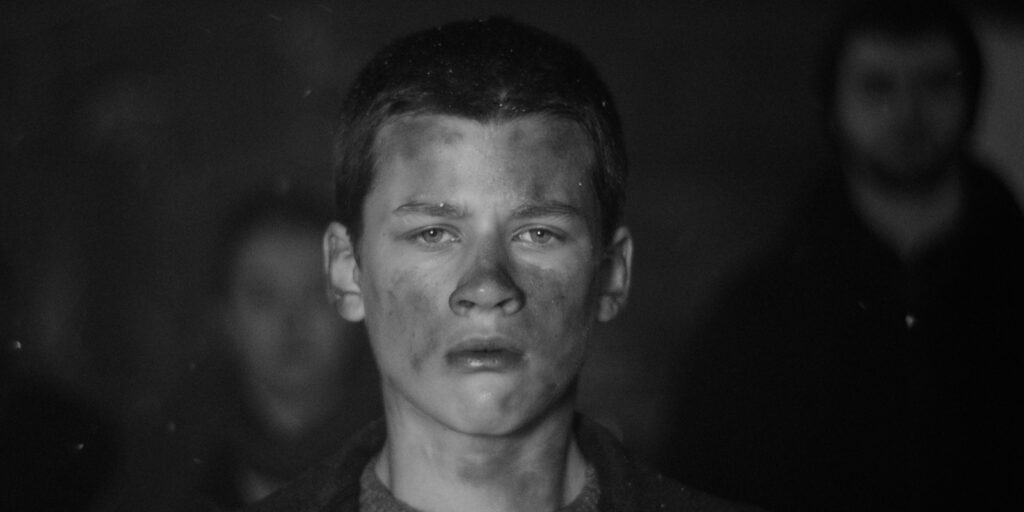
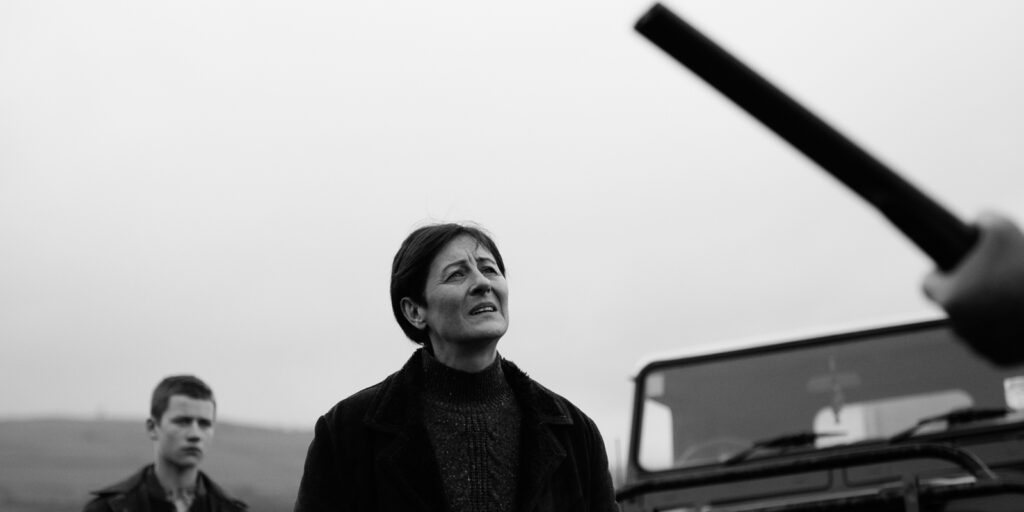
The film is about a small, remote farming community which is turned upside down when their entire sheep population mysteriously vanishes. This sparks panic, suspicion, and unrest amongst the villagers. Three key figures become the focus of the ensuing madness: a reclusive elderly shepherd who miraculously still has his flock; a grieving and volatile farmer whose livelihood is in free-fall; and her son, a young farmhand, caught between the two. As the community spirals into a frenzy, fear gives way to fury, and long-held tensions and a mob mentality surface. What begins as a search for answers quickly descends into scapegoating and violence. The shepherd becomes a target of growing paranoia, resentment and greed. Torn between survival and empathy, the young farmhand must decide where he stands: whether to follow blind loyalty or his conscience.
What drew you to this particular story?
I’ve always been drawn to stories about community vs the individual; about the struggle between belonging to the pack and straying from it. I grew up as a third culture kid caught between my Chinese heritage and growing up in America. Having now moved to the UK, I have also found myself trying to adapt to somewhere new. I’ve often struggled to find my place and where I fit in; feeling a push pull between fitting in with the group and being my own individual. Mac’s vision for the film — a stark monochrome world — was also a big draw. I immediately thought of the work of documentary photographers such as Chris Killip and Don McCullin, whose work I really admire, and became reference points for this film.
Can you describe the visual language you wanted to create for the film?
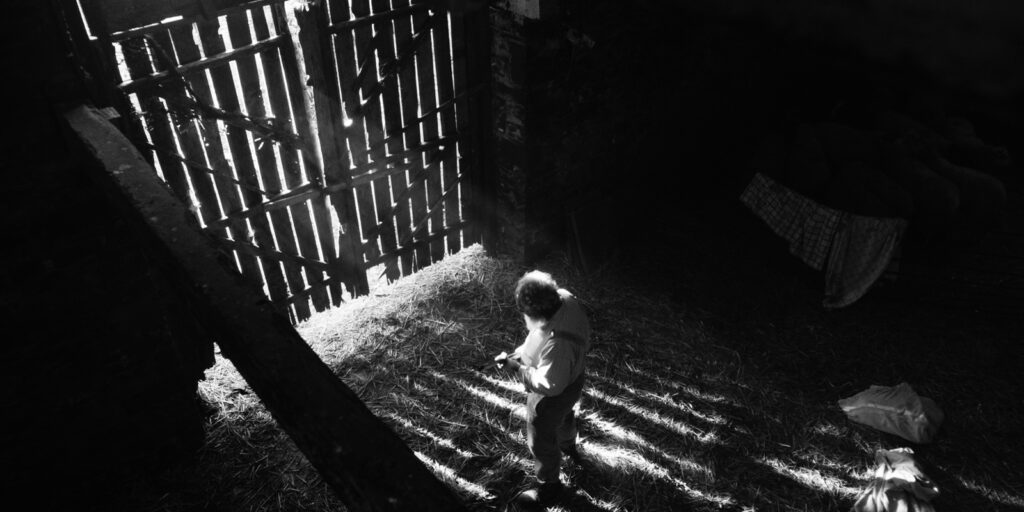
I wanted to create a visual language that would showcase the unspoken turmoil of our ostracised shepherd and his relationship with the rest of the community. There isn’t much dialogue in Flock, so I knew that the visuals needed to be strong to convey the rich world that was in the script. Before our shepherd locks himself in the barn, I wanted the world to feel open and expansive, but in a way that felt frightful to our protagonist. Once he’s locked in his barn, I wanted the visuals to mirror his slow decline into paranoia: transforming a place that was meant to feel safe into a prison. When it came to shooting the villagers, I wanted to create a visual language that communicated how the shepherd saw them: a pack that he was not apart of, but equally one he didn’t judge for their behaviour in the face of deprivation and fear.
What was the most challenging sequence to shoot?
The most challenging sequence to shoot was the opening of the film. Mac had envisioned and scripted the sheep disappearing as a oner. The plan was for a seamless one shot to follow our young farmhand away from a flock, before returning to an empty pen and the realisation that all the village’s sheep have vanished. Our plan was to create a complex but repeatable camera move, so two takes could be stitched together: one with sheep and one without.
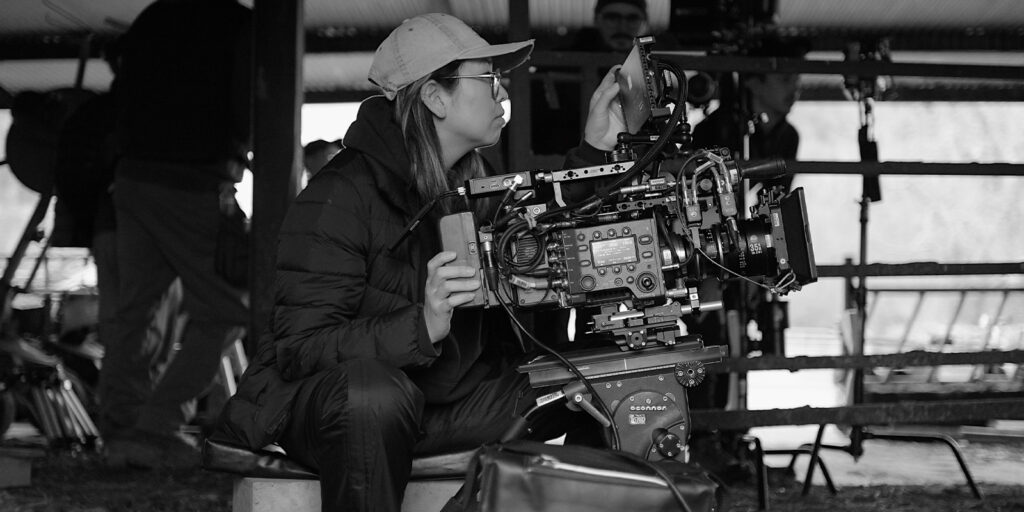
The challenge became how to pull this off with limited time and resources. I knew we would need a track, a jib, and also some kind of three axis head, but I wasn’t sure this would be possible with our resources. Lee Brown was already on board as our Trinity operator. I spoke with him about the opening shot and he mentioned that his Trinity 1 could be used as a three axis head with wheels, all tech’d by Optical Support. I then spoke with Pat Gillespie, our key grip, about putting this on a jib and track. We had originally blocked out half a day for the opening as I knew we would require a fair few rehearsals and takes. Thankfully, Lee is a brilliant operator who worked together seamlessly with Pat get the shot on take 11.
What camera and lens package did you choose and why?
I chose a Sony Venice 1, a set of Leica Summilux-C lenses, the Petzval 58mm and 85mm, and the 50mm Canon Rangefinder “Dream” lens. I chose the Sony Venice as I knew the dual base would be ideal for the amount of night work we had. The film was always going to be in black-and-white. Mac and I talked a lot about the kind of monochrome look we wanted to create. Although the film is set in a nondescript time period, we didn’t want it to feel like we were trying to emulate vintage black-and-white cinema. We wanted to create a a striking high-contrast look that embraced the modern. I wanted lenses that had a bit of character but would also hold up well wide open as I knew there would be a lot of night work.
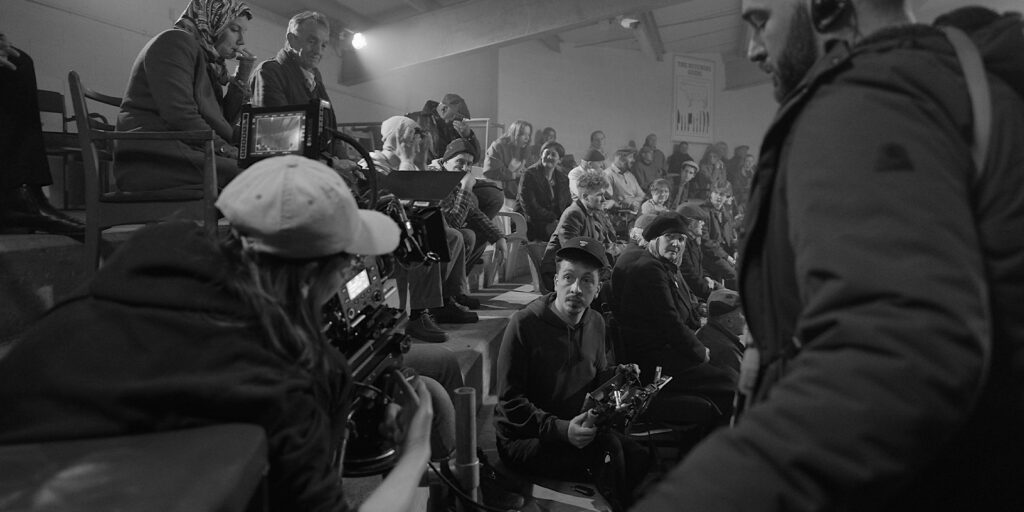
After testing different sets, I settled on the Summilux-Cs, which have just enough character but still maintain a beautiful optical sharpness without feeling clinical. The Petzvals and Canon became our “specials” for the moments of nostalgia when the Shepherd thinks warmly of the community as his psychosis deeps and he yearns to feel included.
How did your technical choices shape the film’s visual identity?
Looking at the photography of Killip and MuCullin, I wanted to create a rich, stark, high contrast black-and-white look. The latitude of the Venice allowed us to light the scenes with the high contrast we wanted. Working with my gaffer, Mark Lane, we lit each scene to have the full range of tones — rich blacks and bright highlights. The Summilux-C lenses enhanced this look as they’re quite crisp, which meant that we had great tonal separation and sharpness. This added to the high contrast black-and-white look we were going for. In contrast, my use of our ‘special’ lenses created a softer black-and-white look, which was fitting for the shepherd’s moments of nostalgia and delusion.
What was your collaboration process like with your director?
My collaboration process with Mac was close and thorough. We had a few months before the shoot to really go into the script in depth. We went through every scene, talking about what Mac envisioned and what we needed to convey story wise. We looked at loads of references as Mac had some specific shots in mind that he wanted to recreate. We spoke extensively with the team at InCameraFX who were doing the internal organ sequences and looked at many tests to pinpoint exactly what we wanted those to look like. Mac and I did a fair few recces with Ella our production designer so we could all be aligned on what we needed to see on screen to sell the world. By the time we got to set I didn’t feel like there was a stone we’d left unturned.
Can you describe a moment on set where you had to improvise due to unexpected challenges?
Our last day in the barn was absolutely stacked and we had run into some difficulties when it came to rigging our big stunt, the shepherd’s lynching, and were running behind on time. The sequence when the community bursts through the barn was written as two separate scenes and was never planned as handheld. On the day Matt, our producer, pulled us aside and asked if we could potentially combine the scenes. We all decided that if we did it handheld we could flow the scenes together. Creatively, the handheld ended up visually emphasising the shepherd’s isolation being invaded by the villagers.
How do you balance artistic vision with practical constraints on short film productions?
Balancing artistic vision with practical constraints is a constant challenge on short film productions. I always try to understand what a director wants to convey visually — the ideas, the story beats, the emotions — so if we can’t do the exact idea they have in mind because of practical constraints I can offer alternatives that creatively achieve what they are looking for.
What does this recognition from the BSC mean to you personally?
This recognition from the BSC means a lot to me personally. It’s a nice feeling to know that my hard work has been seen and celebrated. Above all, as someone who didn’t think there was a place for them in this industry, this recognition shows me that BSC cinematographers — who I respect and look up to — think that I belong in this industry and that there is a place for me in it.
What advice would you give to emerging cinematographers entering competitions?
Shoot, shoot, shoot! Keep shooting. It’s important to learn what you like and don’t like and what works and doesn’t work for you as a cinematographer. Never be afraid to try something new — if it doesn’t work it doesn’t work, it’s not the end of the world. The more you learn about yourself and what you like creatively the more expressive you can be in your work.
What’s next for you in terms of projects?
Next I’m hoping to make the move into long form. I’ve been doing a lot of second unit and B camera operating on features recently. I have also shot some proof of concept shorts which now have some feature murmurings around them… so there are some things brewing. In the meantime I’ve got some music videos on the horizon and some shorts that are gearing up to shoot next year.
Are there particular genres you’re eager to explore cinematographically?
Cinematographically, I would love to shoot a heist film, an action movie, or a fantasy film. I love action films. I grew up watching them with my dad and have always thought they would be an exciting challenge to shoot. I also love heist films — Ocean’s Eleven was always on the telly when I was a kid, so I’ve seen that one over a dozen times. They’re such fun ensemble films, I would love to have a go at shooting one. I also love The Lord of the Rings — my brother showed them to me when I was a kid and I was obsessed so it would be a little childhood dream to shoot a fantasy film like that.