

The newest cohort of Full and Associate members of the BSC have been revealed. Learn more about the accomplished cinematographers and camera operators who have been invited to join the society.
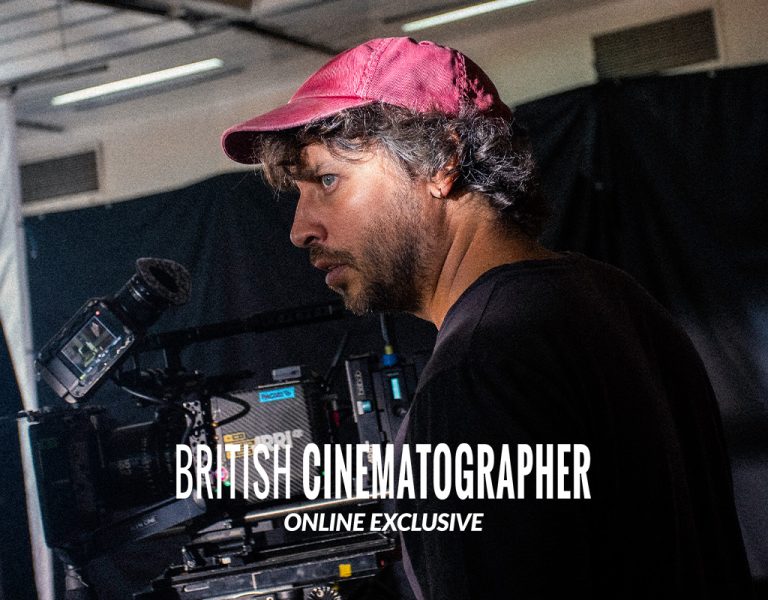
Aaron Reid BSC
Selected credits
Supacell; The Walk-In; A Town Called Malice; Britannia
Impact and influence: Could you share an example of a project or filmmaker that’s had a profound influence on your work?
I’m a huge admirer of Khalil Joseph—his work deeply inspires me, especially his music videos and commercials. I’m constantly drawn to his unique visual style and storytelling approach. The way he frames and captures scenes has been a big influence; I often find myself referencing his pieces when developing my own shots.
Life lessons: What has been your biggest learning curve to date?
One of the biggest learning curves I’ve experienced was learning to shoot on film. I was introduced to it in film school, and transitioning from having no experience with celluloid to understanding how to properly expose it was both challenging and incredibly rewarding. It’s a thrilling process—there’s a rush that comes with shooting on film—but it definitely requires a steep learning curve.
Another significant adjustment has been moving from short-form content like music videos and commercials to long-form storytelling in film and TV drama. After spending years working in short-form, stepping into long-form was a major shift. The scale of production increases dramatically, the pace and volume of shooting intensify, and the amount of information you need to process grows substantially. My first show was a real baptism by fire, and it marked a steep but invaluable learning experience.
Challenges and learning: What’s been the most challenging aspect of your career thus far and how did you overcome it?
The greatest challenge of my career so far has been staying relevant in an ever-evolving industry. Cinematography is constantly shifting—styles, technologies, and audience expectations change with time. To keep up, I’ve had to reinvent myself every few years. But that kind of growth only comes from staying curious and committed to learning and being a student of the craft which is a lifelong pursuit.
Collaboration: Can you describe a memorable collaboration with a director that significantly changed the outcome of the project?
One of my most memorable experiences working with a director was filming A Town Called Malice with director Joasia Goldyn. We were presented with an incredible road—about three or four miles long—offering a variety of terrain perfect for multiple scenes. The catch? It was located in one of the windiest spots on the island of Tenerife, Hermano Pedro, a place renowned as one of the top five windsurfing destinations in the world.
Understandably, production was hesitant. The risk of sudden weather changes, especially at night, made them wary of filming there. But we couldn’t let it go. The location was too good—visually stunning and full of cinematic potential. With persistent persuasion and rigorous planning, we managed to get the green light. To secure approval, we spent weeks on location meticulously planning every shot, mapping out a detailed walkthrough to present to the producers.
The scenes we filmed were some of the most demanding—intense drama mixed with technically challenging sequences: car-to-car shots, nighttime chases, and even a crash scene involving lighting cranes and tracking vehicles. It was a gamble, but one we fully embraced. We shot over three days, capturing scenes in daylight, during sunset, and at night. And we nailed it. The result elevated the production value of our episodes significantly.
Technical innovation: Are there any new tech technologies or techniques in cinematography you find particularly exciting or game changing?
Lately, I’ve become really excited about the Nanlux light range, especially the 5000B and 2000B models. They’ve proven to be excellent alternatives to traditional HMIs—truly a game changer that’s not only powerful but also more environmentally friendly.
BSC membership: What does becoming a BSC member mean to you?
Becoming a BSC member is a milestone for me. It’s something that I’ve worked towards my entire career. It’s my greatest achievement so far.
Words of wisdom: What is your advice to others at the start of their career with ambitions of becoming a BSC member?
For those aspiring to become members of the BSC, my advice is simple: continually hone your craft, stay focused and keep shooting, embrace every opportunity to learn, and never stop growing.
Ben Richardson ASC BSC
Selected credits
1923, 1883, Mare of Easttown, Wind River, The Fault in Our Stars, Beasts of the Southern Wild
Training/education
A BA Media Arts program in the UK. It was a great foundation for learning, but wasn’t as vocational as I was craving. I spent all my spare time poring over books like Masters of Light, and visiting cinemas and museums. I met some like-minded friends, and we spent whatever we could afford on Super-8 film and plywood to build small sets. We lit them with 500W work lights from B&Q, and just started figuring it out on weekends.
Influence and impact: Could you share an example of a project or filmmaker that has had a profound influence on your work?
Watching Dog Day Afternoon in an after-school film class organised by my theatre studies teacher was a revelation to me. It was just the most beautifully shot, beautifully constructed and acted film, but very real and raw. Quite unlike the films I had been exposed to at that age. It felt like everything was truly spontaneous, the camera wasn’t leading you, it was observing along with you. I loved that feeling of discovering the story through the cinematography, not just being shown it.
Life lessons: What has been your biggest learning curve to date?
That saying something out loud doesn’t mean it has been heard. Even more so in the creative space where feelings and ideas rule over data, it’s crucial to work on communication. If you want others to help you execute the idea in your head, or you want to truly understand the ideas in a creative partner’s head, you have to be humble and open in your communication. If people misinterpret what you thought was clear, be open to the possibility that it’s how you’re communicating which is at fault.
Challenges and learning: What has been the most challenging aspect of your career thus far, and how did you overcome it?
Honestly, getting my “break” was the longest journey I had. I didn’t have any connections to the film industry, I didn’t live in a film town, and I just couldn’t seem to find a way in. I worked a variety of “day jobs” for a decade, but continued seeking opportunities to shoot whenever I could, shorts and music videos, and some stop-motion animation I’m very proud of. I was lucky enough that some of them took me to festivals. And over time, I started to meet people with a similar aesthetic and ambition, which finally led to meeting the director and producers of my first feature (AND managing to convince them—without a meaningful resume—that I could shoot it!).
Future trends: How do you see the role of cinematography evolving in the next decade, and what excites or concerns you about these changes?
I feel that what we do with a movie camera is a direct descendent of painting, and theatre, and photography, and all the narrative mediums that have come before. And I truly believe that the goal of all those mediums—including ours—is communication more than just entertainment. The best films help us explore and understand what it means to be human, what our experience of being on this beautiful rock in space is or can be about. And I think preserving that unfiltered photographic connection to real humans—real experiences—is critical. With machine learning advancing at a breakneck pace, I think cinematography needs to re-focus on the humanity of the work, on our collective experience of living. I love action, and fantasy, and creative invention as much as anyone, but at its core, cinematography needs to stay committed to the art of human storytelling. Keep your eyes open, feel, breathe, look at the pain and the joy of your fellow humans, and try to find ways to bring that to the screen honestly.
Collaboration: Can you describe a memorable collaboration with a director or fellow cinematographer that significantly impacted the outcome of a project?
I feel like I’ve been blessed with so many great collaborators, it’s hard to single one out. I’m not sure I can point to any one “ah-ha” moment, it’s always been about putting in the work. I do love learning the point of view of my directors, understanding how they see their story being told. But I’ve also often joked, the production designer is your best friend on set (without them you’ve got nothing to point the camera at), and the editor is your best friend in post, because if you give them the right options, they can hide or disguise the times you maybe missed the mark!
Technical innovation: Are there any new technologies or techniques in cinematography that you find particularly exciting or game-changing?
The most exciting thing to me is the sheer breadth of options available to cinematographers today, especially at lower budget levels. We all know the tools are just tools (which I know is easy to say when your day-to-day kit is the Alexa 35 and a set of Summilux lenses – sorry not sorry!), but there are options today available to almost everyone that would put the technology used to shoot Mean Streets to shame. I’m very excited to see what young cinematographers do by taking those accessible tools and focusing their attention solely on what’s in front of the lens. That’s where the real game-changing will come from.
BSC membership: What does becoming a BSC member mean to you?
Stumbling around the edges of the North Circular in the late 1990s with an SRII and a set of Ronford legs, I couldn’t imagine how I would ever bridge the chasm between myself and the members of the BSC. Turns out that bridge is just committing to the craft, absorbing the lessons of those who came before, and putting the work of cinema front and centre in your life, for as many years as it takes. I couldn’t be more honoured to be invited to membership. Plus it’s made my mum’s year.
Words of wisdom: What is your advice to others at the start of their career with ambitions of becoming a BSC member?
Find your own way. Study the work of, and learn from those you admire, but don’t just seek to emulate them. Look at what moves you in the films you love, and research and understand how the filmmakers crafted those moments. And above all, stay present on the shoot day, no matter how well prepped you are. Planning is essential, but a spontaneous reaction to what’s happening in front of you can often be more meaningful than something you preconceived weeks or months ahead of the day.
Catherine Derry BSC
Selected credits
A Thousand Blows (Disney, S1 Block 1); The Great (S3 Blocks 1,3,5); Industry (S1); Unchosen (Netflix) (S1 Block 1/to be released 2026)
Training/education
I took a degree in stills photography at what was Central London Polytechnic (now University of Westminster) and then trained on set at Rushes Motion Control, starting as a runner and then as a camera assistant on 35mm film. I eventually left to go freelance as a clapper loader and worked my way up through camera departments from there.
Influence and impact: Could you share an example of a project or filmmaker that has had a profound influence on your work?
One of the projects that had the most influence on me was working as focus puller on the film Eastern Promises. Watching David Cronenberg and Peter Suschitzky ASC collaborating really was a privilege, especially the way they went about blocking scenes. Using a dance floor with a dolly was also very new to me back then.
Life lessons: What has been your biggest learning curve to date?
I’d say my most challenging learning curve was lighting big sets. Although the principles are the same, the jump from the smaller sets I’d been working on to huge outdoor sets like the one we created on Disney’s A Thousand Blows is huge, but also turned out to be one of the most satisfying aspects of the project.
Challenges and learning: What has been the most challenging aspect of your career thus far, and how did you overcome it?
If I’m really honest, the biggest challenge has been personal — being a single mum with two young children while working my way up through what has been (at least until recently) a pretty unsympathetic and unaccommodating industry for women. I was unable to take longer jobs, particularly outside London, but I honed my DP skills on a mix of short-form work and occasional dramas. Once the kids got older I was able to take on bigger projects but it’s been tough, no two ways about it.
Future trends: How do you see the role of cinematography evolving in the next decade, and what excites or concerns you about these changes?
Obviously technology is evolving rapidly and this will have a big impact on crew roles as we shoot. As AI tech takes over (or at least significantly reduces) camera team numbers and the role of DP shifts towards a merger of live shooting and on-set post, things are going to change significantly. For me personally, collaboration with my crews is one of the most rewarding and enjoyable aspects of the work, so this obviously is a concern, as much as I love the idea of what the tech also makes possible.
Collaboration: Can you describe a memorable collaboration with a director or fellow cinematographer that significantly impacted the outcome of a project?
In season three of The Great I worked with director Jaffar Mahmood and a brilliant art department to create a scene involving action taking place on a frozen lake, which we actually shot in Sevenoaks in the middle of summer! Working with the VFX team we came up with a plan involving carefully chosen angles, snow-dressed trees and blue walking boards laid across a mowed grass field. It worked out beautifully — a great team effort.
Technical innovation: Are there any new technologies or techniques in cinematography that you find particularly exciting or game-changing?
LED lighting continues to be a game-changer, opening up the options for location work. Looking forwards, virtual locations and the possibilities of what we can create in the studio with emerging tech is exciting, although once again I love travelling and working with large crews on location, so obviously have mixed feelings about this too. I find AR interesting and I have had some enjoyable experiences in virtual production, but the area I am most interested in is large format like IMAX, which is advancing rapidly.
BSC membership: What does becoming a BSC member mean to you?
I’m really delighted for all kinds of reasons to be welcomed into the BSC. It’s always great to have your hard work and commitment recognised, and I feel honoured to have the letters after my name. There’s an added dimension for me too, which is that it’s also about the increasing recognition being given to female talent in the industry. I feel very happy to be joining the growing number of women BSC members.
Words of wisdom: What is your advice to others at the start of their career with ambitions of becoming a BSC member?
This is a little uncomfortable to say, but given the tech and economic convulsions that we’re already starting to see in film production I don’t honestly think anyone can predict what the life and work of a DP will look like in 10 or 20 years. But what I can say is that the ability to adapt and re-invent yourself as both artist and technician is going to be more vital than ever. And also, whatever happens with technology, that film has and will always be a human, collaborative process, so the ability to bring passion, inspiration and sensitive leadership onto set will never stop mattering.
Christopher TJ McGuire ASSOCIATE BSC ACO SOC
Selected credits
Bad Boys: Ride or Die, Blue Beetle, Venom 1 & 3, Terminator: Dark Fate, Jason Bourne, Detroit, Pitch Perfect Trilogy, True Detective S1
Influence and impact: Could you share an example of a project or filmmaker that has had a profound influence on your work?
Geoffrey Unsworth OBE BSC’s masterful cinematography in A Bridge Too Far and Alex Thomson BSC’s fantastical work in Labyrinth and Legend deeply inspired me as a young man. Their ability to craft the epic, emotionally charged visuals with precision and elegance sparked my fascination with storytelling through the lens. Watching their work made me realise the power of cinematography in shaping narrative, both in reality and fantasy ignited my ambition to try to follow in the footsteps of a them as true visual pioneers.
I was extremely privileged to have met Alex Thomson BSC a few times and lucky to have gotten him to sign his amazing book Outstanding Stills.
Watching Platoon, directed by Oliver Stone and shot by the brilliant Robert Richardson ASC, was the moment that truly sealed my fate—it nailed the coffin shut on any doubt I had about pursuing a career in the camera department. The raw, visceral cinematography pulled me into the heart of the story, showing me how the camera could do more than just capture images—it could evoke emotion, tension, and truth. Richardson’s bold use of light, movement, and perspective made me realise the camera operator’s crucial role in shaping a film’s visual language. From that moment on, I knew I wanted to be part of that process—to help bring powerful visions to life and contribute to the storytelling magic of cinema.
Working recently with Fabian Wagner ASC BSC on Venom: The Last Dance, Sam McCurdy ASC BSC on Peacemaker, and Daniel Mindel ASC BSC SASC on Godzilla x Kong has been a powerful reminder of my roots and evolving place within the British film community. Collaborating with such visionary DPs not only sharpened my technical and creative approach, but also made me deeply aware of the shared language, trust, and camaraderie that define our industry. These experiences reconnected me to the core of why I entered this world—to be part of a collective that values storytelling, craft, and collaboration. It affirmed that my journey isn’t just a career, it’s a contribution to a legacy I’m proud to be part of.
Collaboration: Can you describe a memorable collaboration with a cinematographer or fellow camera operator that significantly impacted the outcome of a project?
Working with Barry Ackroyd BSC on Jason Bourne and Detroit was a transformative experience—it truly opened my eyes to the power and precision of handheld camera operation. Barry’s instinctive, immersive style taught me how handheld work could elevate storytelling, creating urgency and intimacy in a way no other technique could. I was equally fortunate to have worked alongside incredible talents like Mike Proudfoot Assoc. BSC ACO, David Morgan, Alf Tramontin Assoc. BSC, and Simon Finney Assoc. BSC ACO, among many others on the Harry Potter films. Each brought their own artistry and dedication to the craft, and being part of that team was not only a privilege but a masterclass in filmmaking that continues to influence me to this day.
Working in tandem with Alf Tramontin on the third act of Harry Potter and the Deathly Hallows: Part 2 was an incredibly defining moment for me that has stayed with me throughout my career.
Technical innovation: Are there any new technologies or techniques in cinematography that you find particularly exciting or game-changing?
I’ve been incredibly lucky to be involved with some of the industry’s most exciting innovations, including the MK-V Revolution and the Stabileye. These groundbreaking tools pushed the boundaries of what was possible in camera movement, and being part of that evolution was both inspiring and humbling. Working alongside visionary directors of photography like Julio Macat ASC, Geoff Boyle NSC FBKS, Henry Braham BSC, Matthew Libatique ASC LPS, Daniel Mindel ASC BSC SASC not only expanded my technical understanding but also reinforced the importance of collaboration and trust in the creative process. Their openness to experimentation and drive for excellence made these innovations more than just technological leaps—they became key parts of how we tell stories more dynamically than ever before.
BSC membership: What does becoming an Associate BSC member mean to you?
My first love is cinema. To have been able to forge a decent camera operator career in this industry on both sides of the Atlantic always amazes me and I count myself lucky to have had the opportunities that have come my way. I have and will continue to be proud of my British heritage and the love of the British motion picture industry, being seen worthy enough to be considered an Associate BSC member by the world esteemed organisation of the British Society of Cinematographers has been a dream come true.
Words of wisdom: What is your advice to others at the start of their career with ambitions of becoming a BSC member/Associate BSC member?
Gaining as much on-set experience as possible is absolutely paramount to becoming a good camera operator. No amount of theory or technical reading can replace the real-world lessons learned by physically being in the thick of a working set—observing, adapting, and absorbing the rhythm of filmmaking.
Each shoot, whether it’s a high-pressure live event, a quiet observational documentary, or a tightly choreographed feature film, brings a unique set of challenges and dynamics. Working across a wide variety of genres allows an operator to develop a versatile visual language. For example, live music teaches you anticipation and reactivity, drama emphasises emotional framing, and documentaries sharpen your ability to work instinctively and unobtrusively. The more diverse your experience, the broader your toolkit becomes.
Equally important is the ability to listen—really listen—to those around you. Directors of photography, grips, gaffers, 1st ACs, and fellow operators all have something to teach. Being open to advice, asking thoughtful questions, and absorbing their feedback builds not only your skillset but your credibility and reputation. The industry values humility and collaboration just as much as technical know-how.
And above all, patience is critical. This industry isn’t built overnight. Developing into a great operator takes time—time to learn, time to fail, and time to improve. Rushing through the process can leave gaps in your foundation. Instead, focus on building it brick by brick: one set, one shot, one lesson at a time. When you combine hands-on experience, a willingness to learn from others, and patience in your own development, you create a foundation strong enough to carry you through a lifelong career in cinematography.
Jamie D. Ramsay BSC SASC
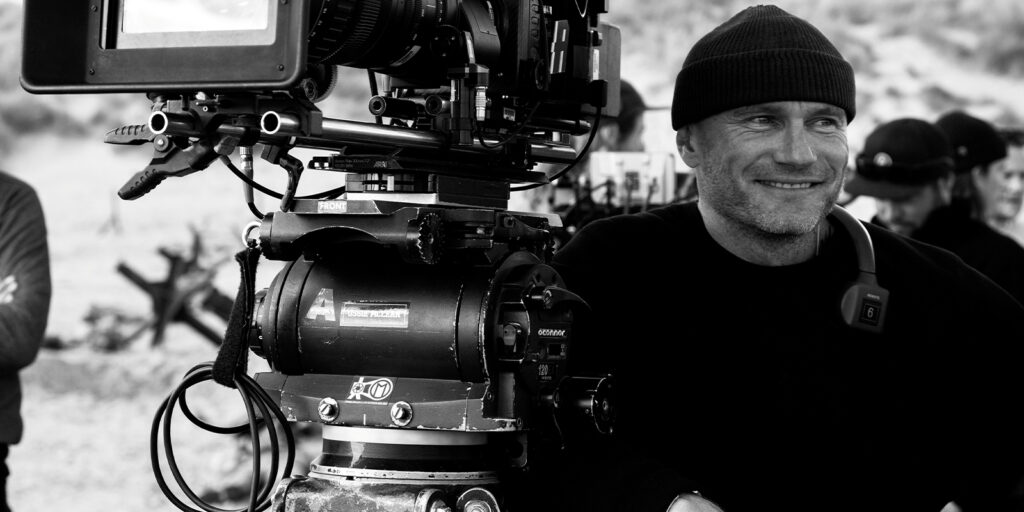
Selected credits
All of Us Strangers; William Tell; See How They Run; Living; Mothering Sunday
Training/education
Four-year honours degree at the Academy of Film and Dramatic Art in Johannesburg, South Africa.
Impact and influence: Could you share an example of a project or filmmaker that’s had a profound influence on your work?
I think my early years at film school were largely my formative years in terms of the early impact of cinematic art. When I started my journey at film school I began to look at film differently. With an eye that was in awe of the image and the potential of how imagery can become a character that makes one feel. At the time there was a stirring in the Latin film world that hooked me. The first time I watched Amores Perros it was as if a fire was lit inside of me. The distinct visceral handheld style with the dirty lighting and locations made me truly feel as if I was there.
Life lessons: What has been your biggest learning curve to date?
Growing up in a time in Johannesburg South Africa where one was forged in a fire of ultra masculinity. Where fragility and softness were whipped out of you at school. One of my greatest life lessons was to learn how to break these walls down and allow the quiet and gentle to be as powerful as the chaos. Realising that creativity can only blossom when this part of me would be in balance.
Challenges and learning: What’s been the most challenging aspect of your career thus far and how did you overcome it?
One’s growth as a cinematographer forces you to go through times of shedding and growth. Where you reach points in your career where you have to sacrifice so much in order to make the big steps forward. I started in feature films very young and when I began to find my voice I realised that one of the most valuable decisions a creative makes is the choice of the next project you take. This decision came at a time where I had no financial padding and relied entirely on my projects job to job. Saying no to average scripts was the most expensive choice and there were times of real hard struggle which induced doubt in my mind. My learning from this was even in the darkest of times, let that fire inside pull you through. Never ever give up.
Future trends: How do you see the role of cinematography evolving in the next decade, and what excites or concerns you about these changes?
I’d like to think that the art of cinematography will hold its relevance indefinitely but one can’t ignore the encroaching aspects of AI. But like any creative pursuit, one cannot allow fear to invade your flow. My approach is to embrace the all new technology and make it work for me. And if we ever do get to a point where we as humans face redundancy then we stand together to force a change.
Collaboration: Can you describe a memorable collaboration with a director that significantly changed the outcome of the project?
The majority of my early work was with the director Oliver Hermanus, and it was during this partnership where I realised the value of a deep creative bond with your director. When the shorthand becomes so intuitive that you are able to open the gates and truly flow the creative spirit. This relationship showed me that a great director creates a space for you to reach your true potential.
Technical innovation: Are there any new tech technologies or techniques in cinematography you find particularly exciting or game changing?
I am really excited by the evolution of LED technology. To have the ability to have your entire lighting design plugged digitally to a desk or iPad makes the process of shaping a scene with tone and colour such a dream.
BSC membership: What does becoming a BSC member mean to you?
As a young and hungry DP in film school we would spend hours in the library reading British Cinematographer magazine and dreaming of one day being a part of the society. It was one of my life goals and one of my dreams come true. To be part of a community of talent that has shaped my view on life through the lens is a true honour.
Words of wisdom: What is your advice to others at the start of their career with ambitions of becoming a BSC member?
To any young creative entering the journey that is the path of a DP, I would say that you must fight to find your spirit, your voice, your own attitude. And once you have an inkling of what that is, never let it go. Always make the choices that come from your own intuition. Feel, don’t think.
Joe Russell ASSOCIATE BSC ACO
Selected credits
Masters of the Universe; Star Wars: Andor S2; House of the Dragon S1; Killing Eve S1-3; The Diplomat S1; Silo S2; Sherlock S3/4; The Tunnel S1-3; Black Mirror; Wallander S4; Luther S3
Training/education
I did a largely practical Film and Video degree at The Surrey Institute of Art and Design, (now UCA) graduating in 2000, and after a year or so of odd-jobbing and helping out on short films and music videos, started working for a camera and lighting rental company called TX at Shepperton Studios, where I would be sent out to assist on various documentary productions, before being sent up to more permanently camera assist for the drama department at BBC Birmingham.
Impact and influence: Could you share an example of a project or filmmaker that’s had a profound influence on your work?
Someone who was a huge influence on me in my teenage years, and who was my gateway into a lifelong love for cinema and cinematography, was Martin Scorsese. I remember doing my A Level Art personal study about three of his films, and it was Raging Bull in particular that really sunk its claws into me. I had been learning to develop my own black-and-white stills in the dark room, and I remember thinking that one day I’d love to be a street/documentary photographer as I loved all the obvious big hitters like Cartier-Bresson and Robert Frank. And then I discovered Scorsese and it opened up a whole exciting new world. I love that he’s still going strong and continuing to make some of the best movies out there!
Life lessons: What has been your biggest learning curve to date?
My biggest learning curve was probably discovering that the learning curve never really ends! Every day on set presents a new challenge and often a new discovery.
But the curve was probably at its steepest when I was first given the opportunity to operate back on the show Doctors in around 2002/3. I would work as the camera assistant to two cameras during the studio shoot (there were no grips or focus pullers, as it was a very low budget show and the operators would do all that themselves, doco style!). Then there would be two days of location shooting, and I would go out on my own with the DP, and would work as both assistant and operator – so I would set up the monitors, prep the camera, then watch a quick block of the action, build the lightweight tracking system we carried with us, and operate/focus pull the shots.
We would shoot many pages a day, often at lots of different locations. I remember those days being very intense and really exhausting but a LOT of fun, as it was very much a sink or swim approach. I think the speed we worked at in those days set me in good stead for the years later on when I worked in documentaries, and I think my experience in the world of docs had a big influence on my operating further down the line, as I eventually moved on to work on bigger productions.
Challenges and learning: What’s been the most challenging aspect of your career thus far and how did you overcome it?
I think by far the most challenging aspect of my career is trying to juggle work and family life. I don’t think anything else comes anywhere close!
Future trends: How do you see the role of cinematography evolving in the next decade, and what excites or concerns you about these changes?
It’s so hard to know what shape the role of the cinematographer and camera operator will morph into over the coming decade and on into the future. I’m both excited and nervous about where and how things might end up. But I’ve never been one to try to second guess the future too much and have always tried to just go with the flow as best I can, so will probably stick to that gameplan and hope for the best!
Collaboration: Can you describe a memorable collaboration with a director that significantly changed the outcome of the project?
I hugely enjoyed collaborating with all three cinematographers, Christophe Nuyens SBC, Mark Patten BSC and Damián Garcia, on the recent second season of Andor. I felt hugely privileged to be a part of that production, having been asked to come on board by Christophe, who I’d worked many years earlier on The Tunnel. All three DPs had a very specific and different set of challenges for each of their episodes, and obviously they all approached these challenges in their own ways. It was such a joy to be trusted as a constant across all the episodes and to thus be a small part of the show’s final look. I feel immensely proud of the work on this show, and I think the joy I felt during the making of it, and the collaboration involved—not only with the DPs but with all the all the other departments as well—has a lot to do with this feeling of pride!
Technical innovation: Are there any new tech technologies or techniques in cinematography you find particularly exciting or game changing?
I think that even with all the developments in filmmaking technology, it will always be the story that drives forward the creative choices, certainly in terms of narrative work. Often, that may mean taking a step back and using more old-fashioned methods that may seem more fit for purpose.
But I guess as a camera operator I’m always keen to keep abreast of any technology that opens up new and exciting ways of moving the camera. I think the Tiffen Volt has been a bit of a gamechanger in terms of Steadicam operation, and I have to say that even having operated Steadicam for nine years before it came to the marketplace, I now can’t imagine not using it!
I’m also fascinated with the new lighting technology out there, and the way in which lighting and set design work together, with so many easily controllable sources often built into the architecture. From an operator’s point of view—and in terms of collaborating with the DP—it can be very freeing, as there will often be far fewer lights to avoid on set, opening the opportunities for interesting blocking and shot design.
BSC membership: What does becoming a BSC member mean to you?
I was very honoured and humbled to have been asked by Baz Irvine BSC ISC and Kete Reid BSC to become an Associate Member of the BSC, a society full to the brim with so many incredible cinematographers! And to have the role and contribution of the camera operator recognised and appreciated in this way really means a lot, and I shall endeavour to carry on working hard to merit that recognition!
Words of wisdom: What is your advice to others at the start of their career with ambitions of becoming a BSC member?
My advice to anyone at the start of a career in cinematography would be to take all advice with a generous pinch of salt, because there’s just no knowing the direction that your life and career might take. Be open and tuned in to all opportunities, even if they might not seem like opportunities at the time! Be ambitious to succeed but not single-minded…and pick up a camera wherever and whenever you can!!
John Hembrough ASSOCIATE BSC ACO
Selected credits
Reunion; The Pursuit of Love; Time; South Riding
Training/education
Spent time learning the trade at BBC Ealing film dept. Worked up through the grades. Taught Steadicam by Peter Robertson Assoc. BSC ACO.
Impact and influence: Could you share an example of a project or filmmaker that’s had a profound influence on your work?
I shall always be so grateful to DP John Rhodes, whom I first met at the BBC. He gave me my first break at every level in the camera dept, from loader through focus to camera operator and Steadicam. And a lovely chap.
Life lessons: What has been your biggest learning curve to date?
There’s a lot of hierarchy in the film world but it is a team game.
Challenges and learning: What has been the most challenging aspect of your career thus far, and how did you overcome it?
Making the jump from focus to operator and Steadicam. It was hard to get the breaks stepping up and I had to deal with long periods of little work. I learnt to live cheaply and hold my nerve.
Collaboration: Can you describe a memorable collaboration with a director or fellow cinematographer that significantly impacted the outcome of a project?
I used to work with director Diarmuid Lawrence and DP Alan Almond BSC a fair amount. They produced some wonderful work together. Diarmuid was very clever at blocking a scene and Alan’s lighting was like watching a painter at work. South Riding, a BBC drama that we all worked on, did not get the recognition it deserved, though Alan did get a BAFTA for it.
Technical innovation: Are there any new technologies or techniques in cinematography that you find particularly exciting or game-changing?
Well, AI of course, but I’m not clever enough to know how it will all pan out.
BSC membership: What does becoming a BSC member mean to you?
It’s wonderful to be welcomed into a community of people I love working with and admire.
Words of wisdom: What is your advice to others at the start of their career with ambitions of becoming a BSC member?
Be brave.
Neville Kidd ASC BSC
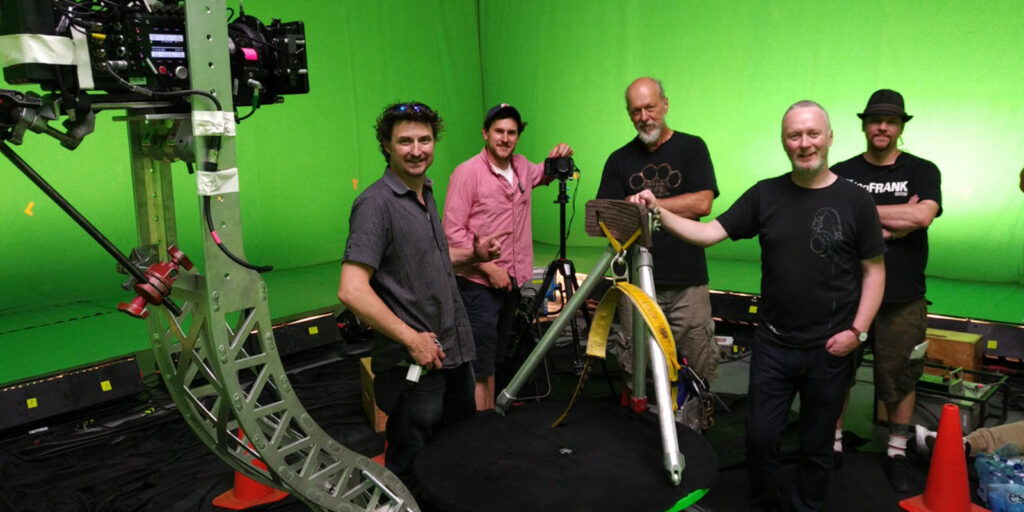
Selected credits
The Umbrella Academy (four seasons); Altered Carbon; Travellers; Sherlock
Training/education
Honorary Doctorate of Arts – Edinburgh Napier University. BA Photographic Studies (Film and Video) – Edinburgh Napier University.
Influence and impact: Could you share an example of a project or filmmaker that has had a profound influence on your work?
David Lynch’s Blue Velvet came out whilst I was half way through film school and this was a monumental moment in my visual subconscious. I was blown away that the cinematic world could be filmed in such a stylised and unique way.
I was impressed by his previous film, Elephant Man, but Blue Velvet took it to a new level. Fredrick Elmes ASC’s use of shadows and his stylised lighting of characters gave a harsh reality and a beauty I had rarely seen in cinema.
Life lessons: What has been your biggest learning curve to date?
The biggest learning curve to date has been lighting bigger and bigger sets, maintaining your vision whilst keeping within budget is a skillset that I’ve had to learn quickly.
Challenges and learning: What has been the most challenging aspect of your career thus far, and how did you overcome it?
Creating iconic shots is always a challenge as a cinematographer. When we were filming Sherlock we wanted to have some bullet time effects for Sherlock, a scene where we were showing him falling to the ground after being shot in the episode “His Last Vow”. Due to the high costs of bullet time, we had to come up with a different idea on a BBC budget. I came up with the idea of spinning the camera and using a lightweight high-speed camera to create the same effect. We built many prototypes before we came up with a version safe enough to put over the head of Benedict Cumberbatch. The final results worked so well the falling shot became a trailer shot for the show and helped win me an Emmy that year for Best Cinematography in a Mini Series.
Future trends: How do you see the role of cinematography evolving in the next decade, and what excites or concerns you about these changes?
I think it’s an exciting time for cinematography. Ideas are being pushed to the limits as well as new technical innovations and possibilities. AI is of course a concern and I think we have to work carefully with it and make sure we are not violating any copyright rules. We’re at an interesting time with AI and I’m sure it’s going to appear in every aspect of filmmaking. I think we need a lot of input from the whole filmmaking community and its lawyers to give the industry clear guidelines of what AI can do and can’t do.
Collaboration: Can you describe a memorable collaboration with a director or fellow cinematographer that significantly impacted the outcome of a project?
Collaborating with Nick Hurran was a standout moment in my career, he really encouraged me to be visually adventurous and never compromise when world building for a new project. Our projects together included Doctor Who, Sherlock, Travellers, Altered Carbon and The Devils.
Technical innovation: Are there any new technologies or techniques in cinematography that you find particularly exciting or game-changing?
The way that LED is changing how we light on set is a game changer, the introduction of brighter LED units that provide a strong hard light I find exciting. The difference in the actual temperature of the studio now and what it was when we were lighting with tungsten units is noticeable. I find I am now replacing smaller HMI lights with LED units in order to get much more control and versatility.
BSC membership: What does becoming a BSC member mean to you?
A great honour! To be part of the BSC is a dream come true, to be sharing new tech innovations and new ideas with cinematographers from all over the UK is a creative goldmine.
Words of wisdom: What is your advice to others at the start of their career with ambitions of becoming a BSC member?
My advice to new cinematographers is to find your people, your fellow filmmakers and artists who you can collaborate with and create exciting new ideas and projects together with. I would film everything that moved when I started and I took on as many projects as I could, in order to find out who I wanted to share my future with.
Oli Russell BSC
Selected credits
Sex Education; The Gold; Renegade Nell; Red Eye
Influence and impact: Could you share an example of a project or filmmaker that has had a profound influence on your work?
Darius Khondji ASC AFC – Se7en.
Life lessons: What has been your biggest learning curve to date?
That it’s ok to do things differently.
Challenges and learning: What has been the most challenging aspect of your career thus far, and how did you overcome it?
I started out shooting mainly scripted comedy. It took a long time to convince people that I was capable of lighting and shooting scripted drama. I managed to overcome this by working hard and being ambitious with the projects that I was working on and that I could influence.
Future trends: How do you see the role of cinematography evolving in the next decade, and what excites or concerns you about these changes?
I hope that the role doesn’t change that much. However, technology is evolving so quickly now in many different ways it’s hard to say where we will be in 10 years. I think it’s just important to try to evolve with it and use it in the right way without forgetting about how we got here.
Technical innovation: Are there any new technologies or techniques in cinematography that you find particularly exciting or game-changing?
I think the acceleration of LED lighting technology has revolutionised the way in which we work.
BSC membership: What does becoming a BSC member mean to you?
Becoming a BSC member is something I have always aspired to. It’s an absolute honour and something I will never take for granted. I have always looked up to its members as the pinnacle of cinematography and the craft.
Words of wisdom: What is your advice to others at the start of their career with ambitions of becoming a BSC member?
Believe in yourself and don’t be afraid to make mistakes.
Richard Philpott Assoc BSC ACO
Selected credits
Sharpe’s Rifles (DP Ivan Strasburg BSC); North Square (DP Sean Van Hales); The Great (DP Maja Zamojda BSC); Gladiator II (DP John Mathieson BSC); Dr Strange in the Multiverse of Madness (DP John Mathieson BSC); The Double (DP Erik A. Wilson BSC)
Training/education
Being a camera operator was the only job that I ever wanted to do, but during the 1970s finding a way into the film industry wasn’t easy if you didn’t have a connection. I found a job in a photographer’s studio in central London where I worked for a few years until an assignment for Volkswagen led to a chance meeting with a cameraman called John Ward, who was also shooting a documentary for VW. John had a well-established connection with Cinefocus, a 16mm rental house based in Ealing not far from the studios. He gave me their number and told me to keep in touch, and for the next year I pestered them on a regular basis to see if there was an opening. Eventually they relented and I joined them as a freelance camera assistant, learning everything that I could about 16mm film making, whilst working on documentaries and current affairs programmes for the BBC.
Impact and influence: Could you share an example of a project or filmmaker that’s had a profound influence on your work?
During my years as a focus puller I worked on several productions, most notably Poirot, lensed by Ivan Strasburg BSC. It was Ivan who gave me the opportunity to start operating when he asked me to assist him with the first series of Sharpe. It was filmed in the Crimea and production wanted an experienced focus puller who could operate the B camera. As it turned out, from day one I was put onto the A camera, which was a great experience, especially as there were no monitors and with a three day turnaround for the rushes report, I had to be sure that I’d got the shot right! Ivan guided me with a few tips and trusted me to get on with it which gave me a belief and confidence in myself that I could build on.
Life lessons: What has been your biggest learning curve to date?
There was a time in the late ‘90s and early 2000s when operating on TV dramas seemed to go out of style unless you could operate Steadicam, which I didn’t. An opportunity came up to work on continuous drama (Holby City and The Bill) with a director I knew quite well. These were mainly shot on single camera, and with budget and time constraints they were made at quite a fast pace. Doing the hard yards on productions like these, whilst maintaining a high level of professionalism and quality teaches you a lot about your capabilities under pressure. So, when you do get the opportunity to move on to bigger things, you’re ready for the challenge.
Collaboration: Can you describe a memorable collaboration with a director that significantly changed the outcome of the project?
I remember in 2015 I got a call from Kate at ARRI Crew asking me if I’d fly to Kosovo that day to work on a short film drama; it wasn’t going well and would I help out. The DP, Victor Seguin AFC, was lighting and operating but the tight filming schedule meant they were falling badly behind. The director, Daniel Malloy, had written a script about refugees called Home and it had Jack O’Connell playing the lead.
I said yes, caught a flight to Pristina and was collected at the airport and driven straight to the set. The set was a muddy track through a wood and it was raining hard. What had I let myself in for?
I met Daniel and Victor for the first time and they talked me through the shot, a handheld walk with a long column of refugees fleeing from war with Jack and his young family in the middle of it all. Daniel wanted a feeling of immediacy so no rehearsal, just shoot. Take one was a success and Daniel was over the moon, it was exactly what he wanted. From then on the three of us got on really well and in five days put together a thought provoking short that went on to win 18 international awards, including the 2016 BAFTA for Best Short Film.
BSC membership: What does becoming an Associate BSC member mean to you?
It’s a great honour to be recognised by my friends and colleagues in this way and I feel privileged to be accepted into the BSC as an associate member.
Words of wisdom: What is your advice to others at the start of their career with ambitions of becoming a BSC member?
In many ways, I feel that the role of a camera operator is the same now as it has always been. Having a good eye for a frame and understanding what shots are required to construct a scene are key. Also to have a sound knowledge and experience of the equipment that you use, whether it be a dolly, crane or Steadicam, all depending on the requirement of the shot. Good communication with the rest of the crew and the actors is essential. All these things take time to master but they are, I believe, essential to being a successful camera operator. Technology is also changing how we do things, often quite rapidly, so staying up to date with it all is no bad thing either.
Robert Hollingworth ASSOC. BSC
Selected credits
A Real Bugs Life (Emmy Award-winning, Jackson Wild Award-winning); Frozen Planet II (BBC); Encounter (Amazon); Prehistoric Planet & Prehistoric Planet II (Apple TV+); Attenborough and the Giant Sea Monster (BBC); Surviving Earth (Working Title – not yet broadcast); Postcard from Earth (Sphere Vegas); All Quiet on the Western Front; The Battle to Beat Malaria; Welcome to Earth
Training and education
BSc in Biology – founded my passion for the natural world and storytelling, and then went on to an MSc too, also at University of Bath.
Early career in theatre lighting – including Baz Luhrmann’s La Bohème on Broadway, working as assistant lighting designer to LD Nigel Levings.
Working on music festivals across the UK on lighting and sound engineering, and touring with musicians.
Self-directed and self-taught cinematography training through watching films and also some hands-on workshops, specialist courses in macro and highspeed filming.
Impact and influence: Could you share an example of a project or filmmaker that’s had a profound influence on your work?
Working with Sir David Attenborough on series such as Frozen Planet II profoundly shaped my approach, teaching me the power of patience, precision, and narrative storytelling in bringing nature’s hidden worlds to the screen.
Life lessons: What has been your biggest learning curve to date?
My biggest learning curve was to temper my own ideas of perfection. When I was younger I didn’t realise I was born with an idea of chasing perfection. Little did I know at a young age that this is both unachievable and soul-destroying, not only personally but for the team around you. I think it’s only something that age can help with but my greatest learning curve I would say was internal; learning when to say ‘good enough’ and realising that the most important thing is that I, and my team around me, goes to work and has the best and most fun day possible, and me wrangling some internal angst about lighting perfection—which is ultimately entirely subjective—won’t contribute to that aim. I’ve discovered that films come and go, but the bonds we form at work remain, and that’s the foundation to build upon each day.
Challenges and learning: What’s been the most challenging aspect of your career thus far and how did you overcome it?
I would say one of the most challenging parts of my career is balancing the work with the personal life. Our industry is fabulous but also at times, all-consuming. It’s a constant jungle.
Again here I could say that mastering technical advances in cameras and lighting is a constant challenge, but it feels surmountable in a way that managing the love of the job and love of family is far harder.
Future trends: How do you see the role of cinematography evolving in the next decade, and what excites or concerns you about these changes?
I believe the next decade will see a fusion of techniques from virtual production (LED volumes, Unreal Engine), to AI-assisted workflows. I’m excited by the creative possibilities these offer, though mindful that protecting the human craft of storytelling remains crucial, so it’s not without its concerns.
Collaboration: Can you describe a memorable collaboration with a director that significantly changed the outcome of the project?
A standout collaboration was working with James Friend ASC BSC and Edward Berger on All Quiet on the Western Front. I was first struck by the conversations I had with both Edward and James and how they were different from usual; we spoke a lot about emotional motivations not to the characters but in our own lives. It felt like a therapy session at times and being this vulnerable enabled me to share their vision, and this comes across in volumes in the final film. Our collaboration was both creatively nourishing but also personally and profoundly changed the way I feel about my role going forward.
Technical innovation: Are there any new tech technologies or techniques in cinematography you find particularly exciting or game changing?
Technical developments now come quicker than ever, and this pace will likely continue. Cameras and lighting are now developing at an incredible pace, enabling higher frame rates, greater sensitivity and broader colours. This level of innovation will continue. Ultimately we can’t lose track that all the technology still needs to serve the story.
BSC membership: What does becoming an Associate BSC member mean to you?
Becoming an Associate BSC member represents peer recognition and an opportunity to engage with the leading figures of our craft. It’s an opportunity to learn from legends, contribute to the community, and help set standards for future generations. Most of all, hopefully it’s a chance to inspire, and be inspired.
Words of wisdom: What is your advice to others at the start of their career with ambitions of becoming a BSC member?
Stay curious, humble, and relentless in your pursuit of knowledge. Travel widely, collaborate generously, and never lose sight of the story—because at the heart of every great image must be a compelling narrative.
Susanne Salavati BSC
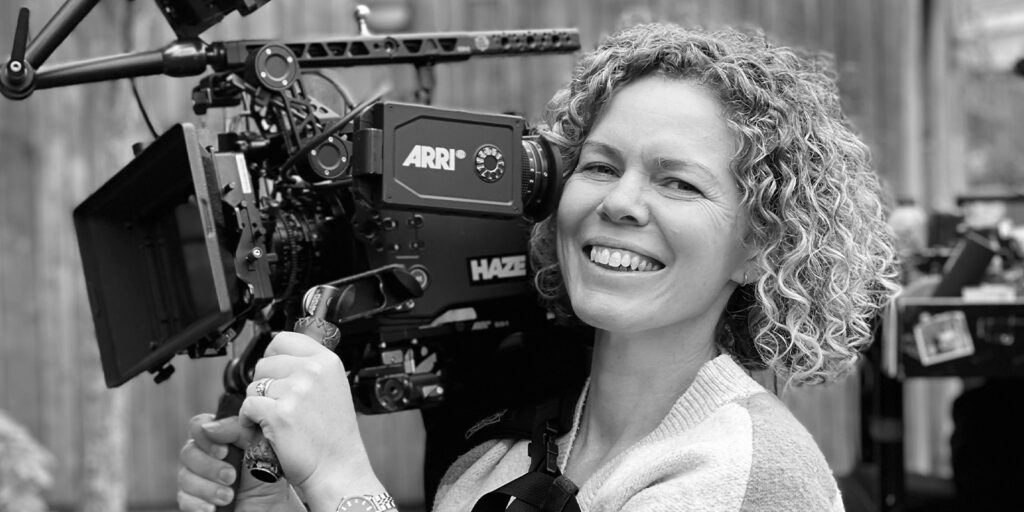
Selected credits
The Lazarus Project (S2) ; The Crow Girl; Truelove; The Storm (in post-production); My Feral Heart
Training/education
BA in Film & TV – LCC University of the Arts London.
Five years as a floor spark 2005-2010.
Influence and impact: Could you share an example of a project or filmmaker that has had a profound influence on your work?
Whilst at university I became really interested in the crossover between documentary and drama filmmaking, mainly because I loved making both types of films and I didn’t want to have to choose. A few (quite contrasting) films from the late 1990s to early 2000s shaped and cemented my fascination with cinematography. I have always adored Lynne Ramsay’s work, particularly Ratcatcher for its profound beauty in a harsh world, the intimacy of the camera work and the way it felt so real and at the same time poetic. City of God felt like an attack on the senses; so vibrant, innovative camera work, real locations, a mixture of actors and non-actors and a brutal world. It opened my mind to the merging of stylised imagery and characters based in reality. Around the same time as City of God I also watched In the Mood for Love. The use of colour and quality of light was like nothing I had seen before. That was the film that made me want to work in the lighting department.
Life lessons: What has been your biggest learning curve to date?
So much of our job, throughout all stages of production, requires clear communication and strong collaborations. I’ve really appreciated this as I’ve gained more experience. I always have the intention to keep a document or an email thread of everything that has been discussed and be as open as possible, sharing that information with all team members. I like to work with the gaffer, grip and operator as soon as I possibly can in prep. Finding cohesion and camaraderie with my HoDs is vital. They provide a wealth of insight, experience and support and if I can use all of that in the right way for the project it makes the work better and the whole experience more enjoyable. I also like to establish a relationship with the colourist in prep and bring them into creative choices from the outset.
Challenges and learning: What has been the most challenging aspect of your career thus far, and how did you overcome it?
I think the most challenging part of my career has honestly been trying to find a work/life balance. This was amplified when I became a parent. I am so lucky to do the job I love but it can be all consuming and maintaining relationships—whether with family, friends or your child—means creating time, space and nurturing whilst also looking after your own health and wellbeing. It’s an ongoing journey which I try to be conscious of and work on all the time.
Future trends: How do you see the role of cinematography evolving in the next decade, and what excites or concerns you about these changes?
AI is of course going to have a considerable effect on filmmaking and cinematography and I think it’s something we all have to learn about and try to incorporate in the most positive and creative ways we can. I think big changes in the industry can seem overwhelming, just as the shift from film to digital was in the early 2000s, but change can often make an industry thrive and can make this line of work accessible to a more diverse range of people. So I strive to embrace AI and use it in a way that enhances cinematography rather than in any way eliminating the brilliant people and heart it takes to create beautiful work that resonates with others.
Collaboration: Can you describe a memorable collaboration with a director or fellow cinematographer that significantly impacted the outcome of a project?
Every time I collaborate with a director on a project it is memorable in its own way. I learn from directors all the time and I love how each director approaches their work differently. Jane Gull (My Feral Heart, Love Without Walls) and I have collaborated for over 15 years and I feel like we know each other’s visions inside out. The way Jane works with actors is beautiful and it creates intimacy and spontaneity on set which affects the nature and fluidity of the camerawork.
Carl Tibbetts (The Lazarus Project, Truelove) has a very strong visual style and has taught me so much about choreography between the camera and actors and innovative storytelling on a larger scale. He also isn’t scared to be bold with performances and lighting, which means I’m always entering new territory when we work together.
My most recent collaboration has been with Josephine Bornebusch on her forthcoming feature film The Storm. Josephine is an incredible writer, director and actor. She knows all of her characters so well and as an actor herself has a great understanding of what is needed in a performance but she is also very open to creative input from the people around her. She is a brilliant leader, she knows what she wants from the relationship between the camera and the actors but can create a space in which any suggestion is welcome and that means that the results are exciting.
Technical innovation: Are there any new technologies or techniques in cinematography that you find particularly exciting or game-changing?
I’m very interested in the Digital-Film-Digital (DFD) process at the moment and I’m currently trying to see if we can use this process on a short film I recently shot for director Mark Chapman called A Woman of Good Abilities. I saw side by side examples of the process when I began prepping for The Storm in Sweden; our colourist for that project Mats Holmgren had done it on another job and the halation and grain looked really beautiful. It’s an expensive process though so you’ve got to have a bit saved in the budget for it.
BSC membership: What does becoming a BSC member mean to you?
Becoming a member of the BSC means the world to me. I’ve worked in the industry for 20 years and at times it has felt like a very difficult career path to navigate. To be acknowledged in this way by friends, peers and people whose work I’ve admired for decades feels very special. I’m also so grateful to join the pioneering women who have come before me and I intend to work hard with all the other members who want to bring more diversity into this incredible society and industry as a whole.
Words of wisdom: What is your advice to others at the start of their career with ambitions of becoming a BSC member?
When I was working as a spark I remember the best piece of advice given to me by a very talented DP was to shoot as much as you can. It sounds obvious but it really is the most vital part of becoming a cinematographer. I learn new ideas, techniques, approaches on every project and that’s part of the thrill of this job. I also think perseverance is key, whilst still knowing your worth. There’s no correct way to become a DP, you have to do whatever is right for you and making mistakes is part of creating something innovative. I’m quite a perfectionist so mistakes hit me hard but you’ve got to take risks sometimes otherwise your work doesn’t grow.
Tasha Back BSC
Selected credits
Animol, In Camera, Girl
Training/education
After a BA in Media Arts I joined the camera department as a camera trainee in 2003 and worked my way up as an assistant before shooting 2nd units and operating for DPs I had previously assisted. This was my step into TV drama and feature films as a lead DP.
Influence and impact: Could you share an example of a project or filmmaker that has had a profound influence on your work?
In the Mood for Love by Wong Kar Wai has always been a film I am struck by for its use of colour, lighting, beautiful compositions and framing. I continually return to it as a reference.
Collaboration: Can you describe a memorable collaboration with a director that significantly changed the outcome of the project?
I would say my most successful collaboration was on Girl with the production designer, Soraya Giliani. Not only was the colour and texture of the set a huge factor in my building in frame, Soraya was careful to involve myself and my gaffer in ways she could build lighting into her set design. This was achieved through practicals but also involving us in her set design – placing doorways, windows, cupboards, glass bricks exactly where we needed them to create light sources in otherwise dark corridors and rooms.
Technical innovation: Are there any new technologies or techniques in cinematography that you find particularly exciting or game-changing?
I’ve enjoyed working with volumes more recently. I’m hoping virtual production will become more accessible and affordable for lower budget projects soon. I am also excited by the small lightweight gimbal systems including the Ronin 4D and I’m looking forward to these systems progressing further so they can take heavier lenses.
BSC membership: What does becoming a BSC member mean to you?
It is so flattering to have such positive feedback on my work from my most talented and established fellow cinematographers. To be invited to join feels like a real career milestone.
Words of wisdom: What is your advice to others at the start of their career with ambitions of becoming a BSC member?
Find your own style, voice and influences. Be brave with your ideas.