

BOOM IN GLOOM
Studios in the UK are thriving and new facilities keep opening, yet production teams are still feeling the squeeze. What’s behind the paradox?
The UK film and TV industry generates £12 billion annually and supports 90,000 jobs nationwide, making it a major economic force and a magnet for international filmmakers.
Yet for many UK crews and production teams, uncertainty persists. At industry events, conversations quickly turn to who is working, who is still seeking their next job and how long they have been out of work. Brexit, the Covid-19 pandemic and the US writers’ and actors’ strikes have all played a part — and in some cases continue to do so — but those factors have been widely analysed and will not be revisited here.
Last year, the largest study of its kind confirmed what many have been feeling: instability remains widespread across UK television. The Big Bectu Survey 2025 paints a stark picture of a workforce grappling with unemployment, burnout and toxic working conditions. Nearly half of respondents were out of work in March this year, with 68% struggling financially. At the time, one in three was considering leaving the industry entirely.
“It’s certainly been a tough time for the industry,” says Jo Wallace, studio director at Sugar Studios. “We’ve seen how hard freelancers and independent creatives have been hit over the past five years. Before the pandemic much of our work at Sugar Studios was in theatre and editorial photography. However, we’ve seen a greater demand recently in advertising and commercial productions. We attribute this shift to tighter budgets, strikes and overall timidness in the entertainment landscape to take risks on smaller projects. That being said, we often work with local talent and find many of our clients are still UK-based. Because of our London location in Greenwich and open-mindedness in our capabilities, we’d like to think people can come to us no matter the size or scale of their project and know they can count on our help.”
Wallace adds that “true recovery for the UK creative sector isn’t just about infrastructure headlines, it’s about making sure support reaches everyone” from freelancers and small studios to emerging talent. In our experience, the industry thrives when people actively lift each other up, share knowledge and expand their community.
“The purpose of (Sugar initiative) Made Sweeter is to give people the tools and guidance necessary to keep creating sustainably,” she continues. “By implementing a dynamic programme that is open to sectors from advertising, music, theatre and more, Sugar Studios is hoping to reach every corner of the industry. Our studio space, industry knowledge and vast network are gems that we can share. Call it the ‘contagious smile effect’, but we believe it’s our duty to start the chain reaction as a major provider of creative spaces.”
Plot twist
The above may make for sobering reading, but the same narrative doesn’t apply to UK studios — many of which are thriving. Pinewood, Shepperton, Leavesden and others continue to attract major international productions, particularly from the US.
According to Dean Horne, VP global studio operations, Shadowbox Studios Shinfield, geography remains a key factor — with all of these studios located within easy reach of London and major international airports, they’re especially appealing to overseas productions.
“With the growth and expansion of studios outside of the M25 comes opportunity for crew in these regions,” he explains. “We chose the location because we knew there was a large population of crew along the M4 corridor. This is an important consideration for producers.”
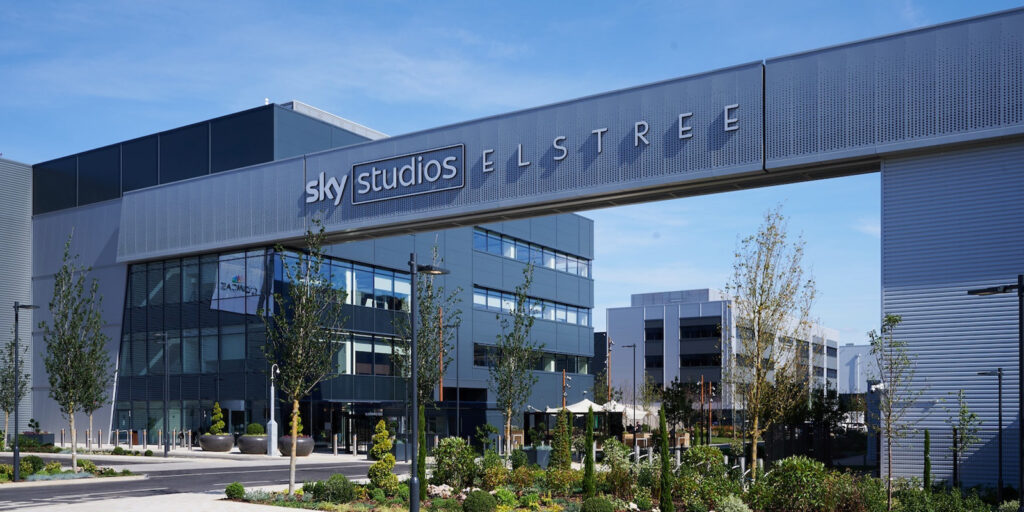
Since its 2022 opening, Sky Studios Elstree has welcomed a host of major film and television projects, including Wicked, Paddington in Peru, and Jurassic World: Rebirth. The studio has also become a hub for Sky Originals, hosting festive drama Bad Tidings, comedy Mr Bigstuff, A League of Their Own, The Unofficial Science Of, and numerous Sky commercials.
Noel Tovey, managing director of Sky Studios Elstree, says that as the broadcaster continued to invest in producing premium original content, “it just made sense” to create a permanent home to shoot that content.
However, the studios benefit not only from proximity to London airports, but from having a famous neighbour.
“The UK is world-renowned for the excellence of its HETV/film crews and craftspeople and the location of Sky Studios Elstree — close to the legendary Elstree Studios and other nearby facilities — allows us to tap into that creative hub right on our doorstep,” he continues. “As a completely new facility, built from scratch, we were able to design the studios with the needs of modern productions in mind — from using renewable energy throughout the site to ensuring there are ample parking spaces. When productions visit, we aim to make everything run as smoothly as possible. Having worked at all the major film lots, we know it’s these small details that make a huge difference to day-to-day operations.”
What’s more, Tovey underscores that Sky “is different from many other studios in that we are fully owned and operated. We host a significant number of our own productions from Sky and NBCUniversal, alongside a diverse mix of third-party projects, both UK and international. Many productions continue to choose the UK because of its highly skilled, dedicated workforce, as well as the scale and quality of its studio infrastructure.”
Tax and talent
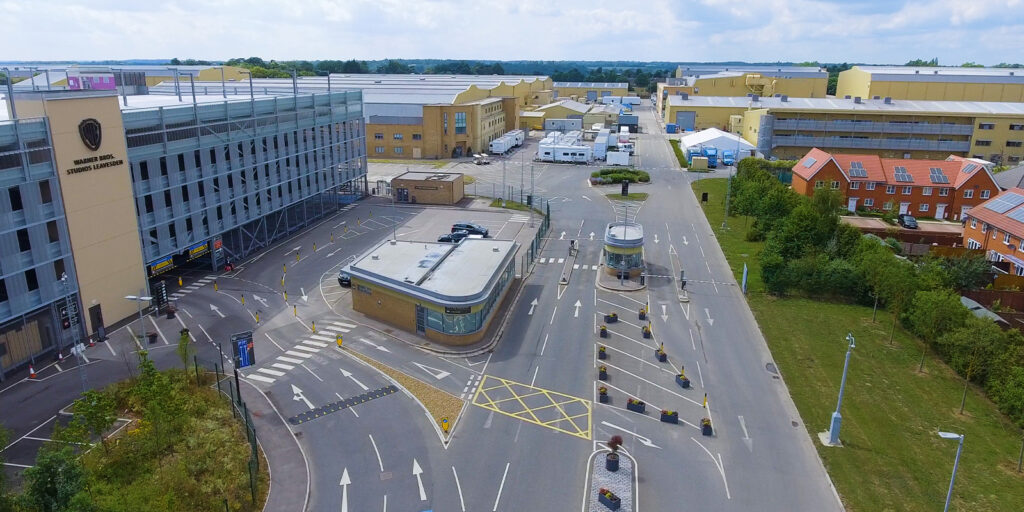
Emily Stillman, SVP at Warner Bros. Studios Leavesden and Warner Bros. Burbank, says the studio has recently hosted major productions including Supergirl, Beetlejuice Beetlejuice and A Quiet Place: Day One. But she adds that easy access to London-area studios is only part of the reason so many international shoots land there.
“For many of the filmmakers we work with the UK remains a first choice; the attractive tax incentive programme alongside an established infrastructure with a strong base of skilled crew and production support means they can bring together the key elements for their show in one trusted base,” she says. “Let’s not forget (proudly…) we have some of the finest film technicians and crafts people in the world.”
Ian Sherborn, MBS Group marketing director – UK and Europe (operator of Eastbrook Studios), concurs. “We are fortunate that this infrastructure also includes a number of highly credible industry bodies and dedicated personnel, who consistently promote, preserve and lobby on behalf of the sector, to instigate and maintain incentives which contribute to making us an attractive, cost effective destination,” he says.
While it’s undoubtedly good news that UK studios continue to attract major Hollywood productions, it raises an important question: How much of this demand is driven by the UK’s world-class infrastructure and crews — and how much by generous tax reliefs and incentive schemes?
“That’s a difficult question to answer and I suspect what is most important differs from production-to-production,” says Mike Mosallam, chief operating officer, Shadowbox Studios (Shinfield is part of the global Shadowbox Studios portfolio). “We can definitely assume that the whole package of attractive tax credits, highly experienced crew and the best facilities are what put the UK on the top of the list for productions.” He adds that the UK government, across parties, has been consistent in its support for the screen industries.
“So, if you are looking to establish a base for an HETV production, with hopes for multiple seasons, you can do so in the UK with reasonable confidence that the incentives will remain over the years,” Mosallam continues. “The UK has historically always been a country which has encouraged and nurtured the industry. That rich history of consistent infrastructure and workforce development, as well as incentives, is challenging to match in other locations. Another factor that sometimes comes into play is that people like filming in the UK. Aside from the critical infrastructure for productions it has great hotels, restaurants, culture. Obviously, this isn’t the top of the list when these decisions are made but it can help tip the scales in the right direction.”
Stillman adds that the UK is an attractive choice for filmmakers due to those reasons. “The skill and quality of crews and the industry infrastructure are major draws, but the financial incentives are crucial to the UK remaining competitive,” she says. Nevertheless, Stillman highlights the importance of the UK maintaining “a good mix of domestic and international productions” in order for our industry to be resilient. “It will always remain a priority for us (WBSL) to remain supportive of the British independent shows for the health of our local industry,” she adds.
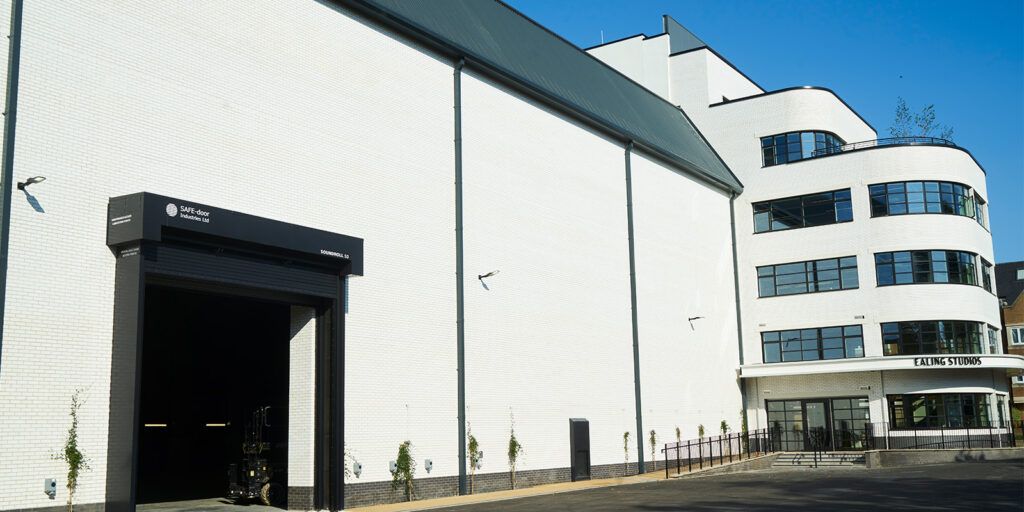
Widely regarded as the oldest continuously operating film studio in the UK, Ealing Studios in London rose to prominence in the post-World War II era with a run of classic British films, including Saraband for Dead Lovers (1948), Kind Hearts and Coronets (1949), Passport to Pimlico (1949), The Lavender Hill Mob (1951) and The Ladykillers (1955).
These days the site tends to service HETV streamer shows such as Wheel of Time and Black Mirror and independent films – the two most recent are Back to Black and The Bitter End.
Barnaby Thompson, co-owner of Ealing, says there are risks that UK crews and facilities could become over-reliant on foreign money, leaving less space for homegrown projects. “The bigger shows can afford to pay more, which raises the cost of homegrown projects, thereby making them harder to finance in the current challenging marketing conditions,” he says.
Sherborn adds: “It is important that we make filmmaking affordable and accessible to all. We must continue to invest and to strengthen our offering through the creation of schemes such as the recently introduced Screen Lighting Technicians Apprenticeship, which will help introduce new talent and protect the future of our industry. In this way, we can maintain our status as an attractive, industry leading destination which is properly prepared to handle all production, be it domestic or international.”
Stillman argues that in the introduction of the IFTC (Independent Film tax Credit) there is a great opportunity to grow a sustainable local independent industry.
“However, this comes back to the value of ensuring a good mix of productions at UK studios to ensure homegrown projects are not left behind,” she adds. “It’s important to remember the benefit to the wider industry of having big budget foreign productions which draw investment to the UK, opportunities for crew development and demand for related services.”
Beneath the surface of success—whether in business or any industry—lie pressures that rarely make the headlines. So, what are the hidden costs or pressures on UK studios of relying so heavily on international productions?
“I can only speak from the experience of Shinfield where we exist to provide the best facilities and service to productions,” says Horne. “Regardless of where they originate, what they need from us is uniform: a partner who will help make their jobs easier. Bringing stories to screen is arguably more challenging than it has ever been before, so we want to offer flexibility and a bespoke approach to our customers. We take this approach for all productions, regardless of size or budget. We know that this keeps people returning and has led to us operating a thriving site with a mix of features, UK indie films, HETV projects from the steamers as well as some UK shiny floor productions.”
Naturally, these factors are all relative, varying according to the size, scale, and profile of the specific site. “We are a boutique studio of a certain size, so we host many UK productions. It is vital the independent UK film and TV sector is protected and nurtured to ensure a stable and balanced ecosystem,” adds Thompson.
For Wallace, “there are many ways to look at compassion” in this space.
“Of course, there are tangible offerings like reduced rates, extending studio time or providing catering when budgets are tight, but to us the meaning goes much deeper than that. In our experience, it’s about mentorship, sharing knowledge, offering guidance on production and creating an environment built on trust,” she explains. “We see compassion as understanding the realities of the industry we all want to see survive. As a small business that has weathered some turbulent years, we know first-hand how vital it is to network, collaborate and support one another. Staying commercially viable doesn’t mean losing that humanity, it’s about building genuine partnerships where clients and collaborators want to return again and again because they know we’re invested in their success.”
“Exclusively British”
The V Studio at Film Soho is an (almost) brand new virtual production facility - it opened in June, with a soft launch announced at Cannes Next last year.
Kate Phibbs, head of studio, says “while growth is obviously very important, I would say that we are still taking the first steps on the journey in getting the word out there that there’s a small – but mighty – new kid on the block” when it comes to high-end, cinematic virtual production facilities.
What’s more, it’s bucking the trend.
“So far, our clients and crews have been exclusively British,” she says. “From commercial content to indie films, we’ve been proud to offer a home to a range of indigenous shoots. Though we do indeed expect this to include a larger proportion of international clients as our reputation starts to grow beyond the British Isles.”
(Not so) London or M25-centric
Not only are many studios on these shores successfully drawing in productions, more are being added to the evolving ecosystem.
Marlow Studios, a planned £750 million film and television complex in Buckinghamshire, southern England, has been approved by the government after winning an appeal. The project, which has publicly attracted backing from filmmaker James Cameron, had previously faced objections at a local level. Final consent was granted by the Department for Housing, Communities and Local Government, headed by secretary of state Steve Reed, through a detailed 266-page decision. The ruling clears the way for the construction of 18 soundstages alongside a dedicated skills and training academy on the site.
However, it’s important to note that this rapid growth isn’t confined to the London area.
Much further north, Northern Studios in Hartlepool is undergoing a £33.5 million expansion of its film and television production facilities. Since opening in 2022, the site has already hosted high-profile productions including the feature film Jackdaw, BBC’s Smoggie Queens, and ITV’s I Fought the Law.
Likewise, Turnover Studios — the latest venture from Turnover XXV, founded by actor and producer Craig Conway, strategist Amita Krishna, casting lead Ajo Kacma, and producer Djonny Chen — will be based in the Teesside Freeport zone. It’s set to become the first facility of its kind in the UK, and possibly Europe, to operate within a Freeport — a designated customs area that offers tax incentives and infrastructure support aimed at driving business growth.
Rebecca Williams, business and marketing director at BBC Studioworks, explains how its newest facility Digbeth Loc. Studios “represents the next chapter for Birmingham’s creative industry” and the focus remains on ensuring this evolves into sustainable employment for local talent.
“This commitment is underpinned by targeted investment in skills development, local hiring and community engagement initiatives that ensure the economic and social benefits of production activity are felt across the region,” she says. “I would hope to see a more diversified slate of UK and international projects in 2026. The aim is to sustain a strong domestic production pipeline while expanding capacity to attract major US and global projects. The outlook for Birmingham and the wider UK studio sector remains positive as the industry recalibrates.”
At the same time, established studios like Shinfield are focused not just on growth but on nurturing local talent. Horne is keen to point out that Shinfield works “to make sure that we create opportunities for local people who want to start careers in the screen industries, have transferable skills or want to step-up” in the business. Through partnerships such as Screen Berkshire and workforce development programmes like the Backlot Academy, Shadowbox Studios supports a steady pipeline of new production talent—ensuring a strong, skilled workforce ready to meet the growing demands of UK studios.”
Early days
Of course, 2026 has only just begun, its story still unfolding in these early weeks.
What’s more, three major Bollywood films are set to be made in the UK from early 2026. India’s leading production company, Yash Raj Film, has confirmed plans to shoot across the country, creating more than 3,000 jobs and injecting millions of pounds into local industries.
So, does the year ahead hold a positive outlook?
“Without a doubt, we noticed a significant uptick in bookings, but also the level of virtual production and LED stage literacy within the productions booking with us,” says Joanna Alpe, CCO at MARS Volume & Bild Studios. “We still host plenty of teams who are shooting VP and ICVFX for the first time. It’s a core value for us to be an accessible and easily bookable stage for productions utilising these filmmaking techniques for the first time. We launched MARS Academy four years ago to underscore this corevalue. Sharing directly the tips and techniques that we see working effectively day in, day out is what it’s all about. 2026 is looking really exciting—especially with regards to repeat productions. For me, having productions bring back season two, three, four, etc. is a great sign. LED stage work is really hitting the mainstream, and that has got to be good for the industry as a whole.”
Alpe adds that, in terms of demand, there’s “a fairly even split between US productions and UK productions” this year. “US productions continue to see real value in shooting in the UK and we have made sure all our commercial processes, stage delivery and team expertise are optimised to deliver for both audiences,” she continues. “Being based 25 minutes from London Heathrow airport has been a real asset for hosting US-based execs and projects. While our crew is based at MARS Volume in South Ruislip, our heritage is delivering large scale media technology projects all around the world so our teams are highly mobile and able to deliver our MARS pop-up virtual production solutions anywhere around the UK or the globe – bringing our expertise directly to where the production might be.”
Debbie Adler, head of commercial and marketing at Garden Studios, says the company is “cautiously optimistic” for 2026. “We have several confirmed bookings across TV, film, and commercials, plus a lot of pencil holds throughout the year and into 2027,” she says. “There seems to be momentum for many tentative projects to be greenlit in Q1. Projects are a mix of high-end TV drama and small to medium sized feature films. We always have a lot of commercials because of how centrally located we are.”
So, while this has been — and remains — a bleak period for many across the sector, there is a clear upside: studios, taken as a whole, are very much in business and booming. However, if the UK screen industry is to be properly future-proofed, the emphasis must move beyond merely filling soundstages towards creating a genuinely balanced ecosystem, one in which international blockbusters and homegrown stories are able to thrive side by side.
STUDIOS SPOTLIGHT
BBC Studioworks
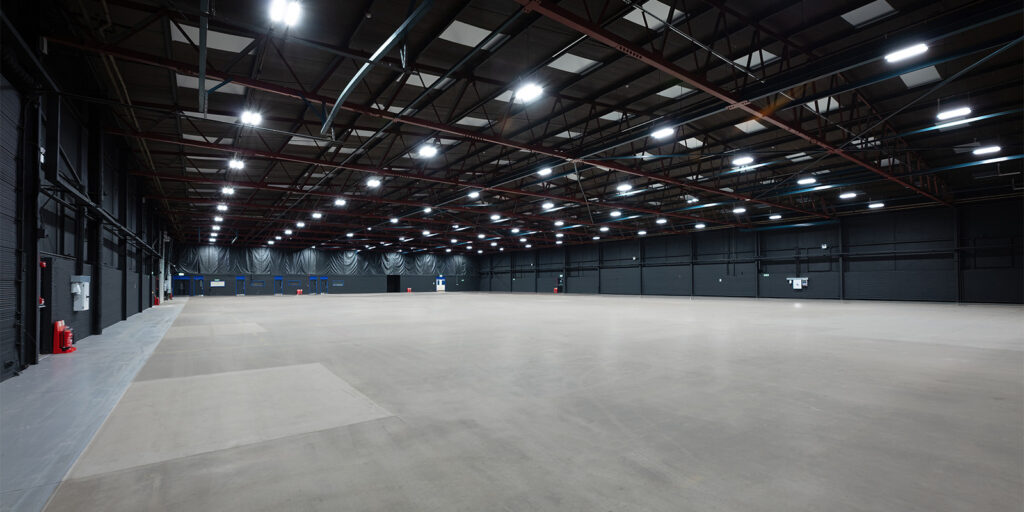
BBC Studioworks caters to major broadcasters, production companies, and the biggest names in television and film worldwide, providing fully customised, end-to-end services. We offer locations in Birmingham, Glasgow and London perfect for film shoots, television productions, and other creative projects, whilst delivering cost efficiencies that go beyond tax incentives.
Our newest offering, Digbeth Loc. Studios, was founded by Steven Knight CBE and is powered by Birmingham’s strong creative foundations. Partnering with Production Central, we view every production as an opportunity to strengthen the regional workforce.
From world-class facilities to expert crews and exceptional post production, your seamless production experience starts with BBC Studioworks.
MARS Volume

MARS Volume is one of the UK’s longest-running and largest virtual production and LED stage studios, spanning 12,000 sq ft and located just 25 minutes from London Heathrow. Since opening in 2021, MARS has hosted major feature films, high-end TV and scripted drama, becoming a preferred venue for productions shooting in the UK. Amazon, Netflix, Disney, Apple, Sky, BBC and ITV have all chosen MARS for their virtual production shoots.
MARS prides itself on delivering gold-standard, reliable and production-centred VP stage space at accessible pricing where the technology sits calmly in the background, enabling productions to flow smoothly and efficiently.
Netflix’s Black Doves filmed key scenes at MARS Volume, with cinematographer Mark Patten BSC remarking: “All the car scenes were shot in the volume at MARS Volume, as it’s much more efficient to film driving scenes in virtual sets. It’s an excellent solution, and MARS has an incredible setup.”
Film Soho
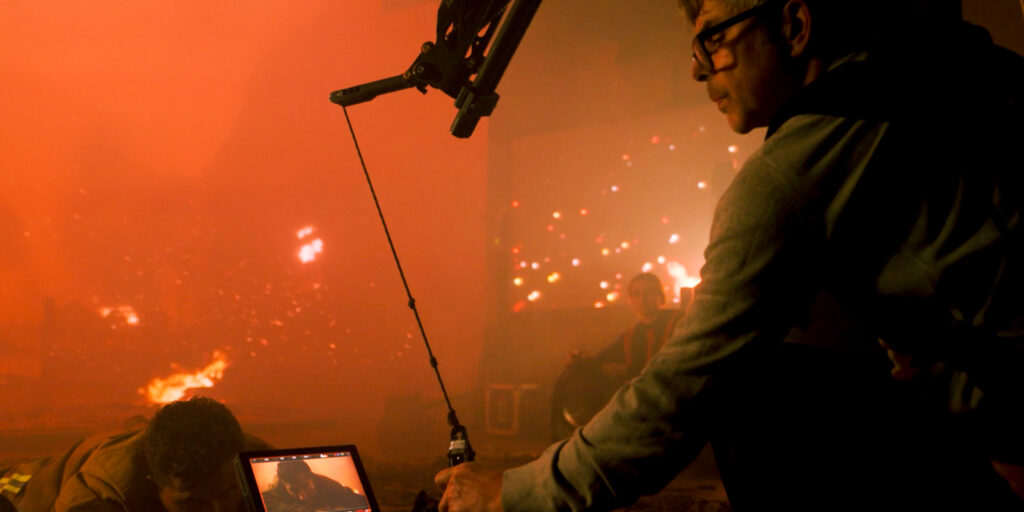
The V Studio at Film Soho is a state-of-the-art virtual production facility that has been designed with filmmakers in mind. Creativity leads, quietly supported by best-in-class virtual production technology.
The result is a controlled studio environment that enables the creation of striking cinematic imagery without many of the constraints that often come with location-based shooting.
Nestled in the heart of Soho, the V Studio boasts a revolving, drive-in stage and a high resolution 12.2-metre wraparound LED wall.
Our best-in-class virtual production technology and our dedicated team of VP experts are here to help your shoot seamlessly transition between worlds, weather and time of day. Filmmakers make the most of a high level of control of light, to create reflections and ambience which can be adjusted with precision and repeated consistently.
Reach out to arrange a visit – [email protected]
Garden Studios

Garden Studios is one of the UK’s leading virtual production and film and television sound stage campuses. Situated across 400,000 square feet and only 30 minutes from Soho, Garden Studios combines advanced virtual production infrastructure with the practical advantages of a traditional studio: on-site unit bases, production offices, workshops, and crew facilities.
With five years in operation and 150 productions completed, Garden’s team has delivered VP for commercials, HETV drama, comedies, features, and a range of unique creative projects. The team brings technical depth, cross-trained skills set in each member, and hands-on production knowledge to every project.
In 2026, Garden Studios will launch our most advanced VP stage yet, purpose-built to support car processing, real-time Unreal Engine workflows, and hybrid productions. Alongside continued investment in new technology, we’re focused on deepening collaboration with filmmakers, helping clients navigate virtual production with confidence, creativity and flexibility.
Sky Studios Elstree
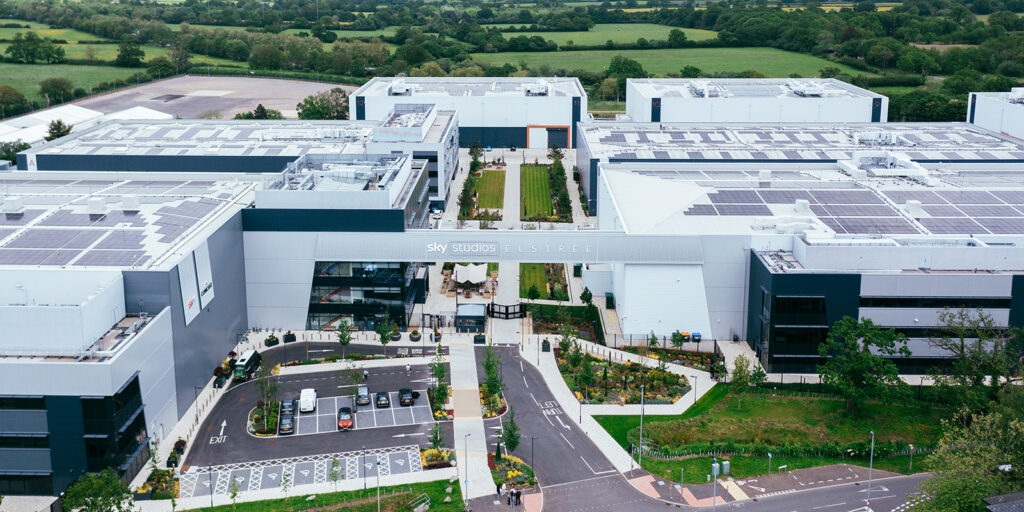
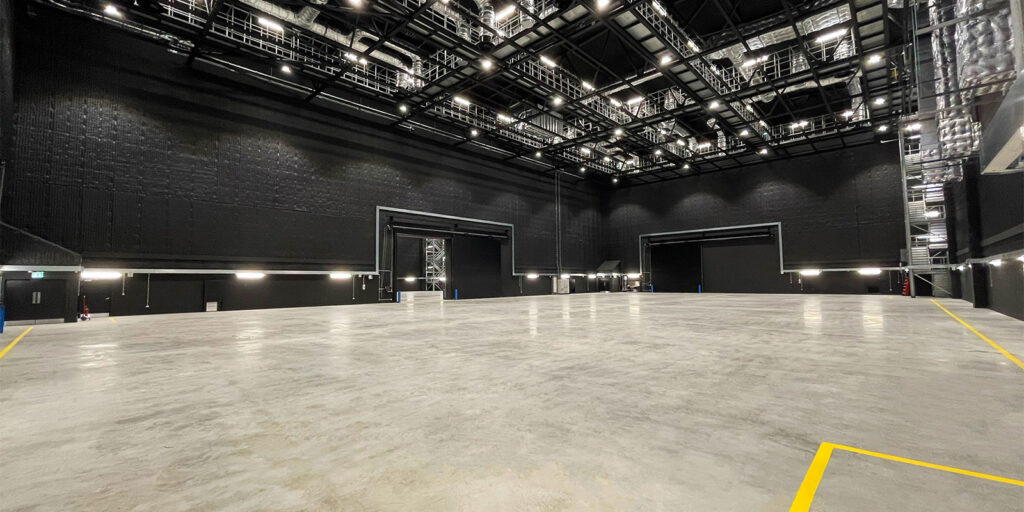
Sky Studios Elstree is a state-of-the-art film and TV production facility, located in the heart of Borehamwood, Hertfordshire – an easy 20-minute commute from central London. With world-class crews right on its doorstep, the site offers 12 soundstages, flexible production offices, adaptable workshops, and a spacious six-acre backlot, all supported by dedicated parking, catering, and breakout areas.
Purpose-built with sustainability at its core, Sky Studios Elstree is setting new standards for environmentally conscious production. Powered by solar and renewable energy, the site also features rainwater harvesting systems, efficient LED lighting, and an all-electric vehicle fleet in its operation —making it among the greenest of studio facilities.
From its modern infrastructure to its dedicated on-site support, Sky Studios Elstree is designed to make production easy.
Sugar Studios

Sugar Studios is a versatile creative hub in North Greenwich, offering four distinctive stages and virtual production capabilities designed to bring any project to life. Home to one of the largest infinity coves in London and backed by over 30 years of industry experience, we collaborate closely with clients across film, television, theatre, fashion, music, and events. From cinematic films and brand campaigns to West End play rehearsals and music videos, our dry-hire studios have been transformed into everything from winter wonderlands and wedding venues to concert halls and West End stages – even Snow White’s cottage.
Every shoot benefits from drive-in access, kit rental options, green rooms, hair and make-up stations, free parking, and complimentary Wi-Fi, alongside Hollywood-level catering. On-site amenities also include a café, workspaces, and a comfortable lounge area.