

From gritty Marvel series Daredevil: Born Again to dystopian Apple show Pluribus, Mark London Williams takes a look at the inventive ways DPs are approaching the biggest projects on TV screens right now – and why they’re winning plaudits for their work.
“There’s such incredible value in an image, and a sequence of frames, for communicating a vision and telling a story.” If there’s anything like a “mission statement” for this particular column, that might be it.
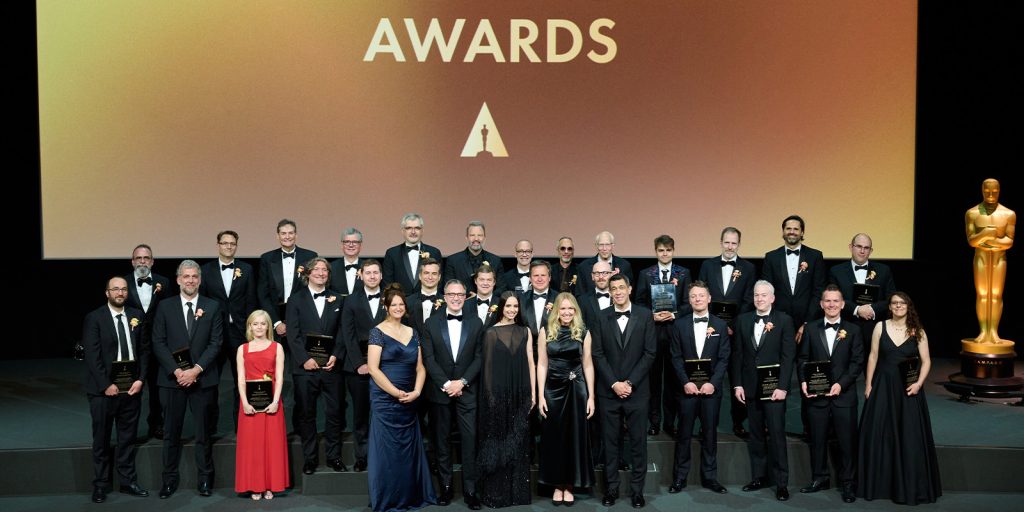
This particularly amenable manifesto comes from Paul Debevec, the storied digital innovator and wrangler of light, who was getting his second Scientific Technical Achievement award from The Academy “for his pioneering work in high dynamic range, image-based lighting techniques”, concepts, he noted in his acceptance speech, introduced at early SIGGRAPHs – only to find them still used some 28 years later… in films like, well, 28 Years Later (and numerous others).
Debevec is, among other things, a content production research fellow at Netflix, a scientific advisor to Eyeline Studios, and researcher at USC’s Institute for Creative Technologies. And hey, a governor on the “sci tech” side for that other academy – the TV one, which passes out Emmys (at an already onrushing September date – and more about some of its cinematography contenders momentarily).
He was previously a SciTech co-winner in 2010, for the design and engineering of the Light Stage capture devices, and was now returning to a Sci Tech ceremony located at the Academy’s own museum, its new(ish) home for the awards which has an even newer spring date, weeks after the Big Sibling Oscars have concluded. That move was originally because of last year’s firestorms, but seems to have stuck as a way to let the SciTech evening breathe a little more fully on its own.
Ahead of the gathering, we swapped emails with Debevec about where he thought “image capture”, in the broadest sense, was headed in the near future – given the future is feeling pretty “near” everywhere of late. To his comments about images, frames, and communicating stories, he added – after we queried about AI – that the technology “is providing filmmakers with powerful new tools to transform backgrounds, shift the camera, and tweak lighting in useful ways for existing images, in addition to its ability to create imagery from whole cloth through prompting. But I think the strongest images for narrative storytelling will always start with a lens and a camera, in ways that audiences will always appreciate.”
Debevec has notably reached back to revive techniques that earlier audiences appreciated, such as the sodium vapour matting mostly famously used by Walt Disney to get (the still dancing!) Dick Van Dyke on his feet with the also-dancing animated penguins in Mary Poppins.
He calls it “a storied piece of cinema history that could achieve perfect traveling mattes with minimal intervention. Even in the digital era, keying a subject from a green screen requires manual effort to extract the fourth ‘alpha’ channel of information from just the red, green, and blue colour records. I had the thought that if we could acquire ground truth high-quality matting examples with sodium vapour matting, we could use machine learning techniques to develop higher-quality and faster-to-use digital matting techniques.” For more on those techniques – including how you can still wear green or blue clothes while using green or blue screens! – you can check out this YouTube video from the Corridor Crew folks, where Debevec lays it out for you as their – yes – illuminating guest.
You’ve also got to love a phrase like “ground truth” in an age like this, and if the other recipients weren’t there because they’d helped make things safer – such as the slew of pyrotechnic awards this year – then it was usually because they’d done something to make films and shows look, or sound, more authentic, or “real”, such as Benjamin Graf’s technical achievement award for the invention of dxRevivePro, which helps “maintain the emotional fidelity”” of location- recorded sound (that “ground truth” again), so it can be used in final mixes rather than later, ADR’d performances whenever possible.
Daring storytelling
Some other “ground truths” are also evident in the second season of Daredevil: Born Again, in that way genre tales often have of reflecting a society’s id faster than more mainstream forms of storytelling. Disney’s ongoing, deft revival of the once-Netflix series – one of the best of the Marvel streaming offers – continues to pit Charlie Cox’s blind-yet-radar-infused avenger against his recurring nemesis, Vincent D’Onofrio’s Kingpin, aka Wilson Fisk, the seemingly self-made billionaire with questionable gangland ties, who has now ascended to elected office. And while there, uses all his powers – legal and otherwise – to extract vengeance on his enemies, and grease the wheels of his businesses. All while using a taxpayer-funded military force to round up immigrants, dissidents, and anyone seeming a bit too “other-y.”
Hmm.
“The scripts were written before this stuff was on the nose,” says cinematographer Hillary Fyfe Spera, returning for her second tour of duty for The Man Without Fear, having shot the bulk of Born Again’s first season episodes.
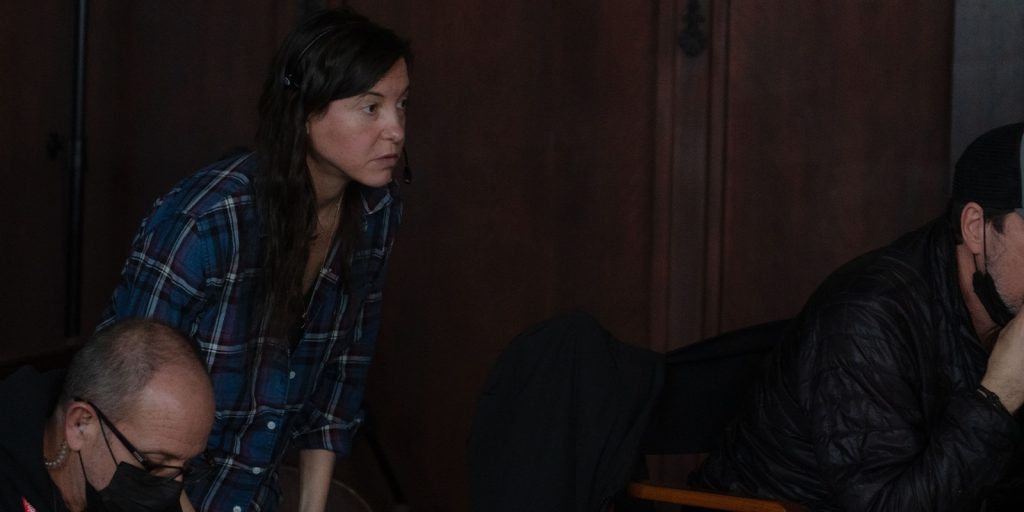
Here, she splits the season with Jeffrey Waldron, a colleague she’s not only known for a long time, but who was “able to jump into [the] conversation […] in an amazing way,” to find his own “amazing success in season two.”
Part of that success – for everyone involved – is the just-concluded series’ aforementioned timeliness. “It was really eerie to watch [events] happen in parallel,” Spera says. “We were all very aware of what’s been happening on the news.”
Meanwhile, the “news” happening in-show unfolds in a quasi-alternate New York – now replete with detention camps – that feels like it took even more dystopic turns after the era of movies like Taxi Driver and The Panic in Needle Park.
Which is likely no accident, as Spera said part of her collaboration with Waldron – along, of course, with the series’ writers, directors, and designers – was to make the show “feel like one cohesive movie. You want it to feel like it was one piece.”
And of those pieces that provided inspiration, it’s also no accident that Spera cited not only the two just mentioned, but also films like The French Connection (perhaps, she says, the “number one” visual reference) and Klute. And for this second season in particular, Michael Mann’s neo-noir, Thief.
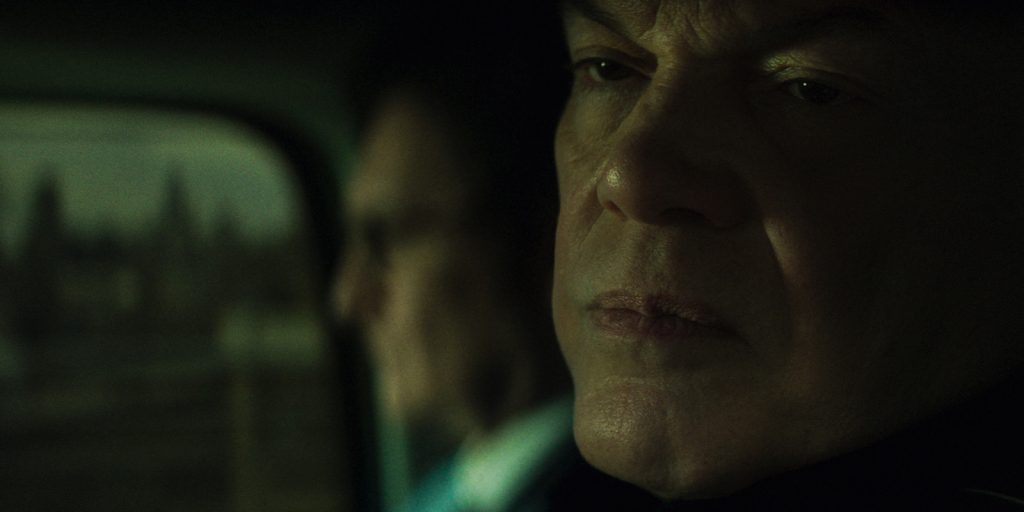
That was part of how she came on board originally, when she “met on it, interviewed [and] they told me nothing, nothing they were hoping for, for the visual direction. I pitched them New York City being a huge character and texture,” underscoring “using ’70s movies.” And even if, strictly speaking, Thief is from the very early ’80s, “that hit with them, which was amazing.”
Of course, films weren’t the only references, as the Daredevil comic has had some fairly storied runs of its own with many of the medium’s best artists and writers working on the title, including Gene Colan, David Mazzucchelli, and Frank Miller, who introduced Elektra to the franchise, often making the stories even more noir-ish.
Miller even visited the set, toward the end of the first season. “Just to have his blessing was incredible,” Spera says, adding that executive producer Sana Amanat “pulled what she called ‘key frames’” from Miller’s work to further set the tone.
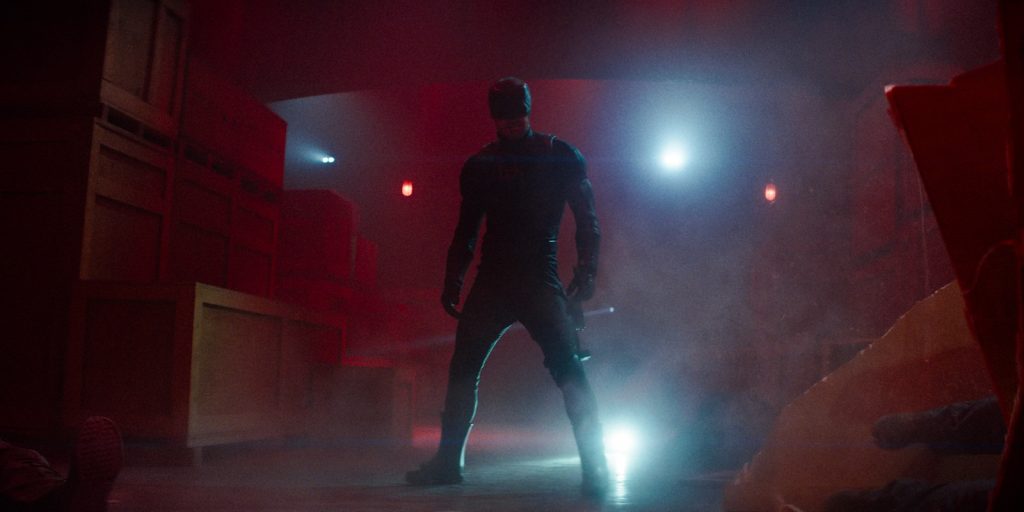
For translating all those inspirations into the series own grit-meets-noir look, with sequences ranging from an opening oner on a contraband-bearing ship in a Red Hook dock, to mayoral boxing matches, street protests, citizen round-ups, assassination attempts, the return of other MCU heroes, and much more, they used ARRI 35s, with anamorphic G Series Panavision Primes that “they graciously tuned for us”, though with the “G” evidently standing for “Godsend”, as in Spera’s comment that they were “godsend lenses to be able to work with.”
She adds that another “cool thing” they were able to keep as a doff of the hat – or perhaps cowl – to the Netflix series was to shift ratios from “2:39 widescreen to full-frame”, keeping a “skinny” aspect ratio for lawyer-turned-crusader Matt Murdock’s POV “sensory” vision.
Spera also talks about the series’ “depth of characters” and how being “more grounded, more rooted in a real psychology” gave them “the ability to take this and push it into these comic book moments that are more noir, more visual. Luckily,” she adds, “it worked.”
Fairly splendidly, too.
Audacious visuals
Another series with a lot of “kingpins” in it – or folks who imagine themselves to be – is the currently-concluding The Audacity. Set in Silicon Valley, it’s a show where each character is convinced that they, in particular, are masters of the world. Or at least their worlds. None of which turns out to be particularly true.
The series is from creator/showrunner Jonathan Glatzer, who, having written/produced previously on shows like Better Call Saul and Succession, knows a couple things about making detestable characters watchable.
The Audacity also serves as an even more unrelenting sequel, as it were, to Mike Judge’s Silicon Valley, where the stakes aren’t just hostile takeovers or the availability of blood boys, but rather the full dawn of pervasive surveillance – including your genetic material – generative AI, oh, and perhaps the end of the world.
Or at least that part of Silicon Valley (convincingly doubled in Vancouver) which, in its third episode, is threatened by one of those unrelenting wildfires we have grown “accustomed” to here, for better and worse, and to which the show’s characters remain even more steadfastly oblivious, lest the flames interfere with a potential, company-saving investor meeting, a rendezvous, or any other aspect of their constructed lives.
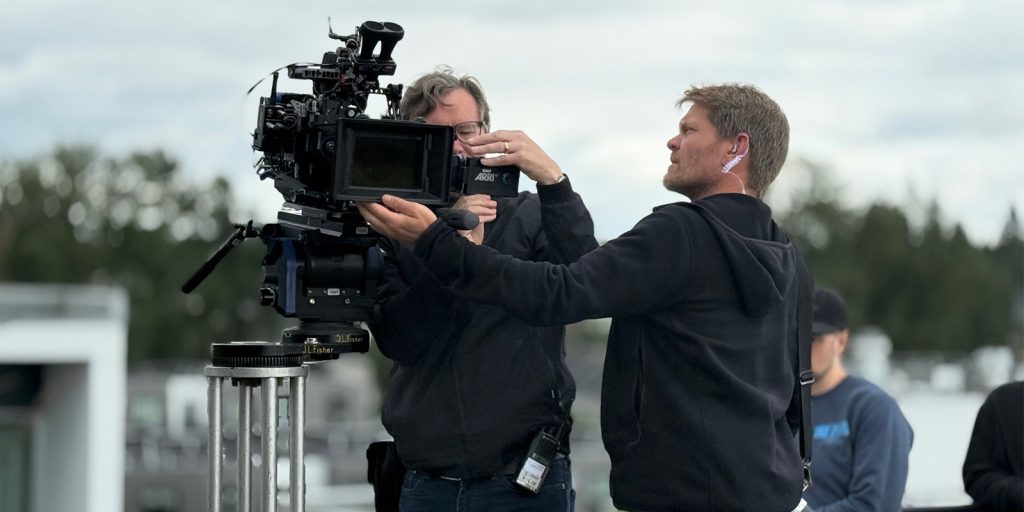
That fire episode was shot by Richard Rutkowski ASC, who split the series’ blocks with DP Paula Huidobro, each working with different directors. We last caught up with Rutkowski when he shot Apple TV’s SF/neo-noir mashup Sugar – some of that even using perhaps Silicon Valley’s most iconic single product, the iPhone.
Here, the company that makes those is simply referred to as “Cupertino”, and the series is decidedly not streaming on a tech company platform, but rather the AMC network.
In an email exchange done during a break while Rutkowski was busily shooting another project, referencing the wildfire episode, he mentioned being “appreciat[ive… of] picking up on this basic point made in The Audacity, where characters are so convinced of their own importance and god-like power in the making and selling of a virtual world [they] cannot see for themselves the power of nature, even as it knocks on their front doors.”
He personally faced some of those knocks, recounting being “in Altadena a day after the wildfires ravaged that community, one where we have many friends and family. The images of that neighborhood in person were almost unbelievable. Similar to the Napa fires of a few years ago, where even the skies of Silicon Valley felt their direct impact and photos sent to us by friends in San Francisco depicted surreal colours and end-of-world textures.”
Rutkowski describes The Audacity as “satirical […] which was attractive to me, and it simply aims to a very different end. Similarly, when Sugar came out on Apple a couple of years ago, it was just after their massive epic Masters of the Air, which I shot two episodes of […] But they were very different shows visually. That’s something I really enjoy, being able to create a stylistic range based on the material and see my own work contribute towards that.”
Though it’s not necessarily work they want viewers to stop and notice, as he adds “our goal is a nearly invisible technique in support of making extreme characters in a fast-paced, dialogue-driven satire seem as believable as possible […] there are times when for all the naturalism a sense of extremely heightened drama is on the screen. The cage fight (that Billy Magnussen’s lead tech bro character) Duncan enters in episode four seems a good example of that, as well as [Zach Galifianakis’ semi-retired billionaire and tech éminence grise) Bardolph’s hilarious WWI re-enactment in episode eight. To reach these more heightened states, we count on our ‘naturalistic’, somewhat ‘observed’ visual style to bridge a believability gap and keep the audience moving with the characters as firmly yet subtly as we can.”
The tools for broaching those gaps were an ARRI Alexa 35 and ARRI Signature Primes “alongside some Fujinon Premista Zooms. We augmented these basics with glass filtration when needed and only very occasionally placed the cameras on the dolly, Steadicam or remote heads. For one shot we placed a Laowa Probe lens on the camera and pushed up rapidly to an unsettling close up of Ruffage (Rob Corddry’s long-suffering Gulf War vet-turned-VA-tech-advocate) during that WWI battle re-enactment. It became an expressionistic statement and brought home his deep PTSD […] as well as the utterly inappropriate idea Bardolph had to invite him to this in the first place.
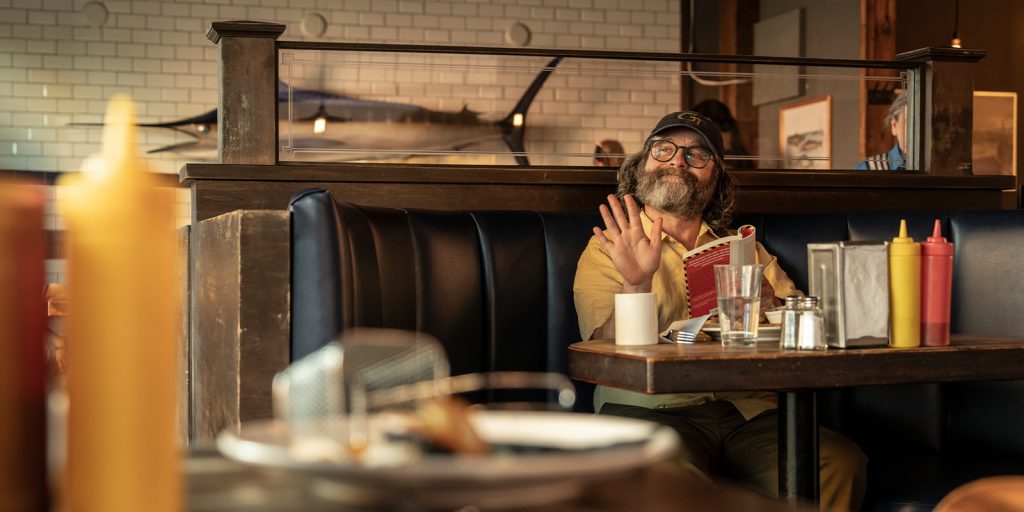
“Otherwise our key look, set out beautifully during (director) Lucy Forbes’ and Paula’s Block One work, was a naturalism seen from nearly 100% handheld cameras, tied principally to characters as they enter the scene in moving shots […] Always busy were the operators Robin Smith and Adam Van Steinberg as well as an excellent DIT, Ryan McGregor. Given a show that mostly plays out handheld in practical locations or on sets built to feel like a true location, this team met challenges daily and I enjoyed their collaboration.”
Hive mind
Enjoyable collaborations –at least on the crew side, if not among the characters – are also the hallmark of Pluribus, the latest show from Breaking Bad and Better Call Saul creator Vince Gilligan, who returns more to his X-Files roots, with a twist on an Invasion of the Body Snatchers-style tale (particularly the San Francisco-set ’70s remake by Philip Kaufman).
Here, though, the proverbial “infection” is one where people become happier, a little more sedate, and a lot more cooperative with each other. And for the dozen or so folks worldwide who haven’t managed to become “of the body” yet – as they termed it in Star Trek’s original Return of the Archons episode, which also shares some of the same themes – they aren’t pursued relentlessly by “the Joined”, as they’re called in Pluribus. Instead they’re puzzledly, exasperatedly tolerated until a “solution” can be conjured for these lone batches of resistant DNA.
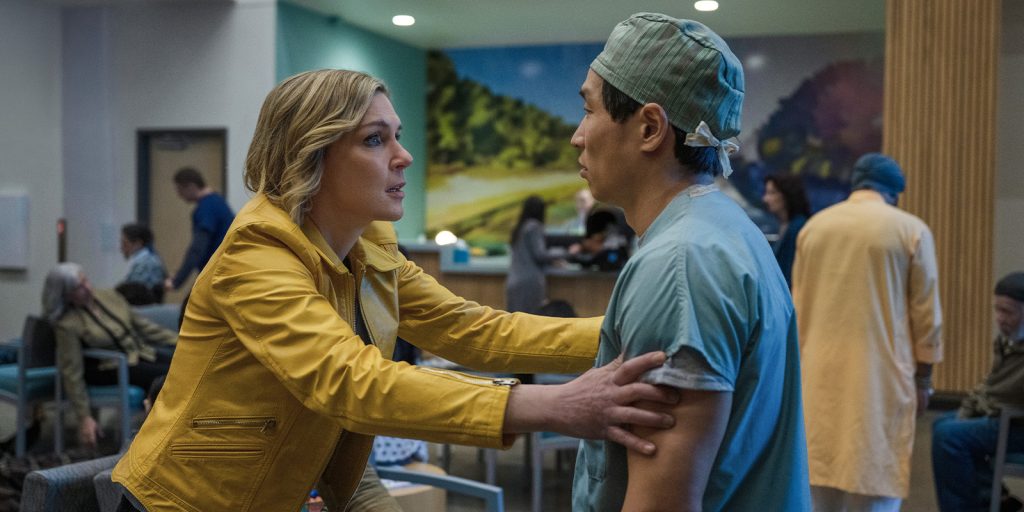
For who, the “hive” collectively reasons, wouldn’t want to become kinder, more fully aware they’re sharing a whole planet with other living beings, while also sharing all the world’s collective knowledge, allowing anyone so moved to fly a plane, cook a feast, troubleshoot any set of mechanics or electronics, or practice medicine or law.
Except in this world, there’s no need to practice law, or for politicians or “leaders” either, which does move things a step closer to potential nirvana.
One holdout though is Albuquerque-based novellist Carol Sturka, placed by Rhea Seehorn, a previous Emmy nominee for her supporting work in Better Call Saul – a show whose own DNA is clearly evident in this particular column.
Sturka writes SF–themed “romantasy”, but is generally reclusive, decidedly non-collaborative, and perhaps even contemptuous of her audience (for whom she has to “closet” some of her characters, to ensure a wider readership). Once Sturka loses her wife to the Joining – if not everyone can quite be absorbed, an even larger segment has a quickly fatal reaction – she becomes even crankier than usual in the face of armageddon.
If, indeed, a massive shift which leaves the world’s infrastructure intact, and the majority of its people still around is armageddon – one of the many philosophical eddies at work in the show.
DPs Marshall Adams ASC and Paul Donachie Assoc. BSC are also veterans of Saul, with Donachie having operated for several seasons before DPing, starting with season five. For Adams, “I did some pickups at the end of season four, some reshoots,” then moved to full cinematography duties in the wake of original cinematographer Arthur Albert’s earlier departure.
There, Adams “inherited the RED Dragon, the only 4k camera at the time,” then moved on to the Alexa 65 for El Camino – the stand alone Breaking Bad movie – where he was “sold on the colour science.”
That has, in turn, led to using the Alexa Mini LF, with Panavision Panaspeed glass, on Pluribus, along with a lot of drones, which, as one might expect, are used for filming, such as over the “adobe chic” cul-de-sac where Struka lives and then holes up, and which is mostly a set of exteriors. But some drones are actually in the show.
As for the working cul-de-sac, production designer Denise Pizzini “made a sketch of [it and] I was able to walk around with my VR goggles on, and look at surfaces, ask for a little bit more room in one place. It was very helpful to be able to use that model,” which was done in SketchUp, which Adams also likes to use. “It allowed me to walk around in the actual space before they broke ground [and determine] what the surfaces were,” as well as planning how different sequences might unfold.
Including those with the drones – with overhead shots of an often empty world (not from lack of people, but because nobody is out and about anymore insistently shopping, commuting to work, etc.), and those that are characters in the show.
At one point, Carol is so unrelentingly corrosive that the hive, who find any harsh emotion discombobulating, decide they collectively need some “alone time” away from her, and so all leave the city. Leaving her there on the cul-de-sac. But! Wanting her to be okay, they also let her know that any groceries, medicines, or anything else she might desire will be delivered to her… by drone.
So “thespian drones” are often coming in and out frame, and in episode, where Struka hopes to have some garbage hauled away, the drone in question is lifting a load that’s too heavy, and winds up crashing into, and wrapping itself around, a nearby lamppost – a fate assiduously to be avoiding for the working Inspire 3 camera drones – leaving the trash to drip back onto the street.
Gilligan, Adams reports, is often a stickler for getting the details of such scenes right, asking things like “how heavy would a garbage bag have to be to bring a drone down?” (which for Adams evoked a similar question about “how much weight would be the right amount of weight?” to line a refrigerator with cash, in El Camino).
Though, as Donachie summarises, “the whole point here is to tell the story in a visually interesting way,” noting, like Adams, how they’ve “pretty much […] planned out the shots we’re going to use for the sequence.” Except in those instances when those frequently Emmy-nominated actors under Gilligan’s purview “will sometimes use something different. [But] that’s the great script writing involved here. Vince always wants the audience to believe it, basically.”
That realism necessitated that they “travelled a lot this season”, with Montana and Spain standing in, respectively, for numerous snowy climes, and international ones, South America in particular. “Each episode has its own locations, fundamentally,” Donachie says, though even with all the travel, they still just “have two DPs , but the same crew for everything else.” When needed, “we’ll get a third camera [but] we don’t specifically have second units.”
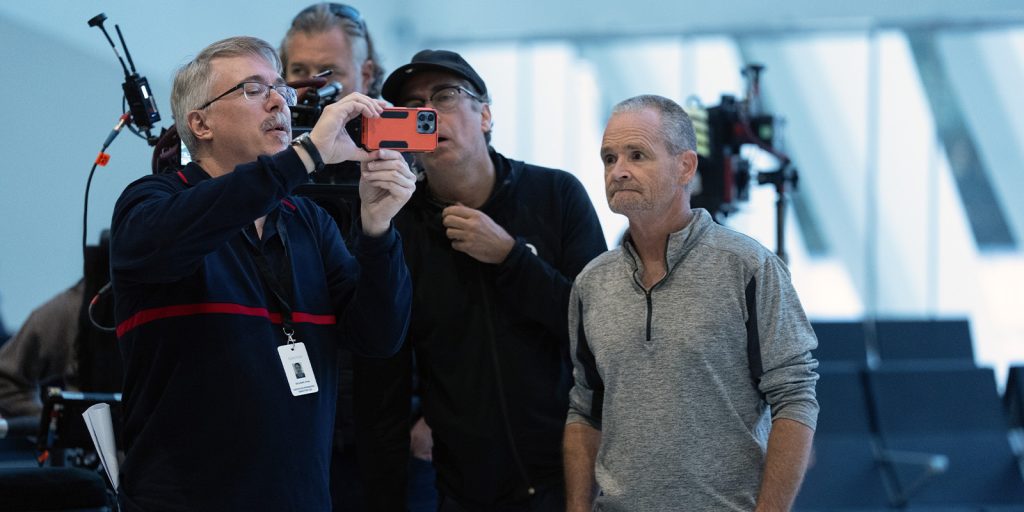
Donachie also mentions the degree to which that shared crew helps both him and Adams with all that prepping, praising the “great camera crew we’ve had – a crew we’ve had for 10 years,” including key grip Jason “Jake” Cross, A camera operator Matt Credle, and first AC Christopher Norris. And gaffer Waylon Brady “will show me the new lights that have come out – ‘do you want to use one of these?’”
Donachie used what he describes as “a complete array – a lot of HMIs, Tungsten, and LEDs.” Though he has a particular philosophy to go with it: “If you’ve got three lights burning, switch two of them off. It’ll probably look better.”
And will also confirm, as with most of our shows this time out, that other “ground truth”: that we’re never too far from the shadows after all.
Until next month though, enjoy all the spring light coming your way, and we’ll see you then.
@TricksterInk/[email protected]