
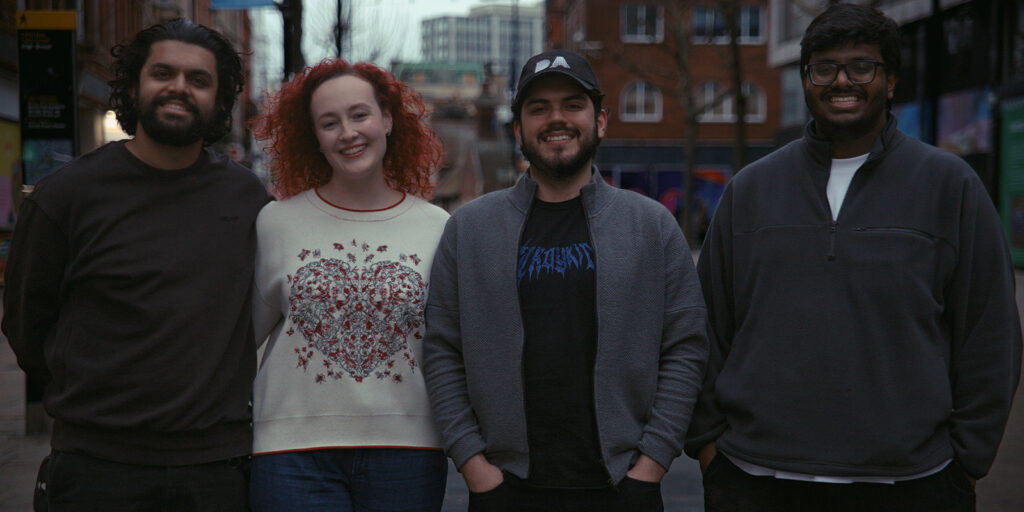
DISAUTHORITY, a “next-generation independent studio challenging traditional models of filmmaking by unifying production and post under one roof”, is built by filmmakers who grew tired of fragmented workflows, diluted creative vision, and the bureaucracy of waiting for permission to progress.
The studio operates on a simple but demanding principle: “If you are obsessed with the craft of filmmaking, the size of your budget will never dictate the quality of your work.”
The studio operates across two branches: post-production services under DISAUTHORITY, and original filmmaking through DISAUTHORITY Originals.
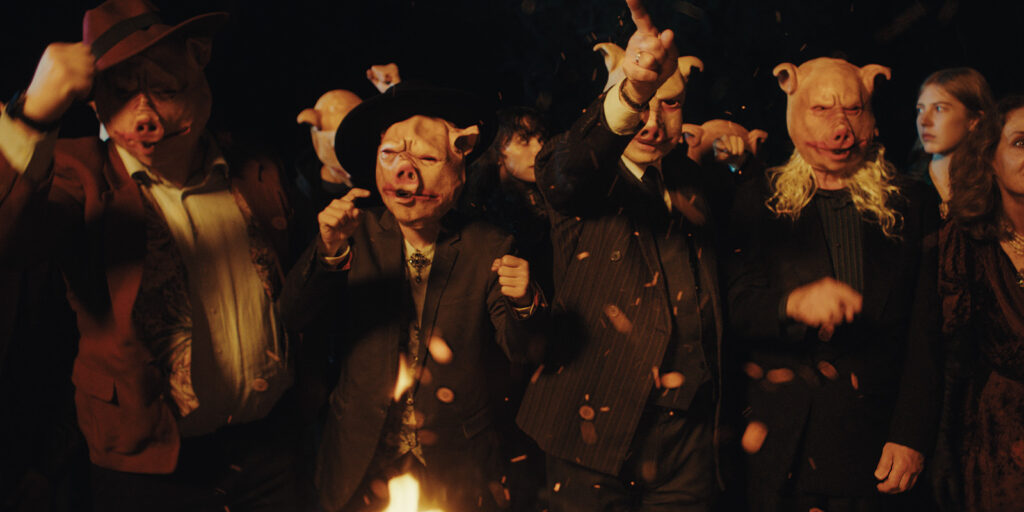
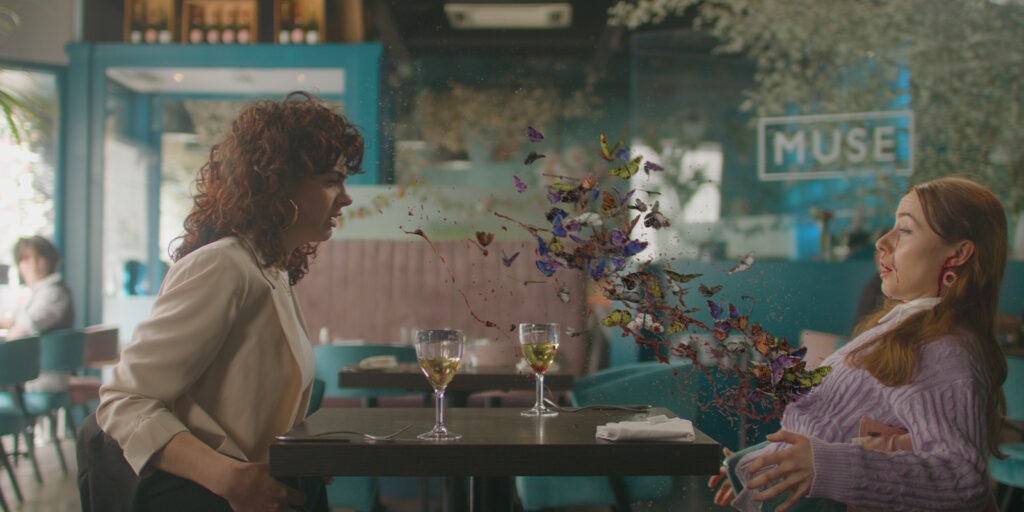
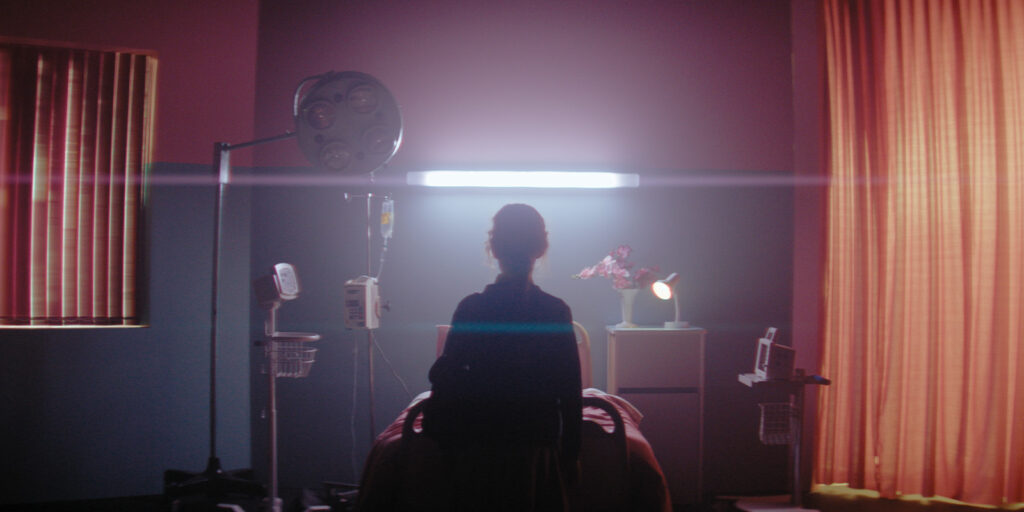
That work now includes the completion of principal photography on its debut feature film, Sticks & Stones, a grounded supernatural horror written by Lily Howkins.
With post-production already underway entirely in-house, the film is scheduled for release in 2026 and marks a defining milestone for the studio’s integrated model.
“Sticks & Stones represents exactly why our studio model exists,” said Maria Shevtsova-Hundsnes, DISAUTHORITY vice president & producer.
“The film is ambitious and emotionally driven, but it’s also practical and intentional. Being able to carry a project from development through to post with the same creative team means nothing gets lost along the way.”
Origins rooted in “creative obsession, not access”
DISAUTHORITY’s story begins not with industry access or established backing, but with a passionate necessity to create films.
Growing up in Norway, managing director Marcus Hundsnes developed an early interest in storytelling and visual expression shaped by a fierce resilience and creative independence.
As a teenager, he worked multiple day and night jobs – stocking shelves, cleaning, and doing whatever was available to save enough money to apply to film school in the UK.
“I wasn’t born into film,” Hundsnes shared. “I had zero industry lineage, just this hunger to make films and with no interest in waiting around for it to just happen.”
That determination led him to MetFilm, where he met Zain Haris and Raiyan Chinoy, now colourist and VFX supervisor respectively at DISAUTHORITY. All three shared a passion for the craft of filmmaking, but also frustration with how post-production was treated within student and independent filmmaking – often rushed, outsourced, or approached as a technical afterthought rather than a creative process.
Haris brought a deep understanding of colour and image systems, while Chinoy had a strong aptitude for VFX and technical problem-solving. Marcus began pulling them into early post jobs, cleaning up edits for other students. Workflows were tested and rebuilt, and every project, regardless of scale, was treated as an opportunity to refine craft.
“We were just trying to make things look better than they had any right to,” said Haris. “There was no money, no safety net, just a shared obsession with getting it right.”
“In the early days, every project was an experiment,” added Chinoy. “We were learning creatively and technically at the same time. That mindset is still central to how we work.”
A modest £300 paid post job became a turning point, proof that their work had tangible value. What followed were increasingly ambitious shorts, late-night sessions, and the gradual formalisation of systems that would become DISAUTHORITY’s technical foundation.
Entering production and formalising a studio
The shift from informal collaboration to structured studio began in earnest in 2023, when Hundsnes was approached by producer Shevtsova to collaborate on a short film that required both production and post support.
Rather than splitting responsibilities across multiple vendors, the project was handled end to end by the same team. “What immediately stood out to me was how integrated everything already felt,” Shevtsova reflected. “Post wasn’t something they tacked on at the end, it was part of the storytelling conversation from the beginning.”
That collaboration became a test bed for a new way of working: independent filmmaking powered by post-production infrastructure and creative continuity.
As further projects followed, it became clear the team was already functioning as a studio, just without the formal structure. “We realised we were already doing the thing people spend years trying to build,” Shevtsova continued. “So the question became: how do we protect this way of working and make it sustainable?”
From that came DISAUTHORITY’s dual structure: DISAUTHORITY Originals, the production arm developing and producing original films, and DISAUTHORITY, the post-production studio supporting both internal projects and carefully chosen external work.
The two arms operate symbiotically, creating a closed creative loop that allows ideas to be conceived, produced, and finished with clarity and control. “Post isn’t a handover for us,” Hundsnes emphasised. “It’s a creative pillar.”
Genre, perspective and deliberate curation
DISAUTHORITY Originals is defined by genre storytelling that prioritises emotional truth and character. Shevtsova’s influence is particularly felt here, with a strong emphasis on female-led narratives and women in key creative roles behind the camera.
“Genre gives you a framework to explore complex emotional ideas without flattening them,” Shevtsova said. “It allows stories to be unsettling, intimate, and honest at the same time.”
Curation plays a crucial role across both Originals and post-production work, but the studio is careful to frame this not as exclusivity, but as responsibility. “We’re selective because we want to be deeply involved,” Shevtsova explained. “If we take on a project, we’re committing our time, energy, and creative care to it. That’s the only way the work stays strong.”
Original projects are assessed for creative alignment, production and market viability, while post-production collaborations are structured with an emphasis on focused, hands-on support rather than an industrial pipeline approach.
Scaling infrastructure without losing the human core
DISAUTHORITY has grown steadily from three people working out of a garden shed to a close-knit team of 15. That growth has required significant investment in infrastructure, from server capacity and backup systems to calibrated colour suites and high-end VFX pipelines, but the studio has been equally intentional about protecting its culture.
“Growth doesn’t have to mean bureaucracy,” Shevtsova offered. “We’re very conscious of not building layers that slow people down or disconnect them from the work.”
Hiring decisions prioritise both skill and compatibility. “People who work well together make infinitely better work than people who don’t,” Hundsnes added. “That’s not just a nice idea, it directly affects quality.”
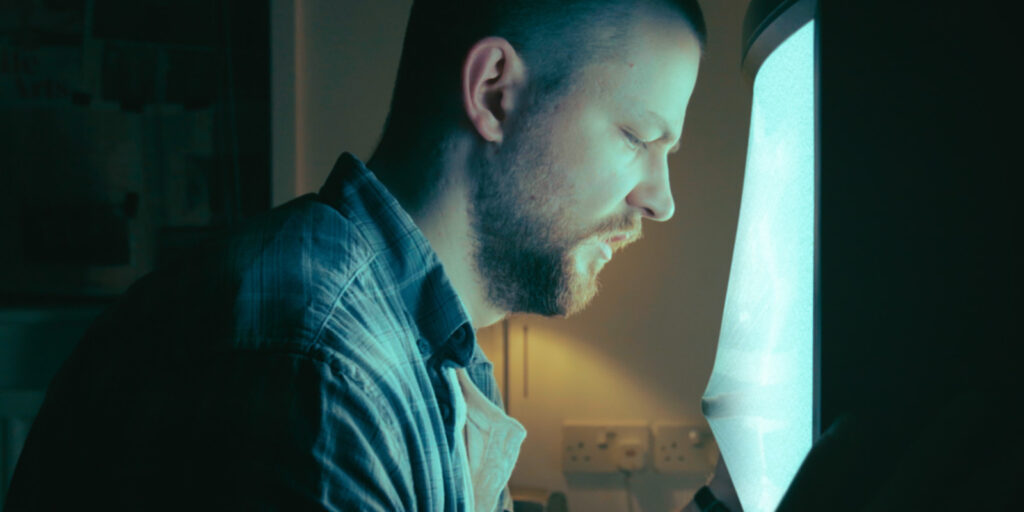
The studio operates with small, senior teams, fast decision-making, and a high degree of trust. New hires are given real responsibility early on, reinforcing a culture where people are expected to care and contribute meaningfully.
“If someone has the instincts and the ability, we don’t make them wait years to matter,” Shevtsova added. “That’s how you keep people invested and how the work improves.”
Sticks & Stones and looking forward
With filming now complete on Sticks & Stones, DISAUTHORITY is entering a pivotal phase. The film, a grounded supernatural horror, is now moving through post-production entirely in-house, ahead of its 2026 release.
“For us, this film proves the system,” Shevtsova noted. “It shows that this model can support a feature without fragmenting the process or compromising creatively.”
Alongside Sticks & Stones, DISAUTHORITY Originals is developing multiple new genre scripts, while the post-production arm continues to expand its work across long-form projects, music videos, trailers, and branded content.
“We’re not trying to replicate the old studio system,” Shevtsova stated. “We’re building something smaller, sharper, and more human – where people are trusted and the work actually matters.”
Hundsnes put it plainly, “We’ll keep growing, but we’ll always operate like filmmakers first. Obsessive, collaborative, and unapologetic about caring.”