
The next era of filmmaking will not be defined by technology alone as remaining connected to our authentic creative voice continues to be at the heart of the cinematographic process, says Christopher Ross BSC.
Creativity
/kriːeɪˈtɪvɪti/
Noun
the use of imagination or original ideas to create something; inventiveness.
“companies are keen to encourage creativity”
the ability to produce or use original and unusual ideas:
“Creativity, ingenuity, and flair are the songwriter’s real talents.”
As we move deeper into 2025, the rhythm of pre-production schedules and post-production workflows continues to accelerate as the global filmmaking world returns to pre-strike activity levels. For crews and companies alike, it is a welcome relief to be back on set, telling stories.
Two and a half years ago, just before 2023’s SAG-AFTRA/WGA strikes, I wrote about the creative process and emergence of AI image generation. I considered the future of our collaborative relationship with generative artificial intelligence, and as the AI landscape has evolved dramatically since those early experiments with static generative imagery, I thought it was time to revisit.
In recent innovations, Google’s Veo 3 can produce cinematic videos with character speech and environmental audio – all from simple text prompts. Runway’s Gen-4 model advances character consistency, camera movement, and overall motion. Perhaps most intriguingly, Midjourney has joined the video generation space, offering 4K resolution alongside its established photorealistic lighting, challenging established players in this rapidly evolving field.
These developments force us to revisit JP Guilford’s foundational work on creativity I explored in 2023. His conditions for the creative process, aiming to produce novel responses, to solve problems, to sustain original insights remain as relevant as ever.
Consider traditional pre-production: script breakdowns, storyboards, visual references, concept art and lighting plans. Each stage has always been a dance between logistical reasoning and creative intuition. Can AI tools assist in this process, logistically and creatively? Should shortcuts be encouraged by automating this process? Where does the divide between repetitive human labour and the creative process intertwine and overlap?
John Berger, in Ways of Seeing, observed that the relationship between what we see and what we know is never settled. If AI systems can generate footage appearing indistinguishable from traditional cinematography, fundamental questions about authorship, authenticity, and artistic integrity emerge. Are we witnessing the birth of a new visual language? Do we risk losing something essential about the craft itself?
Rick Rubin’s profound meditation on creativity, The Creative Act: A Way of Being, reminds us creativity is about “helping people transcend their self-imposed expectations” and returning to an authentic way of being. This wisdom becomes particularly crucial as we navigate AI-assisted filmmaking. Google’s introduction of Flow, an AI filmmaking tool for creative collaboration, suggests a future where AI serves not as a replacement for human creativity but as an amplifier of our most genuine artistic impulses.
The danger is not the technology itself, but our potential disconnection from creativity’s true source: our unique perspective, individual voice, capacity for authentic expression. AI can generate infinite variations with subtle or extreme differences, but only a human (the artist) can determine which variations serve truth, story, and the human heart.
JP Guilford’s concept of “Divergent Thinking”—artistic fluency, flexibility, originality, elaboration—becomes even more crucial. Our fluency may now include the ability to craft precise prompts that yield meaningful AI results, but more importantly, it encompasses our deepening sensitivity to what feels true versus what merely appears impressive.
Paradoxically, when hundreds of visual concepts can be iterated in a matter of hours this acceleration of creativity demands even deeper discernment, not less. As Rubin writes, creativity flourishes “when living in a state of harmony and balance,” not in the frantic consumption of possibilities. Where do the possibilities lead us? Down the metaphorical “rabbit-hole”?
Midjourney’s Video V1 is a maturation of the technology; aligning it more closely with traditional cinematographic storytelling. By allowing prompters to define start and end frames, content can be generated more linearly; moving the technology beyond the fragmented, experimental outputs of early AI video generation. The ability to maintain narrative coherence across AI-generated sequences brings these tools closer to professional production workflows.
New dimensions
As innovation deepens and greater photorealism is achieved, we must be vigilant against the homogenisation of our visual language. AI systems have been trained on existing content, with differing ethical stances regarding copyright, leading to an inherent feedback loop that reinforces conventional visual approaches rather than pushing boundaries.
When AI can generate any visual style we’ve seen before, our value as artists lies not in technical execution but in our capacity to access what has never been seen. The algorithm knows the statistical patterns of millions of images; image-makers know the weight of a single human moment.
The collaborative nature of filmmaking takes on new dimensions in this AI-integrated environment. Directors, cinematographers, production designers, editors and VFX must develop new vocabularies for communicating creative intent. Traditional boundaries between departments will blur as AI tools enable rapid cross-disciplinary experimentation and iteration.
Looking forward, I can envision a hybrid workflow where AI is both creative partner and practical problem-solver. The artist’s capacity for emotional nuance and narrative understanding remains irreplaceable in guiding these powerful tools toward meaningful expression. The most sophisticated generation tool will never have a connection to an audience’s ability to recognise truth, beauty, and authentic emotion.
Filmmakers have always bridged technology and the human condition. In Rubin’s terms, we are monks in the temple of creativity, maintaining practices that keep us connected to our authentic artistic voice while wielding these tools of unprecedented power. The child-like recognition Berger described—seeing before words—aligns perfectly with Rubin’s return to creative innocence.
We must become more present, not less; more attuned to subtle emotional truths, not less; more committed to our unique perspective, not less. In this age of AI, we are called to be more human, not less. More creative, intentional, and thoughtful. The lenses of tomorrow may be powered by algorithms, but they must be focused by the human heart.
Stay creative.
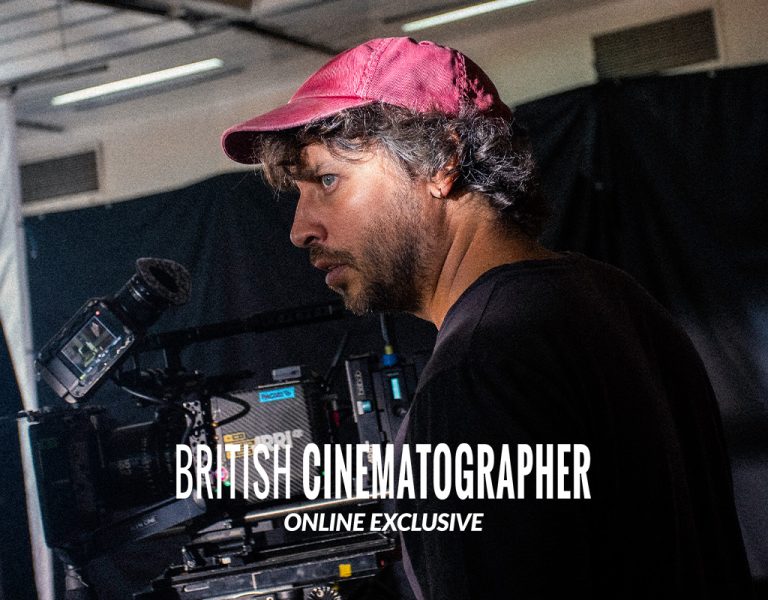
/imagine prompt: A cinematic still of Christopher Ross, a cinematographer who specialises in the photography of narrative feature films and TV series, seen here looking through the viewfinder of a motion picture camera, surrounded by lights and traditional film equipment on a dimly lit and atmospheric film set –ar 2:1 –style raw –V7 –weird 100 –stylize 50