
CHASING THE DRAGON
Bill Pope ASC reveals how he balanced soaring aerials with intimate drama, navigating northern Europe’s bleak weather to craft a sun-drenched fantasy adventure fit for IMAX.
If you’re among those arching a sceptical brow at the arrival of yet another How to Train Your Dragon film just 15 years after the original, rest assured — this is no simple retread. The 2025 release is a live-action reimagining of the beloved 2010 animated classic, itself loosely inspired by Cressida Cowell’s 2003 novel.
Returning director Dean DeBlois closely mirrors his original, with Universal intent on preserving its emotional core while expanding character depth and cinematic scale.
For the uninitiated: the story follows Hiccup, a Viking teen who befriends a wounded dragon named Toothless, upending his tribe’s warrior legacy. Starring Mason Thames, Nico Parker and Gerard Butler, the film was shot in Belfast with a score by returning composer John Powell. Produced by DreamWorks and Universal on a $150 million budget, it premiered at CinemaCon and opened in US cinemas on 13 June.
Here’s a little-known secret: Sir Roger Deakins CBE ASC BSC was originally offered the chance to shoot the film, but he declined—and recommended Bill Pope ASC (The Matrix, The Jungle Book) instead. Pope was then approached by producer Marc Platt’s team, with whom he’d previously collaborated on Scott Pilgrim vs. the World. “Adam Siegel, who co-produced How to Train Your Dragon, also knew my work,” Pope says. “He called and said, ‘We are looking for someone who has experience in visual effects, comedies, and with young actors. And I suppose I ticked those boxes.”
TWO FORMATS
On this occasion, Pope he was charged with shooting in two formats, with a brief to shoot a blend of fantasy flight sequences, stormy locations and a desire to capture emotional intimacy with children at its heart.
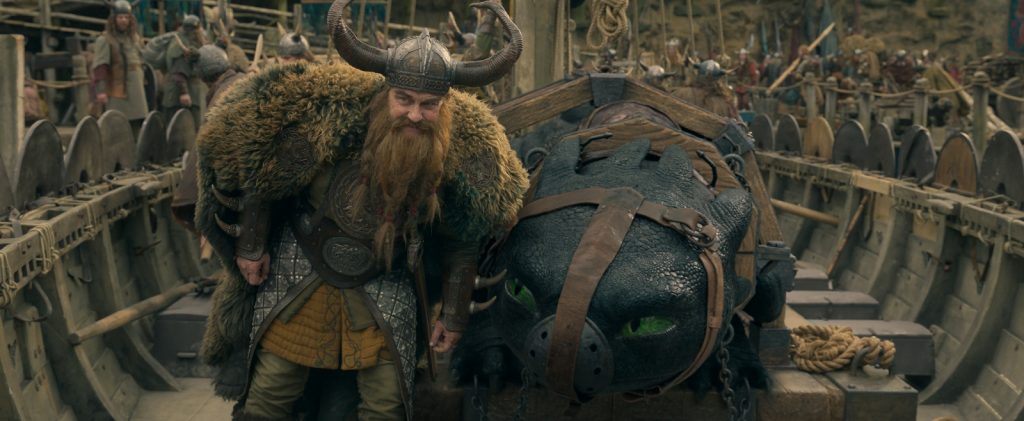
“For all the dialogue and interpersonal stuff—basically anything with actors interacting on the ground when not flying or fighting—we used the ARRI Alexa 35 with C series anamorphic lenses,” Pope explains. “It gave us texture, intimacy and softness. That’s the human side of the story.”
“The late change came just two weeks before shooting when “the studio suddenly wanted an IMAX release,” he recalls. So at the last minute Pope brought in an ARRI LF and shot 50% on that format. “I didn’t feel confident using an IMAX camera going over that rough terrain, especially with kids and the limited number of shooting hours. It could have been dangerous. We used the camera for flying and action sequences though.”
Pope says the switch wasn’t just aesthetic—it was logistical. “I didn’t want to haul IMAX cameras across jagged cliffs with child actors. But the LF gave us scale without the bulk. So it was a hybrid approach—intimate ground scenes in anamorphic, epic aerial work in large format.”
ENHANCING THE STORY
Lighting challenges in filmmaking can vary widely, encompassing both technical and logistical hurdles. From simulating sunlight in adverse weather to accommodating complex setups across diverse locations, cinematographers must adapt creatively. Each scene demands careful planning to ensure the lighting enhances the story, mood, and characters—despite any environmental or production constraints.
For Pope and his crew, the challenge lay in how to convincingly recreate the warmth and glow of Nordic sunshine while shooting in the cold, overcast, and often unpredictable northern climate of locations like Iceland, Scotland, Northern Ireland and the Faroe Islands—a task that required precision, creativity, and technical ingenuity.
“The Faroe Islands are beautiful, but they’re swarming with white seabirds,” he says. “You can’t just send a chopper close to a cliff face. You’ll hit birds or worse. So we used drones and LiDAR scans, then modelled the environments in post. We created digital flight paths based on real scans.”
And how did it cut together?
“I can’t tell the difference,” he says. “In the edit, drone shots, helicopter shots, CG composites—they all blend. That’s the magic.”
Along with lights supplied by Universal Pixel and Sumolight, which he says played an integral role in balancing colour, contrast, and the illusion of natural daylight.
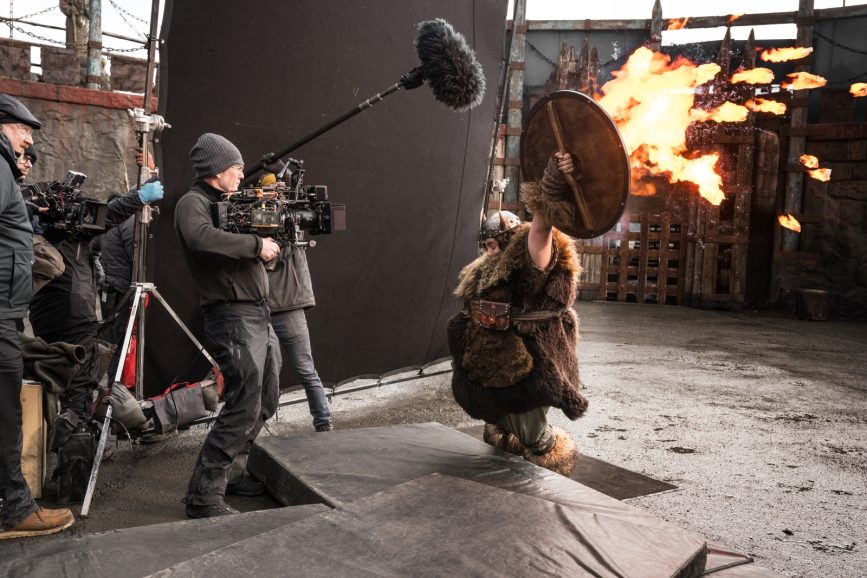
“They’re just bright and small,” Pope says. “We struggled because we were supposed to shoot in August, but then the writers’ strike and actors’ strike delayed us to January—in Belfast, where it snowed the first week and rained the rest of the time. That weather wasn’t in the script. We leaned heavily on Soft Suns, Sumos, and 18Ks to inject warmth—sparkles of sunlight—into a very grey environment. Without that, the whole thing would’ve looked depressing and off-tone. We really didn’t want that.”
Pope says his team used the lights creatively at different scales: a Sumo for sunlight through a window, a bank of Soft Suns to fill an arena. It became a game of optical illusion—using artificial light to suggest natural optimism.
ENTER THE DRAGON
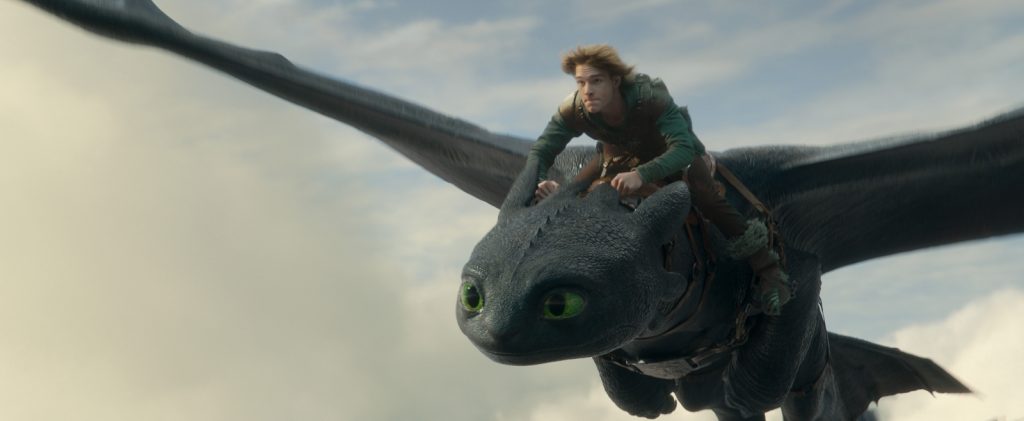
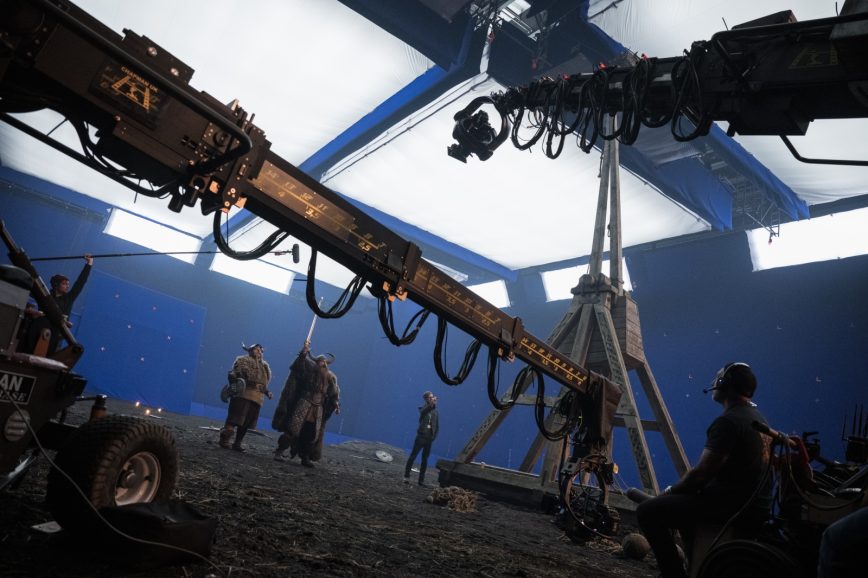
Pope says the most challenging aspect by far was the flying sequences, for a multitude of reasons. “That took months of preparation on its own,” he explains. “We had a dedicated unit, led by Sam Renton, setting things up in advance—getting the gimbals working, plotting out shots—so that when we arrived, neither the actors nor the crew were left waiting around. It was a real test to make everything look believable. The slightest movement or mistake could break the illusion. So you can imagine how tricky that was.”
Needless to say, there’s a healthy dose of VFX and screen work in the latest iteration of How to Train Your Dragon, but it’s something Pope didn’t deal with too much.
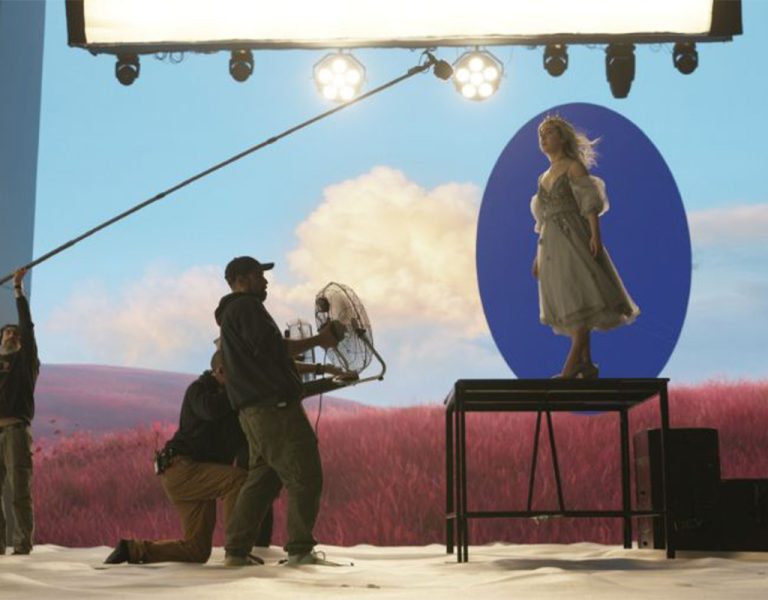
On VFX choices, he says blue screen was preferred over green.
“That decision came from Christian Manz at Framestore,” Pope adds. “It’s a technical choice more than an aesthetic choice. I would leave that up to the team that has to work with that choice for the months of post.”
The VFX supervisor, Christian Manz, says he recommended aerial cinematographer Jeremy Braben and Helicopter Film Services after collaborating with them on Fantastic Beasts. Their brief while filming in the Faroe Islands, Iceland, and Scotland was to capture the epic scale of the landscapes — as if seen through a dragon’s eyes.
“Dean (DeBlois) wanted the landscape to become an awe-inspiring character in itself, and make sure the end result would convey the best of all those places,” he adds. “Ultimately, we wanted people in the cinema to feel like we’d felt when zooming along in a heli – you’re in a tight canyon, then the world opens up, and everything is stretched below you. We wanted to create that visceral feeling in the stomach again, in our Dragon flying shots. So that was Jeremy’s brief. He knew the framing would ensure the camera could reveal changes in landscape, such as feeling close, then feeling wide of objects.”
LESSONS LEARNED
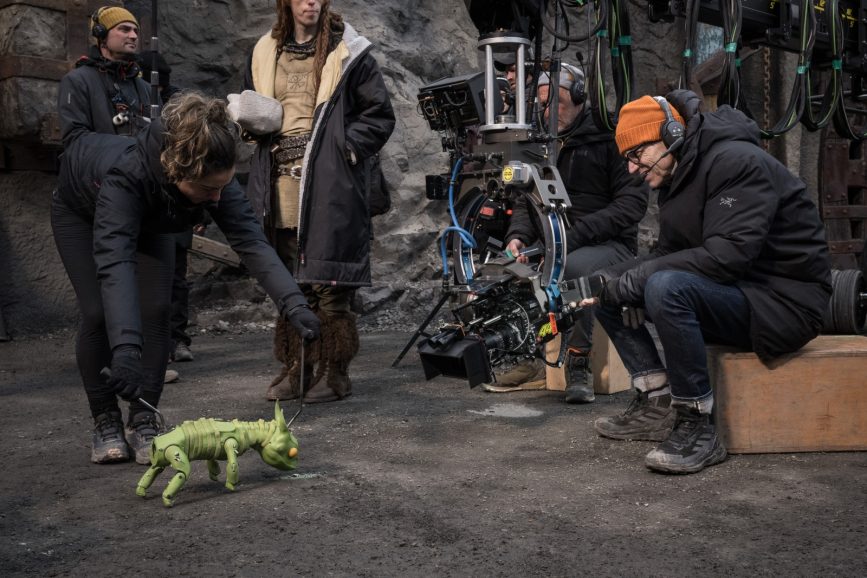
Was there a steep learning curve? For Pope, it wasn’t so much about mastering new tools as it was about adjusting his approach—finding new ways to work within a team and share responsibility.
“I really concentrated on collaboration this time. I wanted to be part of the team, not just the camera guy. That meant trusting people—really trusting them.”
He tells a story about the dragon sequences. “The actors rode on gimbal bases to simulate dragon movement, but translating the shots from concept to reality was so complicated that we brought in another DP, Sam Renton, to work on it full-time while we were shooting. The gimbal work was at the end of the schedule, and hadn’t been completely conceived when we started shooting, so someone had to work out how the flying was accomplished on the stage in the real world. So, we trusted Sam to work out the practicalities. Like scaling camera moves and gimbal moves to make the scene dynamic, like working out how to light the flying in a realistic manner that matched the vast bible of background plates, etc. It was a massive job that the first unit didn’t have the time or bandwidth to do while we shot the rest of the film. We checked in, but I let him lead, and of course he did an incredible job.”
The result? A smoother process, and stronger relationships. “The camera team, led by Karsten Jacobson DFF, the grip team led by Guy Micheletti, the lighting team led by Jonathan Spencer, the VFX crew led by Christian, the second unit led by Patrick Loungway, and Sam’s unit—we were all in sync. And I learned that giving up rigid control doesn’t mean losing quality. It means gaining expertise.”