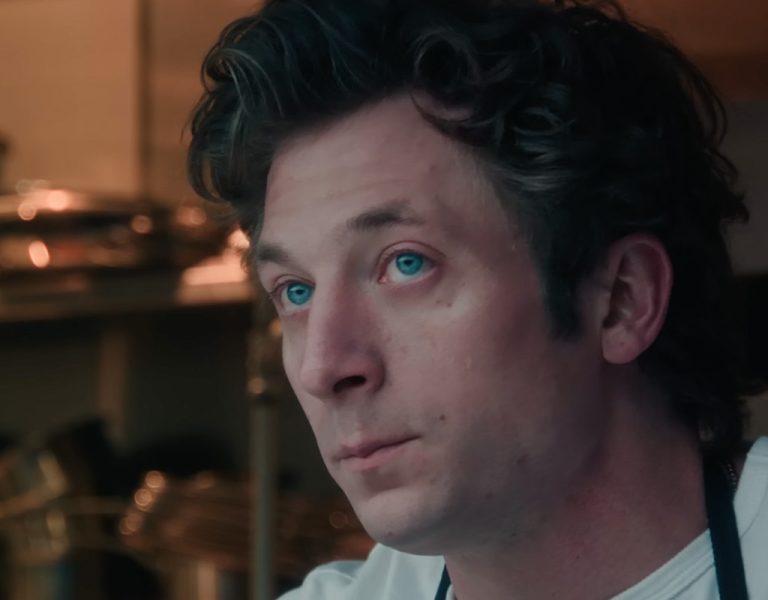


The Birth of a Mall Goth is a fantastical comedy short film which stars Emily Carey (Geek Girl) and Lola Blue (A Kind of Spark).
Shot by Toby Martin (TM) and written and directed by Samantha Locock (SL), the film was produced by Poppi Knight, with Victoria Emslie (VE) on board as executive producer. Mall Goth will premiere at Newport Beach Film Festival in October. The short film follows autistic teen May as she explores the imaginative reasons her sister has become a goth overnight.
The team behind the short film reveal all about bringing it to life – while avoiding cinematic tropes about autism.
How did you explore lensing, framing, or lighting to sensitively reflect May’s experience and her imaginative world?
SL: I was planning this film for several years, so I had quite a strong vision of how I wanted it in my head (also maybe the autism). I remember having a meeting early on with Toby where we went through the script, and I had a reference for every shot… maybe a bit overprepared.
TM: It’s such a pleasure in my experience when a director comes in with this sort of energy and vision for the story they want to create. The refs Sam-E shared with me were full of colour, very vivid, but also very naturalistic in their style which I was drawn to. It’s easy on a short to bite off more than you can chew, so we started chatting about what might work and what might not.

Could you share how you collaborated on defining the look and tone of the film from the outset? What visual inspirations did you draw upon?
SL: We looked at the colour of ’90s/’00s films as wanting to pay homage to that time as well as show that joy for life teenagers have, also with it being a film about goths it would be easy to fall into everything feeling dark and high contrast. I love Sam Levy’s work in Lady Bird (set in a similar time to Mall Goth) and the grade was a big inspiration. By making May’s world colourful, fun, and cinematic, we wanted the audience to connect with her emotionally – to laugh with her, share her awe, and ultimately feel empathy for this neurodivergent teenager trying to understand her sister, when in actuality she’s trying to understand herself. We also looked at more contemporary references such as Ladhood and Big Boys.
TM: Ha! Yes, Big Boys. As soon as I saw this reference I knew I had to pull in a favour from my good friend Will Pope, who was the gaffer on Big Boys. He came on board with that knowledge and the sensitivity from a project like that and fed it into Mall Goth.
SL: When Toby told me he’d got Will on board I was so excited! It’s not every day you show someone your dream lighting references and they then get on the person who helped to create that.
TM: With Sam-E’s extensive reference library, the groundwork had already been laid, and it gave me a solid foundation to start building out some ideas for individual scenes with references coming from all over the place. For example, I leaned on references from both Sex Education and The Last of Us for the moments in the dining room where a lot of the storytelling takes place, two pretty different articles I’m sure you’ll agree.
There were some commercial references too, but ultimately it was the lo-fi look of We’re All Going to the World’s Fair that was in the back of my mind throughout shooting. I love the visuals in this film, it felt so appropriate with the home-made style of the story, and gave me confidence to be a little less than perfect with a few things.
SL: I think that’s a really good point about the home-madeness of it, we’re going through the imagination of a teenage girl from the 00s so we wanted that to show.
Are there particular visual motifs–colour palettes, focal techniques, or camera movements–that you employed to differentiate between May’s internal imaginative experience and her external reality?
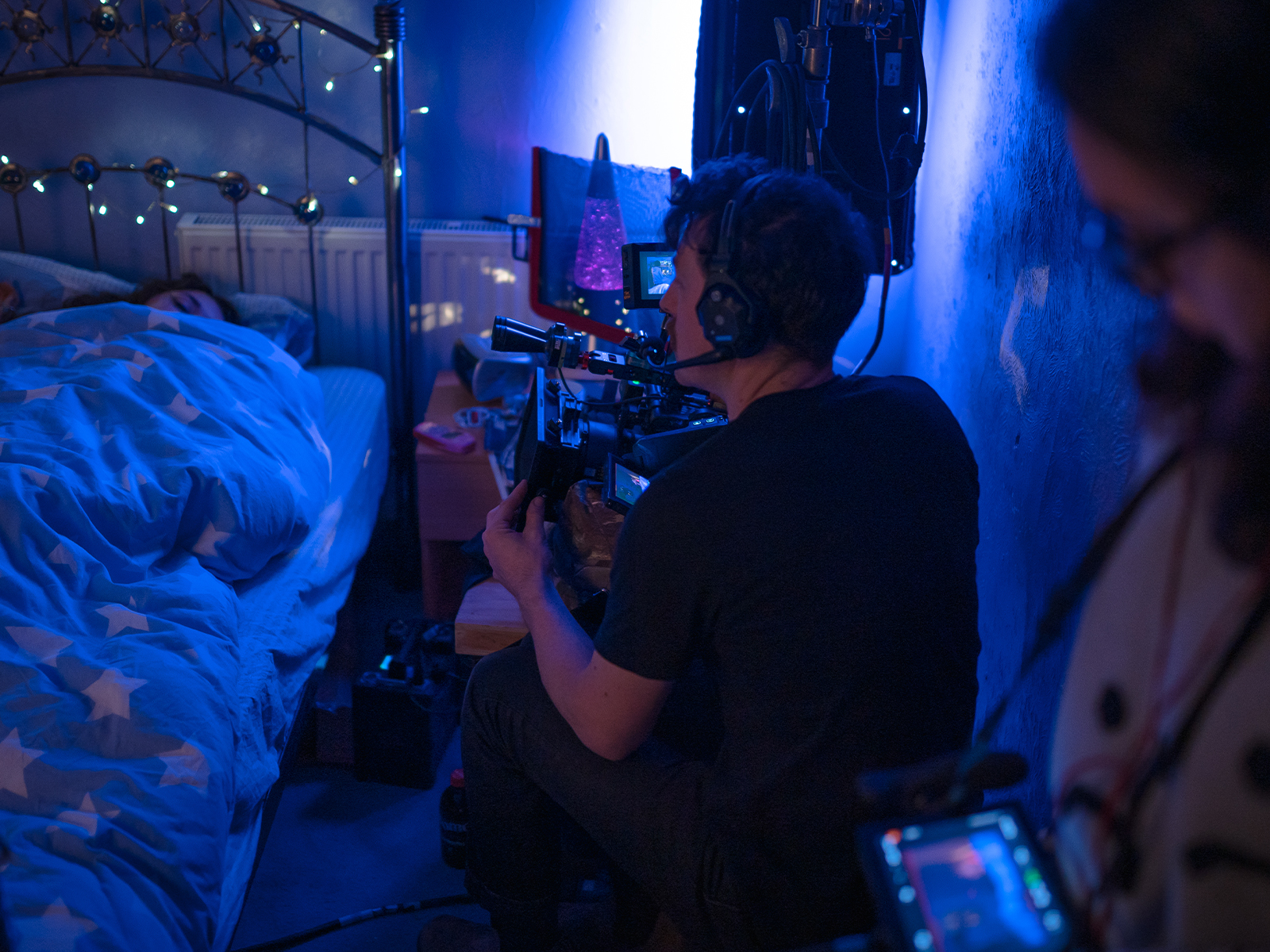
SL: Everything is through May’s lens – she leads us on the journey through this film, and everything is her perspective on the world around her. We blur the lines of genre a bit: the beginning feels like we could be going down a mockumentary route, we have naturalistic sections, and a sci-fi/horror section. We wanted each scene to feel like stepping into a slightly different world, but one that always belonged to May’s interpretation – sometimes clouded by her imagination. Leaning into lighting changes and different styles of operating and framing, while keeping consistent visual motifs that thread the film together.
By being in May’s world, we tried to mirror her process – when she’s being a bit cheeky, the camera is more playful; when we’re having a more tender moment, it’s slower and more controlled.
TM: Completely, that conversation about how the camera behaves in each scene as we jump through time and situation was hammered out pretty solidly during prep. There’s a variation of Steadi, handheld and sticks throughout and I’ll admit I was a little nervous throwing so much into the mix in such a short amount of time, the film is completely out there in it’s way of thinking though, so it sort of makes sense that our perspective is always shifting with the ebb and flow of May’s energy. I’m very happy with how it landed.
On that, I think shorts have to feel like a safe space where you can throw out the rule book a little in order to learn. It could have been a swing and a miss, but with the solid crew around us I knew we were set up for a win.
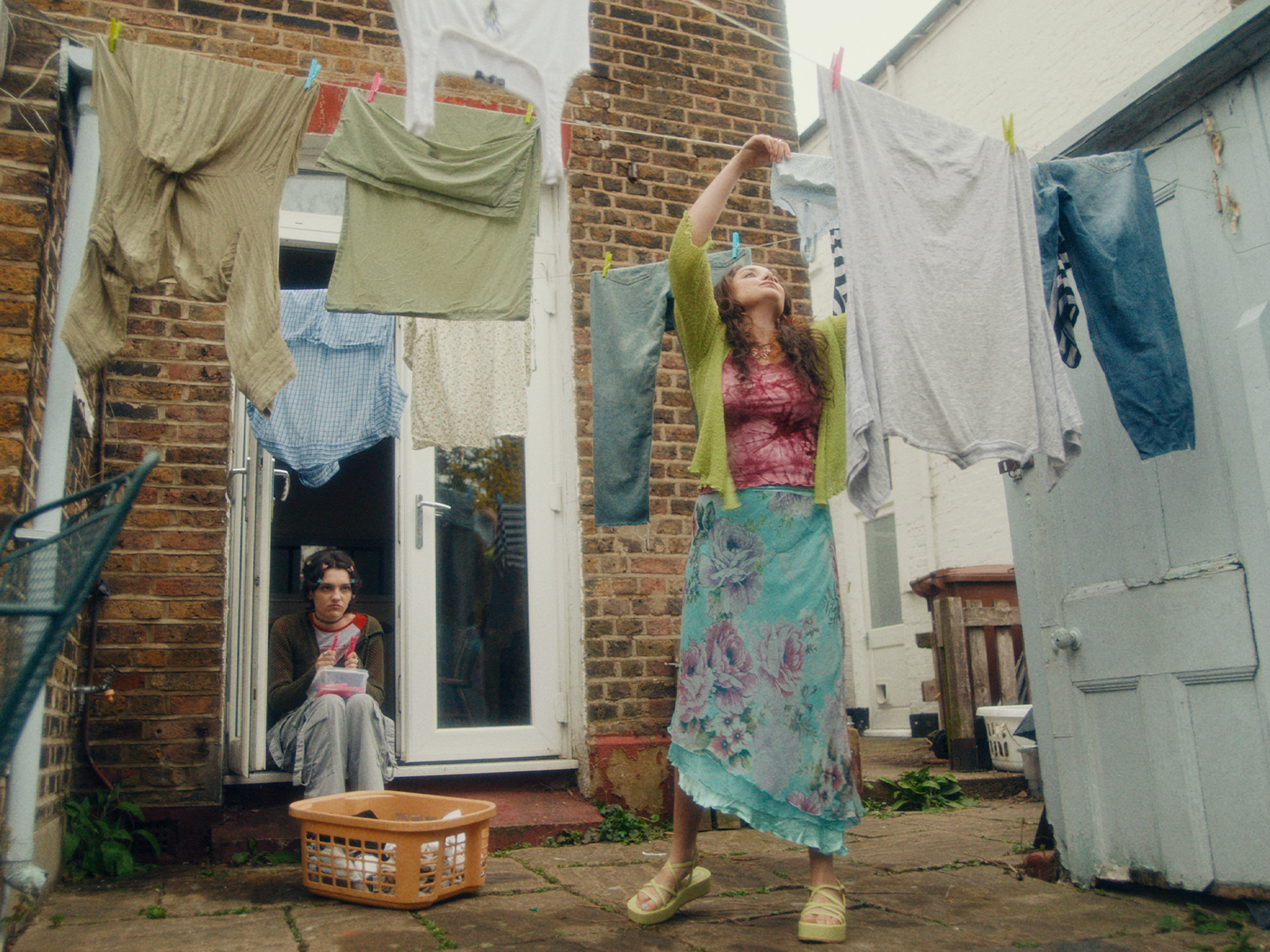
SL: We also wanted to show May and Gemma’s sisterly relationship and how that closeness fluctuates as teen siblings. Biting comments can be defused by a smirk so we looked to show this through composition and blocking levels (also somewhat tricky when our older sister was shorter than the younger sister!) – Gemma often stands above May, but when Gemma is unsure or May is in control then she stands higher in frame.
Samantha, how did your lived experience of being autistic influence not only the characters, but the way you wanted to tell their stories? What measures did you take on set to ensure that filming was as accessible as possible?
SL: I was conscious of not using done cinematic tropes about autism – May is an autistic character (somewhat based on myself), and there’s not a lot of AFAB autistic representation that I can see myself in. So I wanted this to be a window into the playful and surreal ways brains can create understanding of a situation. This film is silly, and it knows it, and it’s proud of that. Not every film about autism needs to be serious.
We had checked in with Em and Lola about whether they had any access needs and we actioned the accommodations so that we could ensure the set was inclusive as possible. Stim toys were encouraged.
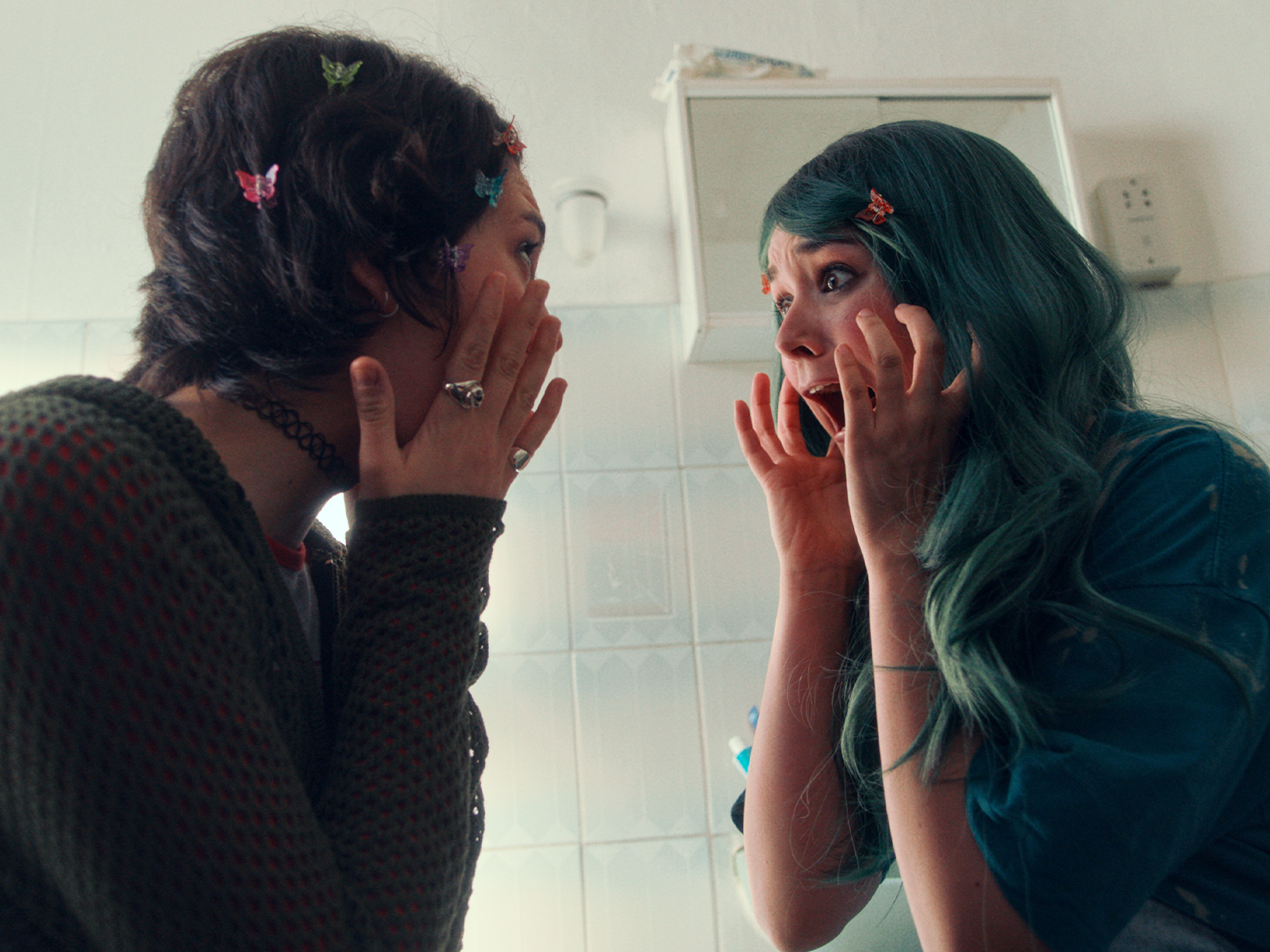
Looking back, which cinematographic moment or sequence in The Birth of a Mall Goth are you most proud of something you feel truly conveys May’s inner world or the film’s unique tone?
TM: For me, the moment where Gemma witnesses a few goths across the street stands out. We spoke about having this moment of the world slowing down, and there were a few moving parts to this one shot. With an iris rack, pushing in on Steadi, and then a punchy LED source introduced manually halfway through, I never expected the shot to work as well as it does; big thanks to Jonny Iseli and Devan Clarke-Sheward for the collaboration. I also love the match cut night stuff in the bathroom, I’ll admit we did go a bit more sinister with that – long live goth.
SL: It’s very sinister but I think that adds to the charm. We’ve all been there when you’re home alone and you see or hear something creepy… you just don’t expect it to be your sister being birthed in the garden. The build up to the egg reveal is pretty fun. We took a while to work out colours with production designer Omar Kent to decide on what colour fit the film, felt out this world, felt gothy and would look cool. It’s the most out there bit of May’s surreal internal logic for understanding her sister.
TM: I’ll add one more thing: the sequence where May is breaking the fourth wall as she travels through the garden is a perfect example of the quirky nature of this film, it cuts from static, to Steadi, and then to handheld, with a seamless transition of drama to doc and back to drama, with a big reveal at the end. Read that back and it sounds completely crazy, but watch it and it works within the context of the narrative.
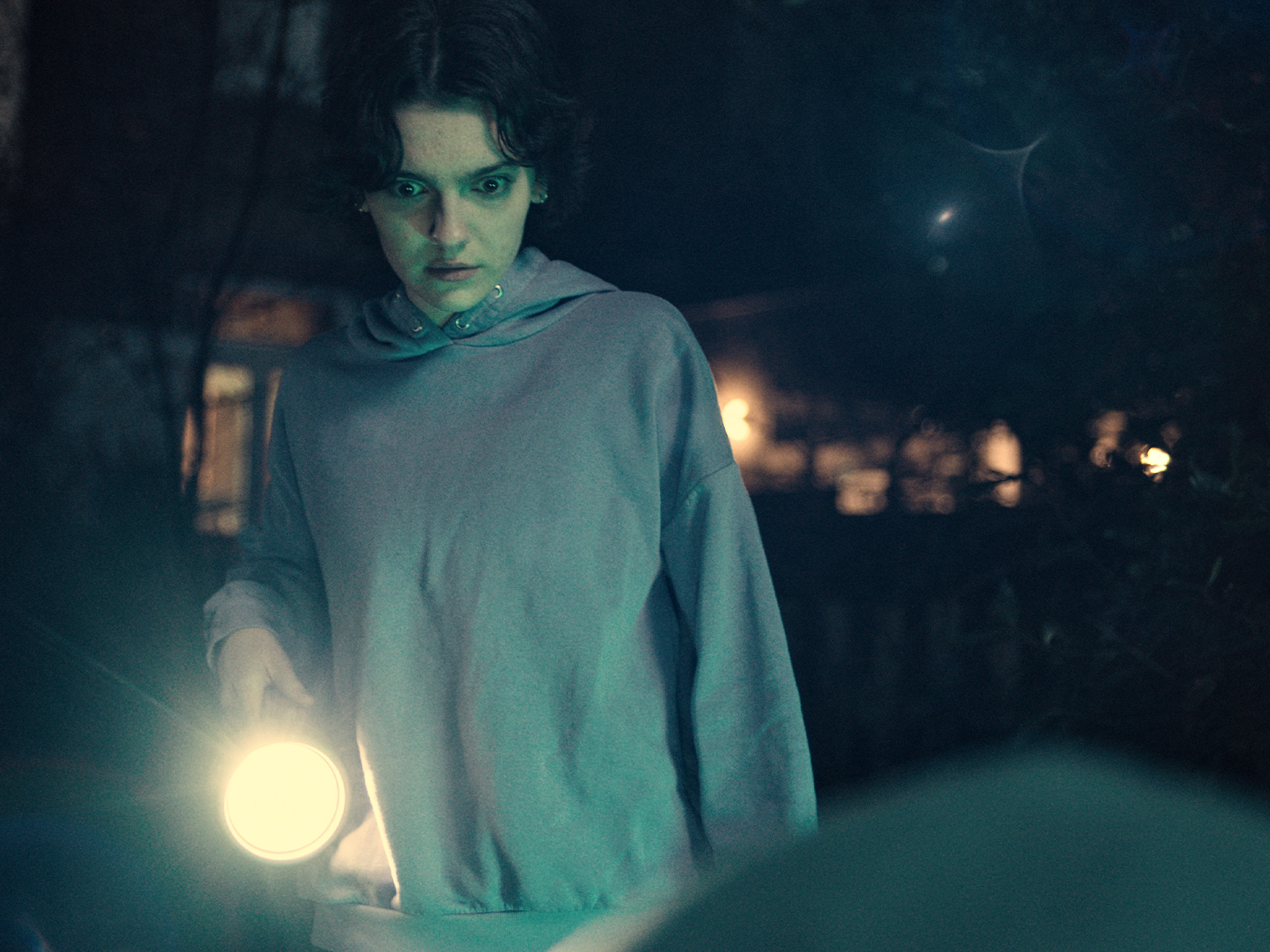
Can you speak to the camera bodies and lenses you selected for The Birth of a Mall Goth, and how technical choices supported storytelling, especially for navigating between grounded reality and fantasy?
TM: I’ll admit I’m a little guilty of going with my gut when it comes to equipment, I get a good feel for the project and tend to commit pretty early on to what I think is going to work. I’d love to believe that’s down to experience, but I think I’ve always just been more motivated by the lighting side of things in order to find the look.
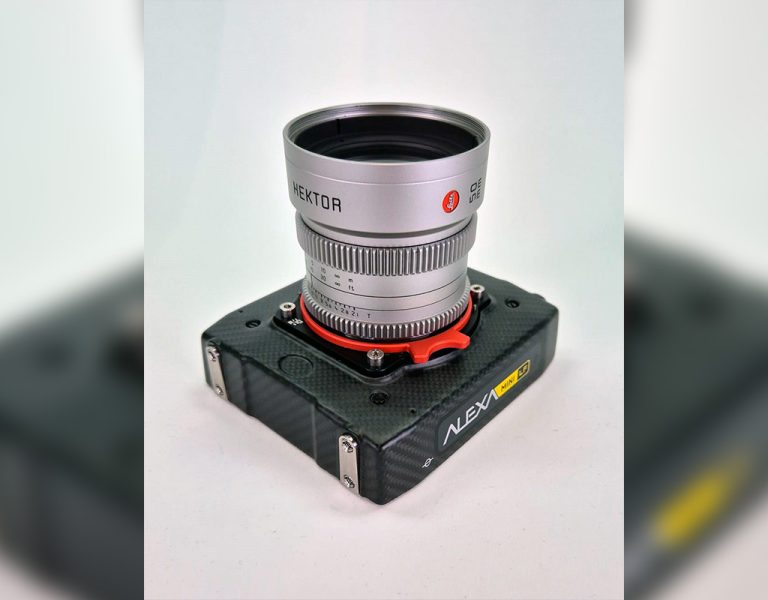
That said, once again I was kindly supported by The Unit Bag with kit; Alex, Dustin and Joe are all so helpful. Knowing the space we were shooting in I chose to shoot with Mini LF for the sensor size just to give us a wider field of view and a little more fall off. I’d had a great experience with Blackwings on a short earlier in the year paired with the LF and felt they’d sit well here, especially with some of the more commercial refs I mentioned earlier.
SL: You’ve gotta love the Arri look.
TM: Lighting was kindly provided by SHL, I owe these guys a lot; we opted entirely for LED for the speed and small footprint, and being able to supply that with a portable power station really helped out on location.
Having a package that works on all fronts is so important with shorts; I work in the lighting department when I’m not behind the camera and I think that’s a strength when it comes to shooting with limited resources, I see first-hand what comes off the truck day to day, I know what we can get away without, and a few little hacks to make the most out of a floor package when time is tight.
I’m also finding with time that sitting down with a good old-fashioned pen and paper and drawing out every scene top-down and working through the exact amount of equipment right down to stands and even distro that can be recycled throughout the shoot is essential in my process at this level. It’s a lighting-first approach that stems from experience gaffing; it means on the day the technical aspects maintain a certain choreography allowing more time for the director and the cast to get to work.
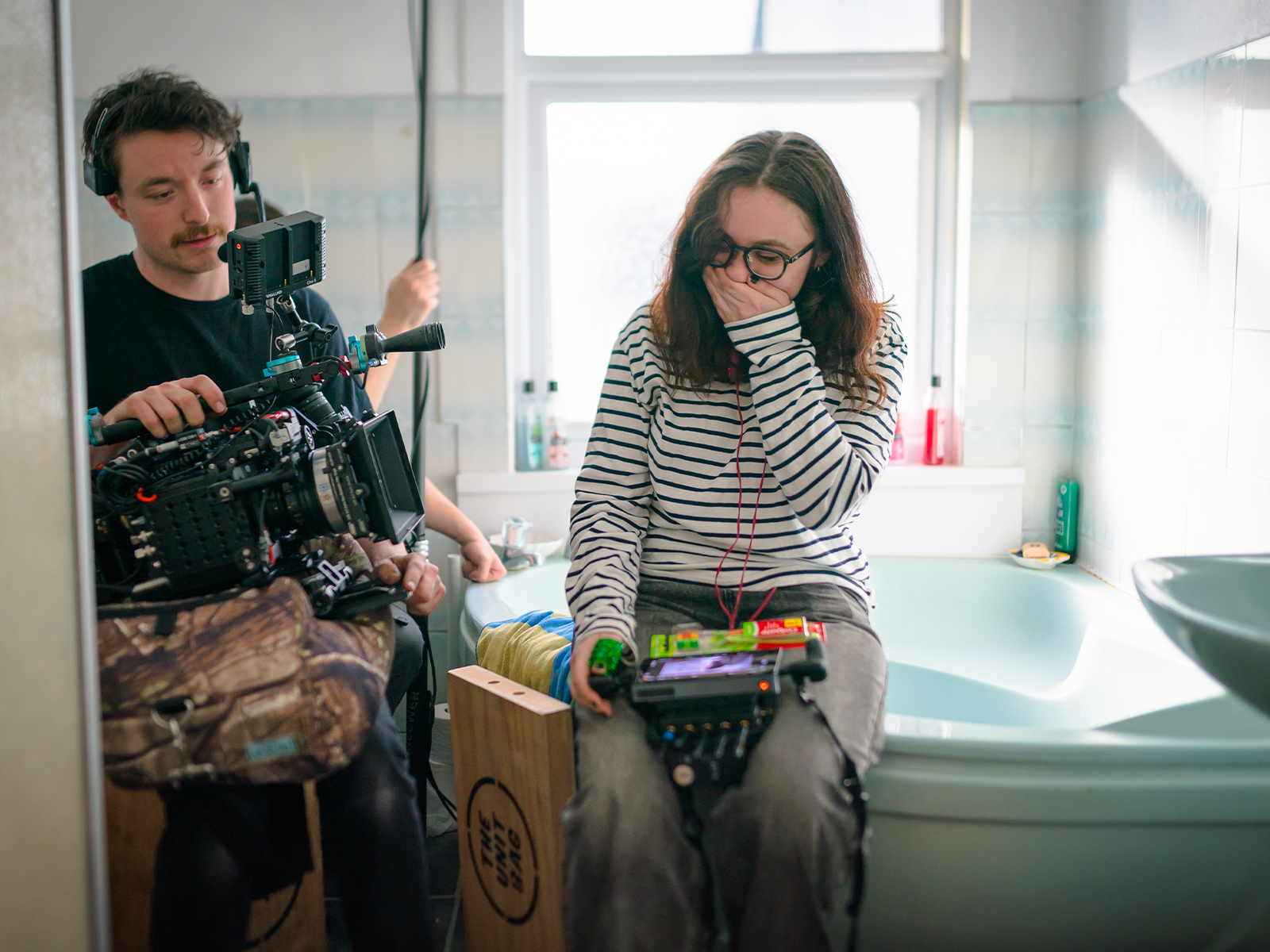
Which elements of the film were most challenging to shoot and how did you overcome those obstacles?
TM: The speed, mixed with the variety of set-ups; the lighting team were leapfrogging us almost every step of the way so we could walk into a space and shoot immediately, which can only happen when you’ve got the people you can rely on. That, I think, is my biggest takeaway from the multitude of projects that have come to life this year – get the team right and everything else will fall into place.
SL: The timescale was pretty intense. Every scene is either a different location or a different time of day so the crew worked incredibly hard to bring it to life in two days. I’m incredibly grateful that we could bring together such a bunch of such passionate and kind people. Also maybe when Ryan (sound recordist), Emily and I got somewhat trapped in the bathroom for a while when a lighting change was happening but the camera, positioned in the door, couldn’t be moved – Toby kept us all amused though.
TM: Ha! If we’re not having fun, we’re not doing it right.
What do you hope audiences, or fellow cinematographers, take away from the way this short film integrates autistic perspectives both in front of and behind the camera through visual storytelling?
VE: For Primetime, The Birth of a Mall Goth encompasses everything we are trying to do: uplift marginalised voices across HOD, crew and in-front of camera positions. Platforming those with lived experiences to tell their own stories in a way which is steeped in authenticity, helps move media representation away from harmful tropes, and gives people more of an insight and understanding into another’s perspective, as well as setting an example of best practice throughout the production pipeline, drawing from personal experiences.
In partnership with Primetime.