

What inspired you to become a cinematographer and work in this area specifically?
My inspiration almost certainly came from my upbringing, as my mother was an artist and my father a science teacher. Growing up in Cornwall as a surfer, an appreciation of my environment and the nature around me quickly became ingrained.
During the pre-digital 90s, far from the movie and TV industry, I was failing my A-level Maths, while Physics and Chemistry were also quickly losing their allure, much to my dad’s dismay. At the same time, a friend gave me an old Praktica MTL3 SLR 35mm film camera. Within a couple of months, my life had changed completely, and I was heading to art college — in a direction I could really get behind. I absolutely fell in love with it! Using technology to make images, and using images to tell stories, interested me intensely — it had its hooks into me. This was what I wanted to do!
Productions would come to the West Country, and I’d somehow get attached to them. I was blown away by the blend of art and industry. In junior roles, I learnt the ropes while studying Film and Photography at college.
This wild and happy period segued into another exciting period of filming extreme sports world tours throughout my 20s. This gave me a great taste for global travel, adventure and exposure to extremes. Sports, travel and adventure eventually led back into science documentaries and natural history.
Fundamentally, I prefer to focus on real environments, real people and real events. Over the years, it has led to the most treasured series of personal experiences on and around the camera. I wouldn’t trade it for anything.
Please share an outline of the production.
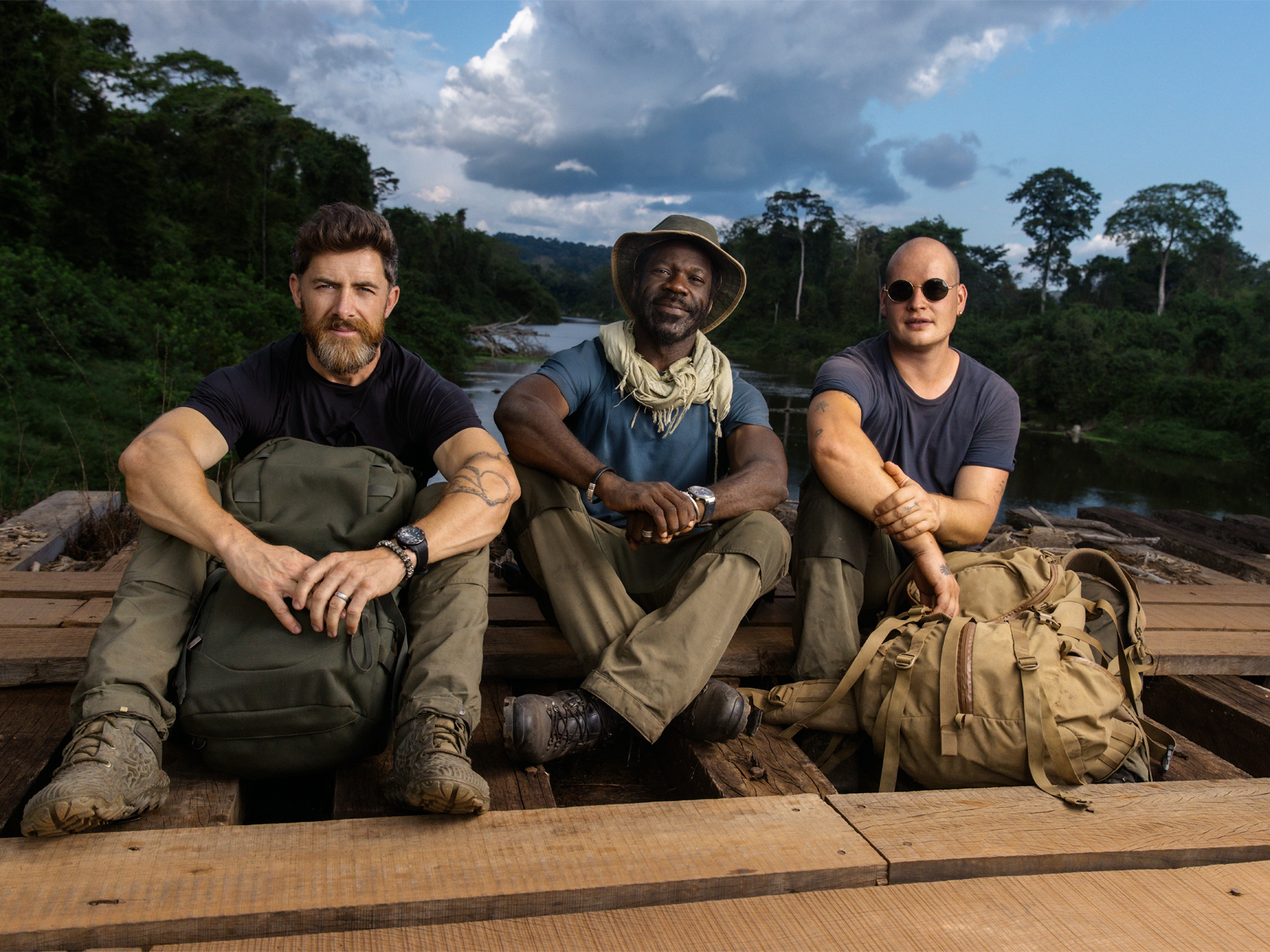
The Wild Ones is a six-part documentary adventure series that follows a team of wildlife experts. They travel to remote and unforgiving environments to find, film and help protect critically endangered species.
Aldo, Vianet and Declan, our three presenters, are super talented and passionate about wildlife and wild environments and, consequently, conservation. It’s kind of Top Gear meets Planet Earth diary sequence. Very informative and very entertaining.
How different was the production from previous projects?
This was a new beast altogether. It felt very ambitious in scale, very adventurous and genuinely challenging. Provisions to help mitigate the inherent risks included hostile environment training and some advanced first aid tuition. These expedition shoots were perfectly executed by the Offspring production team and local fixers, who completely understood the specific demands of these kinds of expeditions. The consequences of not getting the health and safety element correct were very real — especially when getting to a hospital meant 3–4 days’ travel by boat or by 4×4.
98% of our shoot days started by falling out of a jungle hammock or rolling out of a tent in the wilderness somewhere, bleary-eyed, praying for coffee. There’s a lot to deal with even before you pick up a camera: extreme heat and humidity, ticks, leeches, bitey things, stingy things, tummy bugs, large carnivores that want you on the menu, forest elephants that might crush you whilst you sleep. Fungus that, in a few days, will consume your camera and quite happily grow under your skin in some dark corner.
But still, by far the most dangerous animal we might have encountered was human — the poachers who still view the animals as a resource, or potentially the organisations that see conservation as a threat to their endeavours. I’m quite pleased that, as it turned out, we had no confrontations.
How did you decide upon the visual language and how did you work with the director to achieve it?
Series director Alex Ranken and I concluded we wanted to make it feel immediate, intimate and immersive. We wanted the cameras as close to the conversation and action as possible, with the narrative unfolding as it happened. Our principal aim was to take the viewer on a journey with our presenters. Where they go, the camera goes. As the guys discovered something, we — the viewers — discovered it at the same time. If they went trekking, we were trekking. If the guys were hanging off a rope or being tipped out of a small boat, we needed to be rolling out and getting soaked with them.
It became apparent that it’s exceptionally important to get a genuine reaction the first time, in the heat of the moment, rather than try and construct it later with more favourable framing and light. On top of this, Aldo, Vianet and Declan have such great rapport, you’d never know when a gem might pop out during unscripted banter. Consequently, we opted to cross-shoot as much as possible, with long takes becoming the norm — and with a wink from the director, we would keep rolling after he called cut to capture that inevitable comedic moment.
How did you go about devising the shot list?
We didn’t work to traditional shot lists. We took a broad approach each day, keeping our style guide and treatment in mind. Filming documentaries, I feel, is opportunistic; you capitalise on what is in front of you, attempting to impose great photography on moving targets, always trying to pull a rabbit out of a hat and make the most of a tough situation. To support the director further, you continuously assess the content and how much coverage you have from behind camera. The virtual editor in your head is busily spotting the gaping holes in a future edit suite timeline and plugging them with cutaways, POVs, reaction shots etc.
Where was the series shot and why? Did the location present any obstacles?
The series filmed Malayan tigers, Javan rhino, Mongolian bears, Caucasian leopards, Western Lowland gorillas, and offshore in the North Atlantic to film right whales. These threatened and endangered species live at the very edges, quite simply because very few people live there due to how hostile and remote these locations are, and it can’t be underestimated the additional challenges this creates. Deserts, jungles and ocean environments are camera-killing environments. Dust, salt, mud and humidity on top of extreme temperatures, with monsoon rains, make for challenging shooting environments for sure — especially when there is no space to retreat to and recover.
Very often, the daily servicing and storage of equipment would be in tents or on self-made bamboo tables and benches under tarpaulins strung between trees. Not ideal, but essential when the rains come through. When kit wasn’t in use, it lived back in its waterproof case stuffed with silica sachets. Kudos to the camera assistants for their great work keeping the show on the road. Expedition shoots demand complete self-reliance. If a camera breaks in the Gobi Desert, you reach for the insurance policy in the form of the spare body you wisely packed.
It’s a logistical challenge getting hundreds of Pelican cases and bags to a remote base camp. The terrain itself was a huge obstacle to negotiate. There was a lot of trekking day to day just to reach the ideal spots to film the deployment and retrieval of trail cameras. We almost certainly got our 10,000 steps by mid-morning most days.
What cameras and lenses did you use and why? Who supplied them?
Considering the many constraints paired with the production ambition to disrupt a genre — or at least incrementally redefine it — we designed a kit package that would deliver stunning imagery while having a small footprint and retain flexibility to cover all scenarios (some not even imagined). The kit had to be robust enough to survive the rigours of extreme locations, with enough redundancy to split crews and remain functional in the event of breakdowns.
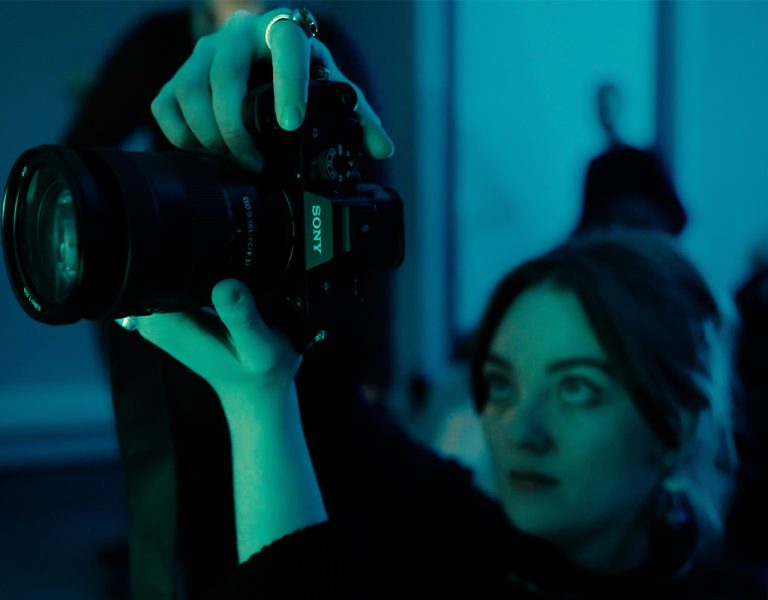
We used RED Geminis, Sony FX6, Sony FX3 and Sony A7S III for filming our three presenters on the ground, and a DJI Mavic 3 for most of the aerial coverage. Drones really came into their own in such vast untouched parts of the world. Different scenes would dictate the size of camera build we used. We wanted to, as much as possible, capitalise on the shallow depth of field attributes of the full-frame sensors, and at times utilise the RAW codec and frame rates of the RED system. Of course, these cameras all offer great low-light capabilities — something we were certain would be essential for us.
When directly filming the wildlife, Vianet used his RED Gemini in combination with a Canon CN20 50–1000mm. Other times, it was matched with a Fujinon Cabrio 90–300mm when used on the Ronin 2 gimbal inverted and mounted to a dug-out canoe. When working from the hide at night, he also used a military-grade thermal camera — the SLX Superhawk. A very special bit of kit. This, in essence, made a key contribution to the Gobi bear story.
Declan and his team deployed over 350 remote trail cameras — a mixture of Brownings and Cube-Cams. Every location needed to be logged with GPS for smooth servicing and retrieval. These skillfully placed cameras, because of their nature and the duration left unattended, were often the ones destroyed by elephants, chewed by bears, flooded by monsoon waters, or taken over by fungus and insects. It was a numbers game for sure — a war of attrition.
After testing, we settled on the T-tuned Black Wings from Tribe7 — typically used for features and dramas. We chose these lenses purposely to help nudge the series away from traditional pin-sharp and perfectly clean renditions of reality. We wanted to embrace the vintage look, the bold colourful flares and a generally less ‘perfect’, softer aesthetic. Subconsciously, the look is more artful, with lots of personality. Only on a few occasions did we find the veiling a bit overpowering, but this was easily dealt with.
The image circle these primes provided meant we could use them across both full-frame and Super 35 sensors. Ergonomically, these lenses are a great size and weight — small enough to be easily handled and transported, even in a one-person situation. As insurance, we also took Angénieux EZ zooms. If the pace of action unfolding became too quick for swapping out primes, we’d move over to EZ zooms — again, lightweight, tough, a great range and characterful.
G Master primes were on hand for the higher-risk occasions — when we mounted the A7S’s on vehicles and for use with the diary cams. We got particularly good results using the Sony A7S’s AI-assisted autofocus, which in turn meant the guys could shoot their diary cams blind and still get great results.
How did you go about devising the lighting schemes and what fixtures did you use and why?
We knew we would be filming almost exclusively with available light, and there would be a good portion of night scenes. With our low-light capabilities of the chosen camera package — upwards of the native 12,800 ISO — we knew we could light everything we needed with practicals. Firelight or the glow coming from an open laptop or headtorch hanging from a branch would be enough.
To support this and ensure we could cover bigger areas, we took small flexible Aladdin LED panel lights and, on occasion, Astra Titan tubes. We’d populate a scene with additional practicals, including storm lights or festoons. We learnt to test the additional headtorch LEDs as they all flicker at different intensities at different frame rates and shutter angles. If we weren’t careful, it resulted in horrible banding all over the shots.
Did you have to create any custom camera and lighting rigs?
Every time we mounted a camera on a moving vehicle, it seemed like a custom rig — a hybrid of suckers, magic arms and vibration plates etc. Nothing stood up to the vibrations and shaking of hours and hours of 4×4 off-roading. There was a bit of tension between keeping the expedition on schedule and slowing it down enough to get the shots. Again, we put extra effort into rigging Sony A7S cameras as we were keen to avoid the GoPro fisheye, all-in-focus aesthetic, and instead keep the mounted cameras’ full-frame attributes like the main cameras.
On one particularly tough hike up into the Taman Negara mountains in Malaysia, we used a truly pared-down minimalist rig — not something you’d normally feel OK with. The Sony FX3 with a Revolver ND solution and SmallHD onboard monitor with two Black Wing primes. As support, we just took a cine saddle and enough memory and battery for two full days. The result: a very small, lightweight unit needing next to no power — unbelievable bang for your buck.
The Cube Cams were also modified to accommodate C-mount lenses to enable a greater choice of focal lengths. This supported Declan’s ‘cluster’ approach when setting out the remote cams. His approach is to not only create evidence of the animals but also combine multiple angles and lens lengths so that, with one encounter, you can create a mini-sequence. To support this, separate IR lighting rigs were also developed to trigger in unison with the cameras. These units, unlike off-the-shelf trail cams that front-light the subject, can produce fantastic-looking results and offer a window into the animal’s nighttime activity.
How did you decide upon the colour palette and LUTs?
It had to be kept in mind that as a natural history-themed documentary, the results must respect and align closely with reality and not deviate too far from this. It would be challenging enough to bring quite so many formats onto one timeline and for it to have visual coherence, rather than a patchwork quilt effect. To aid in this, the main cameras either shot RED RAW or Sony XAVC with S-Log3 gamma curve to maximise dynamic range to aid the colour grading. Directors’ monitors and EVFs were set up with REC 709 LUTs.
Is there a particular shot or sequence you are most proud of?
I am very pleased that our daily efforts to capture genuine reactions from the presenters paid off. When you see passionate, skilled people truly caring about the subject matter, you can’t help but buy into the overall mission.
Do you have anything to add?
I feel particularly proud to have been part of this series. It was a team effort of monumental proportions. Every single person knew their role and executed it perfectly.
The result is a powerful series, striking that magic blend of education and entertainment. I really hope audiences enjoy it.
It might be obvious, but it strikes me that life has evolved since the beginning of time. These dazzling, unique expressions of life — once gone — will be gone forever. However, if you learn one thing from the series, as I did: you can afford to feel optimistic and have agency and become part of the solution when it comes to conserving The Wild Ones.
–
The Wild Ones is available now on Apple TV+.