ON A MISSION
After making his name with the Fast & Furious franchise, director Justin Lin is focusing on a slightly more grounded story with Last Days, which follows 26-year-old missionary John Allen Chau. Here, 2nd unit DP Darius Shu explains how he worked with Lin and his team to help bring the story to life.
Please share an outline of the production.
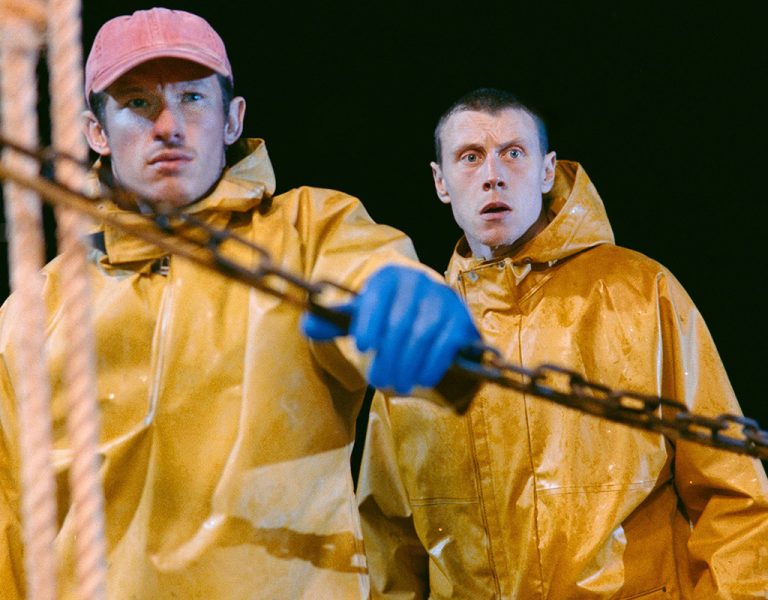
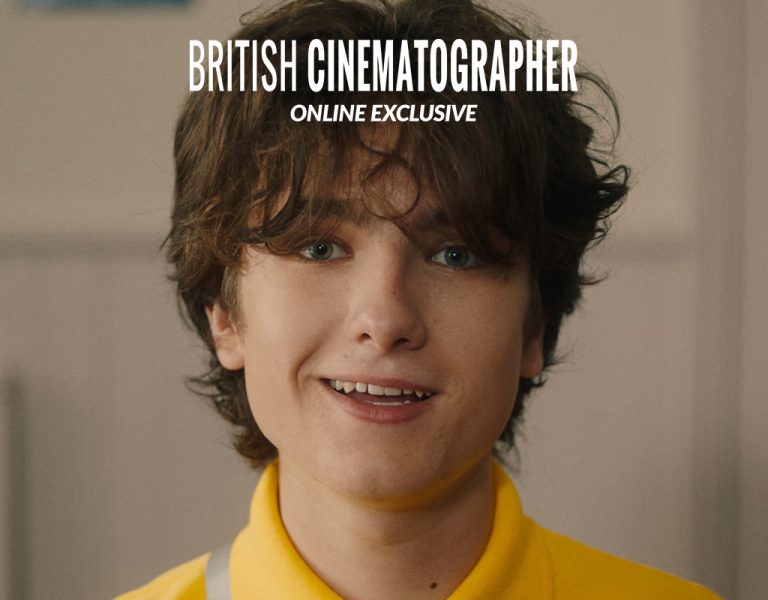
Directed by Justin Lin (Fast & Furious franchise, Star Trek Beyond, Better Luck Tomorrow), Last Days is an adventure biographical drama film that follows 26-year-old missionary John Allen Chau (played by Sky Yang) embarking on a journey across the globe to convert the tribe of North Sentinel Island as he is determined to fulfil his life’s mission, while a detective (played by Radhika Apte) from the Andaman Islands races to stop him before he does harm to himself or the tribe.
Why was it so important to tell this story? How different was the production from previous projects?
For me, this story mattered because it taps into something universal. It really touched me reading the script because it reflects questions I’ve often asked myself, the search for belonging, the moments of feeling lost, and what it means to find purpose. These are questions I’ve asked myself more times than I can count, and I know I’m not alone in that. Everyone wrestles with where they fit in the world, and being able to translate those feelings into images felt incredibly personal and important. It’s why I love cinematography, because it allows me to take something so human and intangible and give it a visual form that others can connect to. That’s the kind of storytelling I live for.
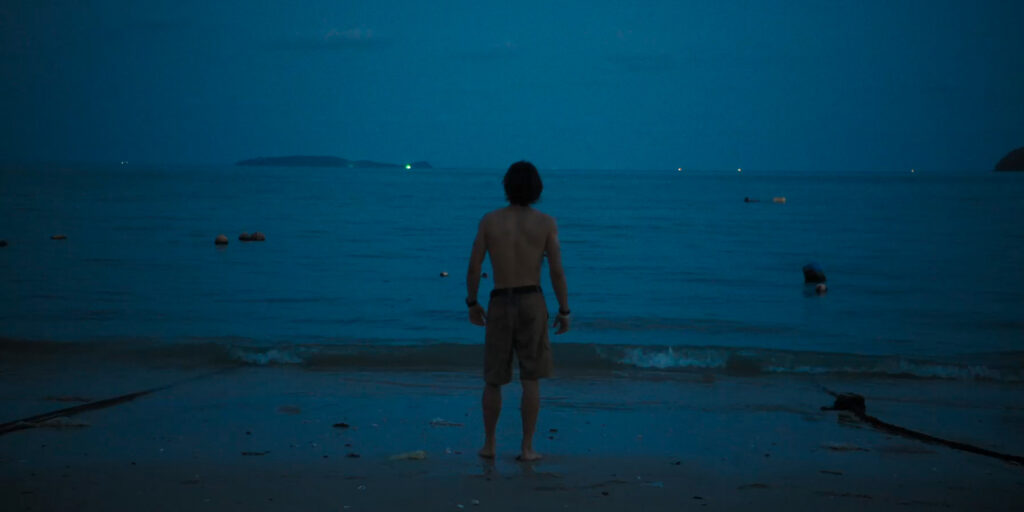
The production itself was unlike anything I’d ever experienced. The making of this film itself was an adventure. It was my first feature and I couldn’t be more grateful to be part of this project. Then, add in shooting across so many extreme environments, on water, underwater, on land, even out of a helicopter, and it really pushed me to shoot in ways I wasn’t expecting. I also had the chance to work closely on VFX, which stretched my creativity in a whole new direction. It wasn’t always easy, but every challenge taught me something and reminded me why I do this. By the end, I felt I’d grown not just as a cinematographer, but as a person.
How did the director articulate what they were looking for?
Justin has this remarkable clarity in his vision, but what really stood out to me was how he communicated it. He goes deeper. He talks about the emotional heartbeat of the scene, what the characters are really feeling, and how he wants the audience to experience that moment that keeps them at the edge of their seat. He has a vision of how each shot plays a role in shaping the story’s momentum in the edit. That kind of direction doesn’t just tell you what to shoot, it makes you feel why you’re shooting it.
How did you work with cinematographer Oliver Bokelberg ASC? How did he decide upon the visual language?
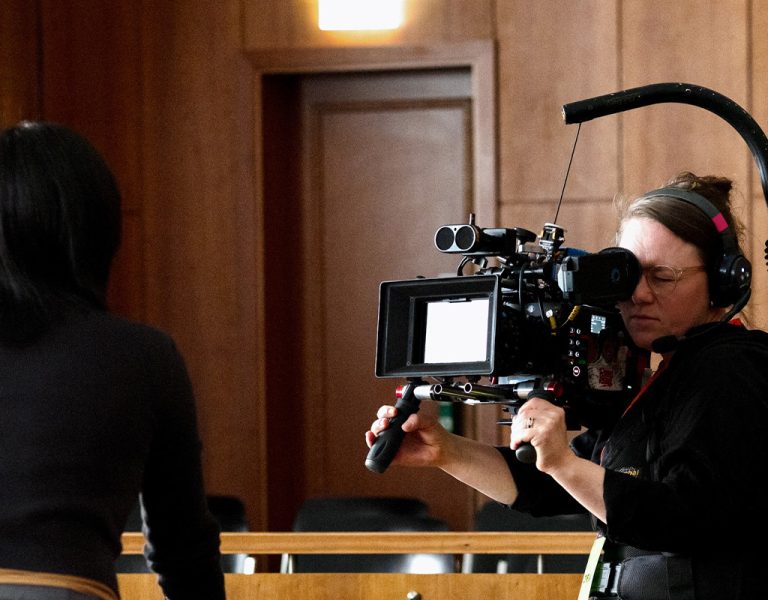
Working with Oliver was such a rewarding experience. As part of the second unit, my main goal was to make sure what we shot felt completely seamless with the main unit’s work.
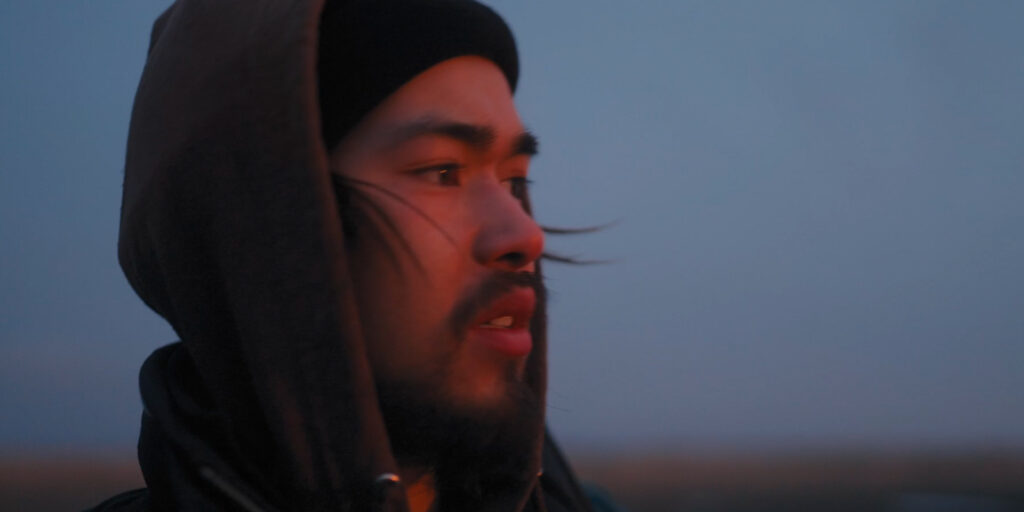
Oliver set the tone beautifully, he shared his mood boards and references early on, which gave me a really clear sense of the look and emotional texture he wanted. It wasn’t just about matching lighting or composition; it was about making sure every shot carried the same style as the rest of the film.
To keep that continuity, we’d review dailies every morning and evening, making sure we were always in step with what the main unit was capturing. Often, I’d be shooting transitional scenes or inserts, and those small moments needed just as much care to feel like they belonged to the same world. Alex Vegh, our second unit director, and I would previsualise ideas, sometimes the day before, sometimes right before a set-up, and then share them with Oliver and Justin for feedback. That back-and-forth made the process feel collaborative rather than compartmentalised, even when we were working miles apart.
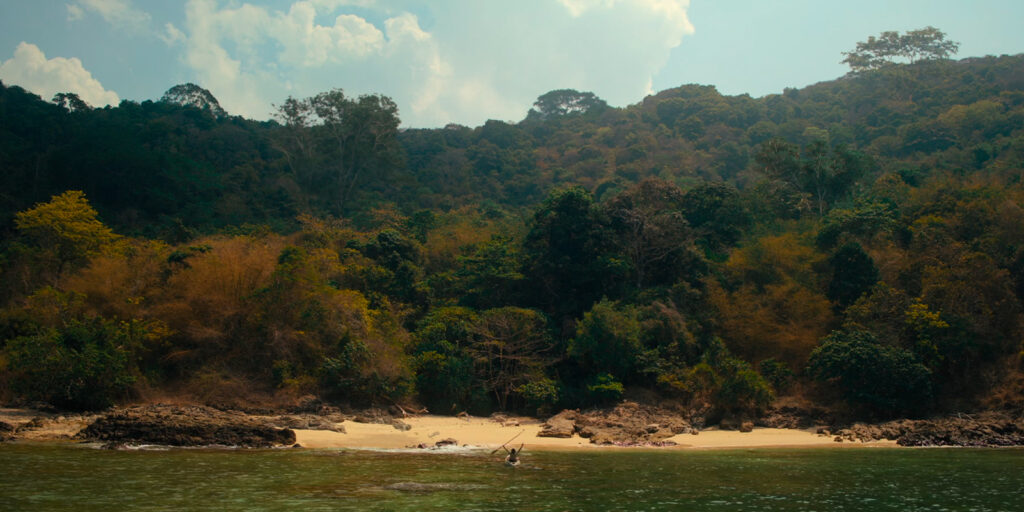
Visually, Justin and Oliver had grounded the film in a heightened naturalism, really leaning into the nature elements. Each of the storylines had subtle shifts in movement and lensing, and as those threads wove together, the visual language also converged. Being part of that process, helping to thread those details so the whole film feels unified, was both challenging and incredibly fulfilling, especially seeing it all come together in the final film.
What creative references provided inspiration?
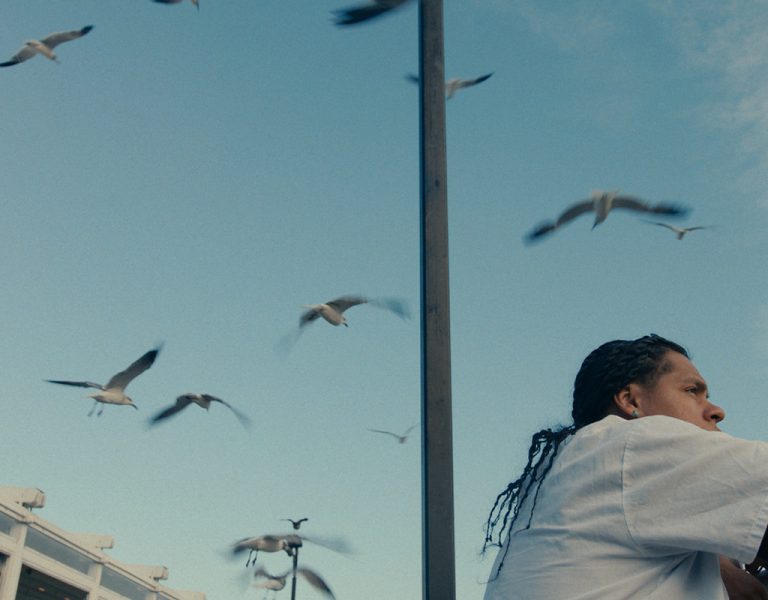
Oliver had created a look-book, that was mostly compiled from photography, movie stills and some paintings. Besides colour and composition references, he was focused on separating the different storylines, utilising lighting choices and operating attitudes, and in our conversations, he kept reiterating the need to include the “super natural” into our realism – pointing to mixed lighting and sun flares, glimmer and reflections from natural water sources. He showed me a lot of work in magic hour and golden hour, and silhouettes.
What cameras and lenses did you use and why? Who supplied them?
Because so much of our second unit work leaned on natural light often at dusk or in low-light conditions, we needed cameras that could really hold their own in those environments. The Alexa 35 and the Sony FX6 became our go-to tools, and they excel in this. The Alexa 35’s dynamic range was incredible for protecting the subtle details in the shadows while still giving us depth and richness in low-lighting conditions. The FX6, on the other hand, gave us the freedom to stay nimble, which was perfect for some of our more guerrilla-style set-ups.
For lenses, we relied on the Optimo zooms. They were a bit of a lifesaver, honestly. When you’re working in unpredictable environments and don’t always have the luxury of time, being able to shift focal lengths on the fly seamlessly meant we never missed those fleeting moments of magic. It kept us adaptable, which is exactly what second unit work demands.
How did you go about devising the lighting schemes and what fixtures did you use and why?
Since all of our second unit work was outdoors, I didn’t devise traditional lighting schemes in the same way the main unit did. Instead, my role was about embracing and shaping natural light, which I’ve always loved. There’s something really powerful about working with what nature gives you, the shifting sun, the softness at dusk. It forces you to be present and resourceful.
Of course, there were moments where natural light simply wasn’t enough. In those cases, I leaned on portable solutions like Astera tubes and lightweight LEDs. They gave me just the right amount of control to lift a scene or balance exposure, without breaking the naturalistic feel. For me, the priority was always making the additional light feel invisible, supporting the story rather than drawing attention to itself.
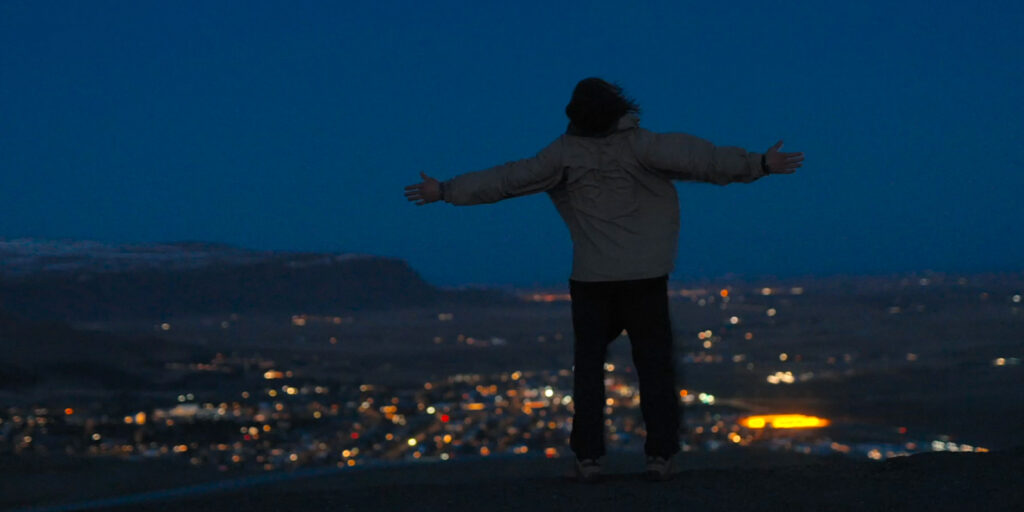
In a way, working with natural light taught me to trust my instincts more. It reminded me that sometimes simplicity, just a well-timed shot in the right light, is the most beautiful and effective choice.
Did you have to create any custom camera and lighting rigs?
Yes, we had a custom rig built onto a kayak, which was a bit of an adventure in itself! It allowed us to get great POV shots that felt fluid and immersive while still keeping the camera stable.
Some of our locations were really remote, so we had to think on our feet. Instead of relying on a Steadicam, we used a gimbal with the FX6, which gave us the mobility we needed to move quickly and adapt to rugged terrain. We also used that inside of the helicopter. For me, those moments are where filmmaking gives you the biggest challenge, you’re problem-solving in real time.
What challenges did you encounter when shooting the project and how did you overcome those?
One of the biggest challenges was definitely the drone sequences in Thailand, cars winding through the hills, boats cutting across the ocean, and kayak shots that had to feel effortless and cinematic. In reality, it was 38 degrees, we were drenched in sweat and sometimes in the monsoon rain, and half the time we were wrestling with water currents just to keep the frame and subject position to how I wanted it. It was chaotic and honestly a bit hilarious at times, but that’s also what made it fun. When you finally nail the shot after all that, it feels amazing!
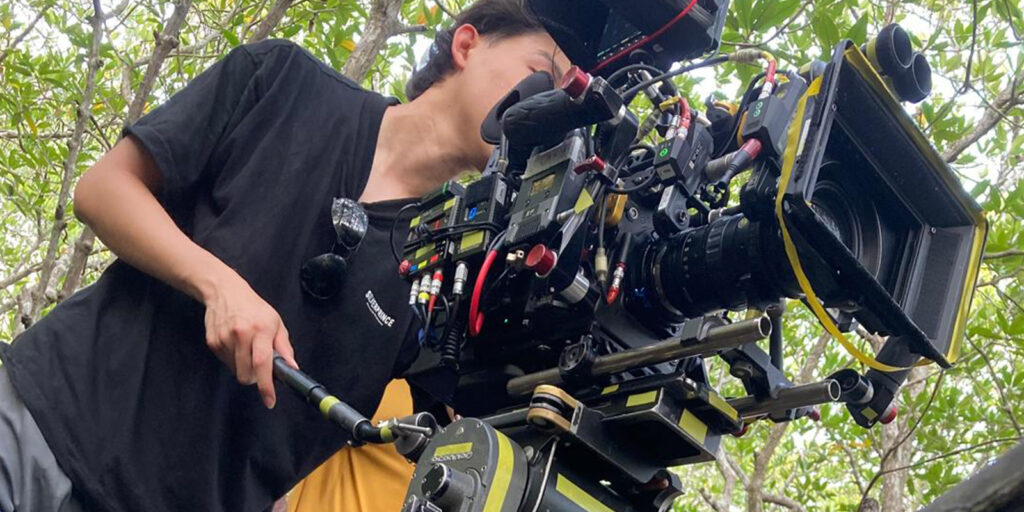
Justin had a very clear visual intent for these shots, the road needed the right curvature, the trees and terrain had to frame the composition perfectly, and we had to work with the final light at dusk to get the exact mood. All of that meant the location had to align perfectly with the timing of the golden hour, leaving us a very narrow window to execute.
Alex and I worked closely with our location manager to pre-select potential sites. We made multiple scouting trips, conducted drone test flights, set up mock shots, and even did test drives to understand the terrain from every angle. It was a meticulous, iterative process, ensuring the drone could navigate safely and the camera movement would flow seamlessly for the story.
When it finally came to shoot day, we only had around 20 minutes of dusk light to capture the sequence. Every movement, from the drone operators to the crew and cast, had to be perfectly timed. The pressure was intense, probably one of the most high-stakes shoots I’ve experienced. Seeing it all come together on screen was breathtaking. It looks epic, and absolutely incredible – it truly demands to be seen on the big screen.
How did you and Oliver decide upon the colour palette and LUTs?
On set, Oliver collaborated with a DIT to establish the colour tones for various environments and timelines of the film, ensuring that he could accurately monitor the intended visual aesthetics. He developed multiple LUTs inspired by different Fuji and Kodak film stocks, refining the look to match the film’s atmosphere and storytelling needs.
Was there much in the way of changes in the DI and which colourist were you working with?
Oliver works quite meticulously with his DIT Joe Coffey on set, in order to get his dailies to properly reflect his intent. For him, this is the best way to protect his conceived look through the editing process. Oliver loves his DI colourist Andre Rivas, who brings a beautiful eye and energy to the colour process, oftentimes checking back to the original dailies and adding punch, and applying a little fairy dust here and there.
Is there a particular shot or sequence you are most proud of and why?
The sequence I’m most proud of is John’s adventure montage. It was such a rewarding experience because Justin and Oliver placed so much trust in me. They gave me the freedom to shoot purely on instinct. That kind of creative flexibility is rare, and it meant a lot. I could respond in the moment, capturing things as they unfolded naturally. It felt like pure, instinctive filmmaking.
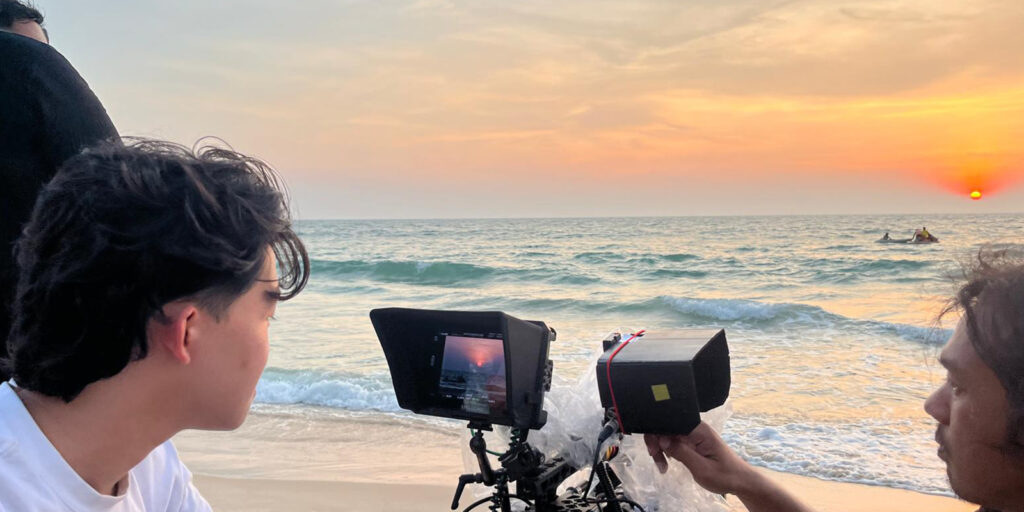
I used the Sony FX6 with a lightweight, guerrilla-style set-up, handheld, agile, and completely unrestricted. That gave me the freedom to move with Sky as we travelled through rural landscapes and sites in Iceland, Thailand and India. We chased sunrises and sunsets, braved freezing winds and scorching heat, and worked entirely off the landscapes around us. It was all raw and spontaneous and how we often be in awe at the happy accidents that turned into something magical.
What made it even more special was the synergy between how Sky and I would shoot these scenes. He has this innate ability to blend emotion, movement, and environment in a way that always makes his performance feel so natural and cinematic. He instinctively knows how to find my camera just as I find and feel his actions, and together it becomes almost like a dance, playing with light, composition, and rhythm in real time. Being completely in sync and trusting each other made the whole process feel alive. It didn’t feel like we were simply making a film; in those moments, it felt like we were living it.
What lessons did this production teach you?
It really taught me how crucial clear communication and delegation are, especially when you’re coordinating across multiple units. Keeping everyone aligned, from crew to talent, was key to making the complex logistics feel manageable.
Another big lesson was about trusting my instincts and advocating for the best possible image, and to not overthink. On a production this big, it’s easy for creative choices to get lost in the shuffle. Not every shot goes exactly as planned, and I learned to embrace those restrictions and adapt on the fly.
Above all, this experience reinforced the value of collaboration. I walked away with a deeper appreciation for every department and every crew member.
Do you have anything else you’d like to add?
Late last year, I had the privilege of serving as director of photography on Slim, Sky Yang’s debut feature, which he wrote, starred in and directed. This followed my work on Last Days, and Slim will also mark my debut feature as main DP, a truly exciting step in my career. The film is currently in post-production, produced by Chi Thai under her production company Last Conker.