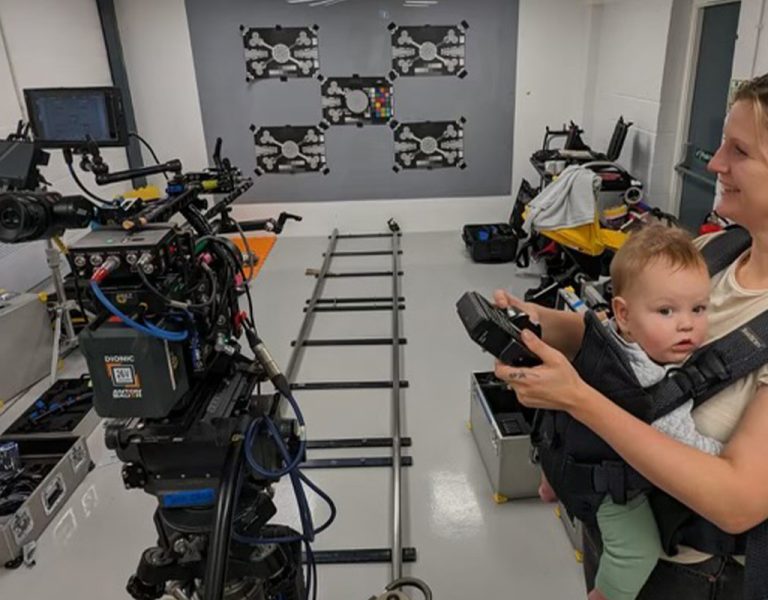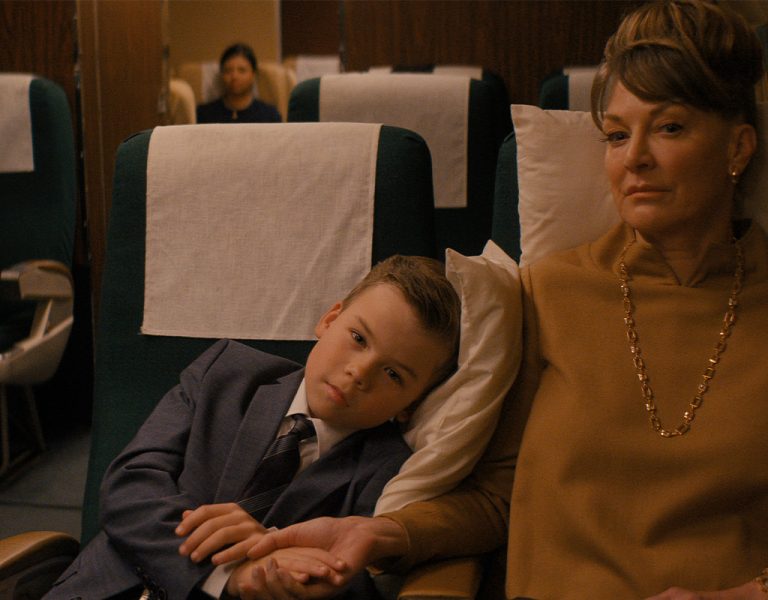

Cinematographer Ellie Michaelidis reflects on access, context, and the informal barriers that still shape who feels able to enter the craft.
Cinematography is often spoken about as if access to it is already assumed. As if the equipment is nearby, the set is within reach, the language is familiar, and the path into the industry is simply a matter of commitment. In reality, a great deal of cinematography knowledge still sits behind institutions, cost, and proximity to the right people. As a result, this has a direct effect on who gets to learn the craft and who feels entitled to imagine a place for themselves within it at all.
I became aware of that gap early, both through formal training and outside it. Even in well-resourced film programmes, practical understanding rarely develops evenly, and confidence certainly does not. Much of what actually shapes a cinematographer does not come from a single class or curriculum. More often than not, it comes from overhearing the right conversation on set, watching someone build a camera carefully, being trusted with equipment often enough that it stops feeling foreign, and finding someone willing to explain something without making you feel like you should already know it. Those moments are hard to find because access to them is unevenly distributed.
Context is key
This creates a contradiction for people coming up in the field. There is more film knowledge available now than ever before, yet turning that information into an actual understanding of the craft remains surprisingly hard. Tutorials are everywhere, gear discourse is constant, technical language is all over the internet. But hearing a term often enough that it sounds familiar is not the same as understanding what it means or how it changes an image. The problem for most aspiring cinematographers is a lack of context to place information within.
That is important simply because cinematography only really makes sense in context. A lighting decision only makes sense in relation to a face, a particular space, a tone or a story, and the same is true for lens choice, camera movement and placement. Explaining what a piece of equipment does is a starting point. What is actually useful is explaining what problem it solves, the feeling it creates, and why a cinematographer might reach for it in one situation and leave it behind in another. Without that layer, technical knowledge stays abstract.
My own path into cinematography has moved through different kinds of practice: formal training at LMU’s School of Film and Television in the United States, documentary work in Greece, development work in Germany, and now building a career as a DP in the UK. Across all of them, I kept encountering people early in their careers who cared seriously about the craft but had only ever been handed the terminology, never the framework to use it.
A platform for change
That is what led me to begin sharing educational cinematography work publicly under @pertempvs. The intention was to take ideas that tend to stay locked inside classrooms and professional circles and put them into language that was clear without being patronising. What made the scale of that gap especially visible was the response. A video breaking down the difference between F-stops and T-stops has reached over 800,000 people. Similar treatments of grain versus noise and raw versus log followed closely behind. These are not obscure topics. They are foundational ideas that cinematographers use every day, and the reason those videos travelled as far as they did is the same reason the gap exists in the first place: many people had encountered these terms repeatedly without ever feeling they had been plainly explained. That reach has since led to collaborations with companies such as Aputure and to recognition from working professionals whose craft I have long admired.
Aspiring cinematographers are routinely told to build experience: get on set, assist, observe, make work. That advice is not wrong, but it stays frustratingly vague unless someone also explains what to actually pay attention to once you are there. What does it mean to become useful in a camera or lighting department before you are ready to lead one? That is where open educational work helps, because it makes set experience more legible once someone gets there. A student who already understands the logic behind source size, colour temperature, or lens character arrives with sharper questions and a stronger ability to connect what they are seeing to what they are trying to build.
There is a deeper question underneath all of this, which is who actually feels that cinematography is for them. The more sealed-off the craft is made to seem, the easier it becomes for people to assume they were never going to get in anyway.
Making education more open does not mean pretending the craft is straightforward. It is not. It takes serious commitment and real experience, and it should be treated that way. But difficulty and deliberate inaccessibility are not the same thing, and publications, training programmes, and film schools all have the ability to treat access as part of the conversation about what the industry actually wants to become.
Cinematography will probably always have some mystery to it. Images work on us before we can fully explain why, and that is part of what makes the craft worth taking seriously. It is worth dedicating yourself to fully, and more people deserve the chance to make that choice with real intent.