
THERE IN BLACK-AND-WHITE
Adapting social worker and freedom fighter Sane Guruji’s autobiographical novel of the same name, Shyamchi Aai tells a fascinating story–DP Vijay Mishra explains why embracing simplicity helped to elevate its impact.
I had the honour of shooting Shyamchi Aai, which won the Best Marathi Film at the 71st National Film Awards this year. The film is very close to my heart, not only because of its recognition but because of the visual language we crafted to bring this timeless story alive.
When I read the script, I realised it wasn’t just a narrative–it was poetry in motion. The way the emotions were written, so grounded yet universal, made me imagine every frame in black-and-white. What appealed to me was the opportunity to translate that simplicity into a visual language that felt both classic and contemporary.
Very few films today take that risk of shooting in black-and-white, and it demanded a different visual grammar–working with light, shadow, and texture in a way that colour films don’t. It was both a challenge and a rare opportunity to create something timeless.
One of the biggest challenges was shooting night sequences and outdoor scenes in natural locations. Black-and-white is very unforgiving–it can easily look flat if not handled with precision. To overcome this, we relied on meticulous pre-lighting and tested different lighting ratios until we found the right balance.
The emotional intensity of certain scenes also required restraint–we couldn’t let technique overshadow the simplicity of the story. So the biggest challenge was not just technical, but also artistic: keeping the visuals powerful yet invisible, so that the audience remains fully immersed in Shyam’s journey.
For the shoot, I worked with the ARRI Alexa Mini LF paired with ARRI Master Anamorphic lenses. This combination allowed me to capture a cinematic 2.39:1 anamorphic frame with rich texture, soft roll-off, and painterly depth. The Alexa Mini LF’s large-format sensor provided stunning dynamic range and natural skin tones, while the Master Anamorphics gave us sharpness without harshness, controlled distortion, and a beautiful fall-off–perfect for the emotional storytelling of Shyamchi Aai.
The visual approach was designed to reflect the poetic simplicity and nostalgia of the source material. We focused on natural light, subtle camera movement, and framing that honoured the period setting, while also ensuring the visuals felt immersive and emotionally engaging for today’s audience.
Colour grading without the colour
Though Shyamchi Aai is a black-and-white film, the grading process was one of the most crucial stages in shaping its final look. Without the distraction of colour, every shade of gray–from deep blacks to glowing whites–carried emotional weight.
In collaboration with the colourist [Zaheer Shaikh], we treated the grading as a process of sculpting light and shadow. We carefully managed contrast to ensure faces carried warmth and humanity, while backgrounds and textures held depth without overpowering the story. The Alexa Mini LF’s latitude allowed us to preserve a rich tonal range, giving us flexibility to play with subtle variations in midtones.
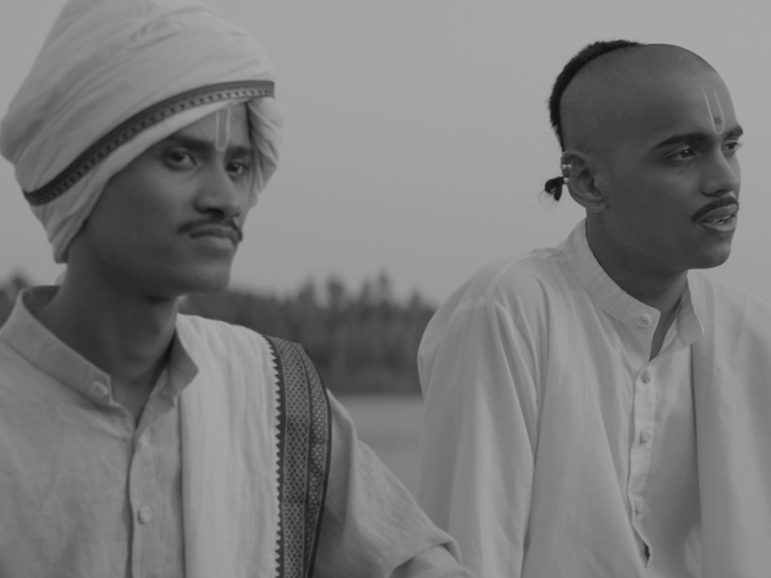
We leaned into a slightly contrasty but natural grayscale palette–ensuring darker scenes carried emotional heaviness, while brighter frames felt hopeful and poetic. Grain, halation and softness were balanced to make the visuals feel authentic to the period, without losing the cinematic polish expected today.
Grading Shyamchi Aai wasn’t about style for its own sake–it was about finding the right visual rhythm so that each frame emotionally resonated, enhancing the timeless relationship between mother and son.
An emotional collaboration
I think the success of this collaboration came from trust and clarity. The director, Sujay Dahake, had a very clear vision–he wanted Shyamchi Aai to feel authentic to its time, but also deeply relatable to today’s audience. His emphasis was always on emotional truth rather than just visual grandeur. My role was to translate that vision into images that carried the same honesty and purity. Shooting in black-and-white meant every frame had to speak with light, shadow and texture, and that demanded a lot of conversations and experimentation with the team.
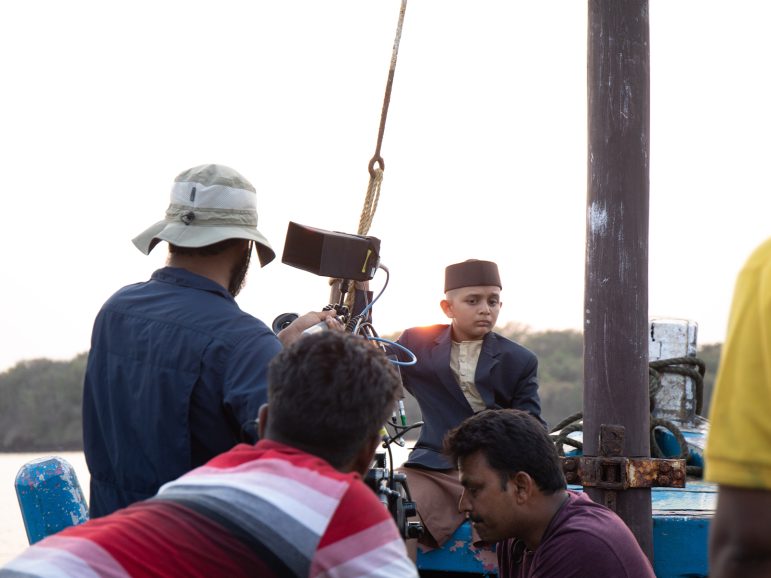
What made the process beautiful was that everyone–actors, crew, production design–was working towards the same emotional core. I brought my perspective as a cinematographer who loves blending classic techniques with modern tools. For example, I leaned on old-school lighting philosophies but paired them with contemporary camera technology like the Alexa Mini LF and anamorphic lenses, which gave us both intimacy and cinematic scale. That blend of the director’s timeless vision and my approach to visual storytelling gave the film its unique identity.