
Throughout R. Michael Givens’ storied career, aerial cinematography has occasionally carried him across some of the most extraordinary landscapes on earth. Yet it’s a practice that poses both opportunities and challenges, as the filmmaker explains.
The helicopter was lying on its side.
At least that is how it felt.
Below me, the tops of the Jamaican palms rushed past so closely that individual fronds flashed through the frame. We tracked a Jeep tearing along a dirt road beneath the canopy. Through the eyepiece of my Arriflex III, I could see only the story.
“Lower.” The pilot lowered. “Closer.” The pilot moved closer. “Hold it there.” The pilot held us in a pivot that felt like slow motion.
The camera, the movement, the colour, the rhythm of the chase — everything narrowed into that rectangle of ground glass. The real world disappeared. There was only the frame.
Later, the helicopter settled onto its landing pad. The rotor blades slowed. I thanked the pilot. No answer. I turned toward him. He was staring at his hands. He never stopped looking at them.
“Look at my hands.” Not merely the knuckles. The hands themselves. White.
For the entire flight, he had gripped the controls so tightly that the blood had left the digits. He stared at them with the bewilderment of a man seeing them for the first time.
In that moment, I learned something that would follow me through deserts, mountains, cities, glaciers, oceans, fighter jets, balloons, Learjets and helicopters.
The cinematographer lives inside the story. The pilot must remain inside reality.
For nearly five decades, I have been fortunate enough to make a living creating moving images. During that time, aerial cinematography occasionally carried me across some of the most extraordinary landscapes on earth. I chased trucks through the Italian Alps, ferries across mist-covered water, aircraft above deserts, automobiles through forests, and once directed a helicopter to herd cars across the Bonneville Salt Flats like a sheepdog gathering a flock.
Yet the older I become, the less I believe aerial cinematography is about flying. It is about perspective. The machine is merely the horse. The journey is the story.
People often assume that aerial cinematographers enjoy heights. I do not. I have always possessed a healthy respect for them. Yet something changes when a camera enters my hands.
Once I am strapped into a seat, pressed against a viewfinder, and engaged in the act of creating an image, the height disappears. The aircraft disappears. The danger often disappears as well.
The frame becomes the world. A monitor allows one to watch an image. A viewfinder requires one to enter it. The eyepiece shuts out the rest of reality. The camera ceases to feel like a tool. It becomes an extension of thought. Or perhaps an extension of story.
Whatever the mechanism, a curious transformation occurs. I am no longer observing the story from outside. I am living within it. The aircraft remains in the sky. The camera becomes a living participant. The fear usually arrives later. As an afterthought—often after landing.
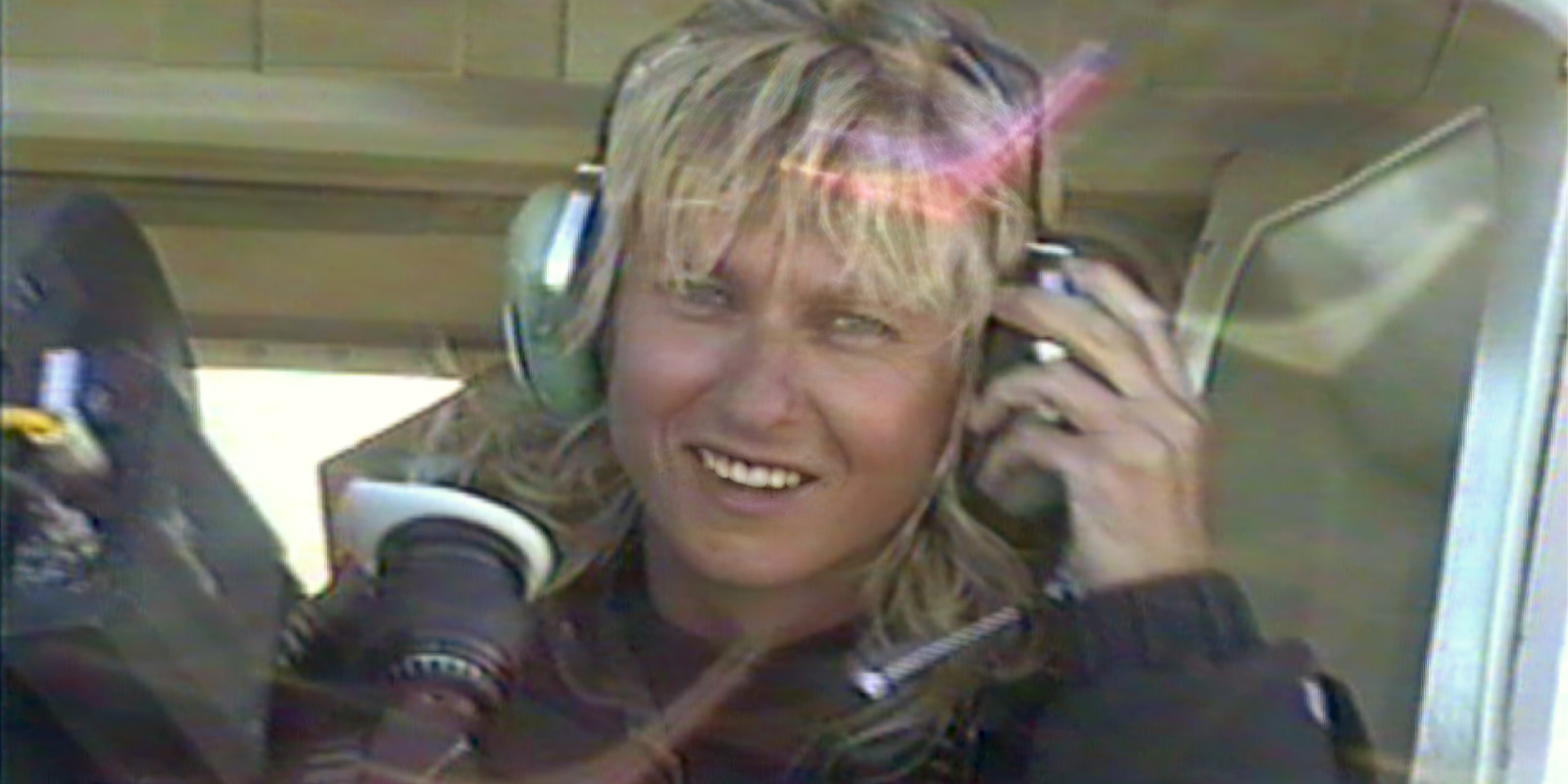
Years later, while hanging from another helicopter, leading a speeding car across a desert, I learned the same lesson again. The composition was right. The movement was right. The story was right.
Then the helicopter suddenly lifted and settled again. “What was that?” I asked over the radio. “We had to lift over a road sign.” That was all.
The pilot was Harry Hauss, one of the finest helicopter pilots I ever worked with. I worked with Harry many times after that day and never lost my admiration for his instinctive understanding of danger.
While I was looking through the lens, Harry had been looking at reality. At full speed, only a few feet above the desert floor, he had seen a sign I never knew existed. Harry understood something essential. I was watching the movie. He was watching the danger.
Many of the finest pilots I worked with were not timid men. Their judgment kept us alive. Their courage helped us make images. Many learned their craft during wartime. Some flew combat missions. Others began as doorway gunners, looking down at a very different world than the one I was photographing.
They understood angle. They understood speed. They understood consequence. Their lives had depended upon all three.
Most rarely spoke about themselves. They simply climbed into the aircraft and went to work. Again and again they found a way.
Over the years I developed a habit that occasionally puzzled clients and disappointed the curious. Unless absolutely necessary, I flew with only the pilot.
At first the rule was practical. Every unnecessary pound carried aloft becomes part of the equation. I changed film magazines in flight. I changed lenses in flight. If weight could be removed, it was removed. In the high Alps, where the air grows thin and lift becomes precious, the distinction between necessity and convenience seemed especially important.
Agency executives occasionally wanted to come along. Friends occasionally wanted to come along. The answer was usually no. For a long time I regarded the rule as nothing more than prudence.
Then one evening in Cannes, I learned that a director I knew had been killed while filming at a glacier. Onboard were the pilot, director, assistant cameraman, and an agency executive who had joined the flight. Additionally, the key grip, eager to experience his first helicopter ride, joined as well.
The aircraft never returned.
I do not know whether a few hundred pounds altered the outcome. Perhaps it did. Perhaps it did not. Aviation is not always generous enough to explain itself.
What remained with me was not the accident itself, but the realisation that enthusiasm and necessity are not the same thing.
The image may justify many things. A beautiful image may even tempt us to forget ourselves. But the sky possesses an indifference that cannot be negotiated. It does not know whether we are directors, executives, grips, or pilots. It only knows weight. It only knows weather. It only knows gravity.
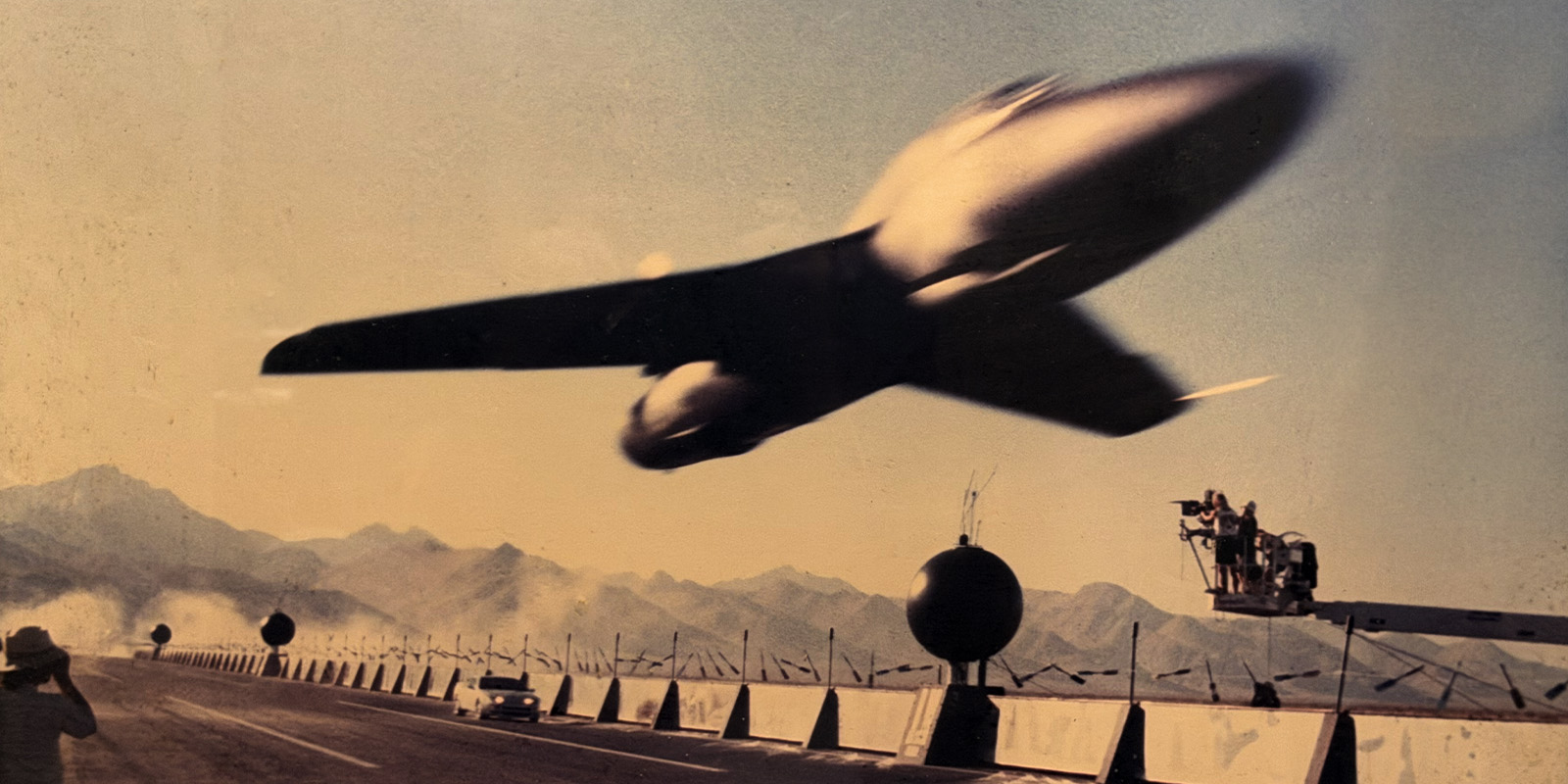
After that, my rule never seemed unreasonable again. Again and again, the sky reminded us who held the final vote.
One night, clouds closed beneath us in the Italian mountains while scouting locations. A pilot spotted a tiny opening above a tennis court and slipped us through as the clouds sealed behind us. The helicopter spent the night there like a faithful horse waiting for dawn.
In Tunisia, while scouting locations in the Sahara Desert, we drifted briefly across the Libyan border. The political climate at the time was particularly unwelcoming to an unexpected American visitor. My pilot wisely decided that adventure had reached its proper limit, and we turned toward safer ground.
The commercial turned out beautifully. I stayed out of a Libyan prison.
In Hawaii, we carried a 50-gallon drum of fuel into the mountains because there was no other way to reach the location, shoot the scenes, and still return. We unloaded the fuel to reduce weight, filmed the sequence, then pumped the waiting fuel into the helicopter and made our way home.
The audience sees a beautiful image. The crew remembers what it took to get there.
Looking back, I realise I was seldom interested in photographing the assignment exactly as it appeared on the page. What fascinated me was discovering the story hiding beneath it.
A truck became an attempt to break the sound barrier. A collection of automobiles became a shepherd’s flock. A ribbon crossing Germany became a journey.
Aerial images were never the destination. They were another way of revealing story.
One of my favourite examples involved a Hyundai commercial originally intended for Canada. The storyboard showed a collection of automobiles crossing the desert while a voice-over instructed weaker competitors to fall away until only the featured vehicle remained.
The concept worked. But it did not sing.
I suggested that we reveal the source of the voice. If these automobiles were being judged, who was doing the judging?
Soon, a giant tower loomed alone above the Bonneville Salt Flats. At its summit stood an unusually tall man surrounded by mirrors, antennas, and mysterious controls. Below him, a black helicopter worked like a flying sheepdog, swooping low over the automobiles, forcing and peeling lesser vehicles away from the flock.
The helicopter became a character. The salt flats became a stage. The commercial became a fable. What changed was not the automobile. What changed was the story.
Perhaps nowhere was that lesson more personal than on a commercial for a Japanese coffee product.
The story involved a ferry crossing a body of water to meet a man waiting on the opposite shore. Simple enough.
Except that accepting the assignment meant postponing a trip home. My grandmother had recently lost my grandfather, and his absence lingered quietly in my thoughts.
Without discussing it with anyone, I began reshaping the commercial.
I dressed the man on the ferry in clothes my father might have worn. I placed him beside a 1957 Chevrolet, much like the one my father drove when I was young. On the far shore, I placed a man I had cast because he favoured my grandfather and placed him beside a 1948 Ford similar to his.
At the time, I could not have fully explained why. Perhaps I simply missed them. Perhaps stories have a way of revealing things their creators do not yet understand.
The audience saw two men sharing coffee. My parents saw something else. A son standing once more beside his father. A reunion life no longer permitted.
Only years later, after both men were gone, did I fully appreciate what that small commercial had given me. Only then did I realise I was making the commercial for my lineage. Not merely for myself. A gift to those who came before me and those who will come after.
The assignment had quietly become something else. Not an advertisement. Not even a story. A remembrance.
Geography became memory. Movement became emotion. A ferry crossing became a reunion.
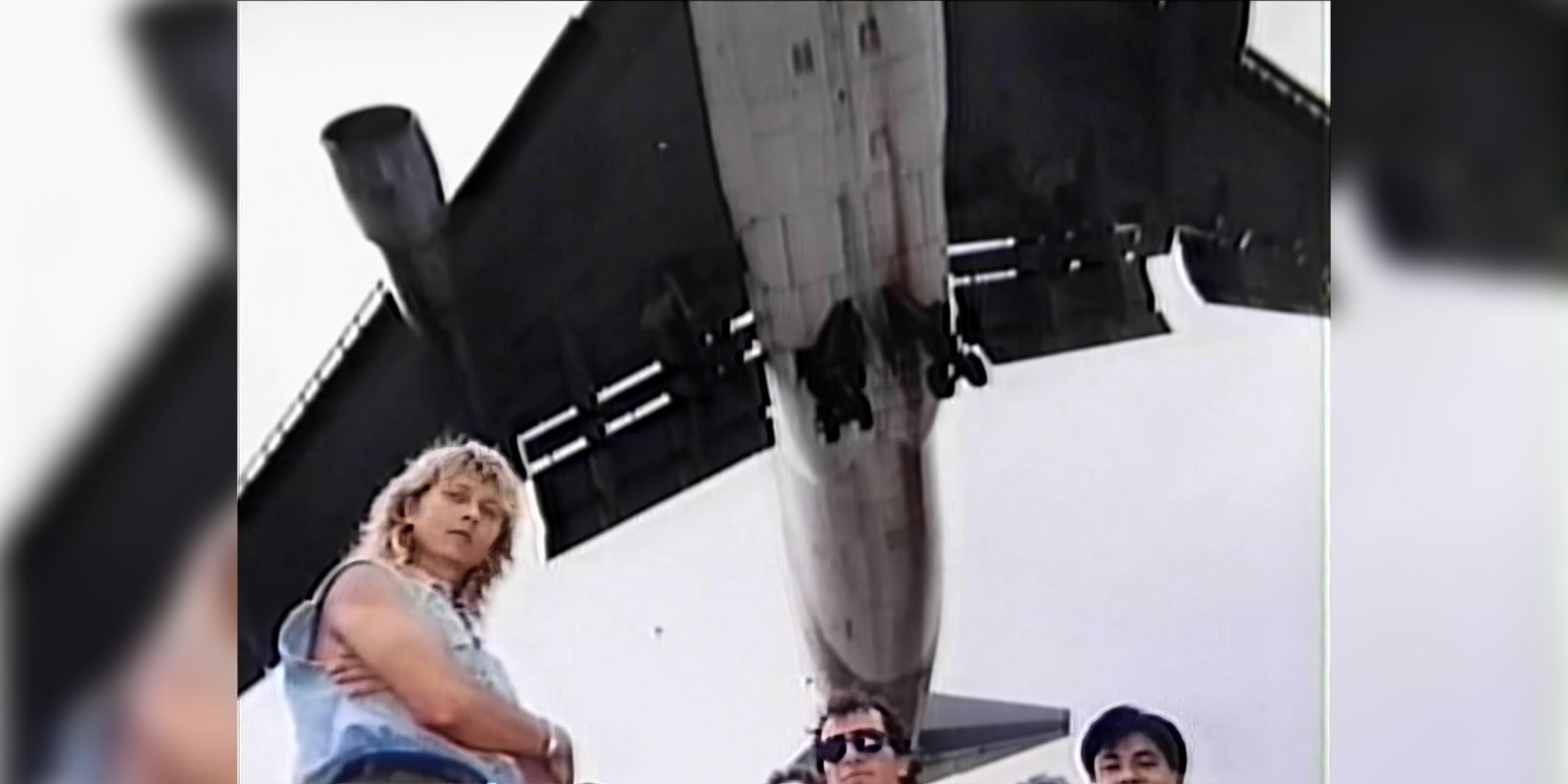
Years earlier, while working with Sir Ridley Scott on the now-infamous Nissan Turbo Z commercial, I encountered the other side of the equation.
The story was a dream.
A driver was pursued first by motorcyclists, then by a Can-Am racer capable of nearly two hundred miles per hour, and finally by a Hawker Hunter fighter jet.
Most viewers assumed the aerial perspectives were created from aircraft. They were not.
We built a tower onto a camera vehicle and fabricated a fighter-jet nose section for the foreground. On one shot, we stood in a Cherry Picker extended over the track while the automobile and fighter aircraft raced beneath the lens. On another, the camera sat only a few feet from the fighter’s wingtip.
Perhaps the most unnerving shot involved a 2000mm lens compressing distance while the jet and the Nissan charged directly toward me.
The audience saw excitement. I saw a single-engine fighter jet flying just above stall speed.
One mechanical cough. One unexpected gust. One mistake.
The audience experiences the dream. The filmmaker negotiates reality. Somewhere between the two, cinema is born.
For years I believed I was climbing into helicopters to look at the world. Only later did I realise the world was looking at me.
Each flight altered the way I saw the world. The roads became ribbons. The cities became patterns. The mountains became scale. The oceans became mirrors. The assignments became stories. The stories became gifts.
Civilisation reveals itself differently from the air. What appears overwhelming becomes comprehensible. What appears permanent becomes fragile. What appears divided becomes connected. The higher one climbs, the harder it becomes to mistake oneself for the centre of the world.
One afternoon, returning from a shoot in the Grand Canyon aboard a Twin Beechcraft, the landing gear indicator failed to show that the wheels were properly locked.
The pilot informed the tower. We performed a low pass. The controllers could not determine whether the gear was safely down. I removed the logbook from beside my seat and began pumping the manual extension handle.
Eventually, we committed to the landing.
As we turned onto final approach, I looked out the window and saw a sight I have never forgotten. Fire trucks. Men in silver suits. Foam equipment. Emergency crews lined the runway awaiting our arrival.
The landing itself was uneventful. The image was unforgettable.
The work had ended. The story had found us anyway.
Today, a drone can begin above the clouds, descend through a city, slip between buildings, and arrive on a close-up in ways that would have seemed miraculous when I began my career.
I admire that. I use that.
Yet the machine remains merely the horse. The journey remains the story.
Looking back now, I find that many of the names have drifted away with time.
I remember Harry Hauss. I remember a pilot named Mike, who once trusted me enough to place the controls of his helicopter in my hands somewhere between Hilton Head and Greenville.
Others remain vivid in memory although their names have disappeared into old production reports and fading call sheets. Bless them all.
Some learned to fly in wartime. Some flew combat missions before they ever carried a camera. Some began as doorway gunners, looking down from open doors onto a world at war.
They understood what I was doing. They had to. The finest could anticipate the shot before I asked for it.
They had once looked down searching for men. I was looking down searching for stories. We were both aiming at humanity.
The difference was what we hoped to bring back.
They carried me through deserts, mountains, cities, oceans, storms, and salt flats. I realise none of those images belong entirely to me.
The audience remembers the feeling. I remember the people.
The pilots who understood instinctively what I needed. The mechanics who kept impossible machines alive. The crews who trusted one another with consequences that could not be undone.
No film is made alone.
For years I believed I was chasing images. Only later did I realise I was really chasing perspective.
I can still see a pilot staring at his hands. “Look at my hands.”
And somewhere above deserts, mountains, cities, oceans, fighter jets, ferries, and forgotten roads that became ribbons, the sky changed the way I saw the world.
In doing so, it changed the cinematographer.