
KEEPING IT PRACTICAL
Writer and director Kevin Walls’ debut feature, Premature, is a contemporary romantic comedy following flatmates Cameron (James Rottger) and Eilidh (Elle Watson) after their drunken one-night stand results in an unexpected pregnancy. When Eilidh discovers she can’t go through with a termination, the pair are forced into an awkward, absurd and increasingly intimate attempt at preparing for parenthood. Walls discusses his approach to shooting and lighting one of the film’s key locations.
Working on a microbudget was always going to be a challenge. If you can even call a £16,000 production budget “micro”. Perhaps nano-budget is more accurate. We shot Premature last summer, filming 89 pages of script, over 23 days, across 17 locations in and around Glasgow. A reasonable schedule for an independent feature, but as we were shooting with a core crew of three, we had to be efficient.
Baptism of fire
Thankfully, I was used to working quickly and under pressure. When I worked as a video journalist at STV back in 2016, I would be assigned a story at 9am, shoot and edit throughout the day, and deliver the finished piece by 4pm. “Baptism of fire” was often bandied around the office. We didn’t have time to overthink our decisions or shoot every conceivable shot. We had to trust our instincts and shoot for the edit. Otherwise, we wouldn’t hit the deadline. It taught me to prioritise story over everything. An important lesson to learn as an independent filmmaker.
It also taught me that if a location doesn’t look right to the eye, it probably won’t look right on camera. With that in mind, I thought it wise to siphon a decent portion of our limited budget into locations, production design and costume design. This meant I had no budget for kit rental and had to shoot the film with the equipment I already owned: a Blackmagic Pocket Cinema Camera 6K Pro, a set of Samyang VDSLR lenses and a small lighting package, comprising a Neewer CB300B, a Godox FL150S and a handful of off-brand LEDs. My Christmas presents in 2024 were a few rolls of LEE colour filters and some Blackwrap. Who needs another bottle of Baileys anyway?
Three coats of paint and a panic attack
One of the most challenging locations was Eilidh’s bedroom, the most frequently used location in the schedule. My friend Garry graciously allowed us to shoot in his flat for 10 days, and we were using his bedroom as Eilidh’s room. Unfortunately, but perhaps not surprisingly, Garry’s room didn’t look like the bedroom of a woman in her late twenties. So, the weekend before we started our stint in the flat, I rolled up my sleeves and got to work.
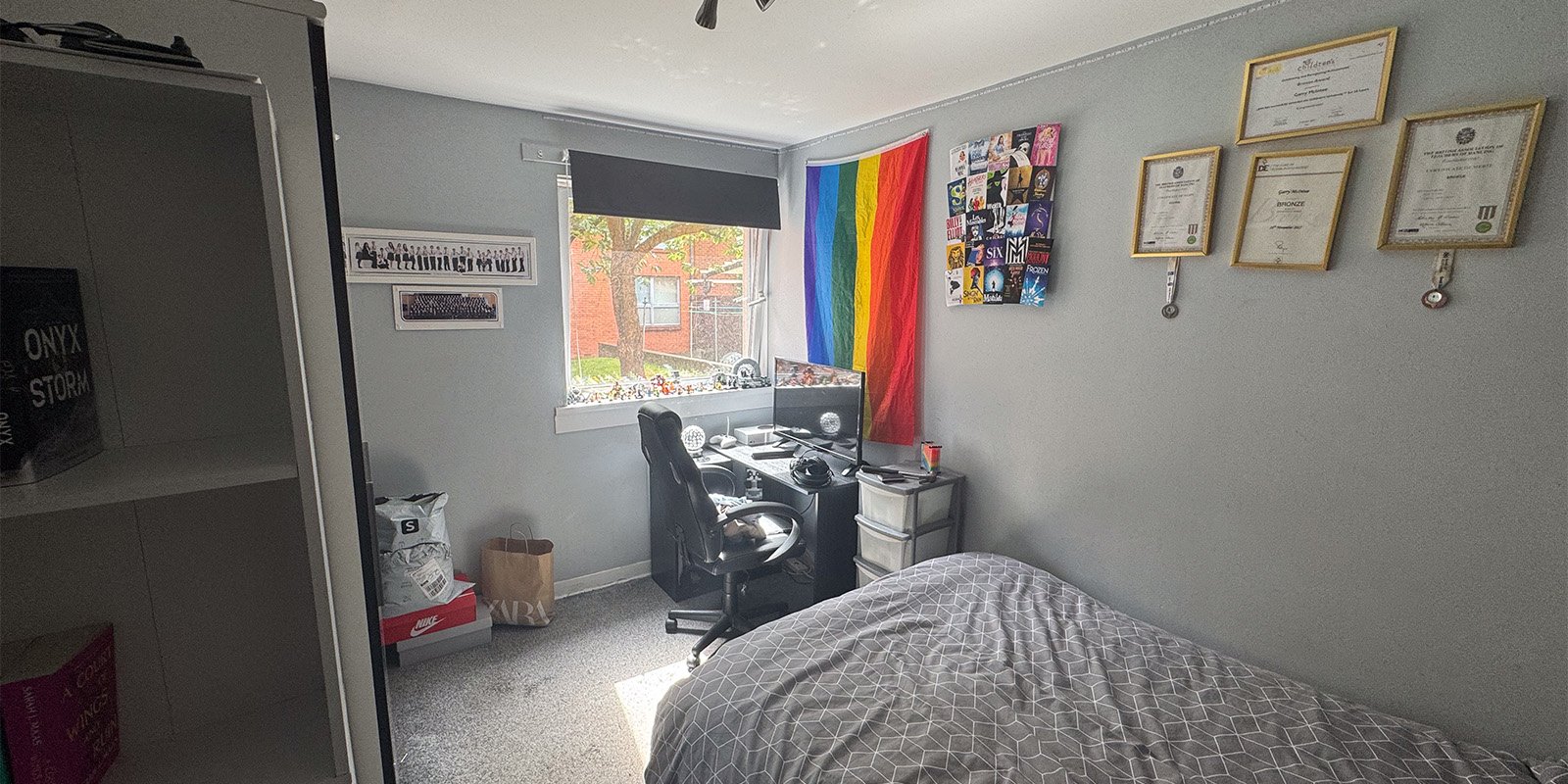
Two days, three coats of paint and one panic attack in IKEA later, we transformed the room into something more believable for Eilidh. Elle Watson, who played Eilidh, Erin Veitch, our camera assistant, and Erin Marshall, who provided original artwork for the film, added the final touches to the room, dressing the location in a way that resonated with Eilidh’s character. Getting the production design right made my job much simpler. From a lighting standpoint, there were only two possibilities for motivation: the window or practical lights in the room.
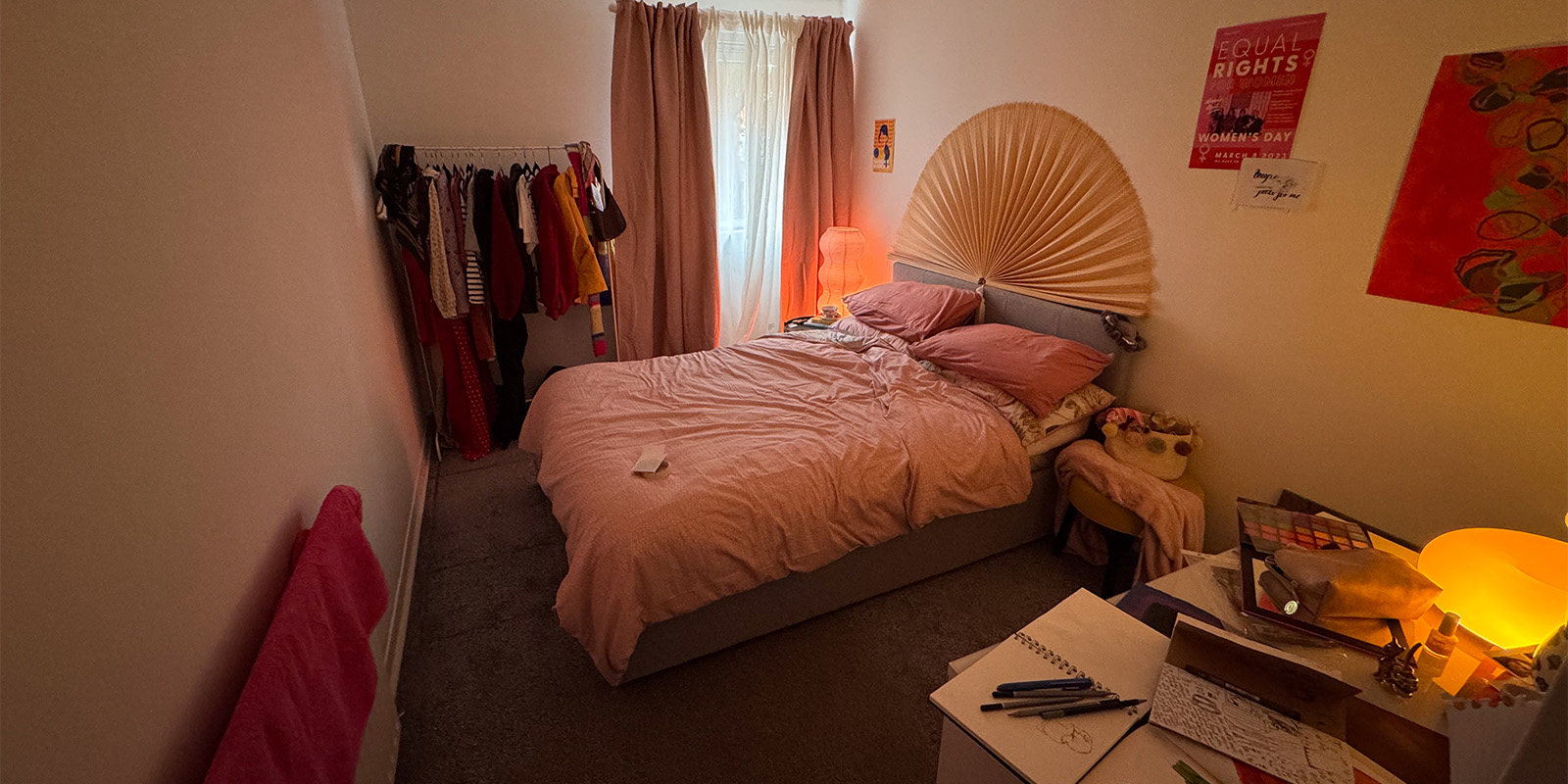
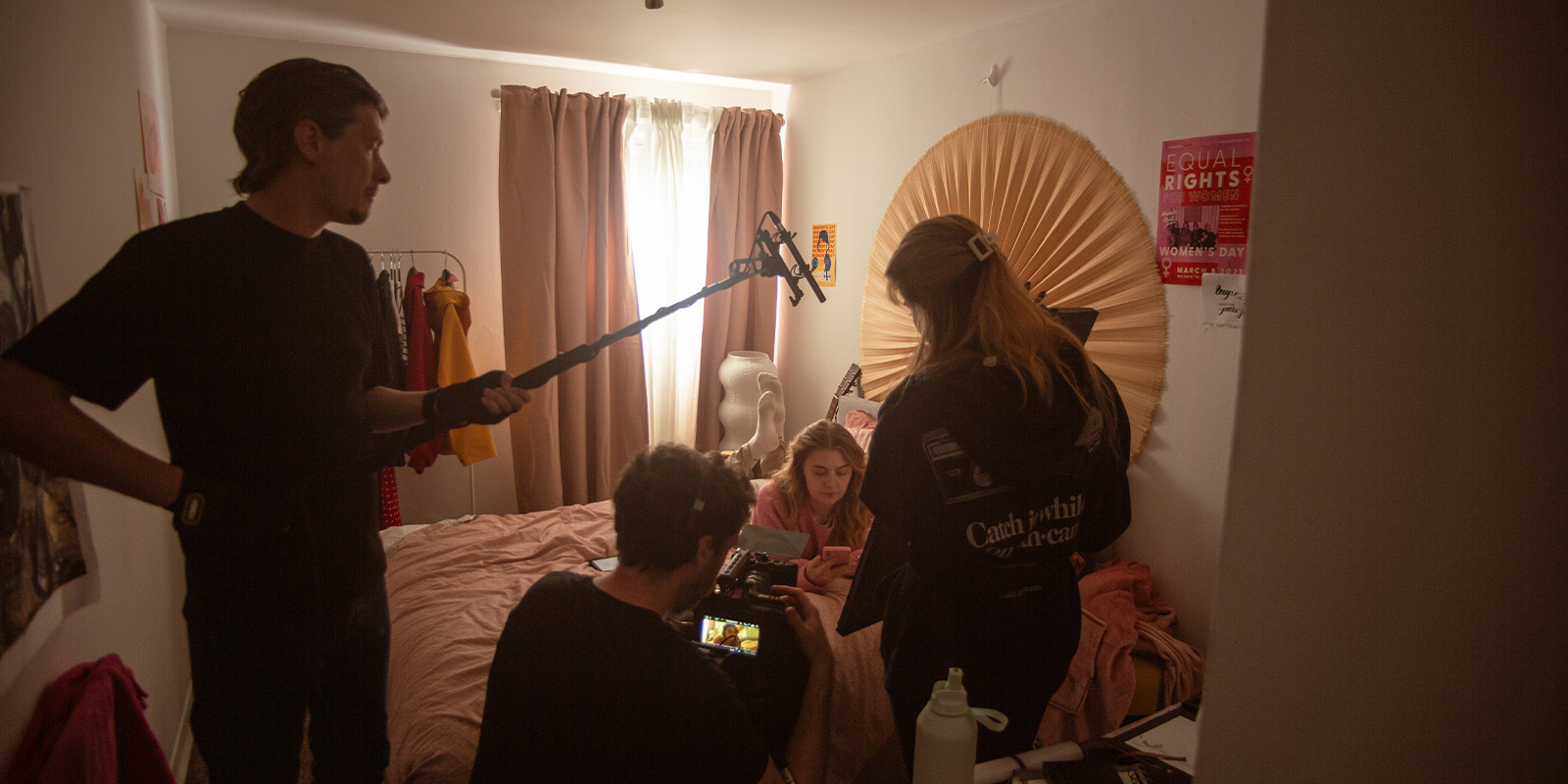
For day interiors, I placed the Neewer CB300B outside the window and shot it through the sheer curtain, maximising our space within the relatively small room. The sheer took the edge off the light, but we were able to part it when we wanted a harder source. The light walls provided a good level of overall ambience but didn’t remove too much contrast from the scene. A poly clamped to a small light stand provided fill on the actors when we needed it.
We got extremely lucky with the weather. It only rained once during the shoot. As the CB300B is not weatherproof, when it rained, I opted to place the FL150S directly behind the sheer curtain, attaching it to the inside of the window with suction cup hooks and applying additional diffusion when required. While I couldn’t adjust the direction of the light with the FL150S, it afforded me the control and consistency I needed to shoot the scenes.
Simple solutions
Two of the most challenging scenes unfolded in this location, both set at night.
The first saw Eilidh arrive in her bedroom in darkness, switch on the light and discover Cameron sitting on her bed. After worrying about the scene for months, and flirting with finicky solutions involving trying to turn on the FL150S at the exact moment the actor flicked the light switch, it was the simplest solution that proved to be the best option, both for execution and efficiency.
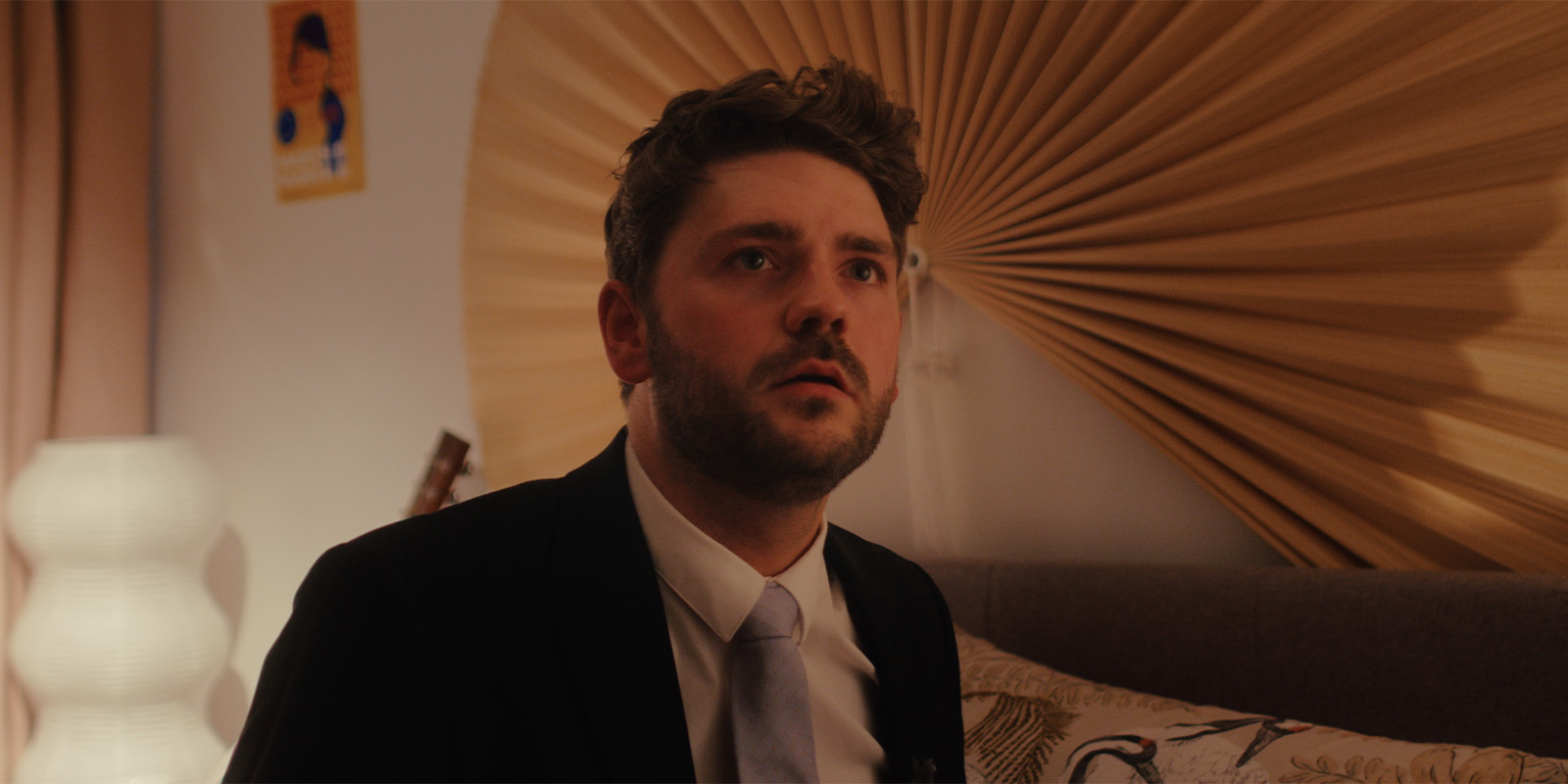
I used the existing light fixture, three 60W halogen bulbs fixed to the ceiling, some Blackwrap to control the spill, and the aforementioned poly to bounce light back into the actors’ faces. Admittedly, I wish I’d spent a little more time keeping spill off the back wall, but, importantly, we were able to capture the beats of the scene in a way that felt a little scrappy and authentic to the moment.
Maintaining intimacy
The second scene was an intimate moment between our two leads. While the scene was thoroughly choreographed by our intimacy coordinator, Michele Gallagher, I wanted the camera to feel spontaneous, responding instinctively to the movement of the actors. My friend and fellow director of photography, Mark Boggis, who was kind enough to come on board as my gaffer on selected days throughout the shoot, suggested bringing a source into the room to supplement the practicals.
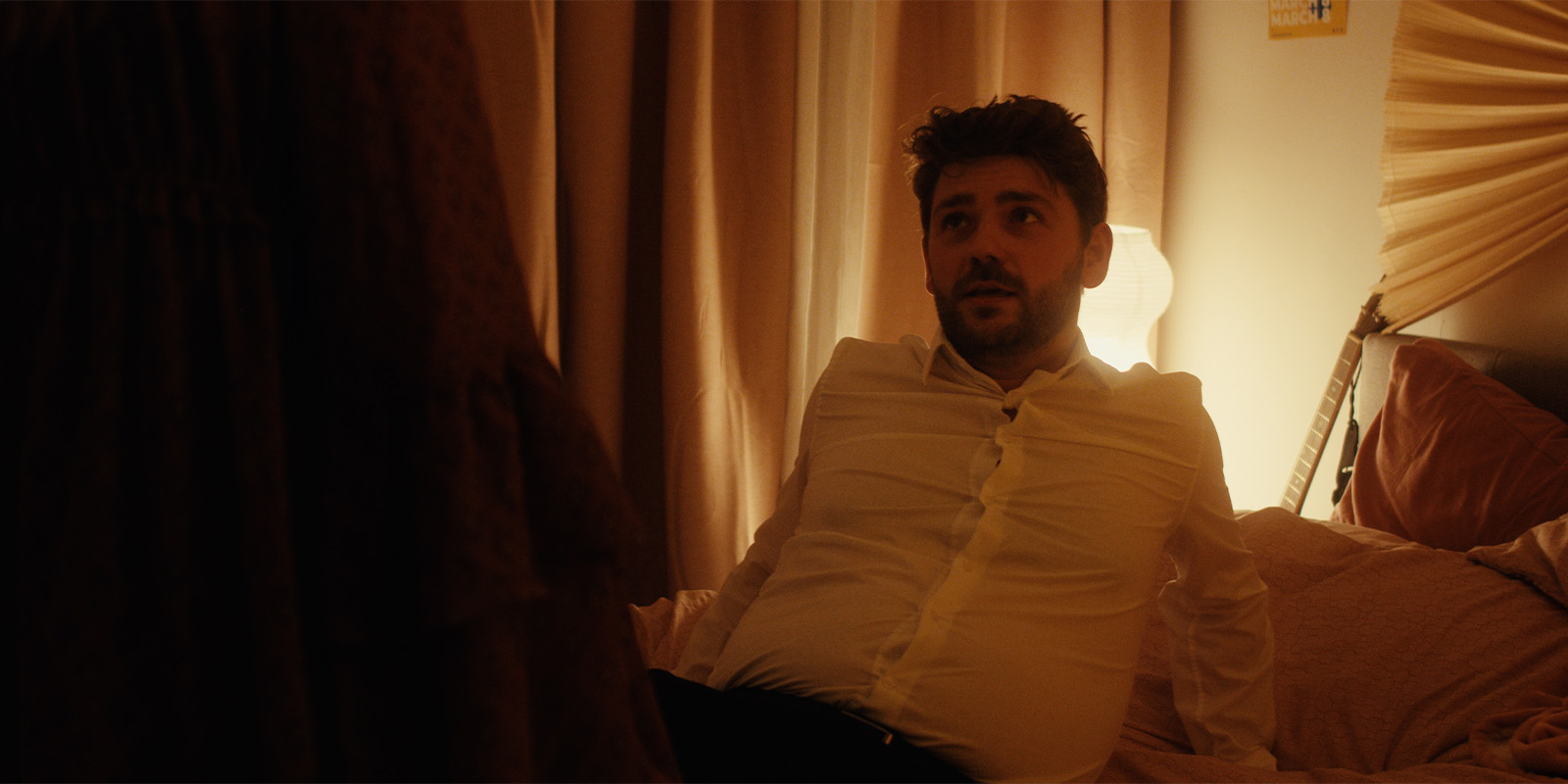
Since we were shooting in a small space on a 24mm lens, I was concerned that bringing a light into the room would take up valuable floor space, inhibit the actors and potentially be caught on camera, limiting the way I wanted to capture the scene. So, I made the decision to light the scene entirely with two small LED lights inside the paper lantern practical in the corner of the room. This meant shooting wide open at T1.5. Don’t worry, I was pulling my own focus and wasn’t throwing a 1st AC in at the deep end.
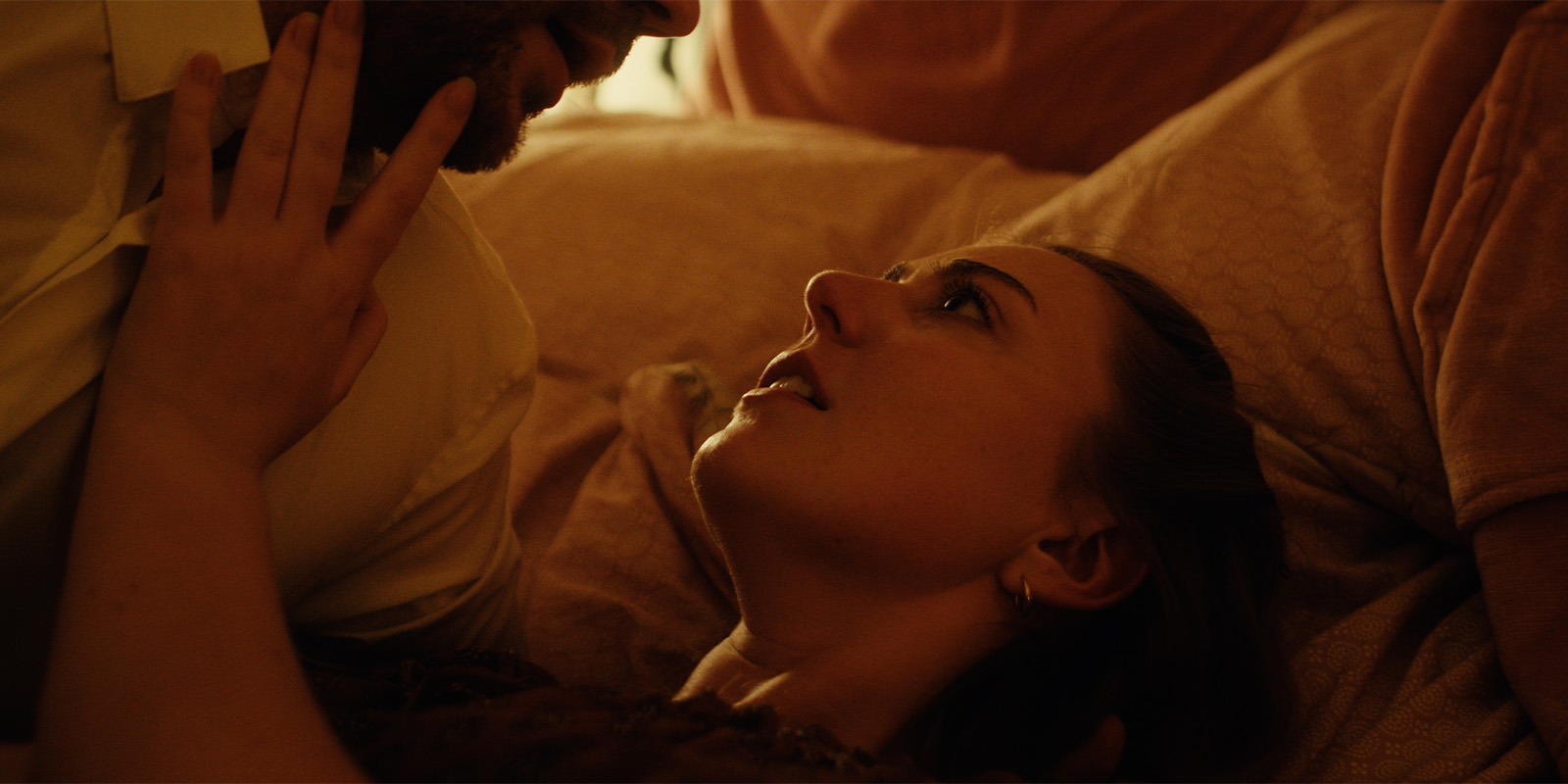
Although the practical was blown out, I was happy with the result. The Tiffen Black Pro-Mist 1/4 took the edge off the highlights, and the resulting halation created a warm glow that spoke to the intimacy of the scene. Photographically, it wasn’t “perfect”, but it felt right for the moment, and allowed me to operate in a way that felt present rather than voyeuristic.
Story over everything
Looking back on the shoot, it reinforced the main lesson I learned working as a video journalist a decade previously: story over everything. The audience is not moved because you managed to protect every highlight, they’re moved because they connect with the story. As cinematographers, we may reflect on our work and lament what we could have done better if only we had more time, more crew or more equipment, but there’s a good chance the audience hasn’t even noticed our flaws. And, anyway, that’s why we keep doing it, isn’t it? To get it right on the next one.
Premature is released in UK and Irish cinemas from 18 September.