
BOOK SMART
From creative classics to technical bibles, cinematographers share the timeless books that have shaped their image-making and storytelling and influenced how they see the world.
New Cinematographers by Alexander Ballinger (chosen by Stephen Murphy BSC ISC)
“New Cinematographers by Alexander Ballinger was first published in 2004 at a time when books on modern Cinematographers were few and far between. Each of the book’s six chapters focuses on a different cinematographer, and within each chapter is a treasure trove of information for any aspiring or practicing cinematographer.
Written without the looming shadow of studio or PR interference, each chapter is a very candid conversation with its respective cinematographer. They talk honestly about their work, focusing on several of their films and breaking them down in great detail. They talk about how the work affects them personally and about what they did technically. They share their personal notes, their hand drawn lighting diagrams and their on set polaroids and camera report sheets. They talk specific lights, specific lenses, T-stops, exposure, filmand processing. They talk about everything. It was, and continues to be, so wonderfully inspiring. Written with a near perfect balance of art and craft, its agenda simply to celebrate the art of cinematography.
I bought the book when it first came out and I’ve pored over it so many times in the last 20+ years that my copy is struggling to stay in one piece. I’ve studied it in detail so many times and each time I re-read it I see something new. With every year that passes the wisdom shared in the book takes on new meaning, the true value of the cinematographers’ experience landing with more flavour. Two of the six cinematographers are sadly no longer with us but the wisdom and ideas within the book are just as relevant now as they were when they first shared them 20 years ago.”
Stephen Murphy BSC ISC
The Negative by Ansel Adams (chosen by Henry Braham BSC)
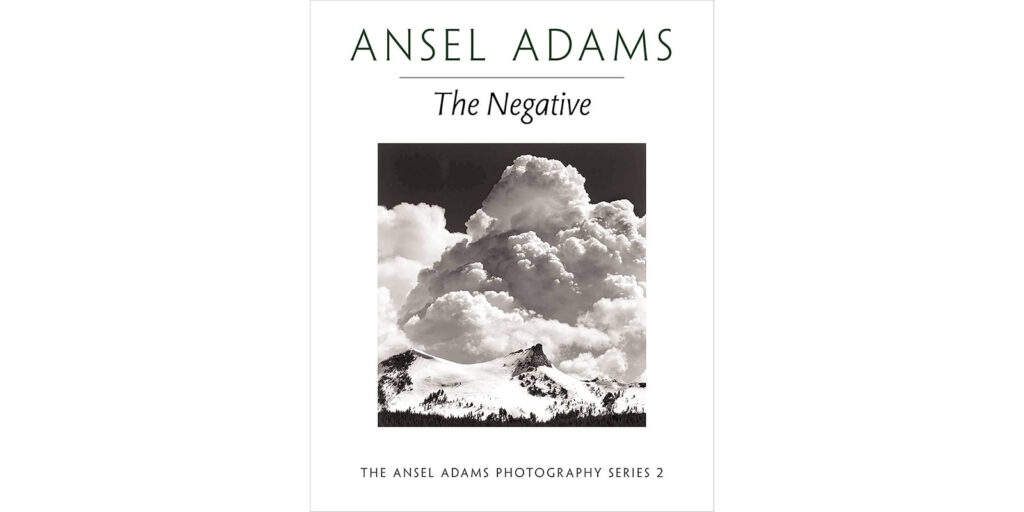
“Everyone has a different way of looking at things. But how do you articulate what you see or imagine onto a piece of film or any photographic medium? The book that set me free and enabled me to articulate myself in photography was The Negative by Ansel Adams. He wrote three technical books on photography: The Camera, The Negative and The Print, first published in 1948.
The Negative is just as relevant now as it was back then. In fact, I think it is more important now than when it was first published. Adams sets out the method of understanding tonal range and how to match what you see or more significantly, what you want to see tonally to the capabilities of the photographic materials you are using. This is the Zone System which he developed at the end of the 1930s with fellow photographer, Fred Archer while they were both teaching in Pasadena. And it is also a process that helps you really see things rather than just look.
Everyone has their personal journey to the way they work and the work they do. In most things we do, we can ask for help and advice from experts, or someone with relevant experience. And filmmaking is a wonderful collaborative process accumulating talent and specialist skills. But the one thing as cinematographers we absolutely must know, is how to convert the vision or idea for an image onto a negative (or digital medium). The Negative is concise and articulate in enabling us to do that and sets us free.”
Henry Braham BSC
In Conversation with Cinematographers by David A. Ellis (chosen by Oliver Stapleton BSC)
David A. Ellis’s interviews explain why choices were made by the cinematographers: in response to story, performance, budget, schedule and most importantly in relation to the director. It is not a manual that explains how to do things, but rather reflects real life situations that the cinematographers faced and how they dealt with them. It allows uncertainty and experimentation: a recurring theme in the interviews is doubt, trial and revision. Established cinematographers openly discuss mistakes, fear on set, discovering solutions and finding out late about major changes.
For students this is profoundly reassuring and encourages creative risk, not imitation. The first version of the book (Conversations with Cinematographers), despite being published in 2012, is just as relevant today as it was back then: the lessons from those great cinematographers have not become less relevant because of the move to digital cinematography, which serves to underline the fact that most of what students need to learn about the craft is not technical but “human”.
These interviews were made with “unbriefed” cinematographers, as against the modern trend for us to be surrounded by agents and PR people fitting us neatly into a schedule to publicise a certain film. With the onset of social media, cinematographers are more reluctant to “tell it like it is” in case they are misquoted or hounded by adverse comments on a platform.
The 2015 revised edition (In Conversation with Cinematographers) adds a further 23 interviews which brings them more into the contemporary world.
My only criticism of the book is that it is UK biased and leaves out many of the great cinematographers from the rest of the world. For a further wider perspective I would also recommend: Masters of Light: Conversations with Contemporary Cinematographers by Dennis Schaefer and Larry Salvato and Reflections: Twenty-One Cinematographers at Workby Benjamin Bergery.
Oliver Stapleton BSC
Transcendental Style in Film by Paul Schrader (chosen by Igor Martinović)
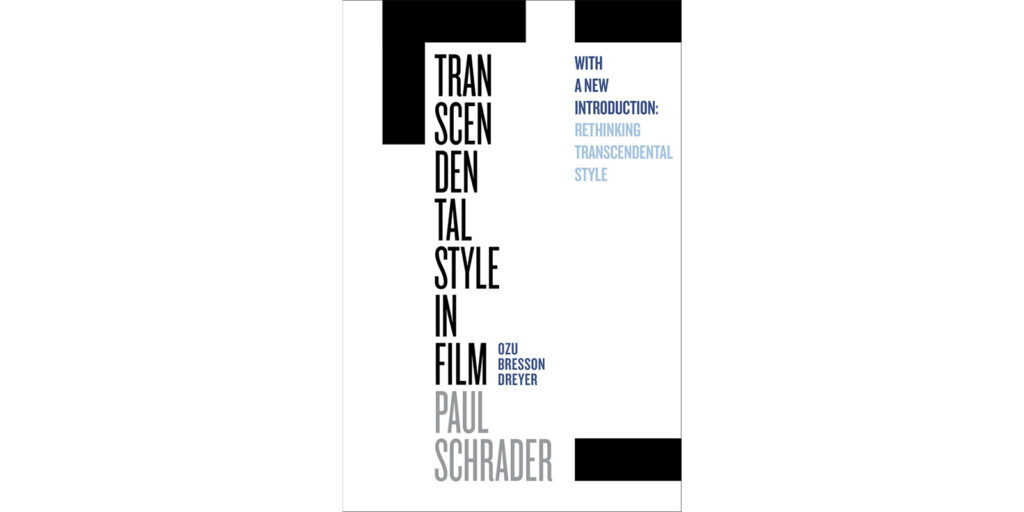
“My favourite book that influenced my way of thinking about movies and about cinema is Transcendental Style in Film by Paul Schrader. He taught me about the different ways of seeing movies, making me see where the narrative segment is secondary to the ambience and creating a mood, rather than just having a narrative-straight storyline.”
Igor Martinović
The Poetics of Space by Gaston Bachelard (chosen by Trevor Forrest)
“My favourite book that comes off the shelf probably three or four times a year is really a reminder to think about the small things in life. It’s The Poetics of Space by Gaston Bachelard. It’s definitely an art school book and not one you’d find on the shelf easily.
He’s a French phenomenologist and he talks about the poetics of space, so the attic, the basement, the corridors, the table, the memories of the inside of shells and the sound of oceans, just the little things that we always brush over.”
Trevor Forrest
On Filmmaking by Alexander Mackendrick (chosen by Simona Susnea)
“A book that I learned a lot from is On Filmmaking by Alexander Mackendrick. I read that when I was a student and it taught me so much about the grammar of film and the ABCs of how to tell a story. Another book that’s had a big influence on me is a collection of portraits by William Ecclestone [William Eggleston Portraits].”
Simona Susnea
The Five C’s of Cinematography: Motion Picture Filming Techniques Simplified by Joseph V. Mascelli (chosen by Oren Soffer)
“An influential book that comes to mind is one of the first filmmaking books that I ever got – The Five C’s of Cinematography: Motion Picture Filming Techniques Simplified. I think I must have been 15 or 16 and barely knew what a cinematographer was, but I was just learning and found this book. I think I read it in a list of books to get to learn about filmmaking. It is pretty fundamental, covers all the basics, like what’s a wide shot, a medium shot, close-up. I still think about that book to this day. Sometimes it’s good to go back to the basics, and I still have it on my bookshelf and take a look at it from time to time.”
Oren Soffer
The Visual Story by Bruce Block and The Set Lighting Technician’s Handbook by Harry C. Box (chosen by Ashley Barron ACS)
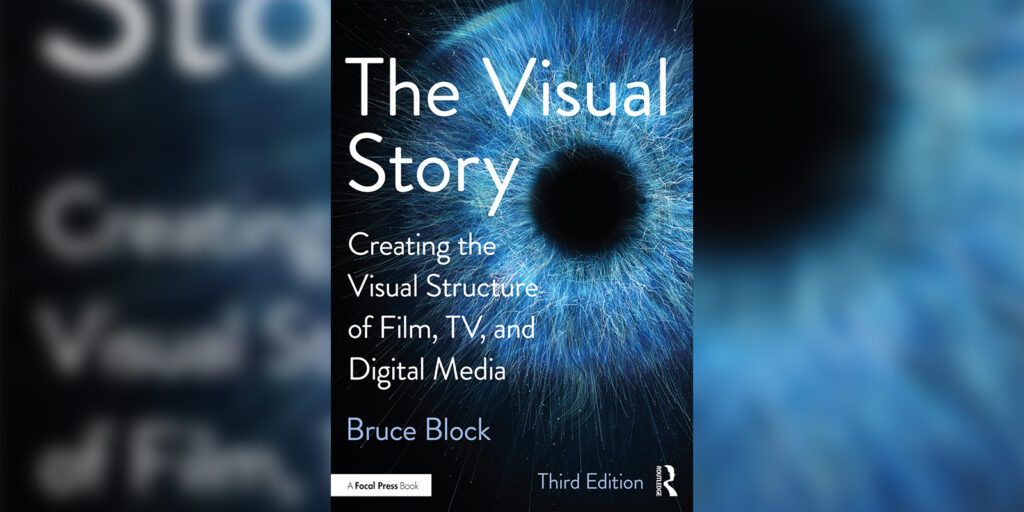
“The Visual Story by Bruce Block and The Set Lighting Technician’s Handbook by Harry C. Box are both texts that had an impact on me and I see as bibles in terms of fundamentals.
Cinematography is meaning communicated through images, and The Visual Story is designed around the fundamentals of how that meaning is created. It breaks visual language down into components of space, line, shape, tone, colour, movement and rhythm, and shows how each one affects emotion and narrative. It explains how understanding the connection between story and visual structures will guide you in the selection of camera angles, lenses, actor staging, composition, set design and locations, lighting, storyboard planning, camera coverage and editing. It gave me a starting point in designing images intentionally.
Understanding the physics behind light was a game changer, turning lighting into a formula that can be adapted to any environment or creative problem while still serving the story. Though The Set Lighting Technician’s Handbook addresses aesthetics, it’s the practical guide to the craft, technology, and professional practice of lighting that draws me to this book. It details explanations of light theory and connects that “what” with the “why” and “when” – the physical tools to their practical uses. It also helped me form an understanding of the crew roles, workflow, some of the realities of production, as well as a baseline from which to communicate with my crew.
Together, these books form a practical foundation to return to. Their root in fundamentals means they remain relevant on every project I take on.”