THE DEVIL’S IN THE DETAILS
Cinematographer Hillary Fyfe Spera explains how Daredevil: Born Again uses location, lighting and anamorphic lenses to execute the gritty feel of the Marvel show.
As we speak to Hillary Fyfe Spera, cinematographer on Marvel series Daredevil: Born Again, about the visual language of series two, one word keeps cropping up: grit. Following Charlie Cox’s Matt Murdock – the titular Daredevil – as he fights to protect the people of Hell’s Kitchen in an increasingly bloody fashion, that’s no surprise. The second run of this critically acclaimed show is grittier than ever –with New York City continuing to play a crucial role in bringing that to life.
“The show really wouldn’t have the same texture and character if it weren’t shooting in New York,” the DP asserts, “so it’s been a total blessing to be able to actually film on the streets of the city.”
Inspired by William Friedkin classics like The French Connection, that “really gritty, really real” aesthetic has become a touchstone for the production, with Spera leaning into the ‘New York-ness’ – warts and all – more than ever before this season.
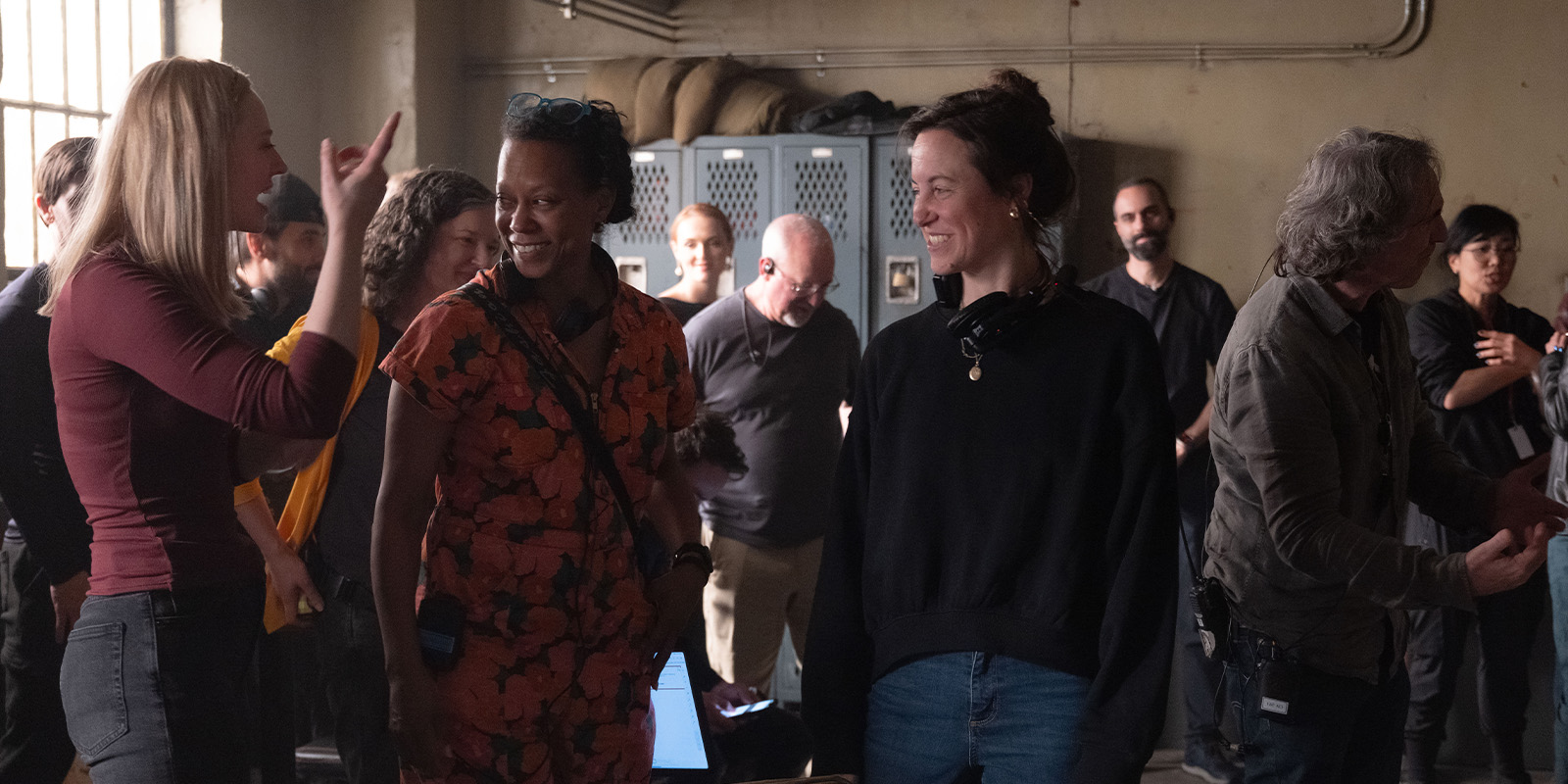
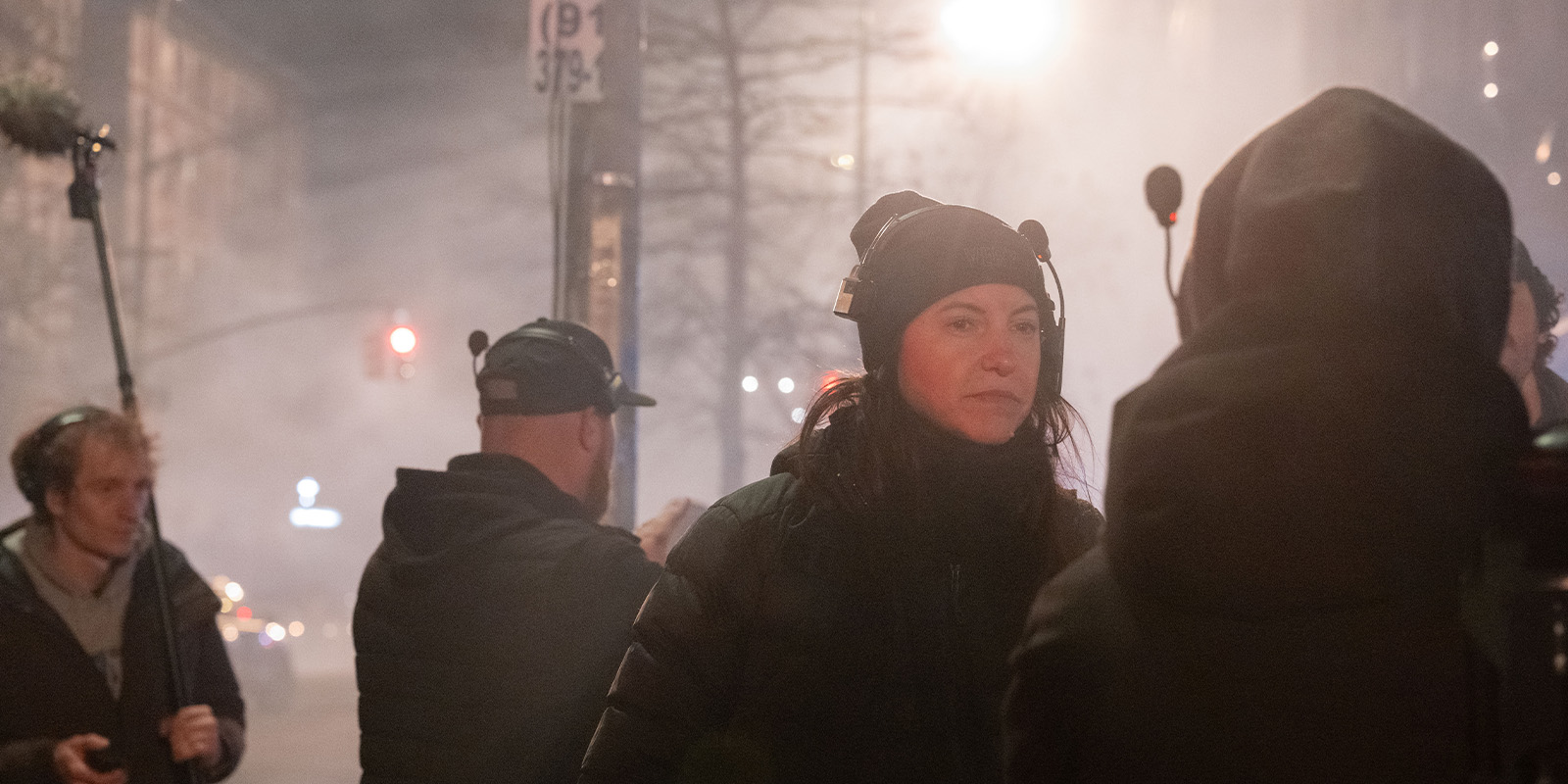
“The challenges of shooting in New York are kind of infinite,” she laughs. “It’s hard. You’re dealing with real stuff – real New Yorkers, unpredictable weather, rats. But it’s a good challenge. It’s authentic. You get that feeling of steam coming from the streets, a lot of neon lighting, fluorescents, uncontrolled environments – all of which give it authenticity. I have lived in New York for 20 years and I feel so lucky to be shooting the show there. It’s such a huge part of its soul and origin.”
Ship shape
Filming anything in New York City is a test, but lensing extensive action sequences – featuring oners, lively locations and complex choreography – is something else entirely. For Spera, who shot half of the season, with Jeffrey Waldron ASC working on the other half, one particular showdown sums up the challenge perfectly. Kicking off the new run, Murdock, kitted out in his new stealth-black Daredevil suit, takes on a group of goons on a cargo ship in the dead of night. The DP looks back fondly on putting the arrangement together: “We start out the season on an actual cargo ship travelling down the East River in New York City. When I first read the script, I was like, ‘Okay, here we go. This season’s going to be a good challenge.’
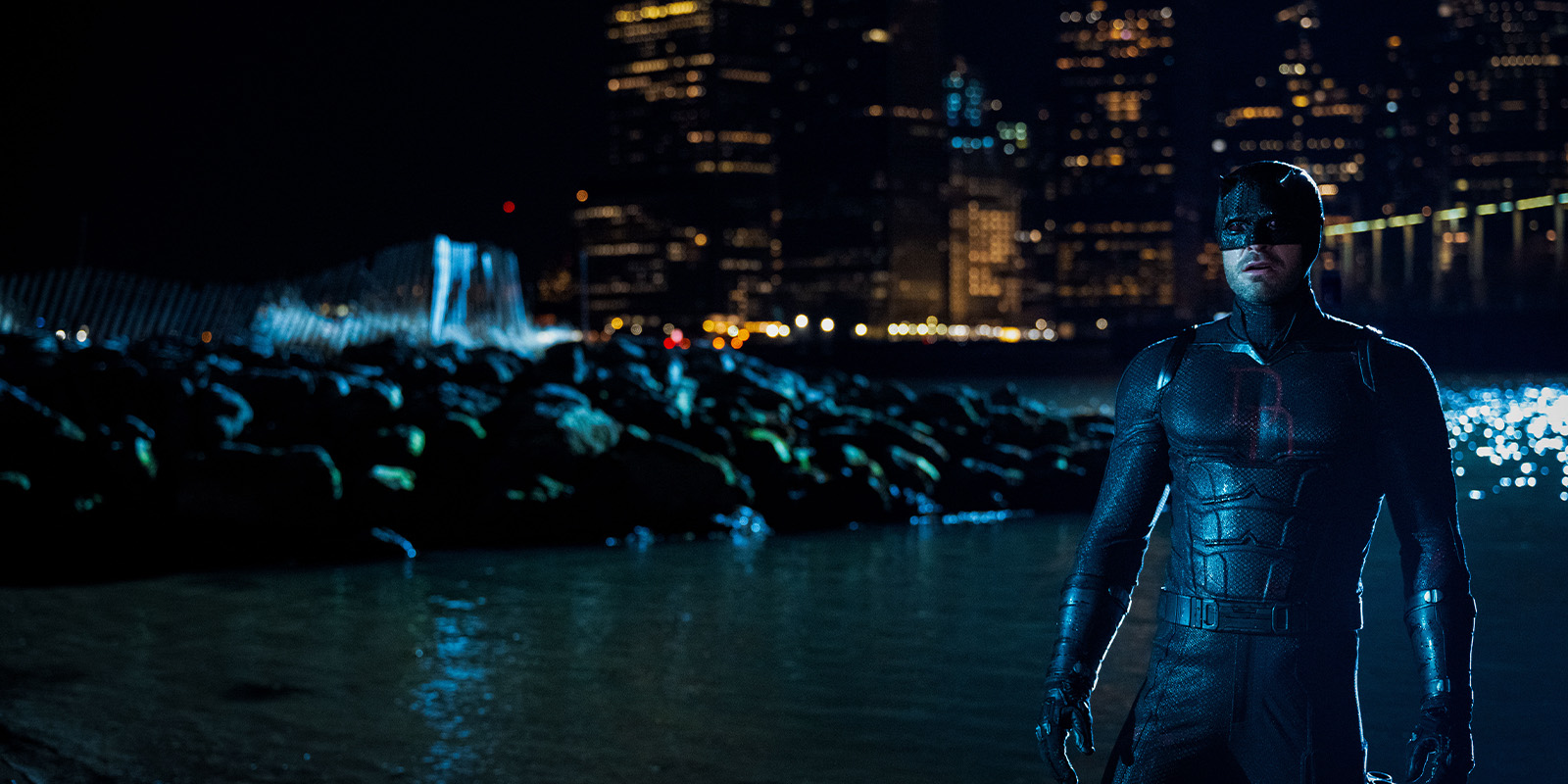
“We shot it on the river with the Brooklyn Bridge in the background, and we were dealing with tides and wind and currents. It was our Fitzcarraldo; it was a really big moment for the season and I’m very proud that our team pulled it off.”
While Spera put together countless breathtaking action beats in the first run, the series two opener threw up brand new obstacles. “There were all kinds of technical tests we had to overcome in order to facilitate that sequence, such as using drone lighting,” she remembers.
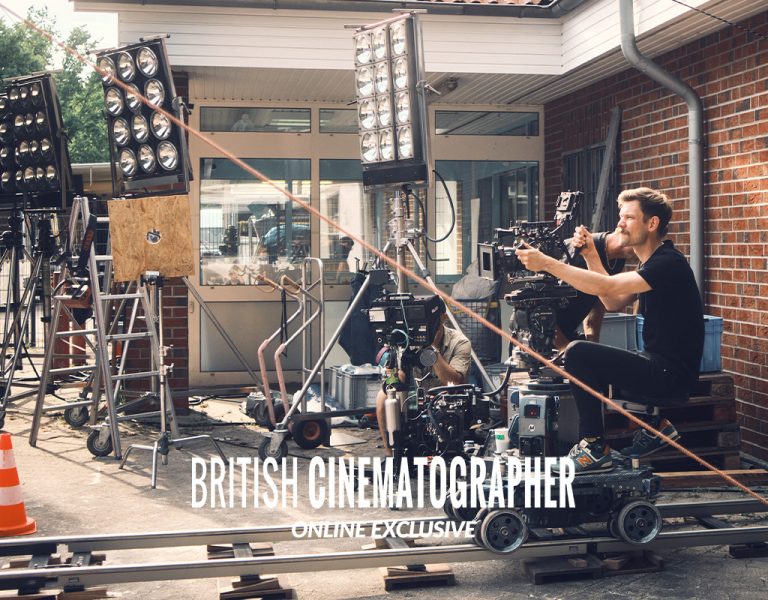
“There was essentially a oner that happens on the deck of the ship, before we go below, and you can’t light 360 because you’re on the water. We used drones which moved with the choreography to ensure we were keeping light consistent, highlighting certain points. We’re always trying to backlight as much as possible, and so to light the sequence and keep it consistent on every take we sent a drone up and trained it on where the path was and used it as a backlight throughout, which our gaffer Charlie Grubbs rightly determined was the only way to do it. Luckily we were able to pull it off with Flying Monster (of Monster Remotes), who provided the drones and embraced this challenge with us, consulting on what our limitations and abilities would be and teaming up with our board operator Ryan Phillips to control the in-air sources. Each drone had 12 minutes of run time at that payload, so we had to be on our toes. This was a first for us, but luckily the plan was the perfect execution for what we needed.”
A lens on reality
To capture most of the series, Spera largely relied on the ARRI Alexa 35 with anamorphic Panavision G Series and T Series lenses from Panavision New York (who did an “incredible job supporting”), with the “speciality” Macro Anamorphic Prime 55s (MAP55s) saved for more “sensory” or “singular” moments. For while Daredevil: Born Again regularly wows audiences with its bone-crunching fight scenes, it also acts as a timelyand thought-provoking political thriller exploring the impact that authoritarianism – driven by intolerance – can have on society. “It’s telling how history does repeat itself,” Fyfe muses. “Seeing how the world is developing around us proves to me that we’re on to something, that we’re really reflecting what’s happening in the world.
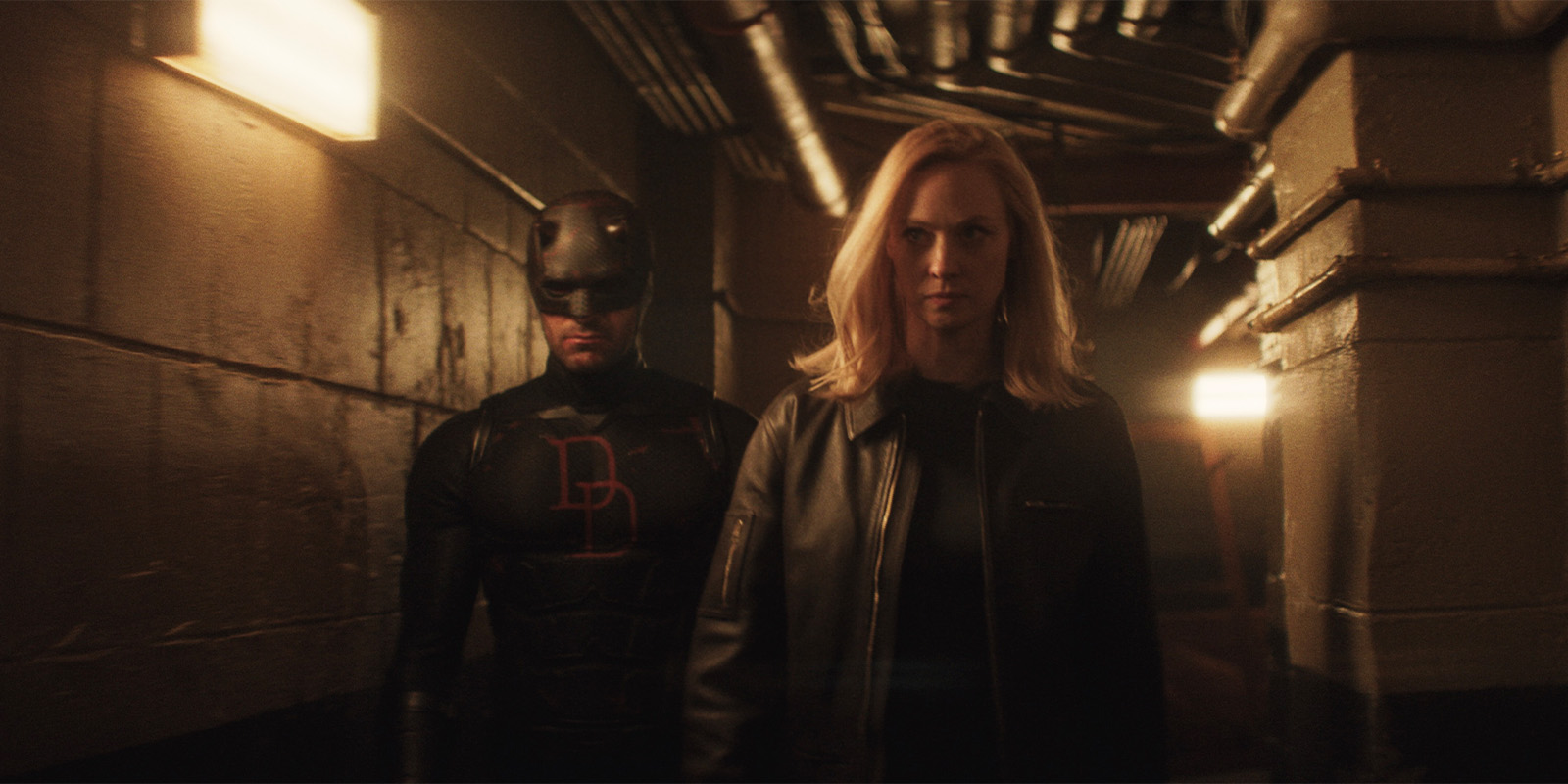
“I am proud of a sequence at the end of the second episode, where we see an altercation in a bodega with a Task Force member that escalates into chaos, resulting in Soledad (White Tiger’s wife) being detained violently by the AVTF (Fisk’s Task Force). A small rioting crowd develops outside on the street. The intention was to make the stakes feel as authentic and real as possible – especially in a situation we are now all too familiar with.
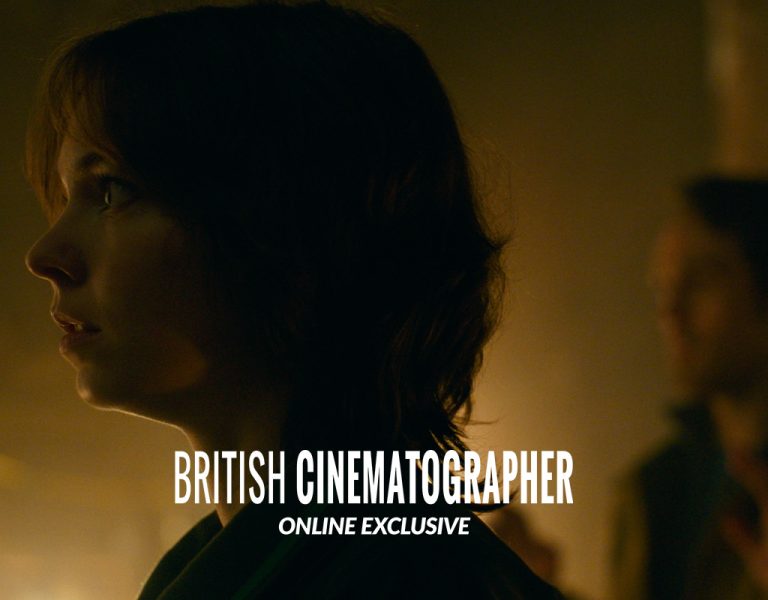
“In addition to shooting handheld and verité, we used a lot of practical lighting: flashlight, iPhone, police light, and simulated headlight sources to add to the disorientation. At the end of the sequence, the camera pushes into Angela (the future White Tiger vigilante) and holds on just her observation of what’s happening: helpless yet determined to fight back. From the moment it escalates inside the bodega, the scene is one long handheld take on the MAP55 – our most human lens. It has a beautiful ability for close focus and falloff with a warm anamorphic flare that feels special and singular.”
A colossal foe
Orchestrating this authoritarianism is the colossal Kingpin, AKA Mayor Wilson Fisk, whose deployment of the militantTask Force and crackdown on vigilantism threatens the freedom of his citizens. Whether sat behind his desk or pummelling any enemy into oblivion, Vincent D’Onofrio’s antagonist is a force of nature – with his physical and political stature intensified by Spera’s deft useof wide anamorphic lensing, often “below the eyeline to make him feel like a commanding presence”.
“Coming back from the visual language we established in season one, lensing was very second-nature when it came to the world of Fisk. Our operators Tom Schnaidt (A camera) and Blake Johnson (B camera) were huge assets in their intuitive awareness through lensing, which also allowed us the ability to look forward to moments that could later evolve and break rules of our language as the season evolves.
“The established approach for Fisk is a more controlled camera on dolly, very precise and institutionalised, using wider angle lenses for coverage to enhance his sense of large presence, as opposed to utilising longer primes for coverage on the vigilante side of our story’s landscape. And often clean coverage, with Fisk occupying all or most of the frame.
“But I have to admit, Vincent does so much in his own physicality; he is able to embody the character so well in his mannerisms and performance that the inspiration becomes collaborative and instinctual.”
While lens choices and camera setup are important, another major part of capturing Kingpin comes from the lighting design, with Fisk – donning a bright white suit and unnatural smile – operating in plain sight, pulling the strings in broad daylight. “The lighting is very controlled,” Spera explains.
“He’s not hiding at all; he’s very brash and bold with his actions. It is also meant to oppress, to arrest. So his world employs a lot of bright light, specifically white light, and a very stark, bold look, with hard, oppressive daylight – which we largely brought to life with Molebeams, Titan Bay Lights (in his mayor’s office) and an army of mover lights to simulate headlights and many of Fisk’s signature oppressive, harder sources.”
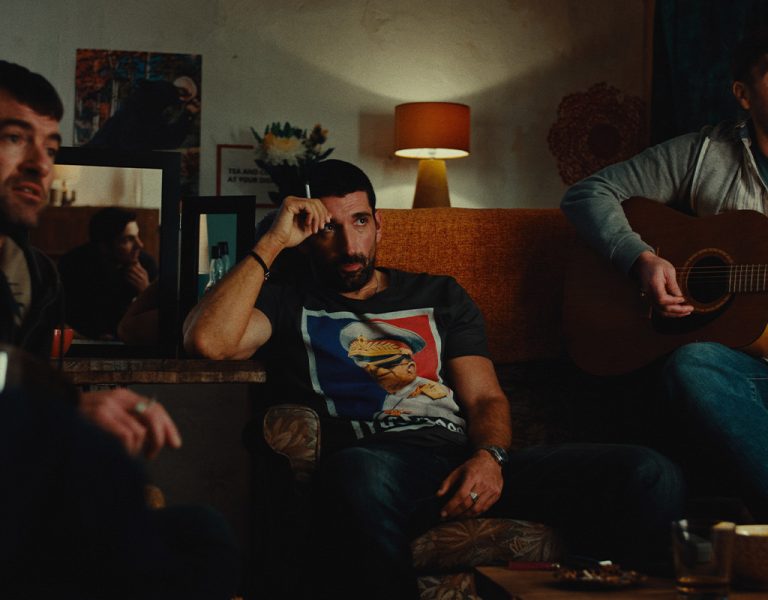
This bright light juxtaposes the world of Matt Murdock and his fellow vigilantes, who are “hiding in the shadows”. “They’re underground,” Spera continues, “they’re the anti-establishment. And unlike with the manipulation of Fisk’s regime, Matt’s part of a very genuine, human motivation. They are the vigilantes fighting oppression. So for that, we really lean into shooting the language of these characters’ world handheld, with longer lenses, dirtier frames, and warmer light sources to feel more intimate, a lot more grounded and humanistic, using ARRI T12s and 10K Molebeams, as well as LEE 651 to match for LED sources and movers for our warm, sodium look.”
When worlds collide
These two looks regularly wrestle with each other on screen, as good and evil go head to head. “Oftentimes within the same scene, we have the visual languages clashing with characters from both worlds interacting,” Spera explains. “In scenes where they collide, we shoot their respective coverage with each character’s visual language remaining consistent – for example, mixing handheld and a dirtier frame on one side of coverage with dolly and clean coverage on the other. It was a subtle difference that was fun to continue to represent throughout.”
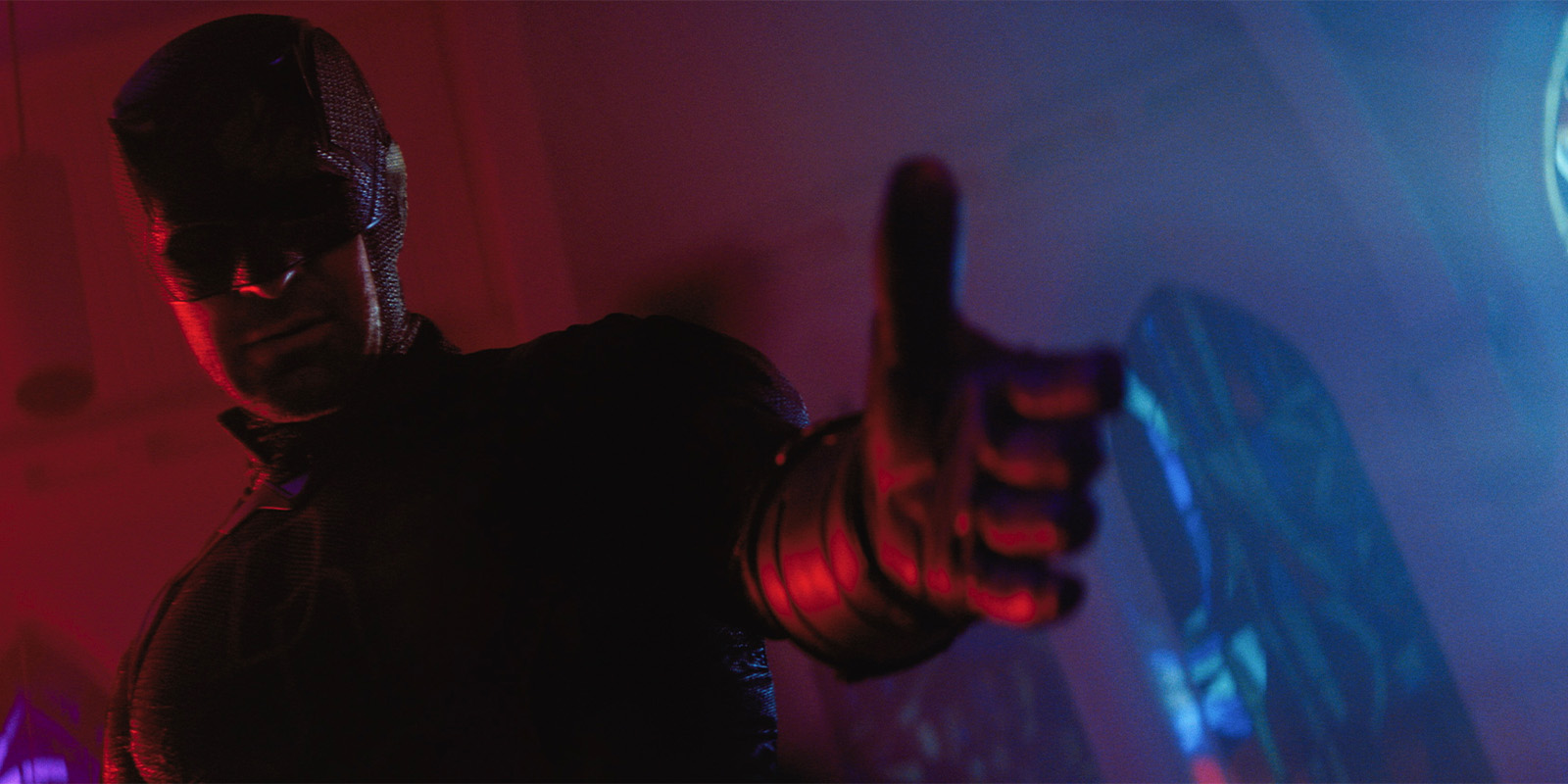
One of the most important visual elements continues right through from when Daredevil first began his journey on Netflix: putting the audience in the shoes of a character who is essentially blind. “Our most signature version of that is what we call ‘sensory grande’, which is our biggest in-camera effect of Daredevil’s sensory system,” reveals Spera. “It’s a combined dolly zoom with an aspect ratio change. This is done with three cameras mounted on a single plate (rig built by our key grip Matt Staples) on track, with the centre camera using a long spherical zoom and the flanking cameras with wide spherical prime lenses.
“The effect is shot spherically to allow for the aspect ratio to widen to full frame to simulate him sensing the entire environment. The aspect ratio change is animated with VFX, combined with stitching together the flanking cameras to see more of the surrounding environment. I think of the effect similar to tuning a radio dial – he starts sensing everything, and then as he clues into one specific channel, the aspect ratio squishes back down and targets in on that one thing.
“The pursuit for a visual signature for this concept started when I was developing our look for season one – I found it was a challenge to express something that’s non-visual with a visual language. It’s auditory, and yet also supernatural. What I liked about this effect was that we were able to create an in-camera, concentrated effect to take the audience into his experience in a very literal sense, both with visuals and sound. I feel like it’s a fun ride – both to shoot and to watch.”