Ryan Eddleston, who has lensed popular hits such as Death Valley and award-winning documentaries like American Interior, explains how he got into cinematography and how he gets the most out of every scene.
Based in Cardiff, Wales, and shooting projects around the world, BAFTA Cymru-winning DP Ryan Eddleston grew up in Rishton, Lancashire. His earliest film memories go back to school assemblies, watching northern classics like Kes and Whistle Down the Wind when bad weather kept everyone indoors.
”I first got curious about what happened behind the camera after watching the making-of documentaries for Bad Taste and Robocop on the TV show Movies, Games and Videos,” Ryan recalls. “A friend and I would run around the back streets of Rishton looking for props to make our own film — until we realised we didn’t have the most important thing: a camera.”
After finishing his GCSEs, Ryan moved to Wales to study Media Studies and Film Studies, which opened his eyes to film as a craft — thinking about how films are constructed and what they mean. That’s where he discovered the work of Pedro Almodóvar, the French New Wave, and German Expressionism. “It sparked something in me,” he says, “so I took an evening filmmaking course, saved up and bought my first camera, and started making short films and music videos — trying out everything I’d learned in theory.”
He then went on to study Journalism, Film & Media at Cardiff University, where the library became a gateway to discovering the people behind the camera who shaped the visuals that inspired him. Films like Lynne Ramsay’s Gasman (1997), Andrea Arnold’s Wasp (2003) and Dawn (2005) deeply resonated. Attending the BFI London Film Festival became an annual event — watching three or four films a day and discovering names that stayed with him, like cinematographer Robbie Ryan BSC ISC (Antonio’s Breakfast). Seeing The Unloved (2009) by Samantha Morton “felt like watching my own childhood”, he says, and Wuthering Heights (2011) – also shot by Ryan – was a defining moment for him — its immediacy, texture and intimacy profoundly shaped his approach to cinematography.
In 2011, Ryan was hired to shoot behind-the-scenes films and interviews for Doctor Who at the BBC — his first glimpse into how large-scale drama was made, with big crews, budgets and equipment working seamlessly together. From there, he moved into independent documentary filmmaking, earning two BAFTA Cymru nominations for cinematography (American Interior and Ivor Gurney), winning for the latter.
After seeing Shane Meadows’ Le Donk & Scor-zay-zee (2009), Ryan teamed up with director Jamie Adams and were inspired to make their own feature — fully improvised and shot with a Dogme-inspired verité style borrowed from his documentary background. The result, Benny & Jolene (2014), was made in just five days for £15,000 and became a modest success, sparking a trilogy that culminated in Black Mountain Poets (2014). That film proved pivotal — leading to collaborations on the debut features of its cast, Alice Lowe’s Prevenge (2016), Dolly Wells’ Good Posture (2017), and Tom Cullen’s Pink Wall (2019), where Ryan operated the B-camera. At the 2015 SXSW screening of Black Mountain Poets, he met director Rhiana Yazzie, which led to shooting her Sundance-developed debut feature A Winter Love (2017) in Minneapolis, Minnesota.
Lighting
“Lighting is a huge part of my process, but ultimately it’s about capturing a mood and reflecting what a character is feeling in any given moment. Most DPs approach lighting from a similar perspective, for me, the artistry really happens in those last few minutes before we start rolling — the small adjustments that can shift how a scene feels to an audience. It might be moving a light slightly, introducing a shaft or hotspot on a wall, shifting the colour temperature a touch warmer or cooler, or perhaps getting rid of some green. Once the blockings are in place, it’s those instinctive, micro adjustments that make lighting truly expressive for me.
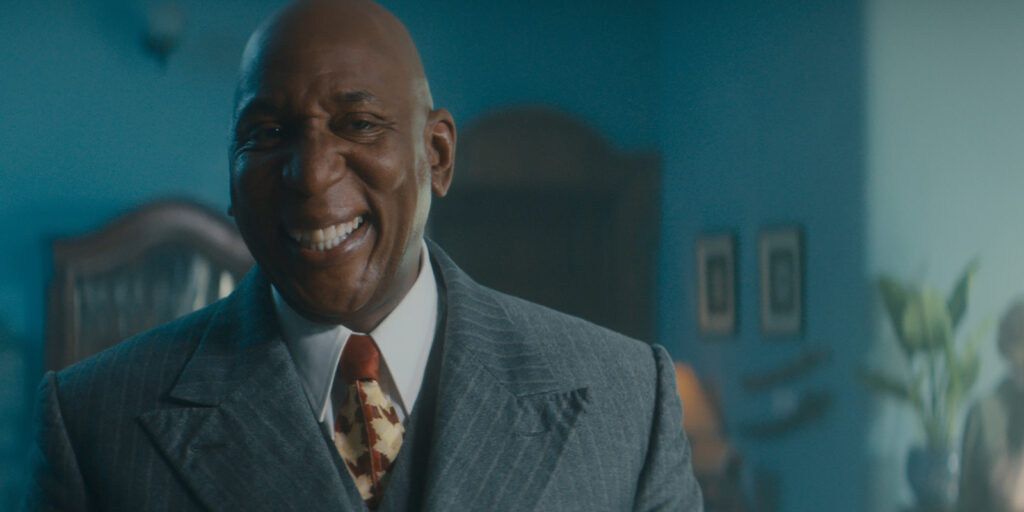
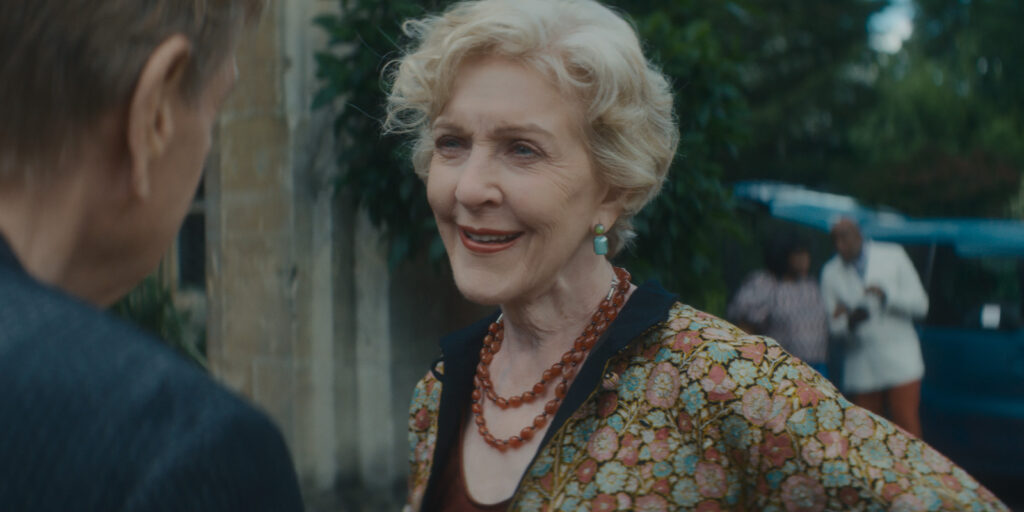
“I rely on HMIs outside windows for consistent, natural-looking sunlight that can be softened to taste, but most of my interior setups are now fully LED. Being able to adjust colour and intensity very quickly without killing momentum, have become vital to working quickly and responsively on set. On a recent film Frank and Percy starring Ian McKellen and Roger Allam, I worked with gaffer Rob White using a G6 to wrap daylight around our actors by bouncing it off walls or ceilings. It gave our actors freedom to move, and we could make subtle adjustments between takes without disrupting their rhythm. It’s a technique I’ll definitely carry forward.”
Film or digital
“I came up during the DSLR revolution, initially shooting on DVCam, then shooting with depth of field adapters and vintage lenses, progressing on to the Canon 7D and the 5D II, digital has always felt very natural to me. The choice between film and digital always comes down to the script and how the Director and I see it, but my instinct until now has always leant toward digital — but at the same time trying to capture the colour and contrast and saturation of stocks like Kodak Gold 200. That said, I’ve recently shot a few music videos on 35mm, which was a great opportunity to play with a different texture and rhythm.”
Lenses
“For me, lens choice is something that reveals itself over time, but my first thoughts come from how I imagine the film after reading the script. I start by gathering visual references that align with what I see in my head, often using ShotDeck to explore how other films achieved a similar tone and mood — what cameras and lenses they used, and how those choices shaped the image. From there, I take into account the camera system, its colour science, who I may or may not have as a colourist, the shape of the locations, the aspect ratio’s, it all plays a part.
“Testing is always revealing. On About a Bell, a feature film I shot, I spent part of prep at Sunbelt Rentals using their pre-lit studio to test a full range of camera and lens combinations. We then watched the footage together in their projection suite so the crew and I could study the subtle differences across the setups. That process led to the decision to use the Alexa 35 with Canon K35s — spherical lenses — for the modern sequences, and the Hawk V‑Lite and Hawk V‑Plus zooms — anamorphic lenses — for the 17th‑century scenes.
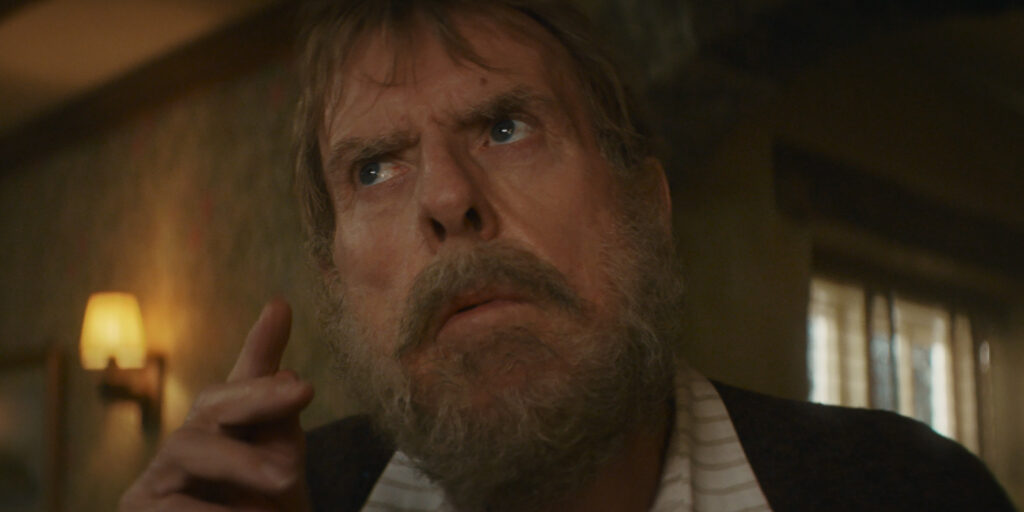
“From that testing, I also knew I wanted to use the Hawk V‑Lites on Frank and Percy. There’s something about their patina, texture, compression, and fall‑off that just feels right. I know these lenses intimately, which frees me to focus more on what’s unfolding in front of the camera. For the magic realism elements, I added the Petzvalux and IronGlass spherical lenses to bring a slightly different energy to those moments.”
Optical filters
“Coming from the DSLR era shooting with vintage lenses, I’ve always found that cinema cameras paired with modern lenses can look a little too sharp for my taste. To get the subtle softness I prefer in the image, I’ve experimented with plenty of diffusion filters over the years, but I’m always drawn to the Tiffen Black Pro Mist filter, specifically the 1/8 strength. It’s a permanent fixture in my matte box, usually alongside a Tiffen 1/8 Smoque and, quite often, a rotating polariser. While some DPs like to change filters depending on the lens, I prefer keeping things consistent —fewer variables to deal with on set.
“I’ve relied on the Black Pro Mist filter for as long as I can remember. On Alice Lowe’s Timestalker, I discovered Tiffen’s Smoque filter. Because haze machines weren’t allowed in some of our period locations, I used the Smoque filter to create atmosphere both indoors and out, especially in bigger exterior scenes where I wanted to enhance that texture. I loved how it affected saturation and depth. I also used it again on Jamie Adams’ Let’s Love with Martin Freeman, following Death Valley, it quickly became a go-to in my kit.
“Years ago, I read an article in British Cinematographer where Laurie Rose spoke about using a rotating polariser paired with a fixed polariser to control exposure while keeping the stop consistent — basically turning it into a variable ND. It made total sense, and I started using one myself. Across the seven feature films I’ve shot with Jamie Adams, where both cast and crew worked entirely through improvisation, we’d often shoot four and a half hours of footage a day without a dedicated DIT. Consistent iris control was essential. With lenses like Super Speeds and K35s, even slight aperture shifts can completely change their character, so the Rota Pola became invaluable for maintaining that continuity.
“The filter on its own is also a fantastic creative tool for subtly controlling reflections and light refraction.
“These three filters — the Black Pro Mist, Smoque, and Rota Pola — have become staples in my matte box, especially on the Death Valley series.”
New developments
“I’m always keen to try out new tools. After wrapping the Death Valley series, Eren Ibrahim from Tiffen told me about their new Dark Contrast filter and sent one over to test on About a Bell (2025) during prep at Sunbelt Rentals. I really liked the results and ended up using it on both About a Bell (2025) and Frank and Percy (2025), which are yet to be released. The main advantage is simplicity — it replaces two filters I’d normally stack, freeing up space in the matte box if I want to use both a Rota Pola and a Pola. The Dark Contrast 1/8 has now taken the place of my long-standing Black Pro Mist 1/8 and Smoque 1/8 filters and lives in my matte box on every shoot.”