FAST-PACED FILMMAKING IN THE SWISS ALPS
The filming of the Locarno- and Camerimage-nominated thriller Sew Torn, lensed by Swiss cinematographer Sebastian Klinger, presented both production challenges and stunning visuals. Set deep in the Alps, he reveals how primary colours played a crucial part and why he chose the Sony FX6 to film it.
The US-Swiss feature thriller Sew Torn is based on a short film with the same title, which I shot in 2019 and was acquired by Searchlight Pictures. When writer-director Freddy Macdonald asked me to reunite for the feature, I knew we would be given a blessing and a curse at the same time: to reimagine–and expand–a narrative that people already liked but make it better. In fact, it was Joel Coen (Fargo, No Country for Old Men) who gave Freddy the advice of turning the short into a feature–and we certainly didn’t want to disappoint him. So, we decided to stick to the same visual approach while making use of the larger resources at hand.
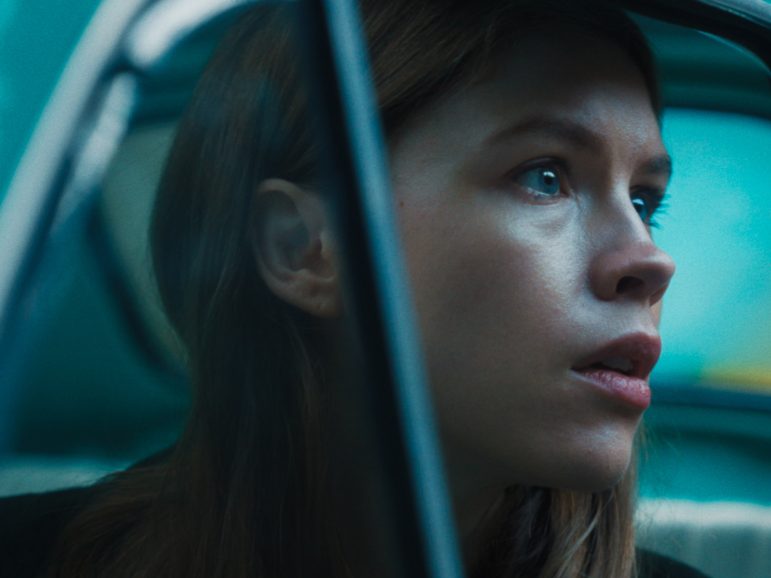
The six-minute short would be incorporated into the feature and act as the inciting incident for the narrative: Barbara Duggen, a nearly bankrupt seamstress, comes upon a drug deal gone bad and finds a briefcase full of money. Contemplating her options and armed with needles and thread, we explore the three different choices she can take: committing the perfect crime, calling the police, or simply driving away. Leading to an escalating cat-and-mouse game with the thugs, these three stories would play out after another, essentially creating three short films within a greater narrative.
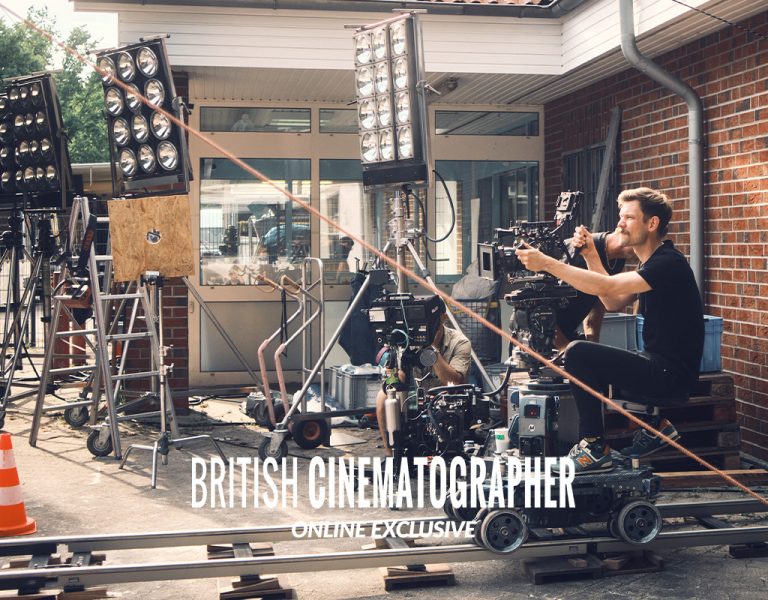
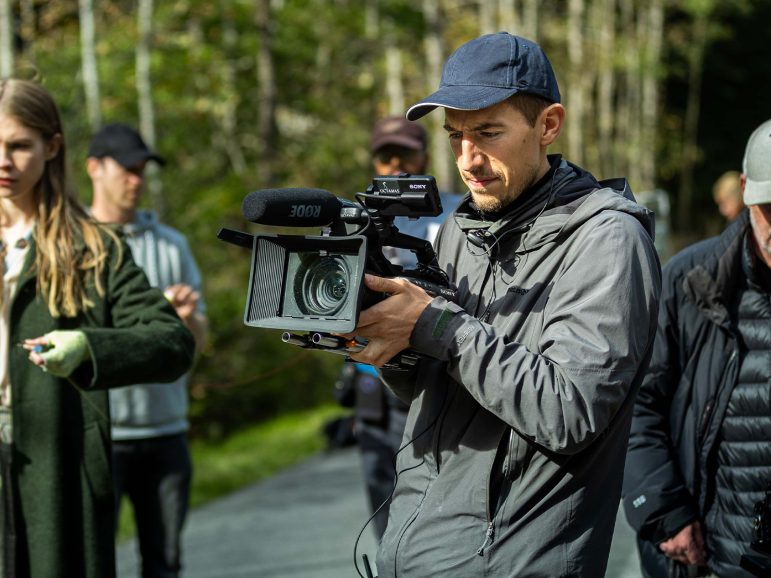
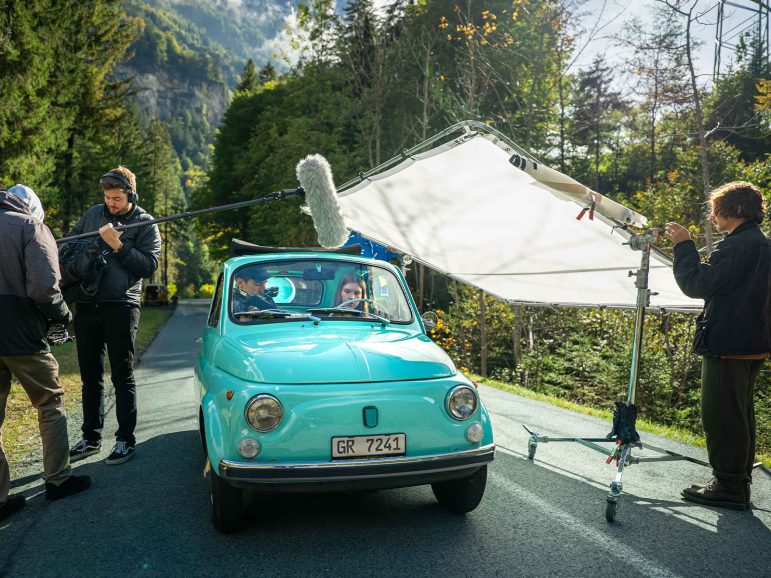
Because we shot the short film back in 2019 with very limited resources–entirely filmed in one day with a crew of four–I originally used my Sony A7III and G-Master Zoom lenses. Since then, I have come to love the Sony ecosystem, so I settled on the FX6 due to its compact, powerful design and rugged practicality, all without compromising image quality. Rigging the camera in the most lightweight way possible allowed Freddy and me to continue the fast-paced filmmaking style we got used to during our previous projects. It also allowed me to shoot most scenes as true handheld footage without any support system for one month straight, providing maximum flexibility. Essentially, reshooting the short meant going back to the same exact location, which I was very excited about, since I grew up in that part of Switzerland. Since I was also a producer on Sew Torn, my local connections proved to be key in finding housing for the 30-person crew and securing filming locations in the remote village of Vättis.
A streamlined approach
Shooting on the FX6 meant that I would be doing a lot by myself, including pulling focus on the lens, which gave my assistant, Janis Wolf, time for other tasks. Opting for the G-Masters again, I was able to trust autofocus a lot of times. And instead of a physical slate, we used the Tentacle syncing system, which, of course, only worked because the director, Freddy Macdonald, would edit the film himself.
This stripped-down and streamlined approach allowed us to focus on the creative part, as telling this story required an insane amount of physical insert shots. With the seamstress Barbara as the protagonist, a lot of the film’s themes revolved around thread, needles and fabric. To capture these tactile elements and sell Barbara’s incredible sewing skills, we ended up having shooting days with up to 70 set-ups, which would have been impossible with a larger camera rig. Consequently, my gaffer, Elia Quadri, pursued a similar approach and settled on relatively simple, naturalistic light without building huge rigs every day and instead relying on remote-controlled LED lights.
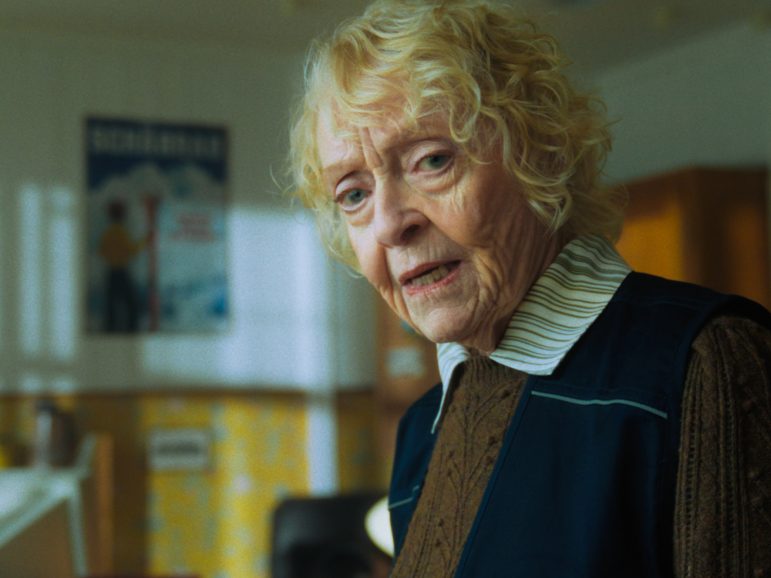
Interestingly, we received numerous compliments for our fast-paced approach. For example, Caroline Goodall (Schindler’s List), who has worked with Steven Spielberg twice, appreciated the quick set-up changes and short waiting times. Also, Calum Worthy (Austin & Ally) praised that what usually takes a full day on other sets, we did in two hours, oftentimes even wrapping earlier than scheduled. It became apparent that this was only possible due to meticulous planning beforehand: Freddy and I shotlisted the entire film for months, while our production designer, Viviane Rapp, was able to build the interior sets weeks in advance. The whole team, brought together by our Swiss production company ORISONO, was on board with this fast-paced approach, and it took everyone to make it work.
An elaborate colour scheme
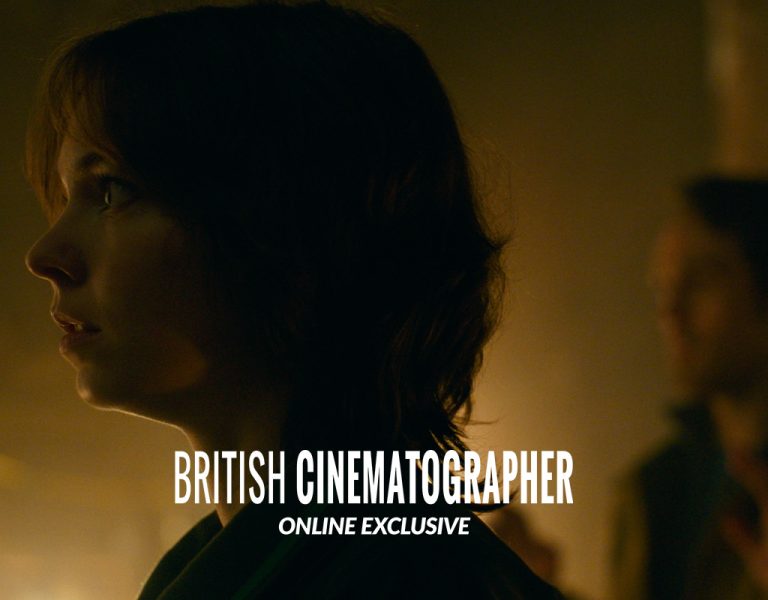
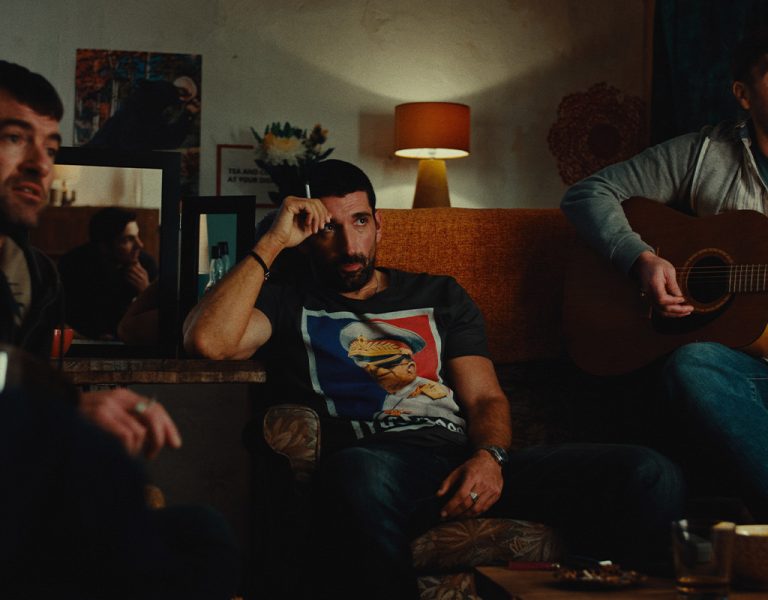
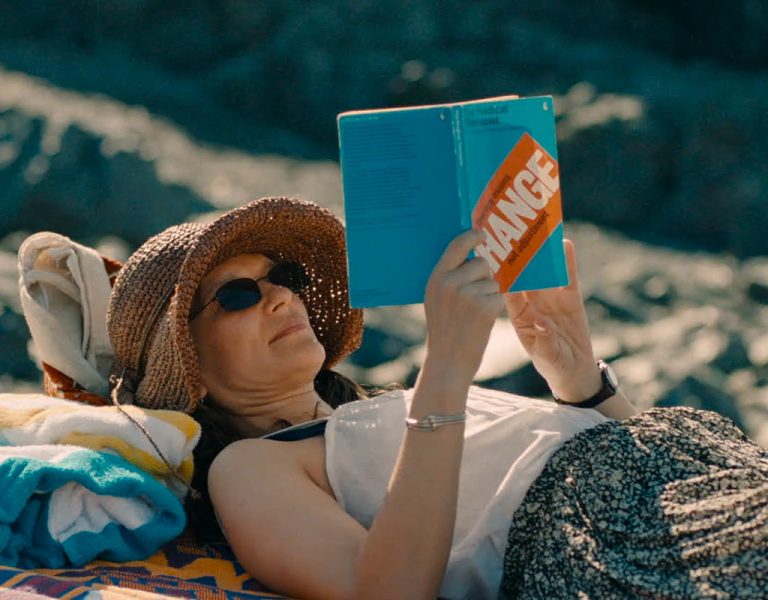
The film’s dissected narrative structure, presented in three smaller stories, posed another fun challenge for the cinematography: although all three stories took place over the course of the same six hours on the same day, Freddy and I wanted these stories to feel distinct. Subconsciously, the audience should be made aware of which story they are currently watching. We began experimenting with colour palettes and colour progression. One major influence on the overall tone of the film was Alfonso Cuarón’s Children of Men, shot by Emmanuel Lubezki. Its desaturated, brownish-turquoise palette served as general inspiration for the world of Sew Torn. Then, we added one specific colour to each story, guiding the viewer on Barbara’s character arc.
This is why the first story, titled “Perfect Crime”, is draped in blue tones. Barbara is stuck, trapped by her suffocating status quo with a cold sadness surrounding her. The second story, “Call Police”, brings Barbara closer to realising her condition, but not quite. This story is filled with the colour yellow, bringing a strange warmth and hints of humour to Barbara’s cold world. Finally, in the third story, titled “Drive Away”, the colour red becomes dominant. Barbara fully confronts and escapes her past, leading to a catharsis with overwhelming warmth. The colour red, representing Barbara’s past, had already been present in desaturated ways since the first story, but now, in the third story, it has become a dominant and vibrant colour of salvation.
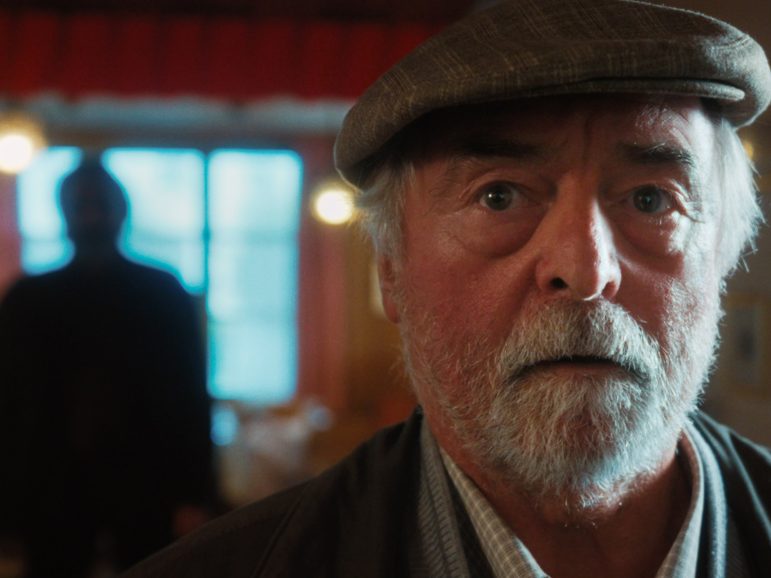
Naturally, the production design and colour grading played a significant role in this. Viviane’s sets were meticulously chosen and built to accommodate the three-story colour palette, replacing carpets and hanging new wallpapers. And our colourist, Simon Hardegger, made sure to put the final touches to the palette and emphasise these three primary colours throughout the film.
A day to remember
For the last shooting day, we saved the best for last, blowing up the storefront of a historic building. Our SFX supervisor, Oliver Keller, reaffirmed that it hasn’t been done before in the history of Swiss filmmaking, let alone in the tiny village of Bad Ragaz. This challenging scene at the end of our shoot became the culmination of both our streamlined approach to filmmaking and our elaborate colour scheme, as Barbara was meant to be fully encompassed by reddish fire, setting her free from the cold shackles of her past. Thanks to it being our last day, the entire team worked perfectly like a well-oiled machine.
And what definitely helped to capture the scene was that I’m used to being my own VFX supervisor. Like on many previous projects, I did all the visual effects on Sew Torn, including, in this instance filling the storefront with raging flames and debris. Having this knowledge helps me a lot in knowing exactly what I need on set to make it work afterwards. And it’s proof that a small team of young filmmakers can create something impactful if there is an original vision behind it, which writer-director Freddy Macdonald definitely had. I’m truly happy that Sew Torn world premiered at SXSW and screened both at Camerimage and on the Piazza Grande at Locarno Film Festival–a dream for every cinematographer.