
POCKET CINEMA
Cinematographers Ko-Chin Chen and Tzu-Hao Kao capture Taipei’s raw intimacy on iPhone, using stealth, natural light and minimal crews to deliver immediacy and emotional authenticity.
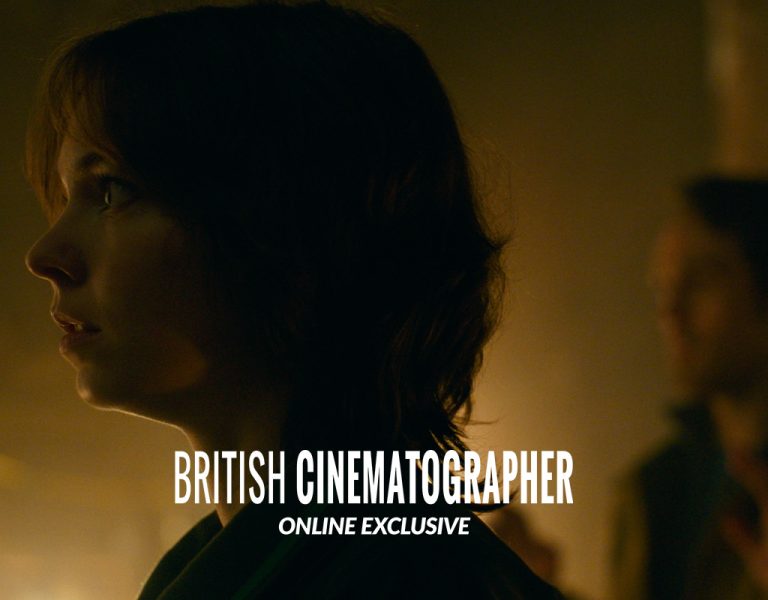
Stripped back and raw, Left-Handed Girl (2025) marks Shih-Ching Tsou’s first solo feature after years of collaboration with Sean Baker on Tangerine, The Florida Project and Red Rocket. The film follows five-year-old I-Jing (Nina Ye), a sweet but troubled girl in Taipei who believes her left hand is “the devil’s hand”, a superstition reinforced by her grandfather. Amid family struggles, societal pressures and financial hardship, I-Jing’s left hand becomes a symbolic guide, leading her to shoplift and confronting the tensions between innocence, tradition and identity.
Her single mother runs a modest noodle stall, while her older sister navigates an affair and the family contends with the challenges of urban life. The story highlights the historical stigma against left-handedness in some cultures, where it has been linked to sin or evil and explores how these beliefs shape I-Jing’s sense of self. Through these intimate dynamics, the film examines family secrets, individuality versus tradition and the pressures faced by women and girls in society.
Funded by Apple and shot entirely on iPhone, the film reflects Tsou’s stripped-back approach, prioritising immediacy, realism and emotional authenticity. Cinematographer Ko-Chin Chen, assisted by Tzu-Hao Kao, captures Taipei with a keen, immersive eye, while Baker co-wrote and edited the film, maintaining the creative shorthand of their longstanding collaboration. Tsou approached Chen to lead the cinematography and Chen invited Kao to assist—someone he had previously worked with—ensuring a smooth and intuitive partnership. Together, they planned the shoot, split the shot list and developed ideas in advance, building a strong creative rapport that carried through the 36-day production.
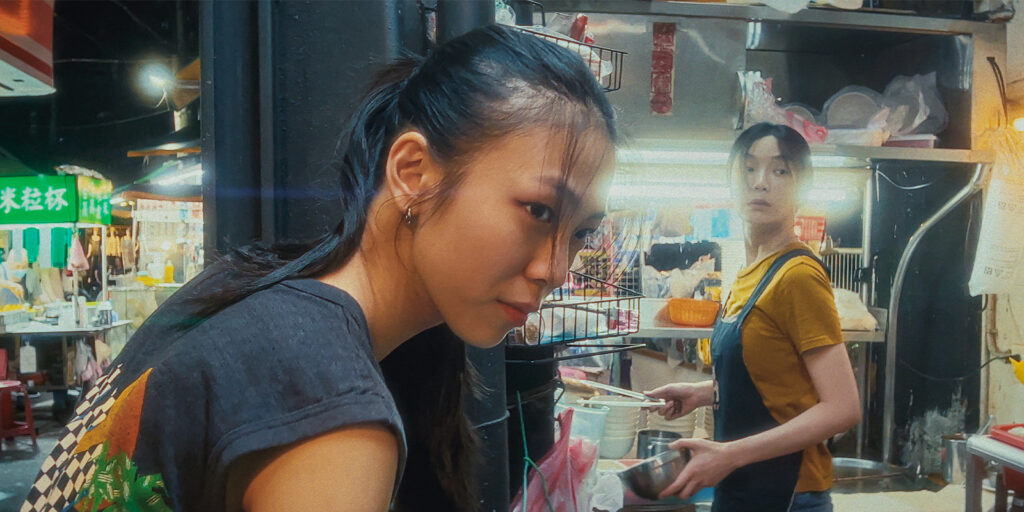
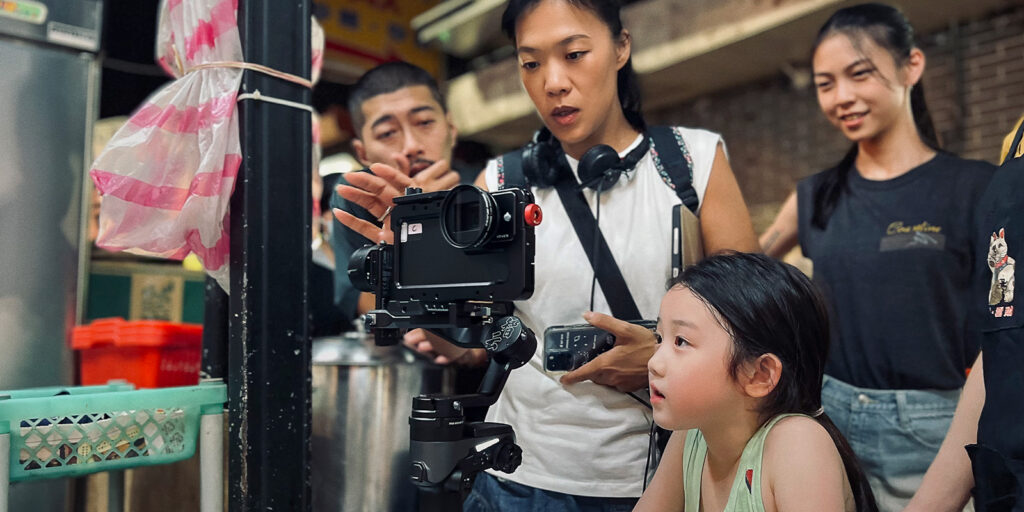
“There are a number of reasons why we shot on iPhone,” Chen explains. “The main one is because the majority of our scenes were shot at a night market, where there would be lots of people. If we turned up with an ARRI or RED camera everyone would know we were shooting a film. Instead, we looked more like YouTubers and vloggers. There was also a budgetary reason, because we’re an independent film crew and we have budget restraints. We have very limited crew members as well. So there are under 20 people in our crew.”
For the night scenes, the crew relied heavily on existing street lighting, illuminated shopfronts and practical sources already present in the environment. Inside the main noodle restaurant, Astera fixtures were used sparingly to supplement available light, creating illumination that feels organic and unobtrusive. In addition, the lighting package included Fiilex Q10s, DMG Lumiere SL1 Mix and Mini Mix panels, Carpetlight Carpitino and Creamsource Micro fixtures, all chosen for their compact form factor and flexibility in tight, real-world locations.
“So, we mainly used LEDs, along with some additional sources for specific effects we wanted to achieve,” Chen adds. “For example, in Johnny’s store next door, we collaborated closely with the art department to incorporate neon lights, making the scene feel more vibrant, lively and dreamlike, while still staying grounded in reality.”
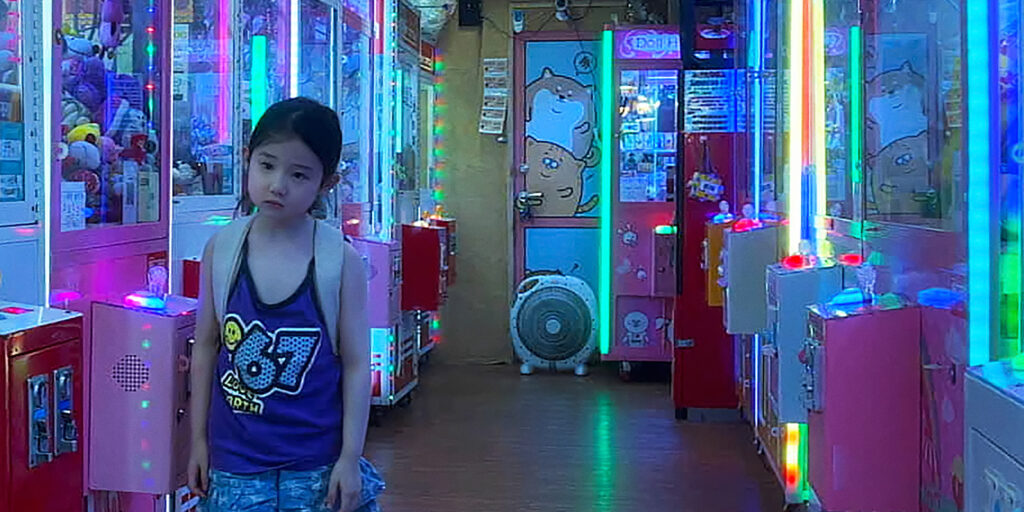
The naturalistic imagery was further refined in post, with colourist Luke Cahill at Lightwave shaping the final look. His grade preserves the immediacy of the iPhone footage while subtly enhancing texture, contrast and colour, reinforcing the film’s emotional intimacy without drawing attention away from the performances.
Working with kids and animals
The oft-cited showbiz rule ‘never work with children or animals’, attributed to W.C. Fields, applied doubly to Left-Handed Girl, where—alongside its young lead—an animal played a key role on location.
“Working with Nina was particularly challenging—she was only six years old and had never acted before,” Chen says. “The team wanted to create an environment that felt natural rather than like a traditional film set, keeping things relaxed and comfortable for her despite the professional demands of production.”
The meerkat, meanwhile, presented its own unique difficulties. “The animal wrangler, who was also the meerkat’s owner and a veterinarian, stayed on set throughout filming,” he adds. “They used a small ball as a toy for the meerkat, but hid food inside—cockroaches—to keep the animal engaged. During one scene, a cockroach escaped from the ball. Nina saw it and screamed, which created some unexpected but memorable moments during filming.”
The motorcycle diaries
One of Chen’s proudest and happiest moments was filming I-Jing on a motorbike, a vehicle he knew—having been born and raised in Taiwan—was central to getting around the city.
Shooting on a moving motorbike would normally be extremely difficult, but because they were using an iPhone, either Chen or Kao could ride another motorbike alongside I-Jing to film her. They simply guided her on the route—from where to start to where to finish—and captured the scene. The sequence not only worked technically but also beautifully showcased the character and rhythm of Taipei.
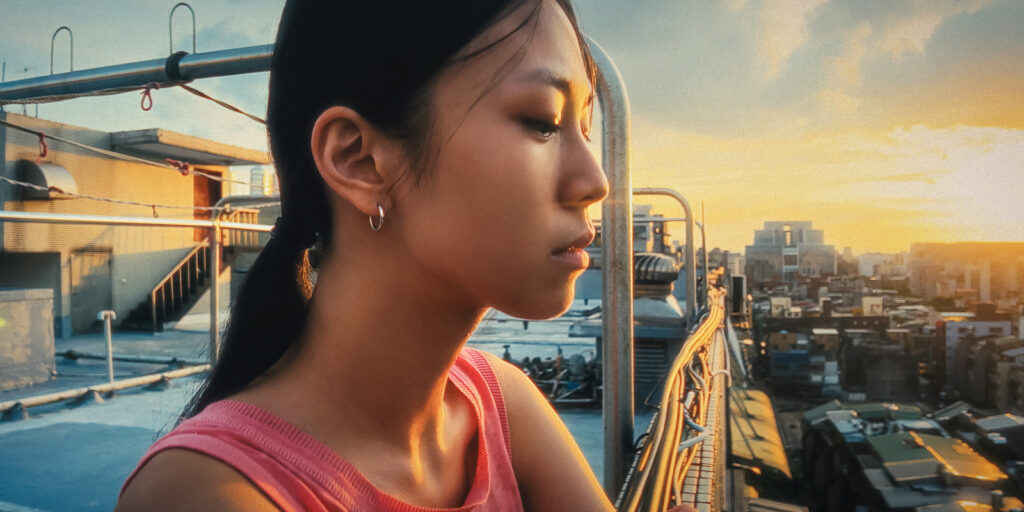
One of Kao’s fondest memories from the shoot was also the motorbike scene, but for a different reason. “We, the cinematographers, had distinct responsibilities,” he explains. “One of us managed the distance while the other was shooting. It worked really well and created great chemistry between us.”
Past masters
There’s no such thing as a completely original idea—every filmmaker builds on what came before. Reflecting on this, Chen considers what he learned while shooting the project.
“Filmmaking offers incredible freedom and endless possibilities,” he explains. “We were taught to think carefully about the camera, the lighting and the size of the crew. And looking at cinema’s history—from the French New Wave to Dogme 95, from film to digital—we realised there are always new ways to tell a story.”