PLAYING WITH THE VISUALS
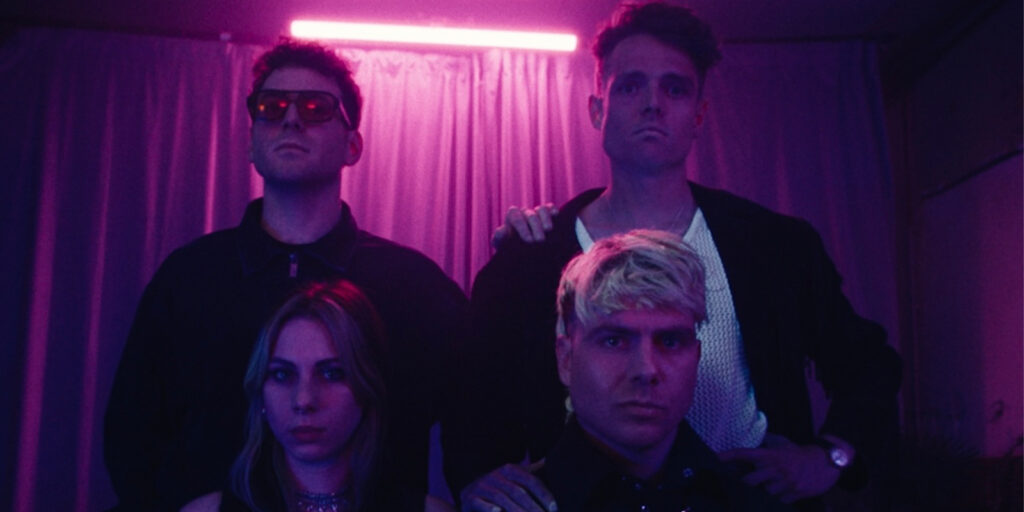
Alternative quartet Daytime TV have unleashed their most explosive work to date with the release of their pounding comeback single “Pause”, forged in the turbulence of the modern world under music label Marshall Records.
Director Matt Chandler first approached me with the intention of wanting to capture a visually trippy, disorderly and lawless style music video, with as many as four main looks and styles colliding. The core of the promo was for it to feel continuous and seamless the entire duration.
We designed four contrasting environments, each with its own identity, yet unified through movement and rhythm.
From the four worlds Matt wanted to create, the first was to be heavily inspired by Wong Kar-wai’s and Christopher Doyle’s collaborative projects such as Fallen Angels and 2046, adopting a deeply atmospheric, saturated neon and high contrast lighting style where sodium vapour and flourescent, sickly greens were our key colour palette.
In our second world we wanted to go in a completely opposite and minimalist direction, opting for a POV spotlight effect done simply with a bright LED torch rigged above the lens. Inside our location I had all of my other lights turned off, only having a V8 outside each window with a softbox, set to 7000K+10CC (which gave me a lovely greeny cool light) that sat at 1%. The sole purpose of this was to give a bit of colour and depth without illuminating the set or being too overpowering as my torch was the main motivation.
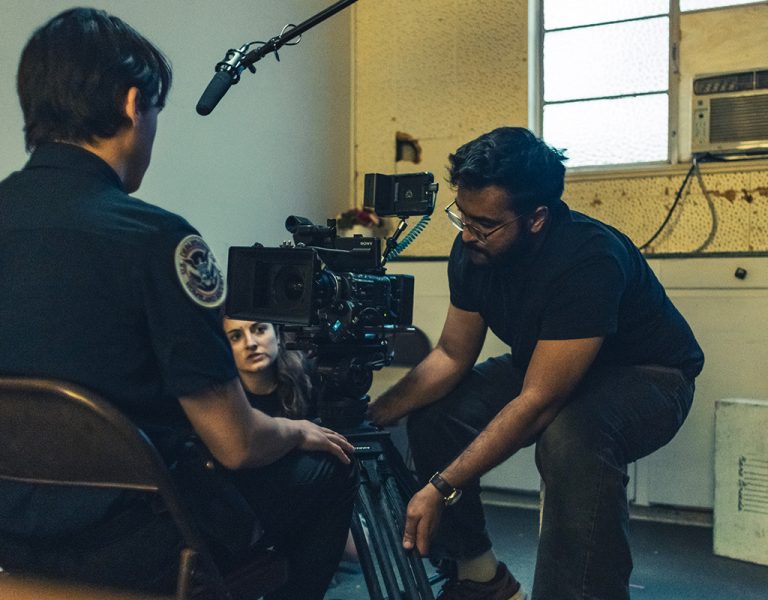
The third world, Matt had envisioned a liminal daylight motivated scene which played into the grungy aesthetic of the location. I didn’t want to go too far into the depths of naturalism. Instead we wanted it to feel overly ‘lit’, artificial and soft.
For the final world, we wanted to explore a neon fluorescent party scene with ultra-violet lighting, high contrast and saturation with vibrant pinks, purples and exterior sodium vapour. I hadn’t worked with UV lighting before so I reached out to my friends over at Glo Film Lighting, who also supplied the lighting package to the production, and they mentioned they had a selection of tubes which could fit into a four bank kino housing. This light was then positioned on a mega boom in the centre of the room where most of the action would take place.
Scale and repetition
As we approached the shoot, Matt, Isis Clunie (movement director and lead dancer) and I met to plan and shoot an animatic that mapped the entire video. Originally, we planned to shoot on a robot arm, but time and programming constraints made this unfeasible.
Instead, I reached out to Steadicam operator Jayy Gomez — knowing full well it would be a full day in the rig (he naively said “yes”).
We broke the video down into 10 core shots, repeated across each world. It was highly ambitious, but seeing the animatic gave us confidence it would pay off. While the concept aimed for continuity, we accepted it didn’t need to be a true one-take. The transitions between worlds, combined with the need to switch between high and low Steadicam modes, made that both impractical and creatively unnecessary.
Given the scale and repetition required, efficiency became critical. Matt had envisioned a super wide-angle look to the shoot and so we chose the 16mm Cooke S4 Primes, kindly supplied by One Stop Films, and we approached the shoot by completing each world in sequence, repeating the shot structure three times. It was an intense schedule, executed brilliantly by Matt and 1st AD Jessica Lee.
Minimalism is key
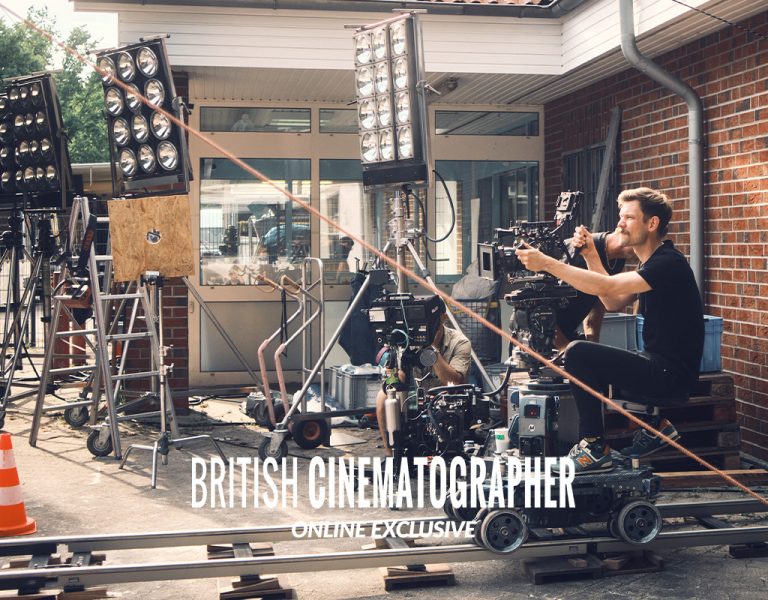
I wanted each world to have a completely different vibe but also not be too labour intensive when it came to changing setups. My lighting team was led by gaffer extraordinaire Scott Youlden and they completely smashed it out of the park! There were two windows, both of which had quarter diffusion taped on the outside and a blackout tent rigged and a LED Vortex 8 with softbox attachment positioned inside, high and favouring one corner to give it a sense of street light motivation. I would alternate between having the softbox on and off depending on whether I wanted it to have a hotter feel.
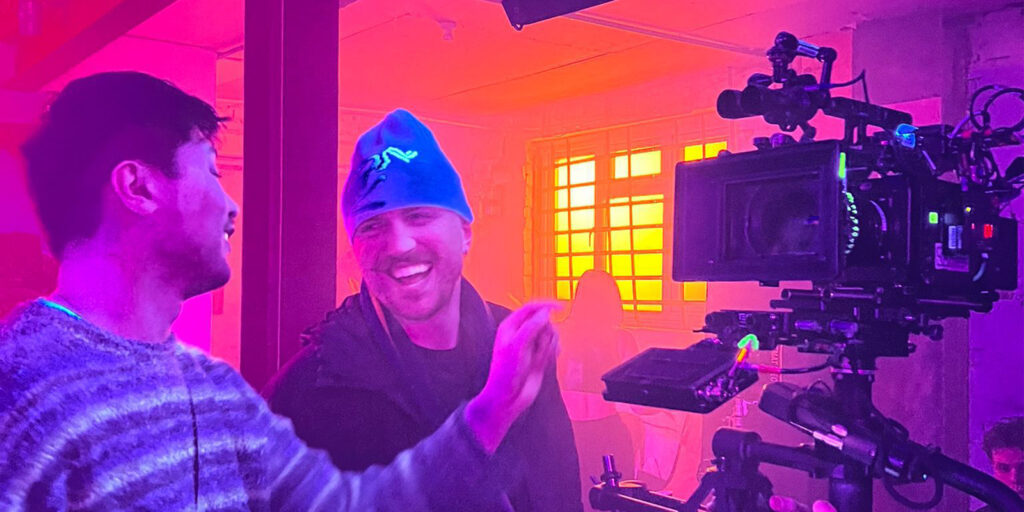
The V8s alone did about 90% of the work, with the other 10% consisting of Astera Titan tubes, Luna bulbs and SO MUCH haze! Haze was our best friend, I love her dearly. Framing on a 16mm lens meant that everything would be exposed to my frame and therefore having lights on stands in the set would be a no-go and out of my control. It wasn’t like we had the budget for a flame artist but it also wasn’t a huge issue as I prefer to light from the outside with the mentality of “Minimalism is key!”.
Making the grade
I find the grade to be one of the most collaborative parts of the process, and working with senior colourist Mara Ciorba at Harbor Picture Company was instrumental in bringing clarity and distinction to each of the four worlds.
References ranged from a Fuji Eterna 250T-inspired palette — offering softer contrast and more naturalistic colour separation — to a more distressed, over-processed aesthetic reminiscent of overbleached and expired Kodak Vision2 5218, with tobacco-stained highlights and degraded whites.
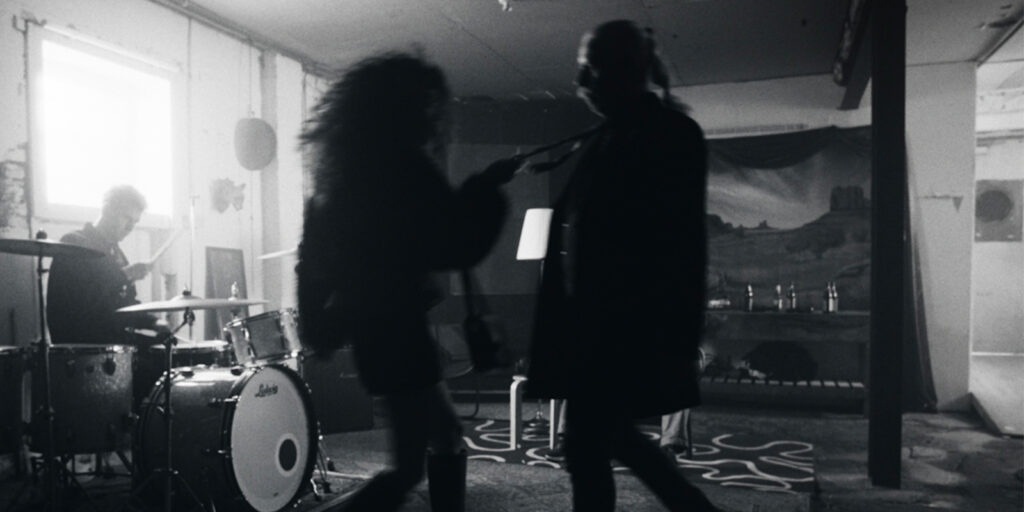
The grade also allowed room for experimentation as the multiple worlds meant that we weren’t limited to a set look. Matt threw in look ideas like Ford/Leone Western era and the classic black-and-white.
All things considered
In the end, what I liked most about this project is that despite how chaotic and varied it looks on screen, the process behind it was actually quite considered and simple.
We had four completely different worlds, loads of moving parts, and a pretty intense schedule, but everything came back to a few key ideas — movement, contrast, and keeping the setup as minimal as possible.
It’s a good reminder (for me anyway) that you don’t always need to overcomplicate things to make something feel big. Sometimes it’s just about committing fully to the idea and trusting the people around you to pull it off.