
FREEDOM FOR EXPRESSION
DP James Blann explains how he and director Kirk Jones put performance first in one of the year’s most powerful films, I Swear.
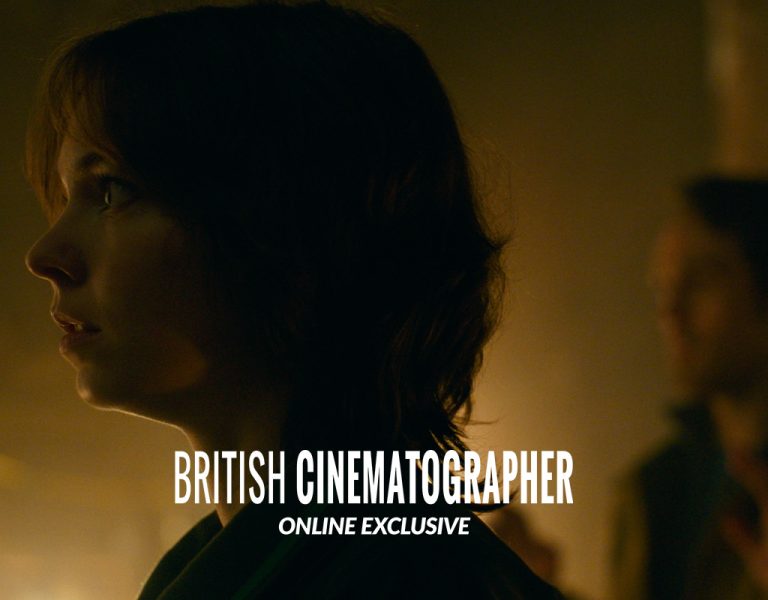
Anyone who has seen Kirk Jones’ I Swear – which tells the true story of John Davidson, who was diagnosed with Tourette’s syndrome at a young age – will know that it features powerful performances from its leads, Robert Aramayo and Scott Ellis Watson, who portray John at various stages of his life.
While the two actors deserve great credit for this, though, and the former in particular will likely feature in plenty of awards conversations in early 2026, the role DP James Blann plays behind the camera should not be ignored. Doing everything in his power to elevate the impact of those on screen, getting the most out of the two stars was a deliberate focus for Blann – whose efforts pay off with aplomb.
“Our approach to the photography on I Swear was led almost entirely by the performances of Scott and Rob,” Blann explains. “We realised early on that Rob in particular needed space for his performance to work, to give him the freedom to tic and improvise physically and verbally without fear of spoiling a shot.
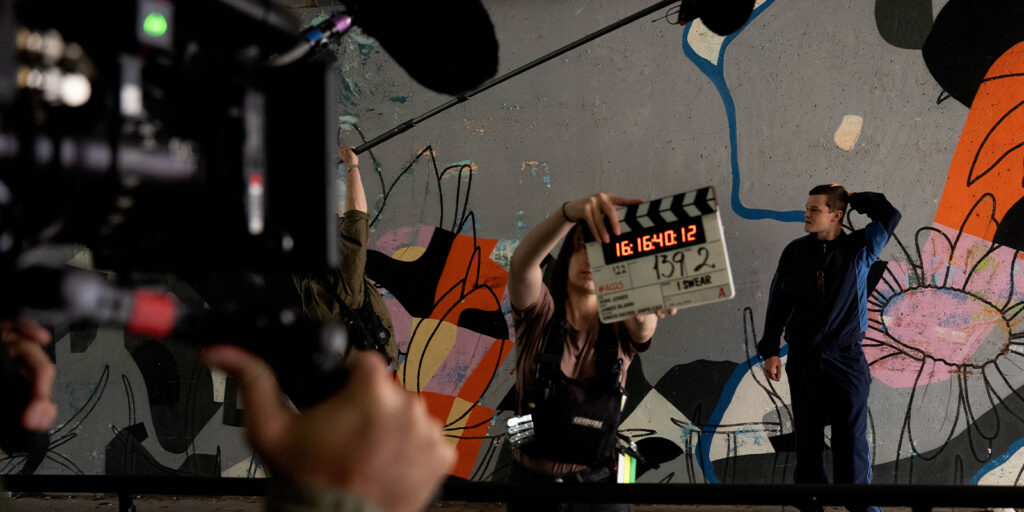
“As a result, there aren’t a huge amount of close-ups in the film, keeping more often to mediums to allow the full physical performances to come through and not pen Rob in. We naturally ended up shooting more mobile scenes on longer lenses from a more distant perspective; the camera had more flexibility to move if it was just me panning rather than being a dolly move that he was tied into, for example, more like a documentary.

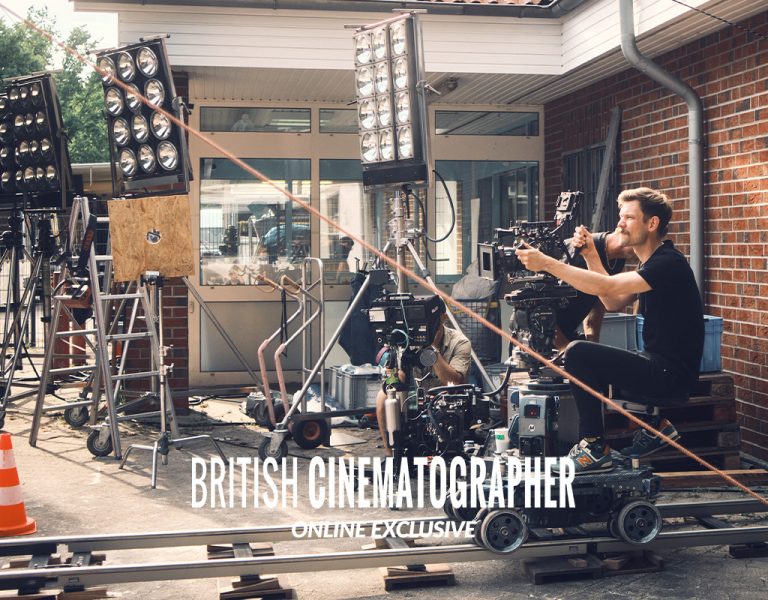
“Lighting was often available or practically augmented by units that I’d keep off the set or as far away from the actors as possible, to maintain the feeling that we were in a real space more than a set. The main idea was to make all aspects of the cinematography low-impact on the actors to give Rob and Scott in particular one or two fewer things to have to worry about during their performance.”
Keeping it real
Blann’s camerawork – shot on ARRI Alexa 35 and Panaspeeds from Panavision for “partly practical and partly aesthetic” reasons, as the team’s low budget and tight schedule meant it needed versatile kit – follows John throughout his life, from the 1980s through to the current day. Each section of the film, and each era that it brings to life, feels authentic and grounded. Yet, rather than opting for drastic visual changes from one decade to the next, Blann and Jones decided subtlety was most suitable.
“Our approach to the time periods wasn’t particularly prescriptive in terms of emulating certain film stocks or looks specific to the eras on screen,” Blann muses. “We decided from the get go that rather than making big swings in the visual treatment, we’d keep it fairly consistent so that the events would still feel somewhat present.
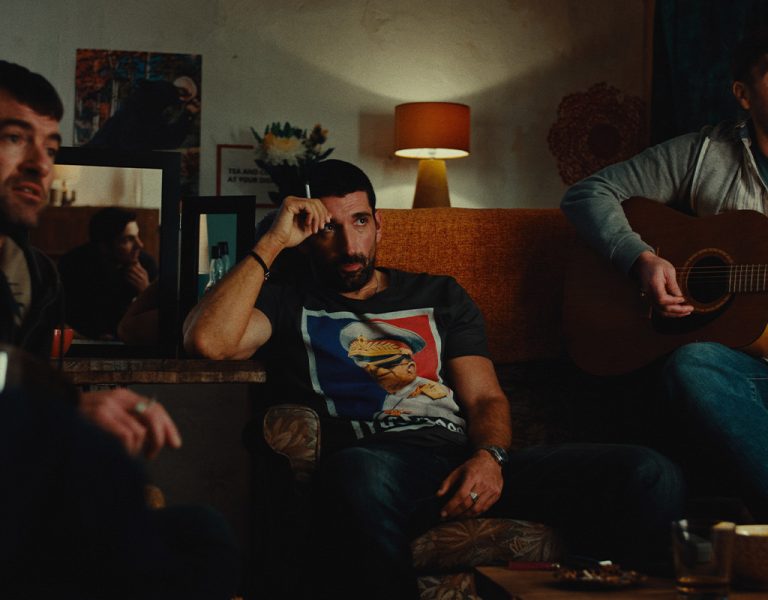
“People are still going through similar struggles to John in the present day and we didn’t want to give the impression that this is a story about something that only took place in a grainy, desaturated past. The art, costume and hair and makeup departments built 1980s, ‘90s and 2000s Galashiels and we tried to photograph it in an honest way, like a present-day documentary crew, to make it feel as real and genuine as possible. In the grade, we made small tweaks on saturation and grain to allow the audience to feel the time jumps without it being too overt.”
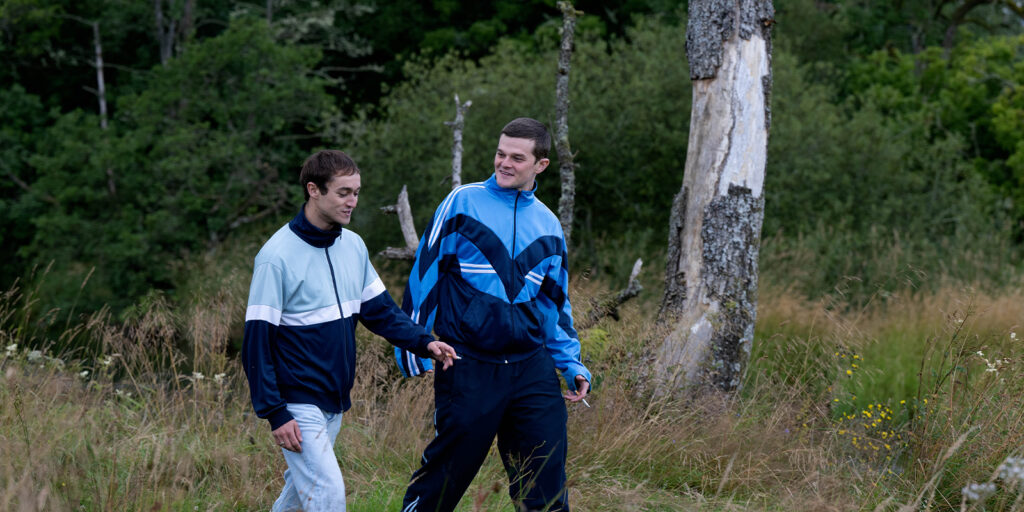
Blann’s lenswork does evolve in certain ways as time goes on, however, as John begins to understand and confront his Tourette’s more directly. “In framing, we chose to characterise young John with more handheld, more freedom and energy, and then contrast that with older John, who’s on medication, which is more locked off and controlled. As John matures, this same kind of approach starts to feel a bit more like confidence in his own skin.
“We felt like John’s physical tics would be more apparent in a calmer frame rather than doing everything handheld and having an overload of energy. The perspective of the film shifts from objective to subjective throughout, and a lot of the more long lens moments were meant to create a slightly voyeuristic feeling of another observer whose eye or ear has been caught by John on his daily travels. There are more energetic, upbeat moments in adult John’s story, where we reintroduce handheld and abruptly return to something more controlled when they’re interrupted.”
A window into John’s world
Again, as is typical for I Swear, the tone is led as much by performance as by the director of photography. “I think one of the major factors, really, is how Rob’s performance evolves on the screen. You really get a sense of how he’s changing and growing as a character and that guides how the framing is feeling, rather than the other way around,” Blann says.
“Again, the key thing from a visual perspective was simple authenticity. More often than not, the second we’d try a more overt move, it tended to feel a little forced or out of place, and it often came down to wanting to observe the events unfolding, and creating the clearest window to the story without many visual tricks was the best approach.”
That window into the story, for Blann, comes from placing the camera as an observer, making the audience another witness to his story. “John has been the subject of a number of documentaries over the years, and has for a large part of his life been the subject of people’s stares, wanted or unwanted, in his personal or public life. We wanted to give the feeling of being another of these observers of John, that we could be another member of the public whose attention is suddenly grabbed and held by John,” he explains.
“I shot most of the film at between T2 and T2.8 to help get this across, with attention always being zeroed in on John even in wide shots. Again, as John grows up, his world becomes a little less magical, more locked in and medicated, and then the depth of field becomes a little less pronounced, except for certain moments where John feels a little closer to his childhood self, such as when he meets his friend Murray again for the first time in years.”
With that window into John’s story comes a window into his tics and impulses – which builds tension as the viewer begins to visualise what could go wrong for John in any given moment, as well as sympathy for the fact he has no control over it. “I watched the film on opening night in the cinema and sat next to my mum, and she would jump out of her skin on every tic! We didn’t go into it with the idea of suspense expressly in mind, but there is an inherent tension in every scene when you don’t know what John is going to say, and you’re rooting for him so hard that you don’t want him to get into trouble or worse.
“There is a horrific element to the idea of developing such an alienating condition at any time in your life, but particularly as a teenager, when all you want to do is blend in and be popular. For me, that again highlights the strength of the performance; the fact that you feel such empathy with John so quickly is down to the shift in Scott’s performance, combined with the simple visual grammar we used.”
Less is more
Just like how the audience learns a lot about John’s story – and about Tourette’s syndrome more generally – Blann also learned a lot about filmmaking from his time on set, most notably the fact that “less is more”. “My favourite scene in the film involves John meeting a young woman with Tourette’s, played by Andrea Bisset, who’s never before met someone else with the condition,” Blann recalls. “There are two scenes that are basically made up of two long takes with them both sitting beside each other, one in a car in the middle of ‘tic attack’ and one where they’re talking about their experiences with Tourette’s at the community centre after. We shot them very simply, and it made me realise more than ever that less is often more.
“Having such a brilliant script and set of actors is a huge blessing, and it was my job here to provide the shortest route possible to seeing that on screen and allowing the viewer to feel like another person in the scene, rather than someone watching a tall tale.”
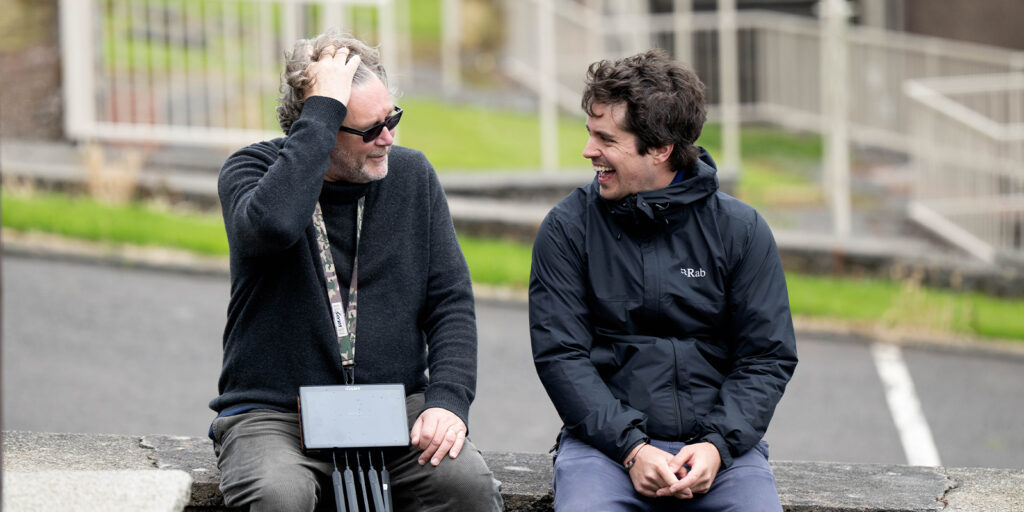
Gaining this sort of experience proved vital for Blann, who – while the film’s visual sophistication makes it impossible to tell – makes his feature debut here. For that, he thanks one person: “It sounds obvious, but I’d like to shout out Kirk Jones, who wrote, produced and directed the film.
“This was my first feature and I’m so grateful that he chose me to help translate his amazing script to the screen. We had a tremendous amount of freedom, and the atmosphere on set was so trusting and conducive to creativity. It was a low budget and a tight schedule but Kirk afforded everyone involved a creative stake in the project and so the whole crew was extremely invested in it – it really just felt like an extended passion project made with your friends, and I think that investment comes across on screen from all departments.”