



The BFI has announced Brazil on Film, a two-month season at BFI Southbank which celebrates the “richness, diversity and global impact of Brazilian cinema, in a survey of almost a century of filmmaking from 1931 to the present day”.
“Arriving at a moment of renewed international attention, the programme brings together more than 40 titles from across Brazil, spanning landmark works, internationally acclaimed and award-winning films, as well as rediscovered and recently restored gems across key movements and moments in Brazilian cinematic history,” the BFI said.
Presented as part of the UK/Brazil Season of Culture 2025–26, a joint initiative between the British Council and Brazil’s Instituto Guimarães Rosa, Brazil on Film runs from 1 May to 30 June, with screenings and events at BFI Southbank alongside a significant Brazil on Film online collection available UK-wide on BFI Player.
Season curators Renata de Almeida (director of the São Paulo International Film Festival) and Adriana Rouanet (film producer and curator, founder of Colibri Cultural and Film Productions) said: “Our Brazil on Film programme traces a cinema defined by reinvention and resistance.
“This season explores landmark movements and internationally acclaimed filmmakers while also bringing forward lesser-known works and contemporary talent across Brazil’s diverse people and cultures, placing past and present in dialogue to reveal a national cinema in constant transformation, as well as looking ahead to the voices and perspectives that will shape Brazil’s cinematic future.”
Justin Johnson, BFI head of cinema programme, added: “This season has been years in the making and feels especially timely now in the light of recent international awards success for Brazilian filmmaking.
“Presented as part of the UK/Brazil Season of Culture 2025–26, it also reflects a wider moment of cultural exchange. Adriana and Renata had the impossible brief of curating a two-month season that covered the diverse breadth, creativity and global impact of Brazil’s rich cinematic history.
“They have delivered in abundance, and we are thrilled to present this extraordinary programme with filmmakers and experts joining us to provide deeper insight. BFI Southbank is going to feel like a Brazilian film festival every day.”
The two-month survey of Brazilian cinema’s modern foundations “traces the evolution of Brazilian cinema through the social and political upheavals that have helped shape it”.
The season is a “journey across moments of origin, rupture and renewal, a dialogue moving between early experimentation, dictatorship-era filmmaking, the rebirth of the Retomada in the 1990s and the emergence of vibrant new voices reshaping Brazilian cinema today”.
These include foundational works such as Mário Peixoto’s long unavailable but now restored 1931 silent film Limite, a landmark of early Brazilian cinema and a pioneering work of global avant-garde cinema restored in 2012 by Cineteca di Bologna/L’Immagine Ritrovata laboratory.
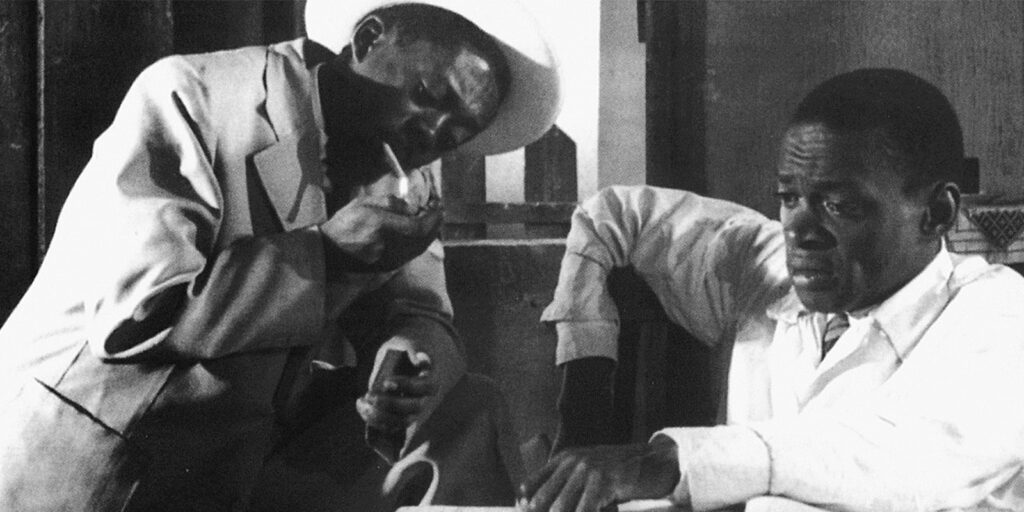
Other titles include José Carlos Burle’s We Are Also Brothers (1949), one of the earliest Brazilian feature films to confront racism directly, restored digitally in 2K by the Cinemateca Brasileira and by Cinecolor Brasil, and the revolutionary energy of Cinema Novo in Glauber Rocha’s incendiary landmark Black God, White Devil (1964).
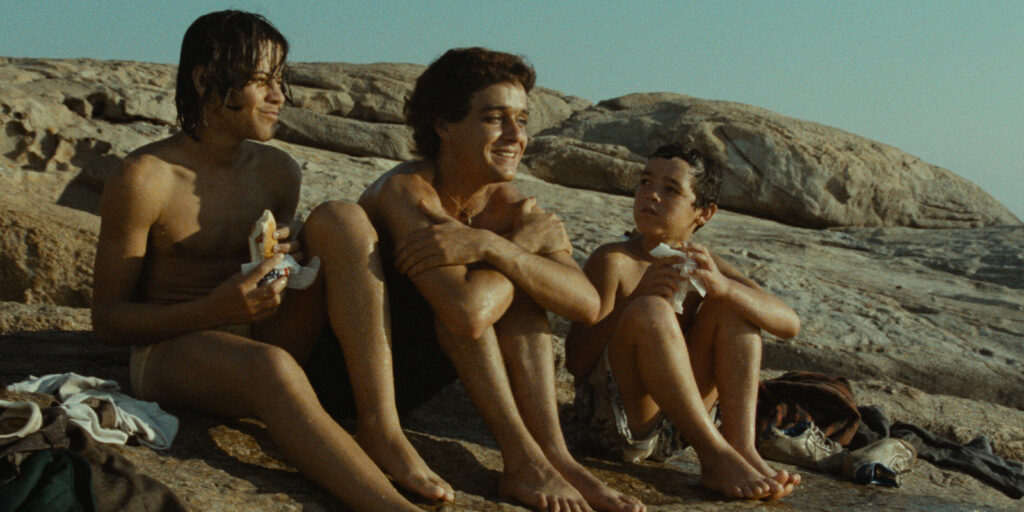
Urban modernism is explored in Luiz Sérgio Person’s recently restored São Paulo Incorporated (1965), restored by The Film Foundation’s World Cinema Project and Cineteca di Bologna in association with Cinemateca Brasileira, Lauper Films Ltd. and the family of Luiz Sérgio Person with funding from the Hobson/Lucas Family Foundation.
Elsewhere, a special focus is given to the work of the late Héctor Babenco, who would have celebrated his 80th birthday this year.
Argentine by birth and Brazilian by choice, Babenco redefined Latin American cinema through a powerful blend of realism and lyricism, bringing international attention to marginalised lives.
The programme includes Kiss of the Spider Woman (1984), which earned him an Academy Award nomination for Best Director, his powerful critique of police corruption during the military dictatorship Lúcio Flávio (1977), and his recently restored international breakthrough, Pixote (1980), a hard-hitting portrait of street life.
Meanwhile, events throughout the season include An Introduction to Brazil on Film on 12 May, where season curators Renata de Almeida and Adriana Rouanet will be joined by guests to present a “richly illustrated overview” of the programme, spotlighting key titles and hidden gems while discussing the most influential movements and filmmakers of Brazilian cinema and reflecting on the industry today.
The event will be followed by a screening of Foreign Land (Walter Salles and Daniela Thomas, 1995) and a Q&A with co-director Daniela Thomas, with further events to be announced.
Find out more on the BFI website.