
BRINGING TRUTH TO LIGHT
Balazs Bolygo BSC HCA crafts a rigorous, multi-format reconstruction, using lighting to underscore emotional proximity, institutional detachment, and shifting perspectives in Jean Charles de Menezes’ tragic misidentification.
The four-part Disney+ series Suspect: The Shooting of Jean Charles de Menezes revisits the tragic aftermath of the 2005 London bombings. After the July 7th attacks killed 52 people, a second failed attempt triggered a frantic manhunt. Amid the chaos, an innocent Brazilian man — Jean Charles de Menezes — was mistakenly identified as a suspect and fatally shot, following a catastrophic intelligence failure.
The series explores multiple perspectives: from the bombers and police to whistle-blower Lana Vandenberghe and the press, exposing a tangled web of fear, misjudgement and institutional breakdown. Directed by Paul Andrew Williams and written by Jeff Pope, it stars Edison Alcaide, Conleth Hill, Max Beesley and Emily Mortimer.
As cinematographer, my challenge was to humanise and interrogate. The visual approach had to be intimate and grounded, capturing the emotional weight of real events — not sensationalised drama, but a raw, morally complex tragedy still relevant today.
Real light for real lives
From the moment I read Jeff’s script, I experienced a visceral emotional reaction — a complex mix of disbelief, sadness and, frankly, anger. Yet that anger could not drive my visual approach; it had to be transmuted into something more constructive — sincerity and restraint.
To honour the reality of the events, I immersed myself in the details. I studied extensively — not only the IPCC findings but also press clippings, eyewitness testimonies and officer accounts. I reviewed raw, often harrowing footage from the bombings and watched documentaries such as Path of Blood, composed of authentic Al-Qaeda material. This was not morbid curiosity, but a necessity to understand the protagonists’ world. The conviction, chaos and profound disconnection from humanity struck me deeply and lent weight to our cinematographic choices.
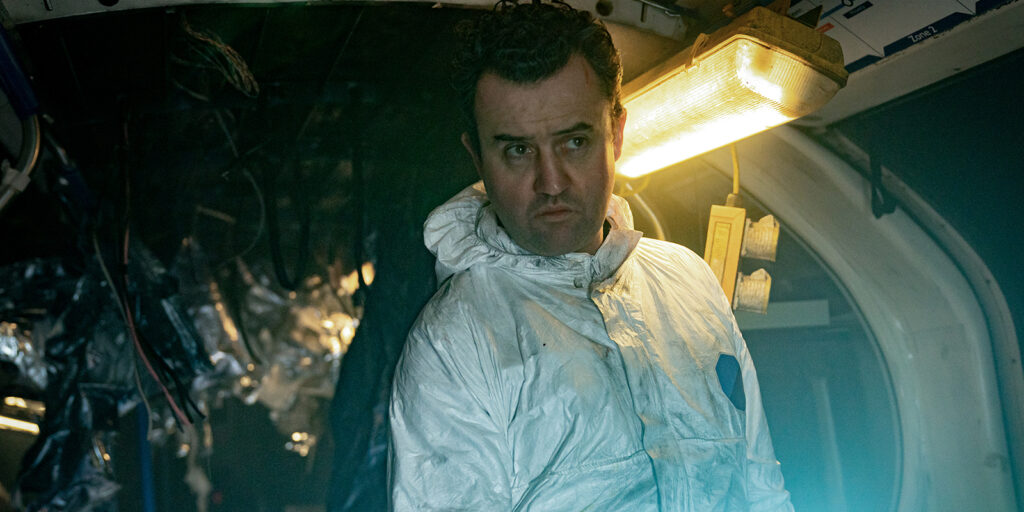
From the outset, Paul and I sought to portray the bombers with empathy and complexity. We rejected simplistic villainy; our aim was for viewers to comprehend their world without condoning it. By contrast, the police sequences were treated with greater detachment, reflecting confusion, miscommunication, and institutional distance.
Hard truths, soft light
A guiding principle shaped our visual philosophy: immediacy over polish. I wanted the audience to feel the presence of the camera — when it was close and when it wasn’t. This meant embracing spontaneity, resisting over-preparation, and avoiding the gloss that can obscure uncomfortable truths.
With the bombers, the camera needed to stay close, physically and emotionally — not to excuse their actions, but to show the tension, uncertainty and conviction of people potentially willing to sacrifice their lives for what they believed in. That proximity allowed space for empathy, not endorsement — and it gave the audience a chance to reckon with their humanity.
In stark contrast, when we were with the police, I introduced more distance — both visually and tonally — to reflect their institutional detachment and, ultimately, their evasion of accountability. They weren’t risking their lives; they were dodging responsibility. That contrast became the spine of our visual approach. Empathy lived in closeness — in rawness, in unrehearsed moments, in the imperfect edge of handheld cameras and under-polished lighting.
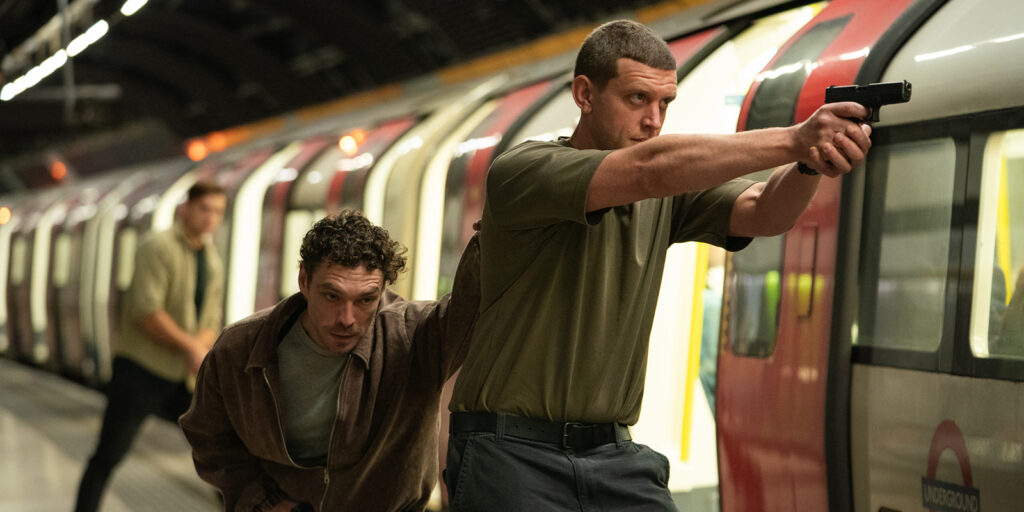
To underscore this, I used Leitz HUGO full-frame primes for the bombers — often the 28mm or 35mm at T2, maybe T2.0 — offering quiet intimacy and emotional immediacy. The police were filmed with Atlas Orion anamorphics at around T2.8: longer lenses, cooler tones and more rigid frames lending their sequences a colder, procedural aesthetic.
We shot with two Sony Venice 2 cameras in Super 35 mode, a 6K restriction handed to us by Disney. Alongside this and as a “counterweight,” I felt I needed a camera with a small form factor for the intimacy and spontaneity within the series’ visual grammar and thus used a Sony FX3 — which ended up comprising almost 40% of the final footage. The FX3, often paired with the Leitz Hugos and Cooke SP3s (when we needed to be lighter), on a Stabileye gimbal, became my main “handheld” tool.
It gave me the agility I needed on the London transport system, to dive into cars, navigate tight flats and keep pace with the kinetic energy of the story.
The Hugos were ideal — compact, sharp, resistant to flare and optically beautiful. I especially loved the 50mm T1.0 for close-ups. Even at T2, it delivered a softness and immediacy perfect for the FX3’s full-frame sensor. I also leaned heavily on the 35mm and 90mm lenses, which could easily carry an entire feature. For set gaps, I supplemented with the Summicron-C 40mm and Summilux-C 65mm — but the Hugos formed the emotional backbone.
Performance led the camera
Paul and I shared a commitment to emotional truth. He stripped away anything that felt staged, recalibrating if a shot rang false. His focus was authenticity, not technical bravado.
His visual compass was grounded in real-world imagery — harsh, unflinching photographs from the actual events became our tonal benchmark. He gave me enormous creative freedom and we worked instinctively, letting performance and space guide us. If the emotion was real, we kept it; if not, we pared it back.
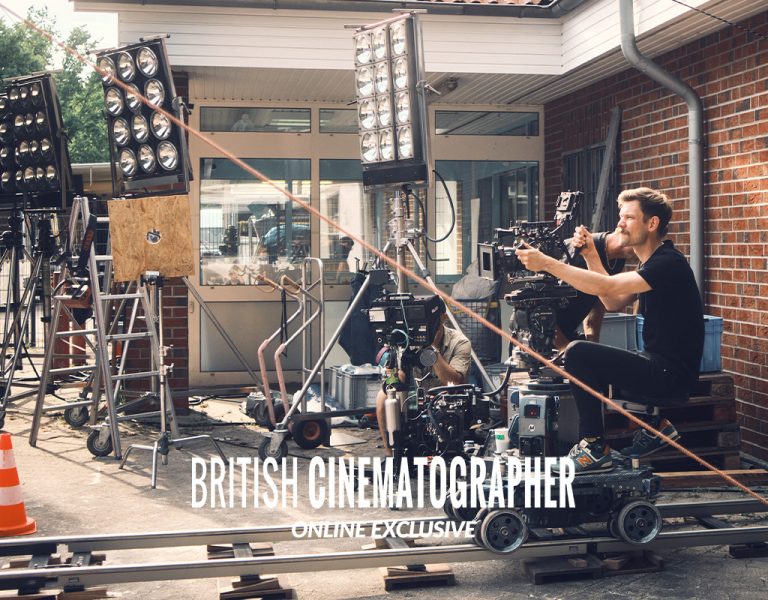
We shot almost entirely on location — real flats, buses and Tube stations. Often cramped and naturally lit, these spaces shaped our approach. The fast-paced shoot required stripped-back lighting, leaning on motivated practicals like daylight, streetlamps and the Underground’s ambient glow. Filming in winter, we sometimes tented locations to extend daylight and use compact LEDs, allowing scene changes and near-chronological shooting.
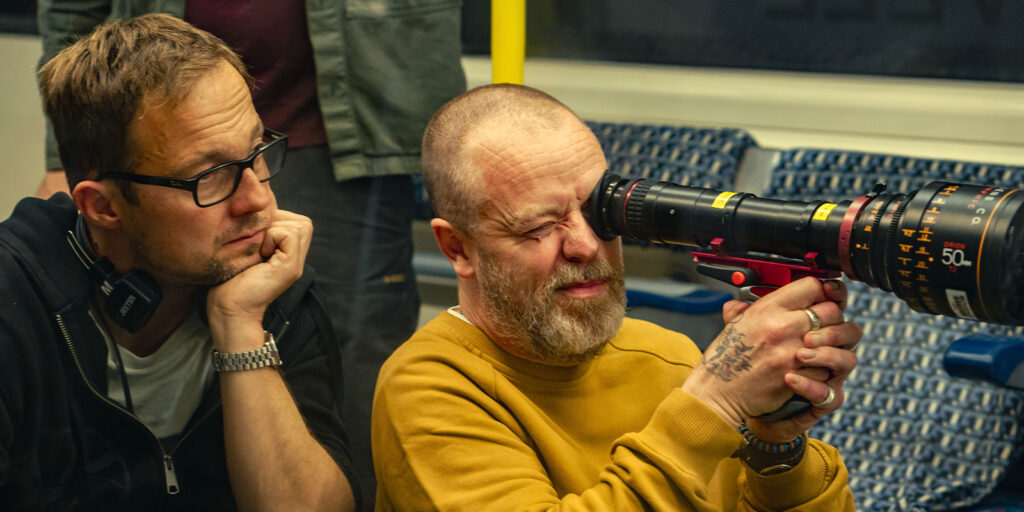
The low-light performance of the Venice and FX3 allowed us to work quickly and intuitively. The lenses handled contrast and flare beautifully, even in challenging conditions. Night scenes were often lit almost entirely with available light and some handheld fill. This wasn’t about stylisation — it was about grit and lived-in reality. Astera tubes in Caligri airtubes and an arsenal of compact LED sources (Fiilex Qs, Nanlux Evokes, Rosco Panels, Creamsource Vortexes) became essential tools, expertly deployed by my brilliant gaffer, Wayne Shields.
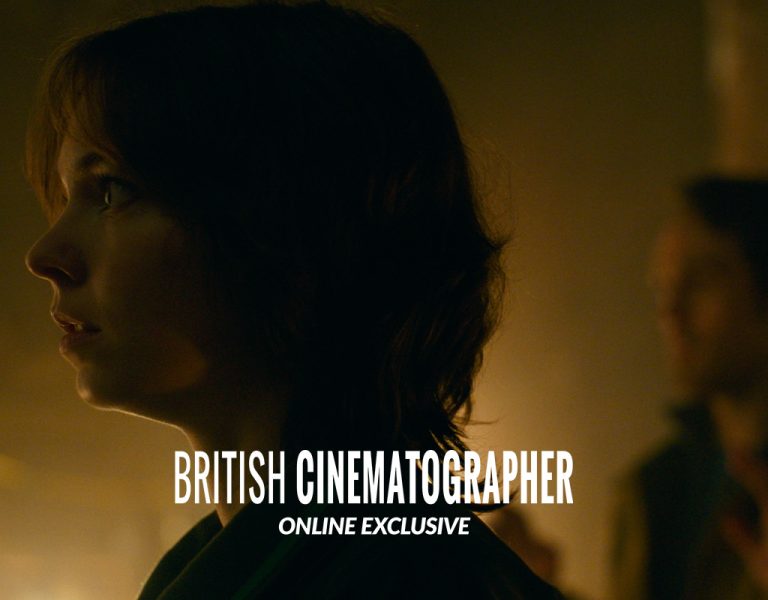
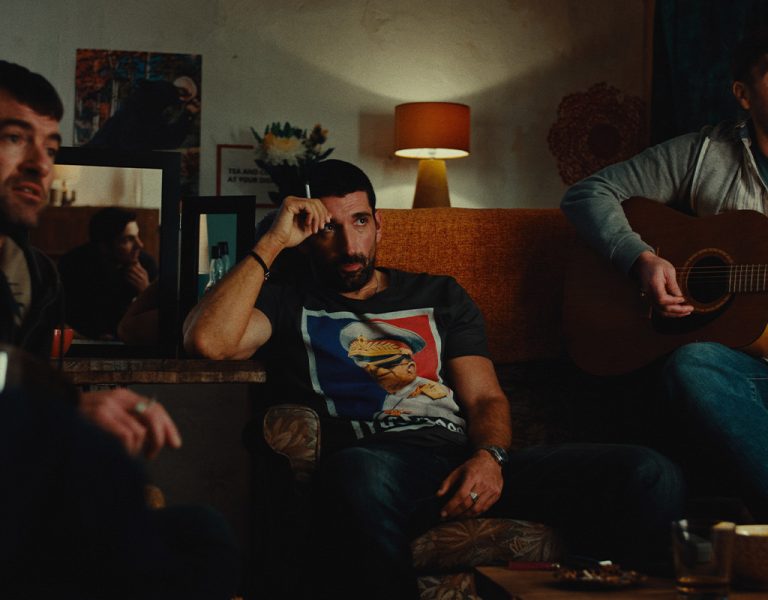
On the Venice, I constantly switched between 800 and 3200 EI dual ISO depending on the scene’s needs, while on the FX3 I occasionally pushed as high as 12,800 EI. Much of the series takes place in dark interiors, featuring varied skin tones across different ethnicities and plenty of silhouette work. The bombers, in particular, were often deliberately underlit — they didn’t want to be seen. Curtains drawn, active at night, always on the move — the lighting needed to reflect that.
An old lens with a new purpose
Structurally, we used a fair amount of original archival material, but in some scenes, it was necessary to match and recreate archival video footage. While we considered shooting on DigiBeta for authenticity, logistics made that impractical. Instead, I worked with Will Newman at Sony UK to source a 20-year-old Fujinon B4 zoom lens, which we mounted via adapter onto an FX6. With some grading adjustments in Resolve, the result was pleasingly imperfect — optically unusual and just the right side of degraded. It added a necessary rupture in the visual grammar whenever we cut to these sequences.
One of the biggest surprises in post-production was how well our prep work with colourist Greg Fisher and DIT Szymon Wyrzykowski paid off. Early on, we agreed on a show LUT during prep that became our visual north star throughout production. Our rule was simple but strict: once we locked in the LUT, we wouldn’t alter gamma settings and all dailies CDL adjustments were global, primary and subtle — mostly slight tweaks to lift and gain.
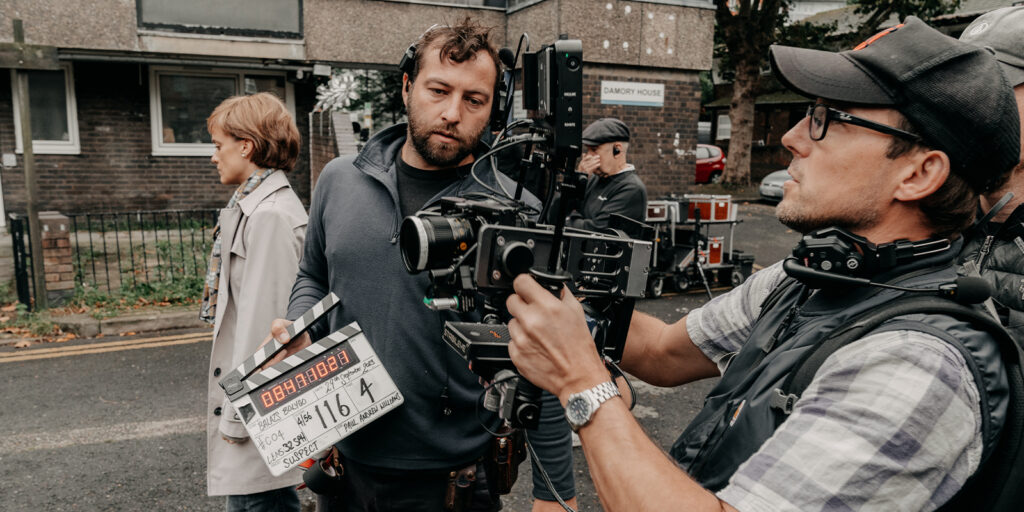
This disciplined approach kept visual consistency across different cameras, lenses and lighting, making grading straightforward. We focused on enhancing what was captured on set, preserving the rawness and immediacy in the final image.
The scene I’m most proud of—and which was hardest to shoot—is the end of episode two: the build-up to Jean Charles’s shooting. It carried huge emotional and historical weight and had to be precise, restrained and unflinching—not stylised or sensationalised. We wanted the audience to feel the inevitability, experiencing a human tragedy unfolding in real time.
Due to legal sensitivities, we rehearsed the shooting sequence repeatedly to ensure accuracy—from geography to timing—working closely with verified sources like the IPCC report. That precision added solemnity; it wasn’t just another day on set.
I’m also drawn to quieter moments with the bombers, showing their doubt and wavering humanity—lost young men on the edge of irreversible choices. Holding that contradiction in the frame was vital.
The price of misinformation
Suspect was one of the most emotionally demanding projects I’ve worked on. The story remains raw — shaped by fear, institutional failure and a devastating miscarriage of justice. What happened to Jean Charles should never have happened.
From the start, I was struck by how much had been obscured — not just facts, but the reductive portrayal of both police and bombers. I don’t excuse their actions, but understanding what led them there felt essential.
This isn’t just a reconstruction — it’s a challenge to the official narrative. So much was concealed through spin and institutional defensiveness. If Suspect encourages even a small reckoning with the human cost behind the headlines, then we’ve done something worthwhile.
Telling a story from 20 years ago feels more urgent than ever. The core questions — about power, accountability, racial profiling and fear — haven’t faded. They’ve only sharpened.