
ALL IN THE SUBTLETIES
DP Sergio Delgado BSC, director Minkie Spiro and colourist Jateen Patel run through gripping new thriller All Her Fault, starring Sarah Snook as a mother living every parent’s worst nightmare.
Director Minkie Spiro hopes you watch All Her Fault more than once. The first time, you’ll focus on the unfolding mystery: a missing child and tense family dynamics. Subsequent viewings will have you saying, “Why did I not see that coming?”
The show opens on Marissa, played by Sarah Snook, as she arrives to pick up her child from a playdate. What she finds is the wrong house and no child in sight. From that moment, Spiro, along with cinematographer Sergio Delgado, build tension through restraint. The show’s power lies in its quiet shifts, and the trust it places in the viewer to pick up on said changes.
Spiro describes the series as a social commentary. “It’s every parent’s worst nightmare when a child goes missing,” she says, “but it’s also about the roles women play in the household, often as the CEO.” That duality between surface and depth, warmth and coldness, drives the show’s visual and emotional arc.
Visual language: From warm to cool
The transformation of the Irvine family’s home is a masterclass in subtlety. What begins as a warm, inviting space gradually turns cold and alienating. For example, Spiro notes that previous productions she’s been a part of repainted the walls of the set to signal a change in the emotional arc.
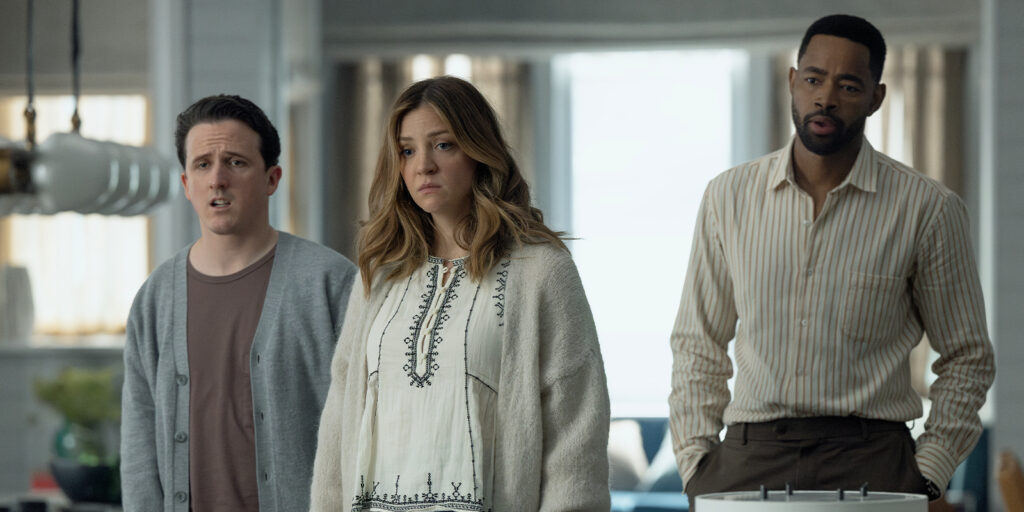
“We didn’t repaint the walls,” Spiro explains. “We used light and colour temperature to shift the mood. Serge worked with the production designer to choose a wall colour that could feel warm under one light and cold under another.”
Cinematographer Sergio Delgado BSC adds, “We started warmer, then moved cooler as the story built. The costume designer was part of that conversation too. Every department was on the same page.”
Colourist Jateen Patel helped shape this shift in post. “The whole story had a subtle look,” he says. “Once I had all the episodes, it made sense. With the LUT we built and slight modifications after episode one, I had enough room to get to where we needed to go.”
Two cinematic modes: handheld and studio
“For me, the lens is the way to tell a story,” Delgado says. He chose the ARRI Alexa 35 and PVintage lenses, because the camera’s latitude allowed him to capture both highlights and shadows with nuance, while the lenses softened the digital sharpness to evoke a more filmic texture.
The team established two distinct camera styles: handheld for the family, studio mode for everyone else. “Even in the same scene,” Delgado explains, “we’d shoot Marissa handheld, and whoever was in the reverse in studio mode. It was subtle, but it helped show the divide between the family and the outside world.”
He also used wider lenses for the family’s close-ups, creating a sense of intimacy. “You feel more inside the head of the character,” he says. Camera angles and heights shifted depending on who was in the frame and where they were emotionally.
Double reflections
Glass, specifically beveled glass, plays a powerful role in the show’s visual storytelling. Spiro and Delgado worked with production designer Rob Harris to incorporate glass throughout the set. “You get double images,” Spiro says. “Reflections that mask the truth, distortions that complicate what you’re seeing.” They also tasked Rob with ensuring the glass was long enough to allow for longer tracking shots.
Delgado agrees. “Sometimes Marissa is laughing, sometimes she’s crying. It’s a really difficult emotion for her, and I think that double reflection is a great way to express that.”
Controlled colours on a volume stage
The team filmed the hero house on location and recreated the interior on a volume stage (the largest in the southern hemisphere). This gave the team unprecedented control over the environment. “We could shoot dusk scenes for pages,” Spiro says. “We had digital plates, so the light never disappeared.”
Patel found grading those scenes seamless. “Everything fit. The contrast ratios, the colour, it was just easy. The house became a character in itself.”
Collaboration and craft
Speaking with Spiro, Delgado and Patel, it’s easy to see how they achieved that nuanced escalation. Thanks to Spiro and Delgado’s insistence on the importance of having sufficient time for post and all the work they did in-camera, the colour grade became a time to explore and play with the image.
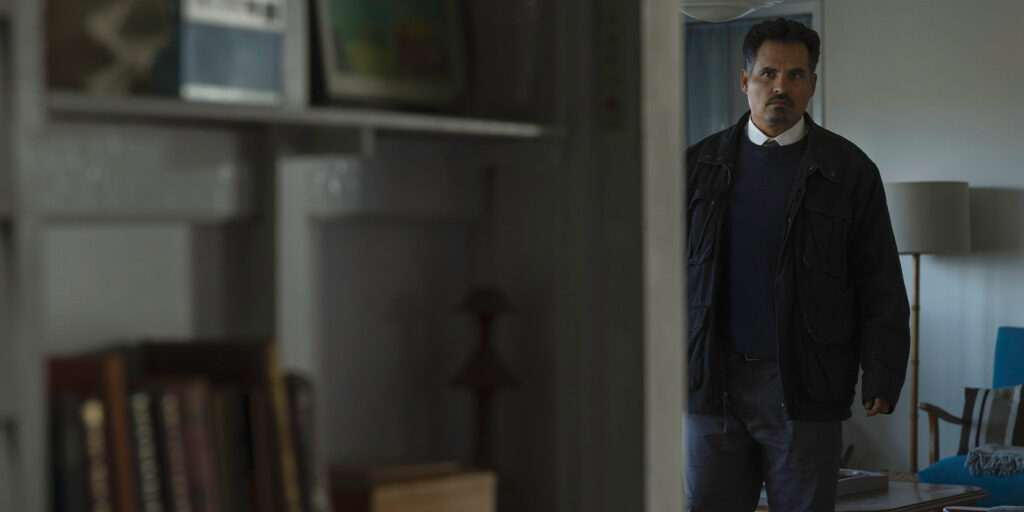
“You’d give Jat a note,” Spiro recalls, “and he’d take it somewhere unexpected. Like giving an actor a note and watching them elevate it.”
“Sometimes you need to step away and come back,” Spiro says. Patel notes that he had the rare opportunity to grade all the episodes back-to-back, which helped him develop the shifting palette that Spiro and Delgado had envisioned.
Pacing and elegance
The show’s pacing is deliberate. Spiro and Delgado resisted the urge to cut quickly, instead letting scenes unfold within the frame. “You don’t always need to cut,” Spiro says. “Sometimes the tension lives in the stillness.”
Delgado adds, “TV doesn’t have to be fast to be engaging. People watch slow-paced films and love them. Why not bring that into series work?”
Unravelling secrets
“You see things you didn’t see before,” Spiro says. “We hope audiences will rewatch the show and catch those small looks, those quiet moments that mean everything.”
Every shift in light, every lens choice, every camera movement is calibrated to reflect the emotional undercurrents of the story. The camera stills. The colour cools. The frame holds just a little longer than expected.
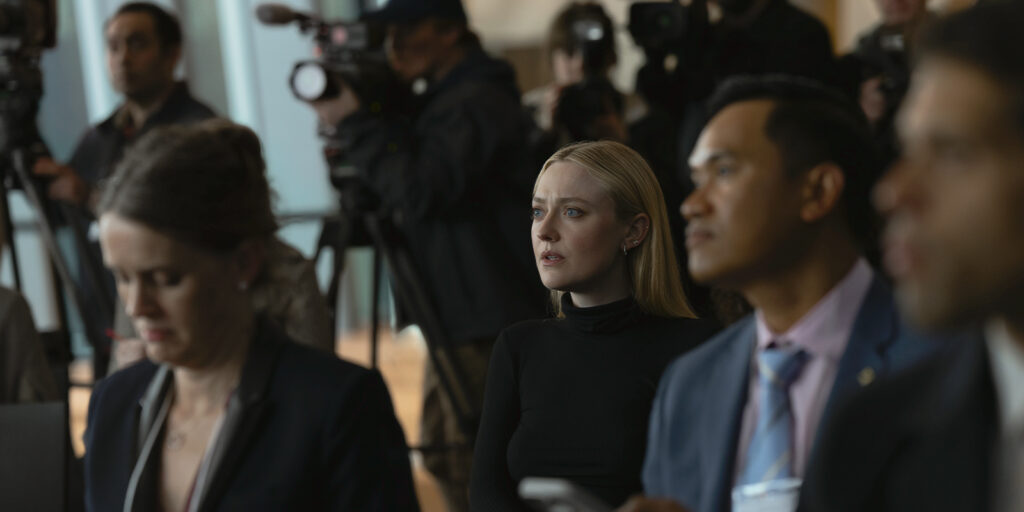
What begins as the story of a missing child becomes something deeper, a portrait of a family unravelling, of secrets surfacing, and roles quietly shifting.
“This story revolves around an awful experience,” Spiro says, “but ultimately, it’s about the secrets and lies that lie underneath. People sit on those secrets, but there’s only so long you can sit on something before the cracks show. We were trying to visually lean into that as well.”
The cracks are there. You might have to watch a second time to notice them.