INTO THE UNKNOWN
Starring Sleaford Mods leading man Jason Williamson, short film Unknown Male says a lot while saying very little – with visuals from DP Rufus Wilson setting the tone in stunning style.
How did you first get involved with Unknown Male and what appealed to you about the story being told?
Luke Radford [director] and Nick Preston [story] had written a short film called Diamond Joe – they sent me the script, which I loved. They wanted to shoot a demo or taster for that, a short portrait of the protagonist – a man on the brink of a personal crisis. It helped us get a better understanding of the character and his environment.
I think what appealed to me most about this portrait was the depth of the character and the freedom to explore his environment through the lens of the camera.
What were your initial discussions about the visual approach for the short? What look and mood were you trying to achieve?
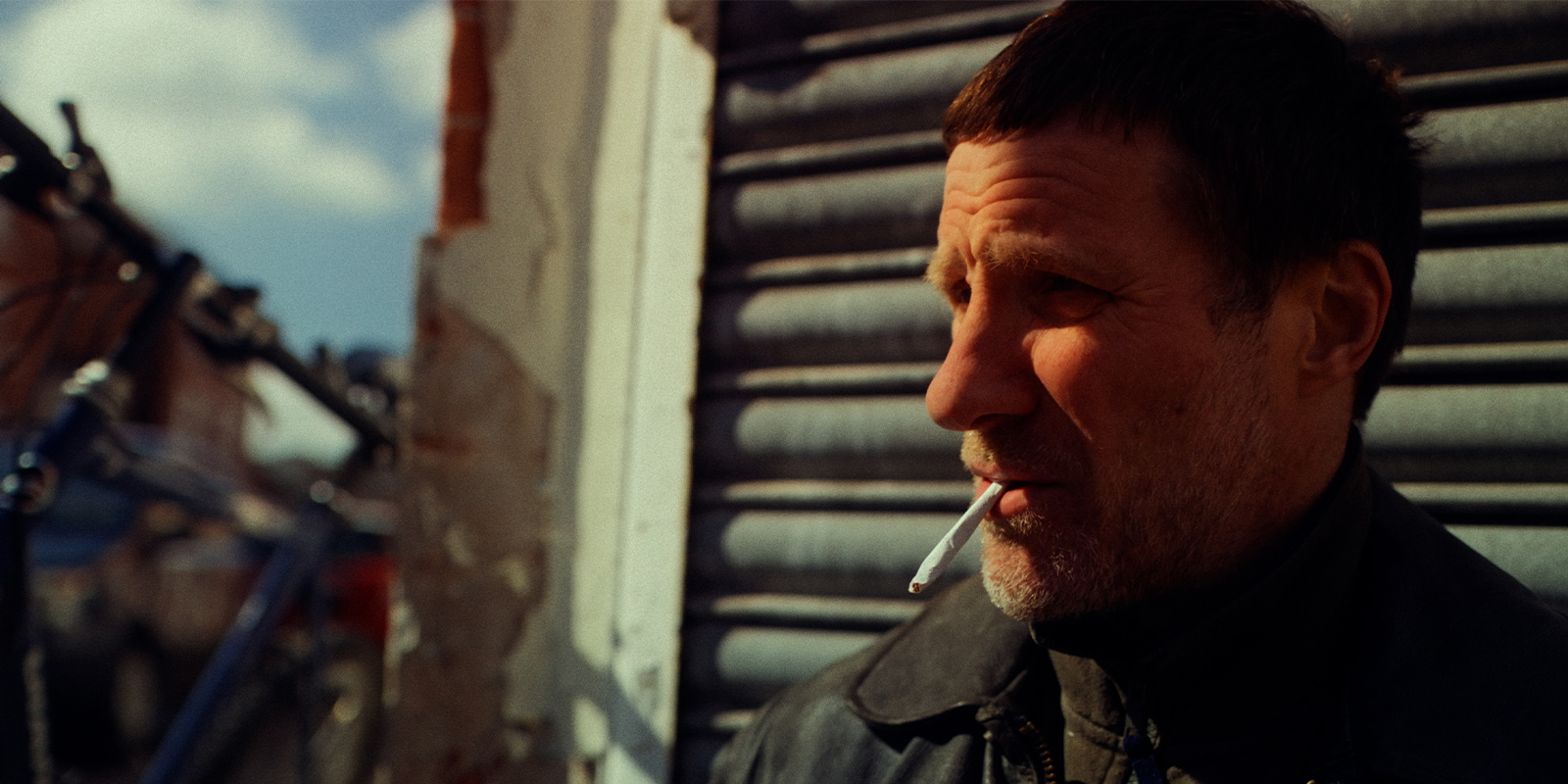
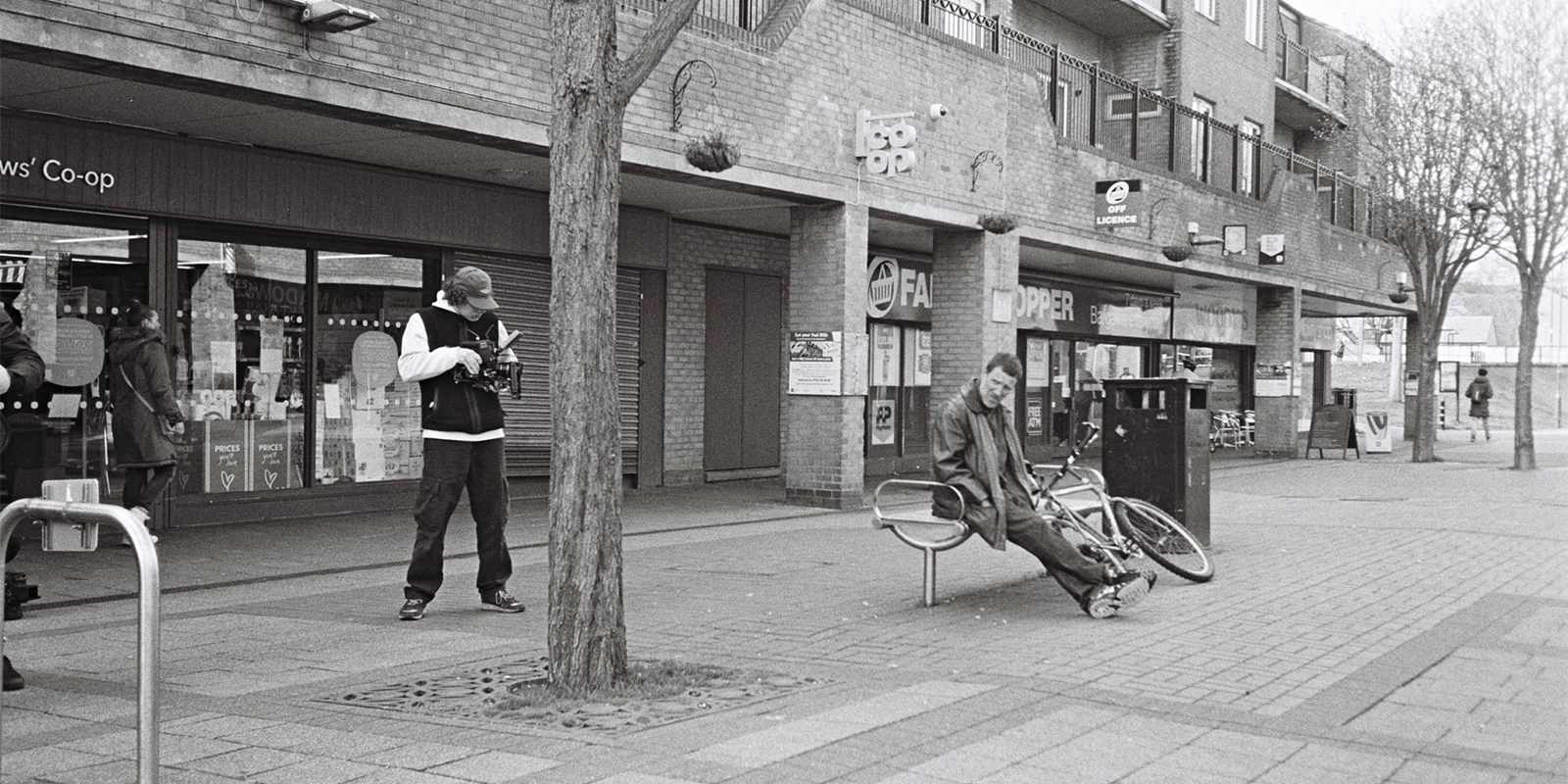
Our initial discussions were about freedom. Freedom for Jason [Williamson, lead actor] to explore and freedom for me to find our visual language through what felt like a very natural way of shooting. It was a push and pull between me, Luke and Jason. We spoke about approaching it with an almost documentary style; small crew, few to no lights, and to be reactive. This suited us well as Luke and I have worked closely on a number of documentaries. I think some of the most beautiful films more often than not have this approach – take Nomadland for example.
What did the pre-production process entail and how long was it? What research was carried out?
Luke explained his vision: a dreamlike mix of documentary and drama. There was little to no storyboarding, shot list or any concrete idea of what we wanted to film on the day, other than the character going about his day in a variety of environments and an improv interview at the end of the day. We did a location scout prior to filming so I knew roughly where the sun would be hitting the estate at different times of the day. And that was it – we were ready to shoot.
Why do you think your collaboration with director Luke Radford was so successful?
Luke and I have very similar tastes and reference points. Our previous work together gives us a very easy shorthand and allows us to trust each other. It’s honestly one of those dream director-DP collaborations.
Can you run me through the filming locations?
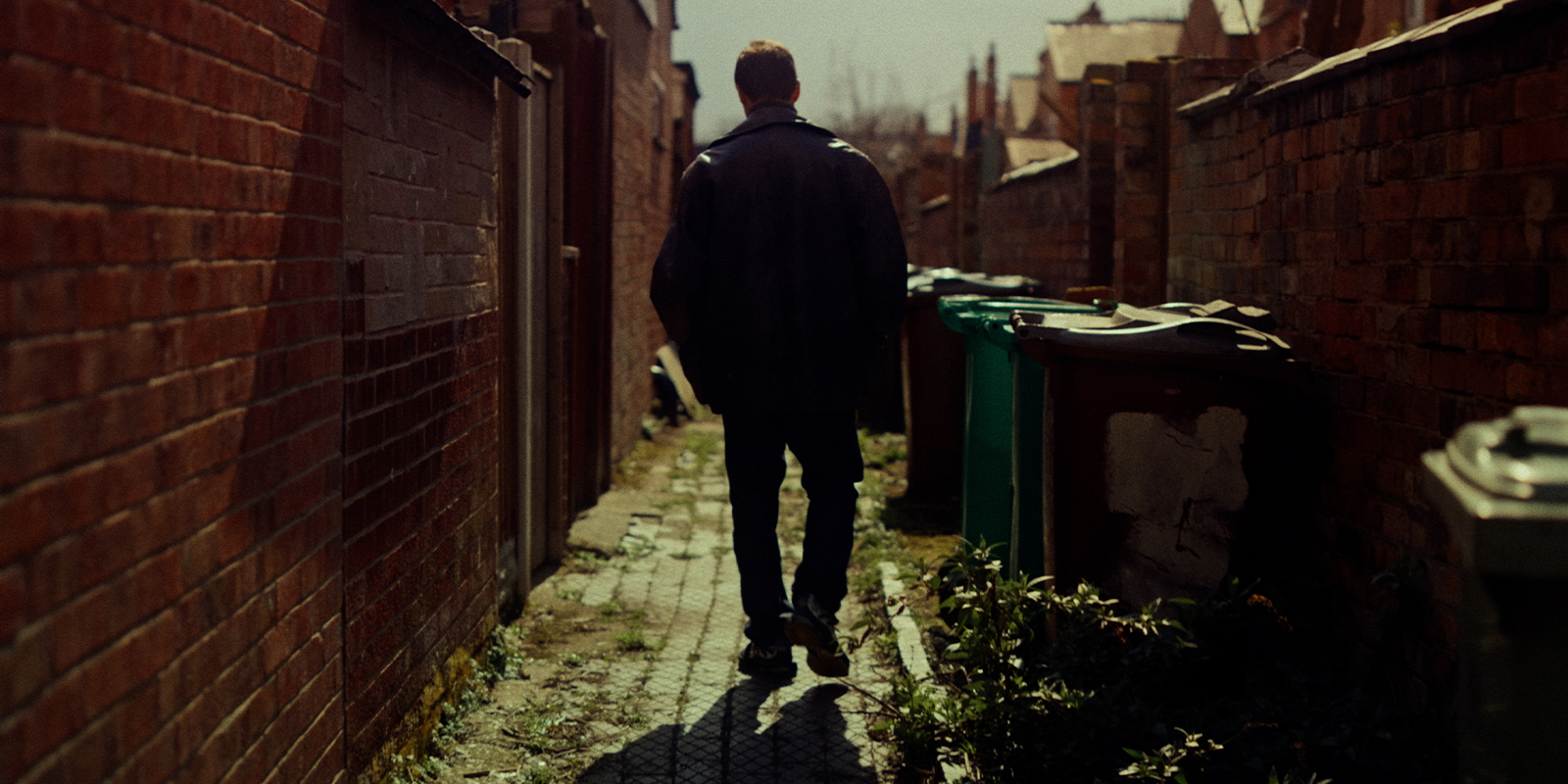
Luke and Nick had previously done a location scout around the Meadows estate in Nottingham, and then they did a second scout with myself. Most of the outdoor locations were very straightforward – the important thing was just to be there at the right time for where I wanted the sun. But as is always the case with the UK weather, we had a mix of overcast and sun, so we improvised a little.
Can you explain your choice of camera and lenses what made them suitable for this production?
We had to use what was available to use, so that meant using my own kit, the Z Cam E2-F6 and my 50mm and 35mm Meike Full-Frame Primes, which are my two favourite focal lengths – I guess you could say they’re becoming my signature. I actually think the imperfect vintage feel you get from the Meikes really suits the look of the short.
How did you use framing and composition throughout the visual storytelling?
We wanted to be very observational and ambiguous. I wanted my framing to show the environment but not take away from performance.
How did you use colour to enhance the atmosphere/tell the story in certain scenes? How did you determine the colour palette?
We wanted deep, rich colours that felt lived in. For the interview, I decided to light it very warm, around 3000k, to give a hopeful undertone. I chose to do a Kodak Vision film emulation as this would give us the rich tones and a nice gritty feel all at the same time.
What was your approach to lighting the film and how did you work with your gaffer, Olivia Kininmonth?
I’ve had the pleasure of working with Olivia on multiple projects and it’s always a very fun collaboration. I cannot sing her praises enough. Olivia and I decided on a very naturalistic way of lighting which consisted of negative fill and bounce light, primarily on close-ups and mids.
Which elements of the short were most challenging to shoot and how did you overcome those obstacles?
I would say the most challenging part of the shoot was the interview. We chose to make this look dreamy and obscure; to achieve this we used a sheet of plastic that has circular ridges on the face, which created a really cool effect. However, the challenge was holding the sheet with one hand the right distance from Jason to have some kind of focus whilst also holding the camera with the other hand for an interview that lasted around 20 minutes.
What lessons did you learn from this production that you will take with you onto future productions?
I think the main lesson I’ve taken from this short is to not get too caught up in gear and to trust my instincts, embrace the unknown and always be experimental. There is beauty in the unknown and not everything has to be planned.