
LOVE AND LAVA
Ollie Downey BSC recounts shooting The Fires in Iceland, navigating volcanic eruptions, extreme weather and a tiny crew to capture epic visuals on a modest budget.
There aren’t too many more exciting calls to get as a cinematographer than to travel to Iceland to shoot a feature film. I was lucky enough to receive the call from my friend, the brilliant director Ugla Hauksdóttir, at the beginning of 2024 to work on The Fires, an adaptation of popular Icelandic novel Eldarnir – Ástin og aðrar hamfarir (The Fires – Love &Other Disasters) by Sigríður Hagalín Björnsdóttir.
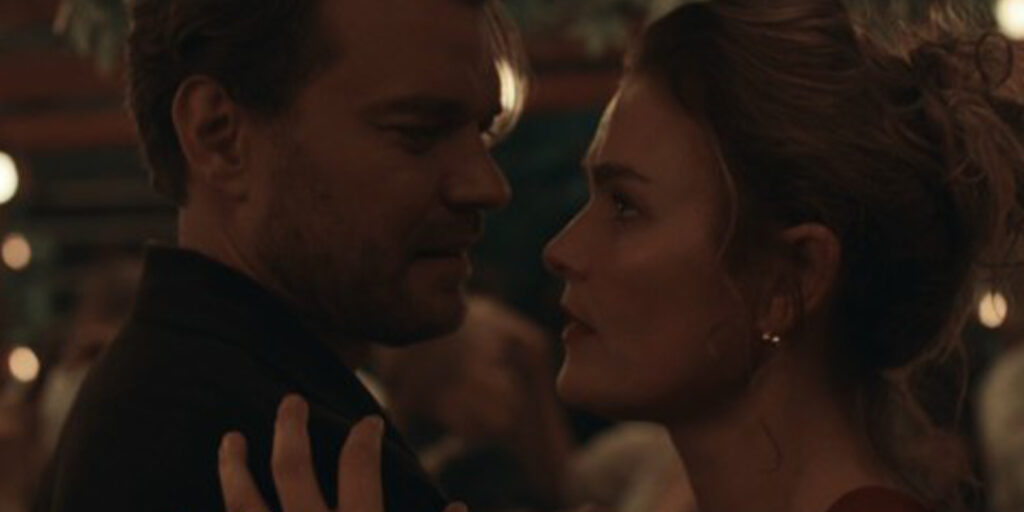
Starring Vigdís Hrefna Pálsdóttir, the story is about Anna Árnadóttir, an Icelandic volcanologist whose life is thrown into turmoil by a series of catastrophic eruptions and a passionate love affair. Whilst the script felt intimate and character driven, it was framed against the epic backdrop of volcanic activity on the Reykjavik peninsula Ugla and I realised quickly that capturing this scale on our very modest budget would be the biggest challenge. In some ways it felt like we were trying to create a European version of an American disaster movie on an arthouse budget.
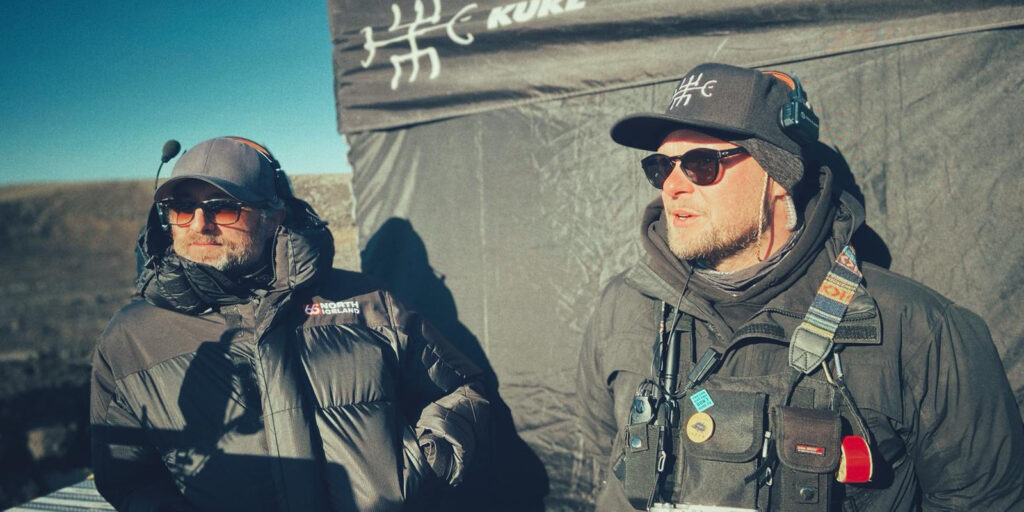
Kukl in Reykjavik supplied our simple lighting and camera package (comprising an Alexa S35 and a set of Zeiss Super Speeds). Apart from our brilliant grips (Guðmundur Garðarsson and Tomas Johnson), our small camera and lighting team was made up of crew from Poland, as the film was a co-production with Mad Ants and the Polish Film Institute.
When the wind blows
The lighting of the film was always going to be challenging. Icelandic weather is notoriously changeable and high winds make it difficult to rely on machines and large bounces or sun block. In addition, we were filming in summer on a tight budget. Our Polish gaffer ‘Larry’ Michal Kruk and his best boy ‘Odin’ Bartosz Wajcht were a godsend. Most locations were large, challenging spaces – the kind we shoot on much larger productions. Armed with just one local spark though, the guys somehow managed to get even the largest locations looking just right.
As a director, Ugla is incredibly calm and methodical and we identified two sequences to pour our limited resources into, to capture the scale and devastation a volcanic eruption brings. One was the film’s climax. Up until this point in the story we managed to stick to a subjective viewpoint and as such had shied away from set pieces or big wides. This sequence though owed most to the traditional disaster movie. Anna, our protagonist, travels back through smoke and fumes to rescue her daughter from the family home in a neighbourhood crippled by volcanic activity.
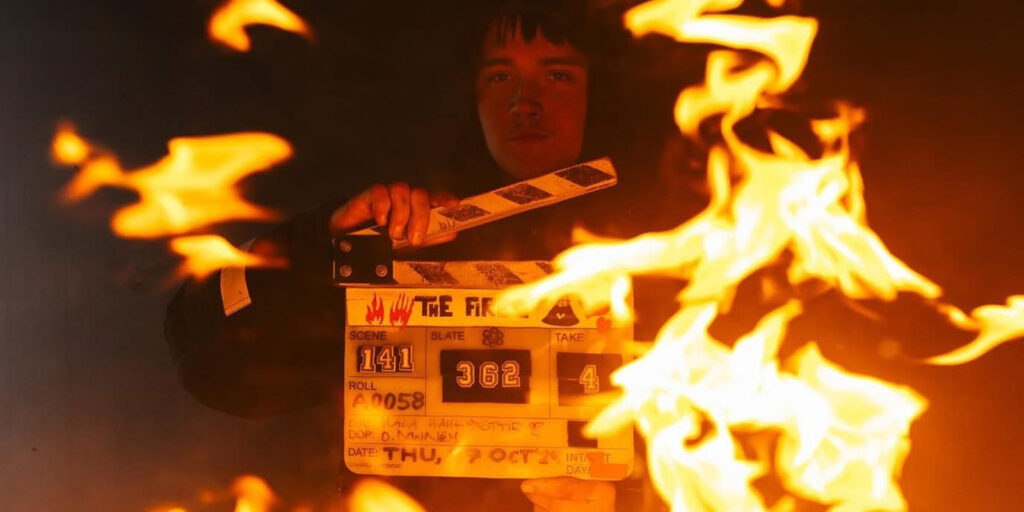
The reality of the situation would be very dark as the majority of daylight would be blocked by thick smoke from the eruption, giving an eerie, twilight feel. On a larger budget we would shoot this sequence in a studio or use multiple sun swats to block any direct sun and bring down the level of ambient light relative to the level of the flames and fire light. On our budget neither of these were options. In addition, we had the challenge of recreating the burning family home Anna reaches, without damaging the beautiful architect-designed house we were shooting in.
We were lucky to be working with brilliant production designer Heimir Sverrisson, his art director Rollin Hunt and SFX supervisor Eggert Ketilsson. For the first part of Anna’s journey, Heimir found an old quarry sheltered from the winds, gave a matching texture to the existing road and allowed the art department to dig in abandoned cars and debris. Eggert then provided the practical smoke and fire FX, using his expertise to provide consistent smoke despite the tricky Icelandic weather. The schedule was tight and had already been cut back a week before we started shooting. As such, we had one day to shoot the bulk of this sequence. It was incredibly challenging for Vígdís Hrefna Pálsdóttir playing Anna and our operator Marcus Engelmar who somehow managed to find great frames despite being buffeted by smoke and debris all day. Our camera department was small but Paweł Fiwek our focus puller and Antoni Haftka our second AC were utterly committed. How Paweł managed to keep this sequence sharp with visibility down to almost nothing I’llnever know.
When Anna reaches the burning family home, she fights through the smoke and debris to find her daughter hidden in a cupboard. Practical FX were forbidden in the location and there was no budget to build a replica set. We investigated solutions including building small-scale models of the family home but nothing felt quite right. Heimir is an incredible problem solver and found a half-finished concrete building up in the hills with similar proportions to our family home and persuaded the owners to let us run wild for a day. Once dressed and filled with smoke and flames, it was similar enough to sell the cheat really well. With a little underexposure and a LUT designed with Gareth Spensley at Company 3, we captured the sequence almost entirely in camera.
It really was a team effort. When shooting high-end episodic TV these days it’s such a well-oiled machine that it feels like any one of us is pretty replaceable. The opposite was true of The Fires; we had such a passionate and resilient little team that the film would not have worked had any one of that cast and crew been missing.
I feel immensely proud of what we achieved with our resources. I don’t think The Fires could have been made anywhere else in the world. Iceland has such a rich tradition of storytelling and literature and a genuine respect for the arts which feels so rare in this day and age.