CRAFTING A STYLISTIC HORROR SHORT
Cinematographer Marti Guiver and director Ethan Evans explain how camera and lighting choices helped shape the horror in their Sony Future Filmmaker Awards finalist short Outside Noise.
Made to reflect the modern horrors of doomscrolling and the effect it has on our psyche, Outside Noise is a tight, supernatural horror short about a woman who listens to a sleep ambience app, but soon suspects it’s summoned something frightening into her bedroom.
Marti shot on an ARRI Alexa Mini, which he pushed to 1000ISO to emulate 35mm grain structure. The team ultimately shot for how they wanted it to look in the final grade.
Shadows vs light
We felt it was important to ensure the light was always motivated; we wanted to strictly avoid that artificial studio look where you can see too much into the shadows, therefore jeopardising the horror. We felt that sometimes it was best to keep a shot dark, leaning on the audience’s imagination to enhance the paranoia.
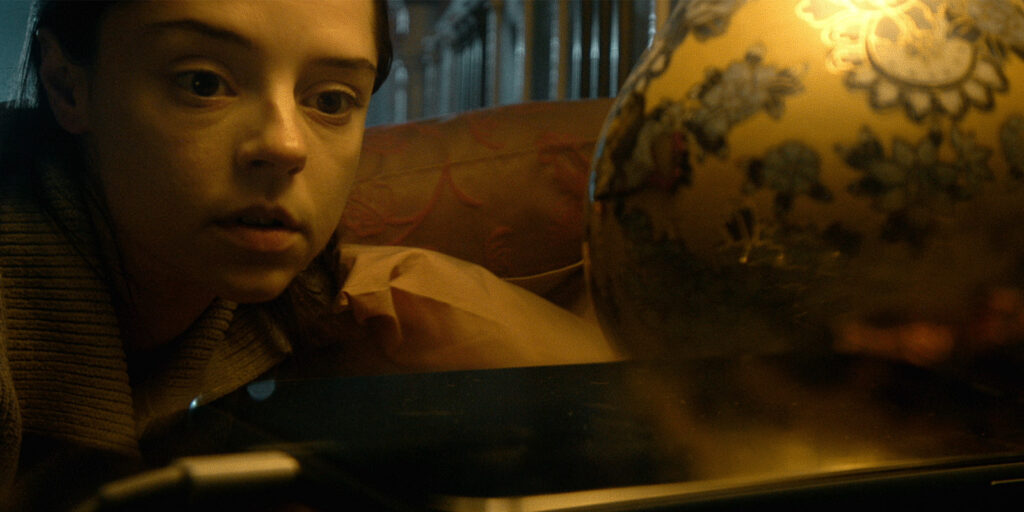
We wanted the look of Outside Noise to feel larger than life, akin to a Steven Spielberg movie, as Ethan believes British horror has long been missing that style that American movies do so well. As well as trying to capture some Spielbergian magic, we studied films like The Conjuring 2, which is a masterclass in the fine balance between big, cinematic creativity without distracting from the character’s grounded, relatable experience at its core.
However, this was challenging – not only due to our limited budget, but also because it was set entirely in a single room. To help switch up the visual palette, we planned an evolution in the light to make it feel like we were exploring different spaces, so the single location never felt stale. To keep it progressively fresh, we designed the short with two main visual sections: one lit solely by moonlight, then another lit by a colourful nightlight.
Lighting as a dynamic tool for horror
For the moonlight-only section, we had an Aputure 1200x shining through the large window for our key light, which we wanted to feel like classic Hollywood moonlight. We had a rain machine/hose trickling water down the window to work as a gobo for wavering texture to increase the atmosphere. The room we ended up shooting in was huge, which was originally a concern, but we decided to lean into what it could offer to make the shadows more prominent, embracing them falling to deep blacks.
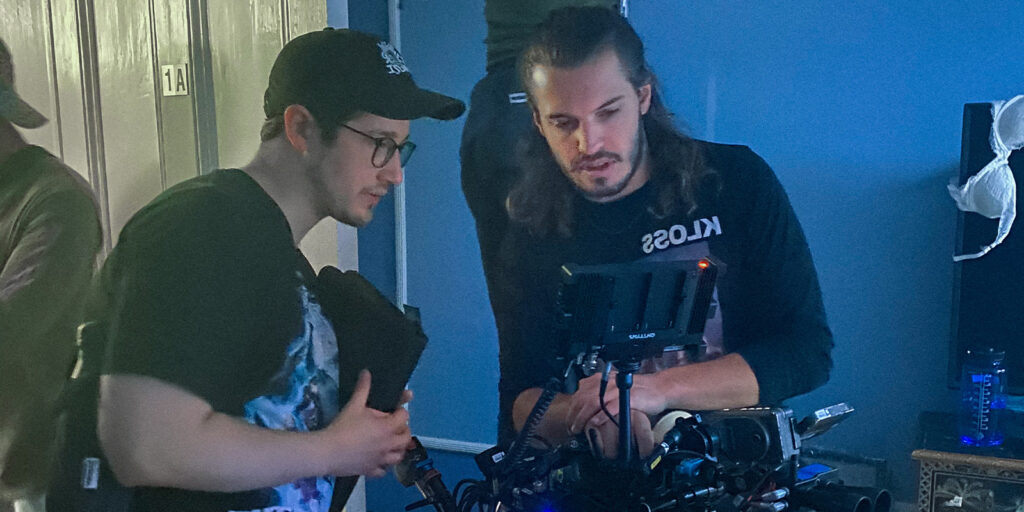
We found single-source Renaissance paintings to be an inspiration for this look and wanted to capture their confidence in light/dark ratio and have Outside Noise feel less like the softness and lower dynamic range you often see in modern digital looks. We used bounce and minimal fill to keep in line with the realism of this single source moonlight and to create that shadowy contrast aesthetic that keeps you wondering what’s lurking in the shadows.
For the nightlight section, we designed pops of bright colour to sweep the shadowy walls to add a kinetic flair to what would otherwise be static action. In collaboration with the art department, we made a small practical nightlight that you see in frame, but this wouldn’t have been strong enough to light the room. We ended up making a large, DIY gobo unit out of cardboard with shapes cut out; inside, we hid three Dedos pointing in different directions and then spun the cardboard to give the illusion of revolving light.
Our lighting choices also weren’t solely for aesthetic reasons, as Ethan had designed them specifically for the scares from the script stages. For example, the nightlight originally came from an idea for a scare where the sweeping light reveals a hidden figure. We also sprinkled in several practical light elements, including when the ghoulish hand reaches for the phone from the shadows, and its hand is just about caught by the cold glow of the phone’s light. We ended up lighting the hand with the practical phone itself, as it looked the most effective on the day – sometimes the simplest option ends up being the best.
Creative but motivated lens choices
In tune with aiming for it to feel like a classic Hollywood film, we explored various lens choices and landed on the Atlas Orion anamorphics. These were perfect as they captured that vintage feel without being too warped or distracting, as we knew we’d be hiding important scares in the edges of frame.
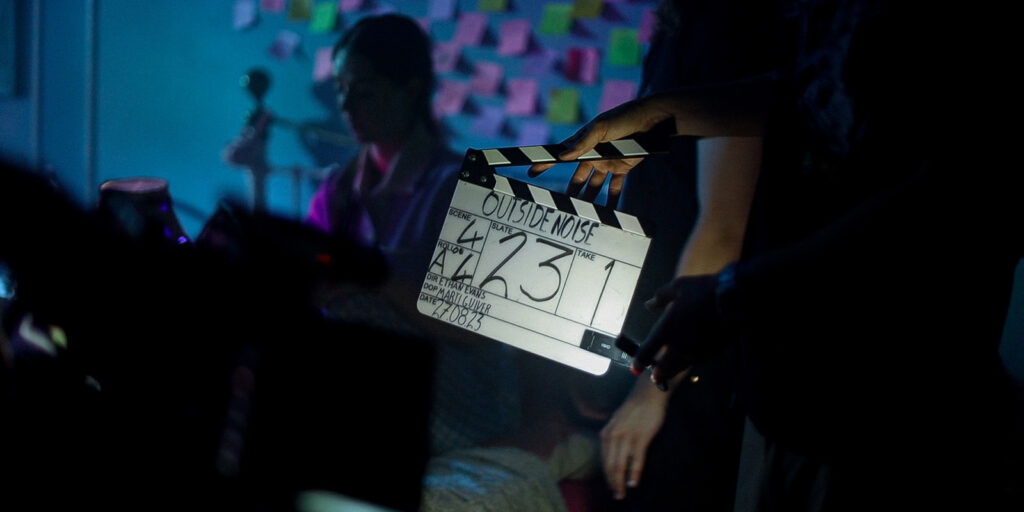
Despite our limited budget, the surrealness of the concept called for us to experiment where we could too. There’s a turning point in the film where Layla starts to suspect something is up with the phone/app; we decided to accentuate this visually by using a split-diopter zoom on top of the anamorphic lens – which was so fun to play with, but more importantly, it served the story well. With Marti’s music video background, we also made sure to experiment on set where we could with techniques like putting Vaseline over a filter.
Overall, we’re both so proud of how Outside Noise turned out, despite working with such a low budget and only having two – very jam-packed – shoot days. It proved to be a great lesson in keeping creative and aiming big, no matter the circumstances.