
THE LOST BOYS
Monsoon season, working with minors and a cinematographer on his knees: Mark Wolf BSC reveals the technical thinking behind the first Lord of the Flies series.
Sir William Golding’s first novel, Lord of the Flies, has haunted school syllabuses and late-night reflections for over 70 years. Relentlessly taught, debated and dissected, this bleak parable of civilisation undone continues to linger in readers’ minds long after the classroom bell rang for the final time.
Of course, the novel has been carried to the screen before: first in 1963, when Peter Brook directed a stark and austere adaptation and again in 1990 under the direction of Harry Hook. One might even count a third, lesser-known interpretation: the 1975 Filipino survival drama Alkitrang Dugo, directed by Lupita A. Concio, which also drew on Golding’s unsettling tale of boys, isolation and the fragile veneer of order.
You’d think, then, a story purpose-built for episodic tension — a group of boys unravelling into savagery, one chapter at a time — would have been snapped up by a streaming service long ago. But until now, remarkably, no one tried. Enter the BBC’s epic four-parter.
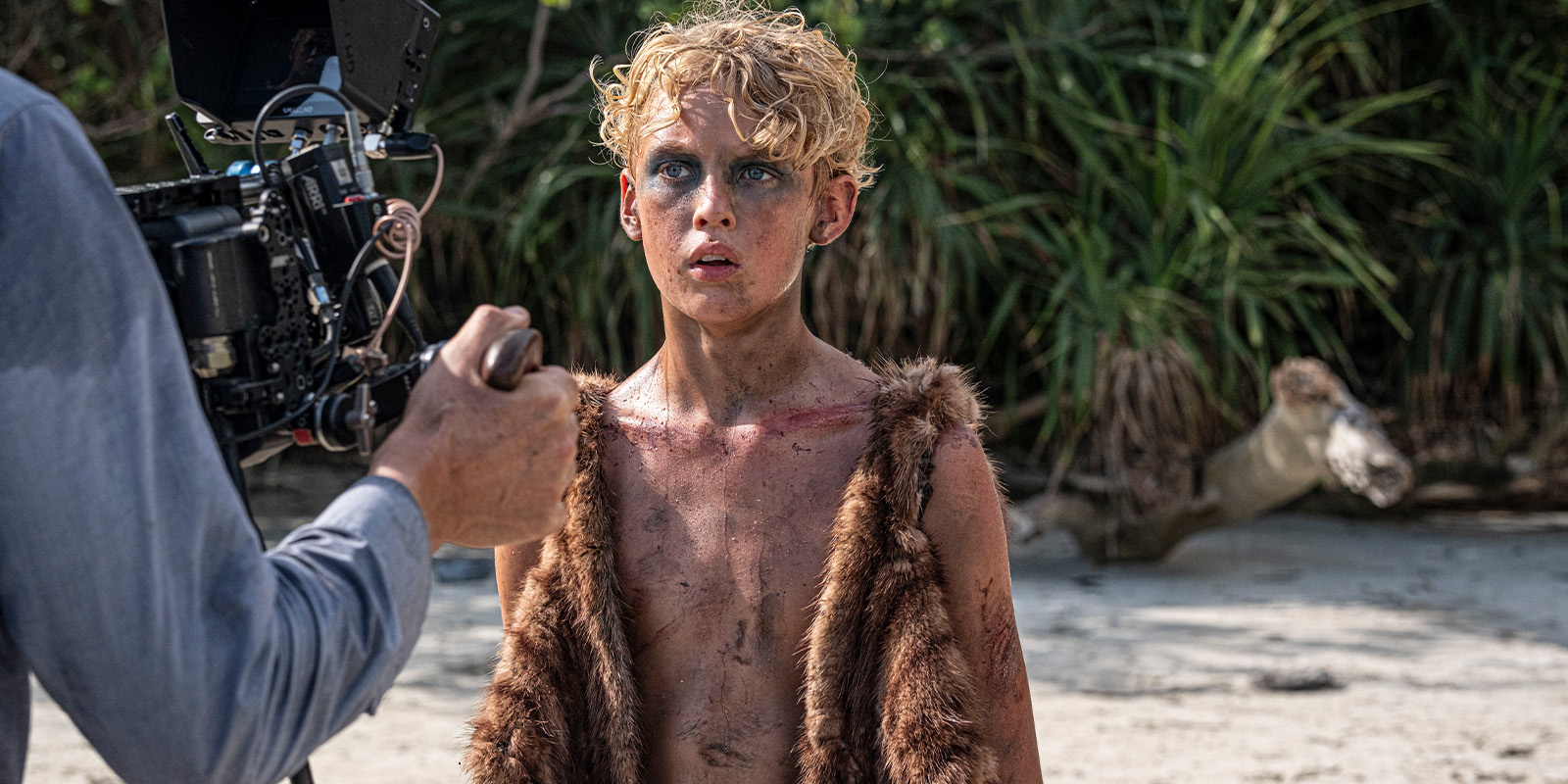
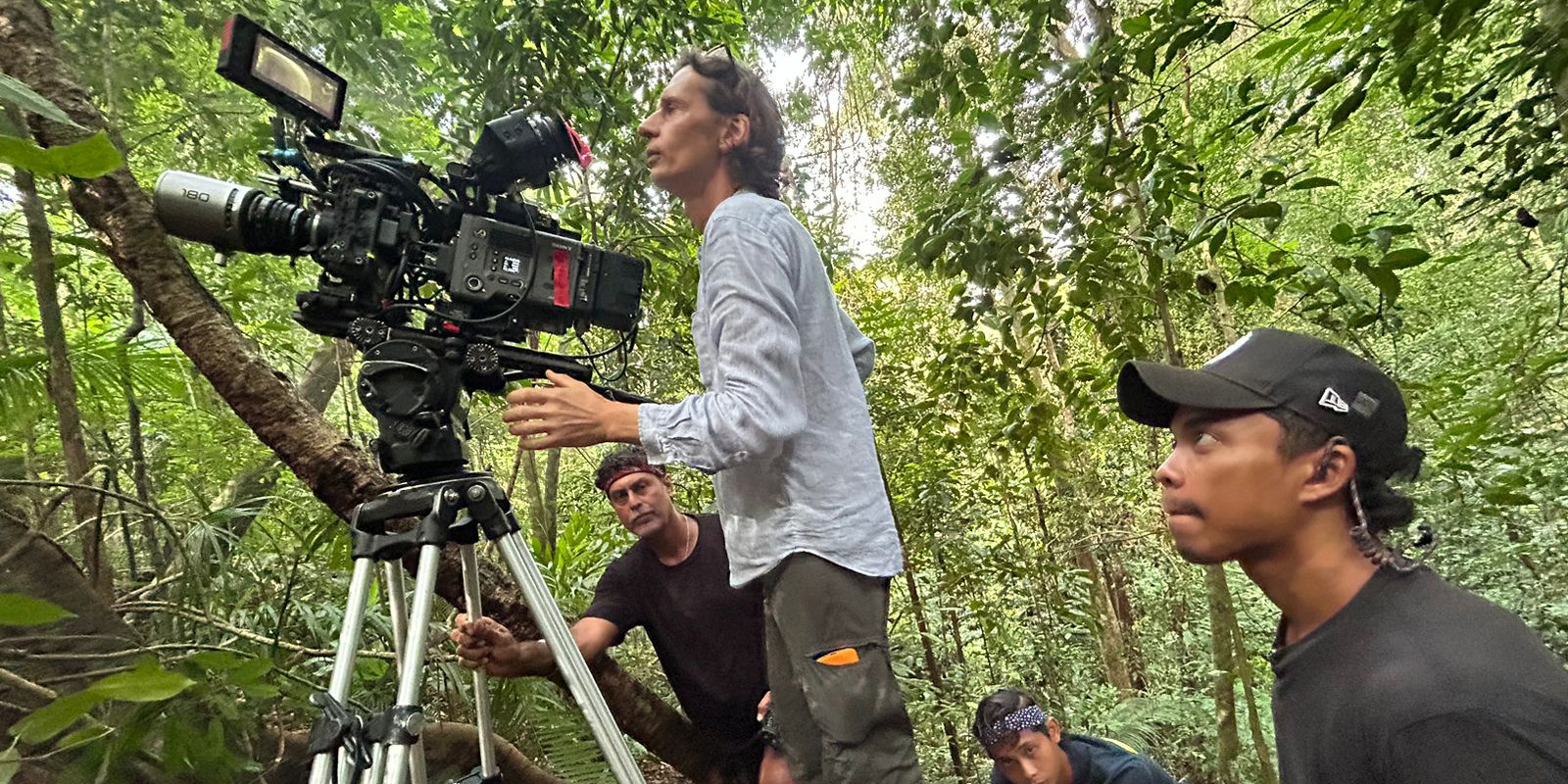
Directed by Marc Munden and written by Jack Thorne, the shoot was physically demanding from day one, as cinematographer Mark Wolf BSC explains. Choosing the Sony Venice 2 in Rialto mode for its ease of handling, he explains why both the camera and lenses were critical choices.
“I knew there was going to be a lot of handheld work, and all the boys are up to my chest — I’d have the camera on my shoulder and probably be crawling around on my knees most of the time,” he says.
“The lenses were crucial. I used DZO Pavo anamorphics, which are relatively new, but they had exactly the quality I’d been searching for. I used to shoot a lot of large-format 10×8 photography, and wide open it produced these incredible, swirly out-of-focus backgrounds. I’d always wanted to recreate that look in motion. I tried adapting an old 10×8 lens, but it was so clunky and impractical it never really worked on set. Then I came across the Pavo anamorphics, and some of them had that very specific look. It really ignited something in me — I felt it could create a whole new world. At the same time, it helped distinguish the boys’ world in the Pacific from the flashbacks, giving that environment its own visual identity.”
Island hopping
Despite its Pacific aesthetic, the shoot — lasting 92 days — took place in and around the Langkawi archipelago in the Andaman Sea, off northwestern Malaysia. Several small, uninhabited islands were used for mangroves and rainforest work, vividly bringing the lush, immersive environment to life.
Naturally, in locations like these, insufficient brightness was hardly ever a concern.
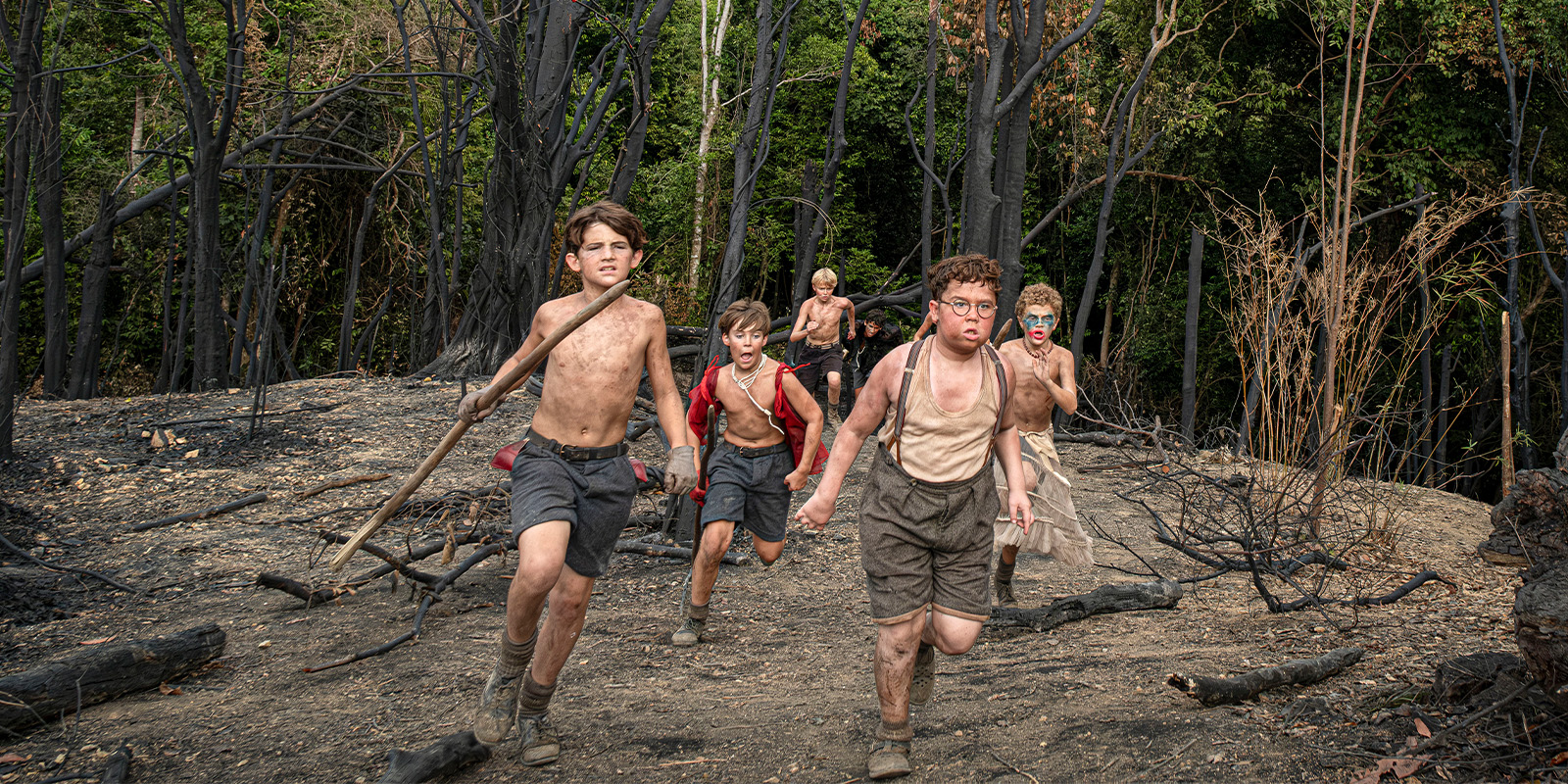
“It was mainly natural light — lots of diffusion and textiles,” Wolf adds. “But I generally didn’t want to make it soft and beautiful. These boys have just appeared on a Pacific island. It’s really hot, searing sunshine, uncomfortable and sweaty. I didn’t always want it to look beautifully lit. So, a lot of the time I just let the sunlight hit their faces harshly. But other times we had these big textiles up in the trees, which was an amazing thing to see — the grips were like monkeys getting them up there.”
In contrast, Wolf’s lighting arsenal comprised Maxi Brutes, ARRI SkyPanel X units with the Hyper Optic hot-swappable multi-lens accessory, and Aputure LEDs, with all camera and lighting equipment supplied by Asian Film Equipment in Kuala Lumpur.
Wolf and his crew used bleached muslin frames — some of them had been used for years and were quite moth-eaten, “which actually added to the look”.
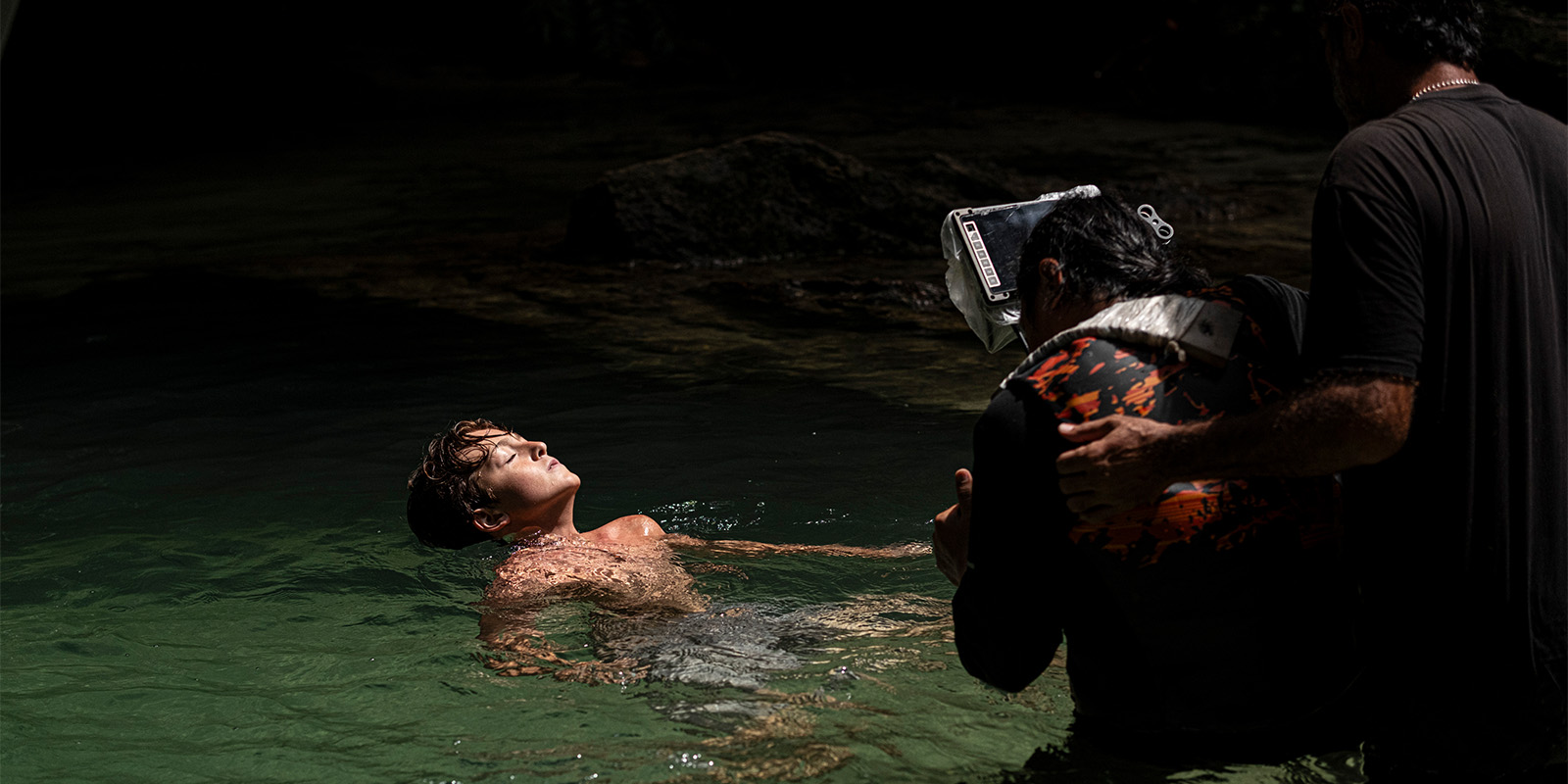
Even though Malaysia provided abundant natural light, shooting during monsoon season was anything but plain sailing for the cast and crew.
“The weather was an overwhelming influence,” Wolf recalls. “There was constant torrential rain, massive winds, trees falling down, lightning storms, storms at sea. Sometimes we couldn’t get to the island locations, or we’d get there and couldn’t get off it because of a storm coming in. One of the safety guys had a lightning meter and if lightning was within a 10-mile radius we had to stop filming without question — sometimes evacuate the set entirely. The kids’ safety was obviously the priority and that was the reason for so many breaks.”
Wolf reserves praise for the young cast for the way in which they handled the production. “They were amazing, really,” he continues. “Very few of them had any stagecraft when we started — the first few weeks they’d be saying their lines with their backs to the camera or hiding behind each other. But they were incredibly well looked after and they never forgot their lines. It was remarkable how quickly they learned. The entire shoot was very collaborative. Mark and I spent months beforehand shot-listing everything, so we always had a clear idea going in — though obviously things change on the day.”
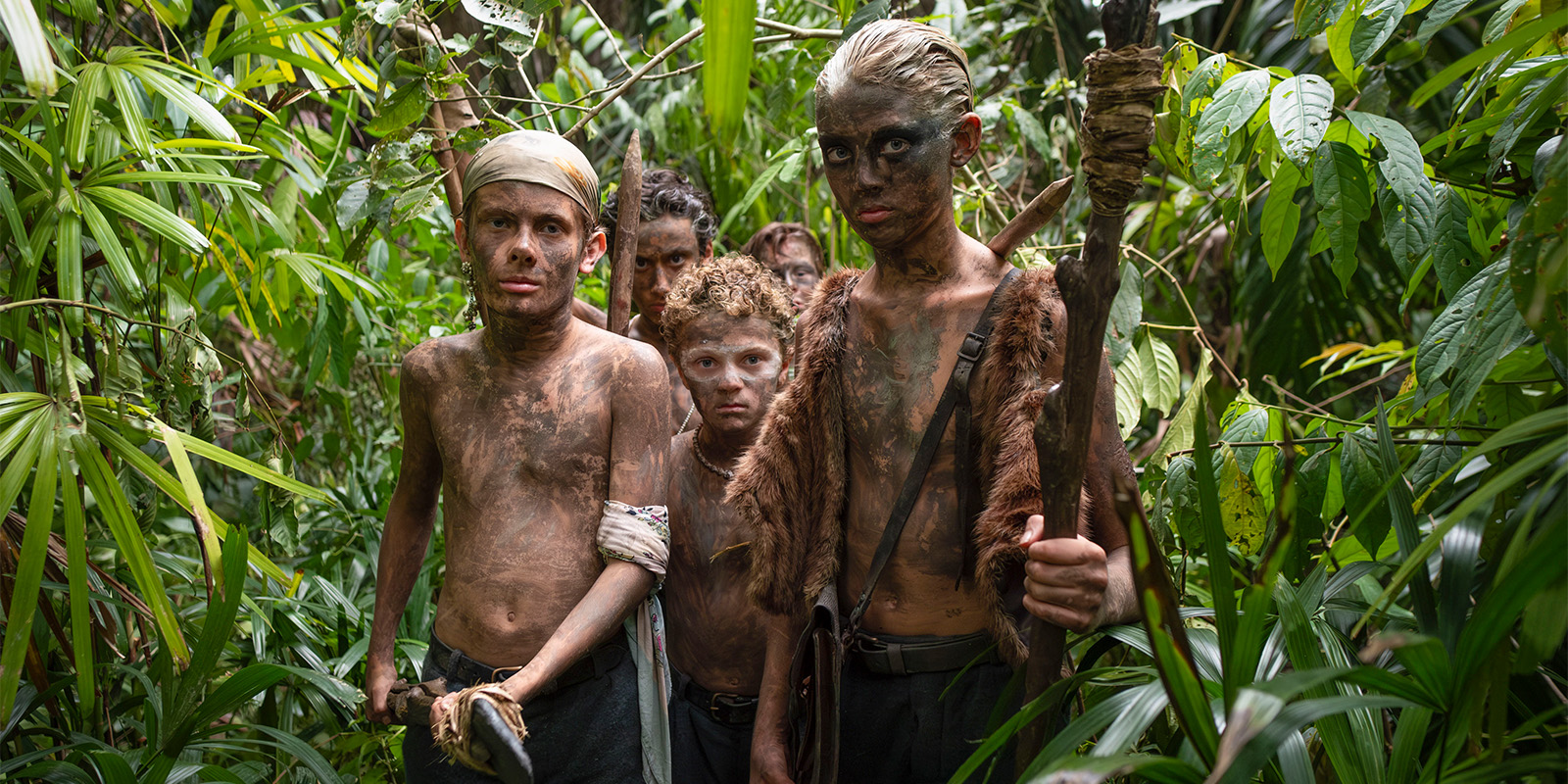
Though no stranger to demanding productions, Wolf was about to confront something entirely new.
“For the infrared work, we were fortunate to have Eleven Films provide a generous budget for research and development. And the final look we found for the infrared couldn’t have been achieved without the creative input from colourist Aidan Farrell of The Farm. The whole technique was a massive learning curve. Honestly, it still doesn’t quite look like night — you have to approach it knowing you’re not creating darkness. I ended up using a RED Epic because it was straightforward to convert to infrared.”
Wolf says “the decision to shoot infrared was largely logistical” for obvious reasons. “How do you light a forest at night with kids running through it, on an island an hour away by boat? Impossible. So, I explored infrared and did extensive research. It has a very specific look and in the end, its hallucinatory quality suited Lord of the Flies. I learned a lot about shooting infrared — which cameras and lenses work and which don’t. We tested various approaches, including 3D rigs combining RGB and infrared, but it proved too finicky and technically challenging to take to a tropical island.”
Out of this world
The aesthetics are stunning and Wolf is thrilled with the final product. “I think the overall look we created was always aiming for something slightly otherworldly,” he says. “It’s difficult to pin down exactly how to describe it
— there’s a surreal quality to the images, a sense that the world on screen isn’t quite our own. And yet, at the same time, it still feels grounded and strangely real. That balance was important to us. Looking back, I really like the way it all came together — the atmosphere, the tone, the overall visual language of the film.”
Adaptations seldom achieve complete fidelity to their source—textual nuances do not always translate directly, and pivotal episodes often demand extra emphasis to work visually. With Lord of the Flies already bearing the imprint of previous films, Wolf set them aside entirely. He never viewed those earlier adaptations, concentrating instead on the novel alone – alongside Thorne’s script – and preserving the closest possible fidelity to Golding’s work.
“I first read the book when I was about 10,” Wolf says, “but I reread it a couple of times before the shoot and kept it with me throughout.” He notes how closely Thorne’s script follows the novel and that he, Wolf, deliberately avoided watching earlier film adaptations to prevent being subconsciously influenced.
Instead, Wolf finds his greatest inspiration in the locations themselves and the feelings the book conjures, which he feels Thorne captured brilliantly in the script.
“One key reference that Marc and I did love was Walkabout(1971), the film by Nicolas Roeg, because it has this strange, eerie and threatening quality. Nothing is necessarily explained. It cuts away suddenly and feels quite disjointed and I really liked that atmosphere”.