
TAKING ACTION TO NEW HEIGHTS
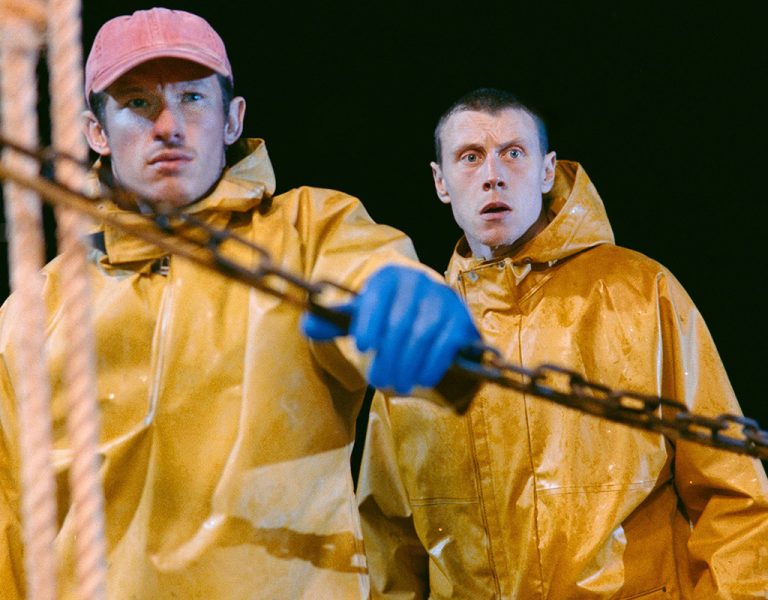
Son of the Soil follows a fierce ex Special Ops soldier, Zion Ladejo, who returns home to Lagos, Nigeria, after his sister’s tragic death. Determined to uncover those responsible, he embarks on a vengeful path into Lagos’ criminal underworld. Blending raw action with social commentary, Son of the Soil is a profoundly human story within the framework of a classic action film, exploring the concept of sacrifice and cost of justice.
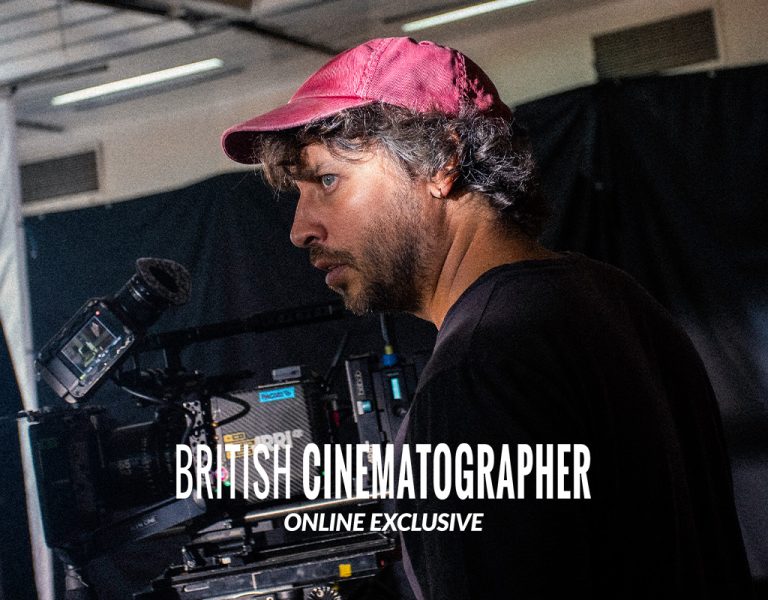
I have spent large parts of my career shooting documentaries and it was that resourceful, quick-thinking attitude which made the execution of Son of the Soil possible. From the outset, we approached the film with a documentary eye, being reactive and responsive to a real-world environment.
I’m a huge action movie fan, but what also drew me was the attention to detail in the script. Writer and lead actor Razaaq Adoti had spent a lot of time living in Lagos over the years, so more than anything it felt like a love letter to Nigerian culture. I could really sense and feel the sights, smells, and sounds of the city in those pages.
A new breed of Nollywood production
I was brought onto the project late into the process, with just under two weeks of prep before flying to Lagos. This marked my first collaboration with director Chee Keong Cheung, and knowing how much we had to capture in just 16 shoot days, it was vital that we went into battle aligned on a clear visual language and a shared shorthand. Working remotely over Zoom while Chee was already in Nigeria, we spent many evenings discussing mood and tone, building what we called the “Cinematography Bible”, filled with visual references and specific colour palettes for each scene, as well as an aligned manifesto of how to approach this adventure.
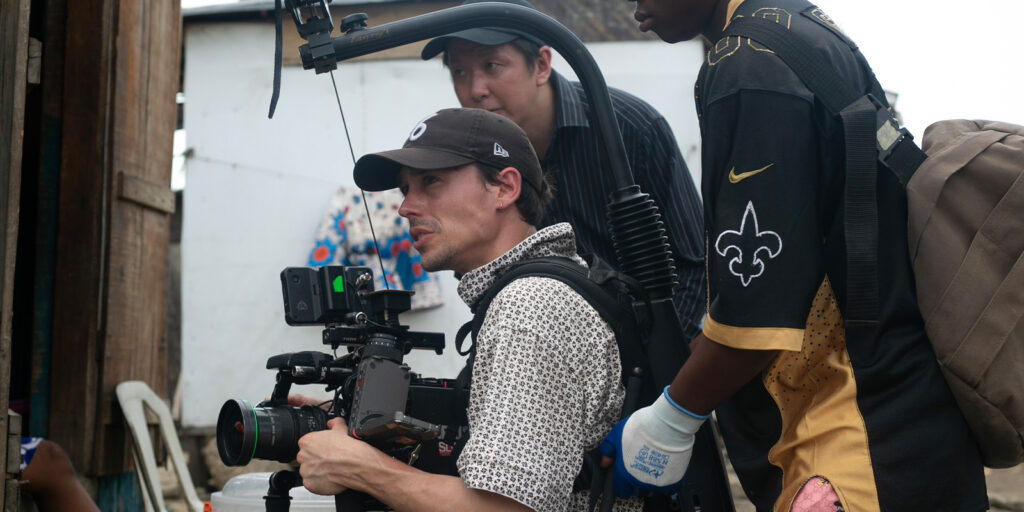
The references we kept returning to were City of God, which similarly to Son of the Soil was shot in the favelas of Rio de Janeiro. Then Tony Scott’s Man on Fire, which became the foundation for our distinctive high-contrast, cross processing style LUT. Chee made it clear early on that he wanted the film to have a level of grit and personality associated with shooting on celluloid, something surprisingly rare in Nollywood productions. During prep, I found myself revisiting the work of Barry Ackroyd BSC, particularly his collaborations with Paul Greengrass and Kathryn Bigelow. His work on Detroit (2017) was especially influential, capturing civil rights unrest with the immediacy of live news footage and the rawness of cheaper film stocks.
The shooting style we landed on was deliberately punk, utilising different formats to create an immersive and often disorientating mood that matched the violent, fast-paced storytelling. Courtesy of SLV Studios, we shot on the Alexa 35 and Alexa Mini, switching between Super 35 and Super 16 modes depending on the intensity of the scene. Around 75% of the film was shot handheld, using S16 Canon 8-64mm & 11-165mm zoom lenses, to find the action quickly and intuitively. We also employed Sigma Cine Primes which we hired in Lagos, mainly the 18mm and 24mm for wide-angle close-ups, injecting a contemporary cinematic language into the mix. In prep I landed on Bronze Glimmer Glass to help match the Sigma’s to the warmer, vintage glass of the Super16 zooms.
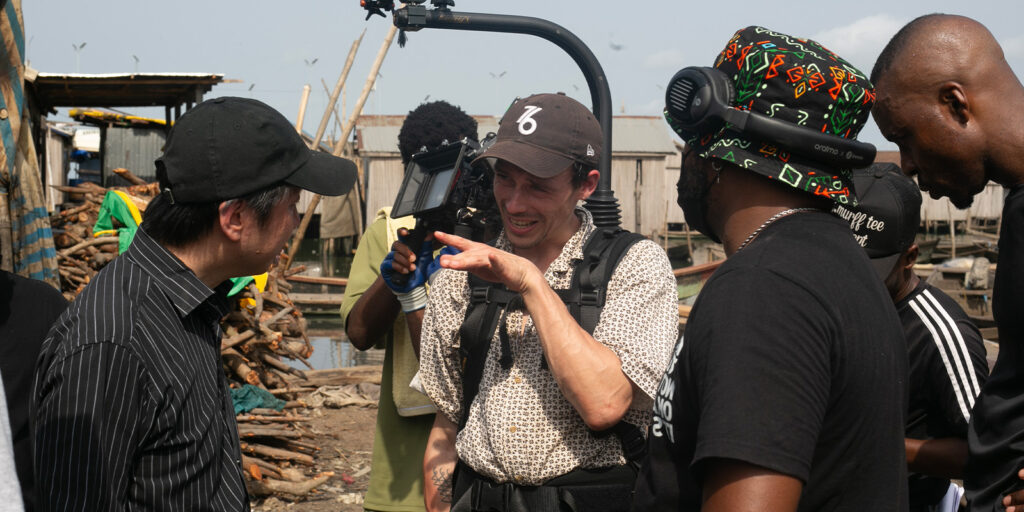
Camera choreography and building a visual language
Besides Chee, Razaaq and me, the entire cast and crew were Nigerian, most living in Lagos. I operated A-cam, playing scenes wide and intimate, while B-cam operator Akinyemi Akinloye worked more telephoto and voyeuristically, catching moments from behind corners or through foliage. This approach heightened the sense of unease and constant surveillance Zion exists under. The cast also included A-list Nollywood stars such as Patience Ozokwor and Ireti Doyle as well as other Nigerian talent. The film also included in its cast the local “Area Boys”, gang members who unsurprisingly brought an authentic level of realism to the roles.
I’ve always operated the camera on my films. I was obsessed with parkour late into my teens, which gave me a strong sense of spatial awareness, and I later cut my teeth filming music festivals, countless music videos and collaborating with dancers and performance artists. I see camera operating as choreography. On Son of the Soil, the camera was curious and energised, dancing with the characters, responding to their moods and emotions. We weren’t trying to be invisible; the camera is self-aware and has a life of its own, guiding us through Zion’s journey.
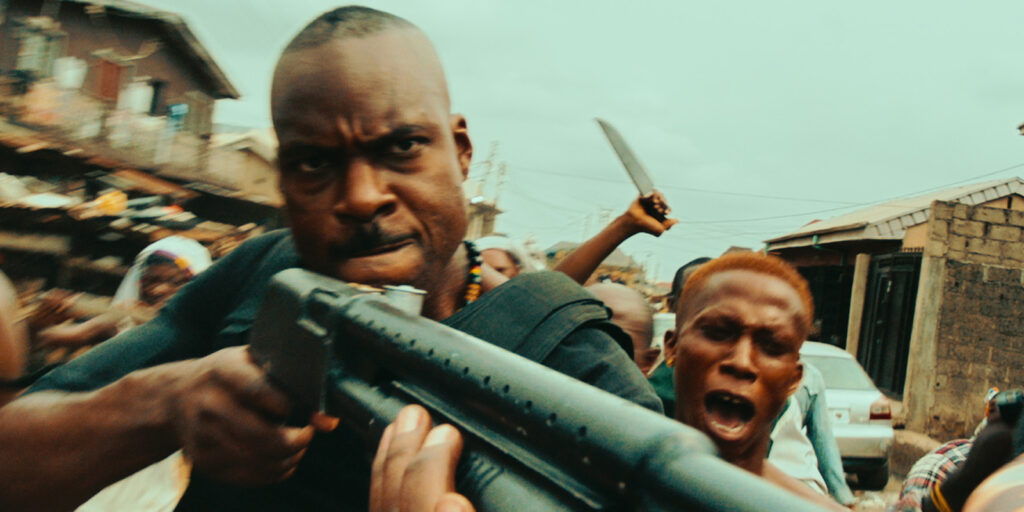
Lagos itself was treated as a character. We incorporated omniscient, almost supernatural perspectives, as if the walls, trees, and earth were witnessing and judging the events unfolding.
Lighting Lagos
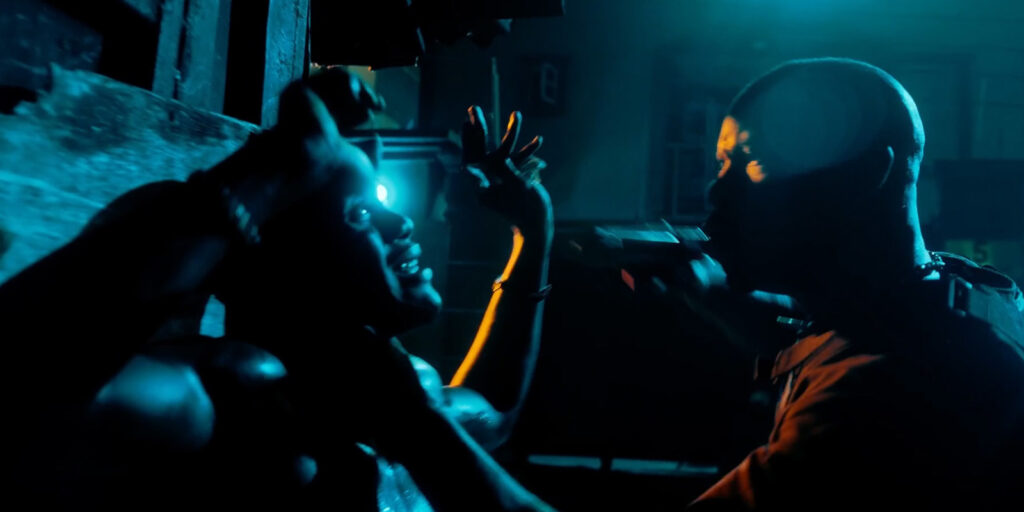
Lighting followed the same philosophy. We wanted it to feel immersive and rooted in the city’s vibrant colour. We leant into the boldness of action movies like Black Hawk Down, never afraid to blow out the highlights or crush the blacks, favouring hard light over soft sources, which the darker skin tones of our characters made much more forgiving. Our package was nimble, working solely with LED fixtures. Titan tubes were integrated into interiors, often dirtied and incorporated into the existing architecture. On the tech recces, I requested sheers and blinds for windows to soften daylight and create shape. Although many locations were often decorated with bold colors which gave us natural depth and texture.
For daytime interiors, we pushed light through windows using Aputure 1200ds and Electro Storm XT26s matching CCT to the exterior palette. For night time shooting, colour contrast was key, we leaned into fluorescent and sodium hues for night scenes and where possible, we would rig lanterns for moonlight fill to give us enough exposure, then rely on existing practicals and motivate them off camera, or set up our own. Day exteriors were often shot in harsh sunlight, so we relied heavily on negative fill and occasional 8×8 diffusion frames for more static scenes, but more often than not we rolled the camera and embraced the available light. Of course we were regularly blessed with glorious sunsets, embracing the back light and bouncing it back into the actors’ faces.
It became commonplace for us to lean into restrictions as creative opportunities. I had an exceptional gaffer, David Walters, who expertly navigated his way around the Lagos landscape and always had ingenious methods to rig lights in the most unusual places. The same went for the grip team who effortlessly rigged our FX3 action camera to Tuk Tuks, as POV cams and anywhere else we could shake a stick at. The resourcefulness of the Nigerian crew was deeply humbling and their ingenuity was tenfold.
Reflections and successes
Making Son of the Soil was a truly unforgettable experience. As my debut feature it was an absolute rollercoaster, technically and physically challenging, rammed full of gang wars, high speed boat chases, pyrotechnics and stunts.
Gratefully the film has been extremely well received, winning three awards at the 2025 Black Star International Film Festival in Ghana (Best Director, Overall Best Film and Best International Showcase), the Audience Choice Award at The African International Film Festival, plus two awards for Most Promising Actor and Best Child Actress at the Best of Nollywood Awards.
The success of the film would not have been possible without the most hard-working crew and a fabulous director, who I would happily ride into battle with again at any given minute.