The Severed Sun is a British folk horror film directed by Dean Puckett. Set in an isolated, patriarchal church community in rural England, the story follows Magpie (Emma Appleton), the daughter of the authoritarian Pastor (Toby Stephens). After Magpie murders her abusive husband, she inadvertently unleashes a malevolent force — a beast with shimmering white eyes that targets the corruption within the community.
Dean and I came to The Severed Sun with a friendship and working relationship forged through previous short film productions — including The Sermon (2018), Satan’s Bite (2018) and Seagull (2022) — as well as numerous film festival trips that fuelled our shared passion for cinema.
It was advantageous that Dean and I had developed a shorthand as we shot The Severed Sun in just 12 days — an idea that, at first, churned my stomach. The script had originally been written for a larger budget and more than twice as many shooting days. The production team decided to move forward with support from a key financier, knowing that if we didn’t seize the opportunity we’d likely lose the funding and the film might never be made.
The creative process began by turning Dean’s storyboards into a workable shooting plan. We opted to compose the film in formal, locked-off static frames, and when we wanted to move the camera, we designed handheld developing shots that integrated the camera movement into the action. One of the influences on our approach was Michael Haneke’s White Ribbon, photographed by Christian Berger. In that film, the camera moves through the landscape while keeping characters anchored within a solid frame. The effect is austere and overbearing, holding the characters without the relief of cutting away. We drew on this idea to inform our own handheld developing shots, maintaining emotional and spatial cohesion throughout the scene.
Cornish conditions
Filming took place across a series of rugged locations on Bodmin Moor in Cornwall. The schedule was tight, and we had to make the limitations work for us — reducing location moves to save time, blocking scenes so multiple beats could play out in single shots, and embracing the weather and natural light to help shape the mood.
One of the most impactful variables we anticipated ahead of shooting was the weather and its potential to slow things down. There was no room for maneuvering in the tight schedule. We agreed early on that we would inevitably embrace whatever conditions we encountered rather than try to control them — especially as our budget couldn’t stretch to weather cover days or the lighting resources needed to compensate for overcast skies or torrential rain. As it happened, our production dates landed in a stretch of fair Cornish weather, bringing blue skies and relentless sunshine. What emerged was what we came to call “the oppressive sun” — an unforgiving light that added a striking look to the film’s thematic darkness. Rather than shy away from it, we allowed this hard light to add tension, contrasting the idyllic brightness of the landscape with the brutality of the events within it.
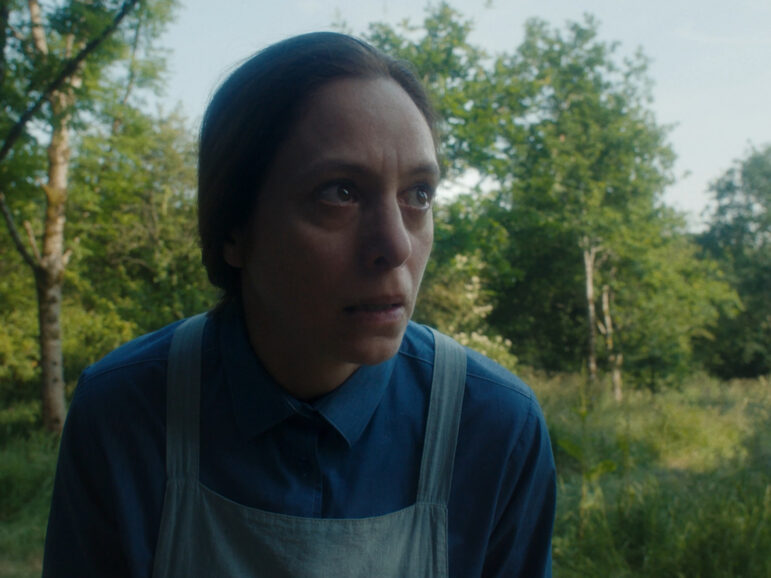
In terms of equipment, speed and reliability were essential — we couldn’t risk issues that might force reshoots or render footage unusable within our tight shooting ratio. I often use unique or vintage lenses where appropriate, testing them to ensure they perform in the specific visual scenario. In this case, I didn’t go for vintage lenses. I chose a trusted workhorse combination: the ARRI ALEXA Mini paired with Zeiss Ultra Primes, supplied by ARRI Rental London, who have supported me throughout my career. Having previously worked with Ultra 16 lenses on the 16mm short Seagull and Master Primes on the 35mm short The Sermon, I had confidence in the Ultra Primes’ versatility and broad focal range.
For this film, the widest lens we employed was a 12mm, which we used to create the Beast’s POV sequence — placing the audience, if only for a moment, directly in the creature’s perspective. When asking for help from a rental house, I think it’s important to keep the request reasonable — the Ultra Primes fit that bill. They’re excellent lenses, widely available, and at the time of our shoot, not the most in-demand, which made them a practical and accessible choice.
Filtration was especially important in building the look of the film. For daylight scenes, we used low grades of Tiffen Night Fog filters to introduce a subtle bloom in the highlights, allowing them to wrap gently into the shadow areas and soften contrast. For night sequences, we stepped up to heavier grades, helping achieve a classic, monotone filmic night.
Executing key scenes
The oppressive sun became particularly potent in the hanging scene. The strong sunlight and deep shadows heightened the sense of exposure — there was no hiding for Magpie or the villagers, and the light seemed to strip away any sense of comfort.
The hanging scene, in which Magpie is seized by the villagers to be executed, stands as one of the film’s most harrowing sequences. Accused of witchcraft, she is dragged to the hanging tree while the mob prepares to carry out vigilante justice. Just as the noose is readied, the pastor rushes in to stop their hastily planned execution.
Because the scene brought together multiple principal cast members and a supporting ensemble, it required meticulous choreography. A noose gag was central to the action, so comfort and safety were treated as the highest priorities. With practical effects, there is always a risk that technical considerations will overshadow the emotional core. To prevent that, we structured the sequence to keep fear, tension, and performance at the forefront, while integrating safety work seamlessly into the action.
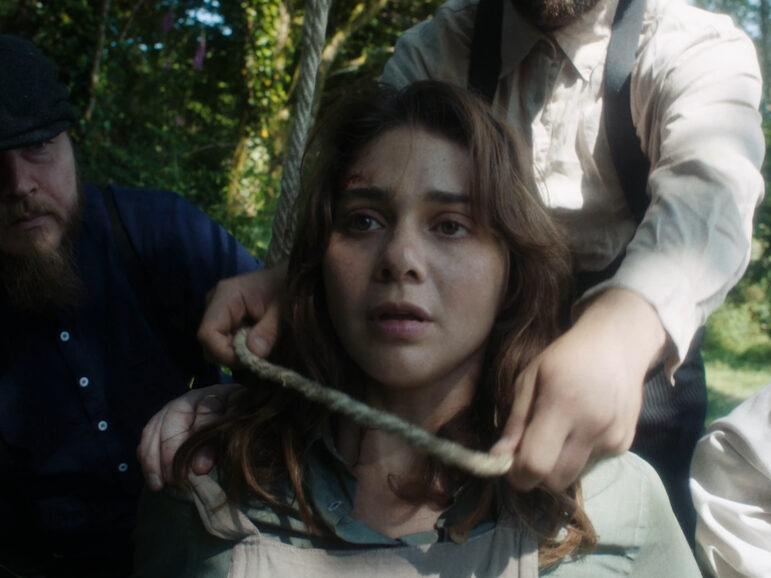
Given the time available, there was a temptation to simplify the blocking and break the action into isolated, single-purpose shots with little depth or background activity. Instead, we looked for opportunities to connect moments spatially, staging action in depth so that multiple layers could unfold simultaneously within the frame. This not only created a three-dimensional world but also brought an intensity that was pivotal to the scene. That said, one moment within the hanging sequence required a different approach.
The noose itself was placed around Emma’s (Magpie’s) neck by a supporting actor — a role ultimately filled by stunt coordinator Keith Wallis to ensure the prop was handled with precision. Early in development, we had planned to use a rope rig to depict the hanging in a single wide shot, but budget limitations ruled that out. Instead, we broke the action into a series of carefully composed shots, implying the execution while preserving both storytelling and performance.
We saved the wide for last, constructing the sequence from carefully planned moments. That approach ran counterintuitively to my instincts — I often prefer to start with the wide and then move into the details once the action is established. For this sequence, we shot the hanging details first to complete the technical work safely and efficiently.
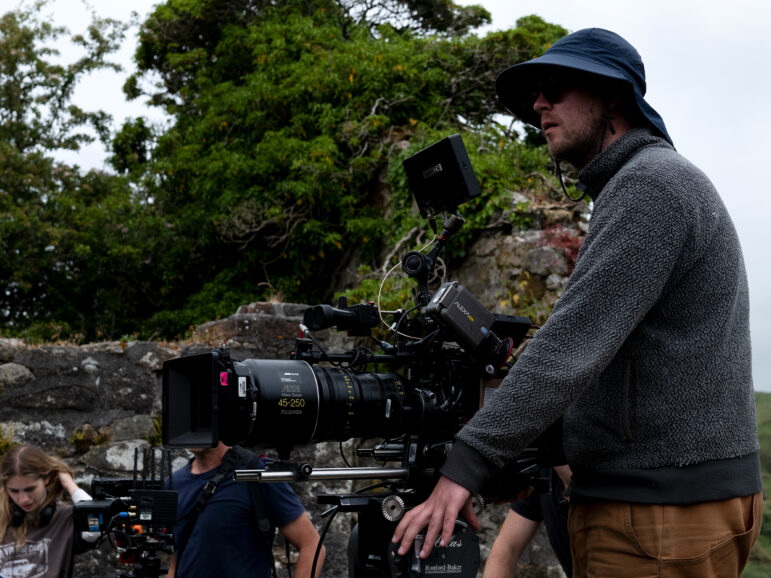
Throughout the film, and especially in this scene, I focused on ensuring the spaces we captured felt authentic and lived-in. Each image had to tell the story as simply and immediately as possible. When working quickly, there is a danger that locations feel too polished and disconnected from the world you are trying to create. For me, the real strength of staging lies in moments where actions overlap naturally and scenes unfold with their own rhythm — where camera, blocking, and location serve the story without drawing attention to themselves.
Working with Dean on his debut feature was incredibly rewarding. His strong instincts and clear sense of tone gave us the foundation to build a visual language that felt both authentic and cinematic — creating cohesion in space, mood, and movement. Together we explored staging, camera placement, and transitions with an eye toward crafting a unified cinematic world. As Dean moves into his next film, set in an entirely different landscape, I look forward to pushing those ideas further and discovering a new visual language together.