
REFRAMING THE CONCERT FILM
Erik Messerschmidt ASC takes us behind the scenes of monochrome music creation, Bono: Stories of Surrender, to explore the making of a bold, immersive and intimate concert film.
The passion to ensure a project came to life in glorious monochrome saw the filmmakers behind Apple TV+ production Bono: Stories of Surrender stand by their initial creative vision. It was a decision that paid off as the production—part concert film-part documentary, based on U2 frontman Bono’s one-man stage show on Broadway in New York—has now received an Emmy nomination for Outstanding Technical Direction and Camerawork for a Special.
“Apple were initially uneasy about the decision to shoot entirely in black-and-white,” says cinematographer Erik Messerschmidt ASC. “But our team agreed you can’t shoot for black-and-white and then expect it to look good in colour if you later wanted to explore that route. It’s a different language. After some discussion, all parties committed fully to monochrome.
“It was fantastic Apple gave us the opportunity to make the film in black-and-white. It was quite a strong choice and the film has a very contrasty look and stylised aesthetic. We wanted it to be as cohesive with what’s happening on stage and with Bono’s storytelling as we could.”
When Messerschmidt first received the call about the project from director Andrew Dominik, the DP was already aware of his reputation for bold and original creations, having first worked together when Dominik directed two episodes of Mindhunter. Their friendship had continued and this time Dominik’s proposition was for a concert film starring Bono that would venture into new territory.
Messerschmidt remembers that first conversation vividly. “Andrew called me and said, ‘Let’s have a coffee,’” he recalls. “I asked him what the project was, but he just insisted we meet in Los Angeles.” Over that coffee, Dominik outlined a vision that was equal parts concert film, documentary, and cinematic experience. The project would centre on Bono, but rather than purely being a recording of a live performance, the director wanted it to be in black-and-white and with a stripped-back honesty that contrasted to U2’s history of grand, arena-sized spectacles. Messerschmidt was instantly intrigued by a project that “sounded interesting and fun” in equal measures.
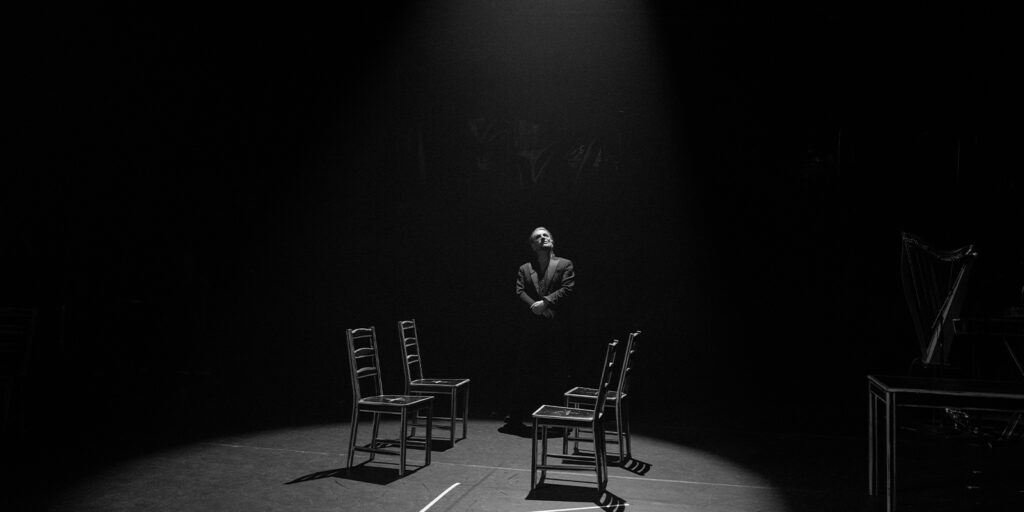
“Everyone came from the same place aesthetically and it was quite an intimate film to make as there were only five or six of us on the crew at any given time which was a welcome change,” he adds.
Shaping Dominik’s vision
The project initially leaned more towards documentary, with the live performance acting as a backbone. But as development progressed, the approach shifted, and instead of supplementing the stage show with documentary flourishes, the film evolved into a visual representation of Bono’s one-man show with a focus on his powerful presence and storytelling.
This demanded nearly four months of preparation in New York which Messerschmidt admits is “an unusually long prep period for a project that required a few weeks of shooting”. After New York, they moved to Italy to film climactic sequences in Naples, and later to Dublin to capture verité-style footage of Bono in his home city. “We spent weeks in Dublin with Bono,” Messerschmidt says. “And although none of the Dublin footage made it into the final cut, it gave us a new perspective on him and the chance to understand him in a more intimate way.”
Aesthetic instincts
As well as starring in the film, Bono played an active role in shaping its look and feel. Famously attuned to aesthetics, the artist’s awareness of how he appears on camera impressed Messerschmidt. “He’s extraordinary,” says the cinematographer. “He was very curious about how the film was looking and what was going into it. He’d come back and look at the monitor and we had discussions around the lighting, camera movement and what lenses we were using and how they would capture him as portraiture versus performance.
“Bono understands photography and knows when he looks best on camera. That rare kind of self-awareness became a valuable tool for the crew as we worked to capture something both intimate and cinematic.”
Messerschmidt shot the film on the ARRI Alexa 65 with ARRI DNA lenses, some of them modified to create unique flare effects. As desired by the DP and Dominik, the results were bold, dramatic, and sometimes deliberately imperfect.
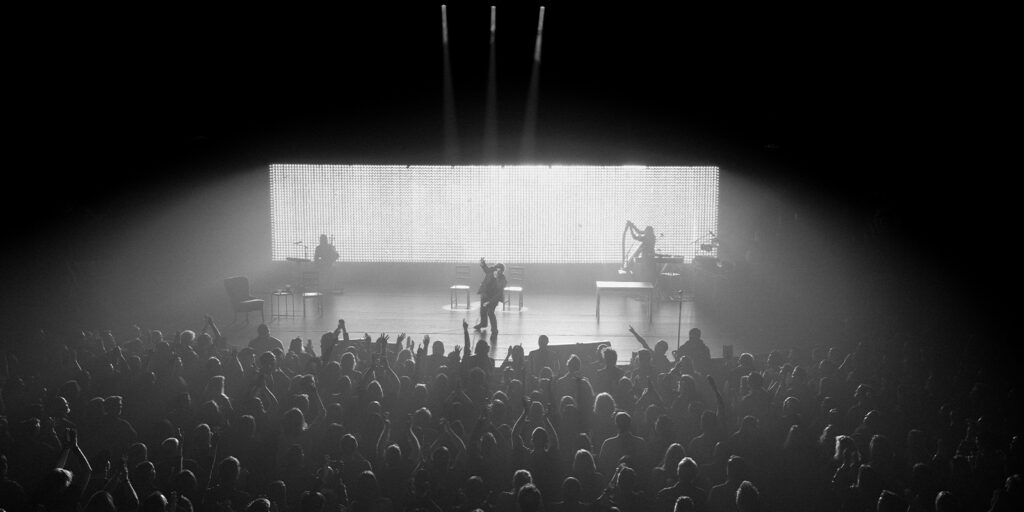
“There’s also an LED screen behind Bono throughout the performance,” he says. “That screen isn’t part of the live stage production but Andrew thought as a visual storytelling element it would bring cinematic grandeur into the performance without contradicting Bono’s stripped-back stage presence.”
Reinventing the concert film
The creative and technical process required Messerschmidt rethink how to photograph an on-stage performance. Most concert films are shot with long lenses from the edges of the crowd, keeping cameras out of the performer’s way. “This tends to create a sense of distance but we wanted the opposite,” says Messerschmidt. “We wanted intimacy and for the camera to be right there with him.”
This meant breaking traditional concert filmmaking rules. Rather than being confined to the perimeter, cameras were instead placed on stage, moving close to Bono during select parts of the performance. To maintain intimacy, Messerschmidt shot on prime lenses rather than zooms. “We even did some performances with no audience at all,” he notes, “meaning we could get right up close without worrying about breaking the illusion.”
The result allows fans to feel closer to the artist than they would normally while elevating the experience through cinematic visuals.
Leaping into immersive cinema
One ambitious aspect of the project which enhanced the intimacy further still was a special companion piece to the film; a version audiences could experience in Apple Immersive Video using the Apple Vision Pro headset, incorporating 180-degree video, spatial audio, and mixed media elements.
“It’s the first full-length film produced for the Apple Vision Pro and has elements of stereo photography, regular flat 2D photography and animation,” elaborates Messerschmidt. “It was a really exciting process to go through and learn about and completely different to anything I’ve done before.”
The bold concept of incorporating this immersive capture required an exciting and complex technical process. “The immersive camera Apple provided had completely different requirements to the Alexa 65,” Messerschmidt explains. “It needed more light, and its effectiveness depended on proximity. If you put it at the back of the theatre, the 3D effect wasn’t impactful. But place it in front of Bono, and suddenly it felt transformative.”
Messerschmidt carried out tests with the camera at Apple’s campus, examining how it responded to light, how it could and could not move. “In traditional cinema, you control the frame,” he says. “You’re telling the audience what to look at. In immersive filmmaking, that frame disappears, so if you pan the camera, the viewer feels disoriented. The role of an operator changes completely.”
When determining the best use of camera movement for the film, he opted for subtle push ins, giving the audience the sense of leaning closer to Bono. Occasionally, the immersive 3D camera was mounted directly above the Alexa 65 to capture both formats simultaneously. By integrating 2D footage from the traditional film, intercut with three-dimensional animation the immersive version of the film creates a unique hybrid cinematic language.
Despite admitting he was sceptical and critical of immersive cinema before this project, the experience has changed Messerschmidt’s viewpoint. “Executed correctly, this technique can be extremely powerful,” he adds.
The cinematographer sees Apple Vision Pro as more than a gimmick. “If you want to put someone in a place they maybe can’t normally go—the summit of Everest or the bottom of the ocean through to a football match or special concert performance—I can’t think of a better tool,” he says. “You have to rethink storytelling entirely. It’s a new language and that’s what makes it so interesting.”
From Mank to music
Working on the immersive grade with supervising colourist Ian Vertovic at Light Iron presented new challenges to embrace. Vertovic—who designed LUTs for David Fincher’s Mank which Messerschmidt lensed and for which he won an Academy Award—was already familiar with the requirements of monochrome.
Although lessons were learnt from Mank, Bono: Stories of Surrender was stylistically different. “On Mank, we obsessed over every detail of how light played on faces, on backgrounds, on sets. This time, it was different. Bono was on stage and there are only so many ways you can light a face in that environment. It became freeing in a way—we would light for the moment and not overthink it,” says Messerschmidt.
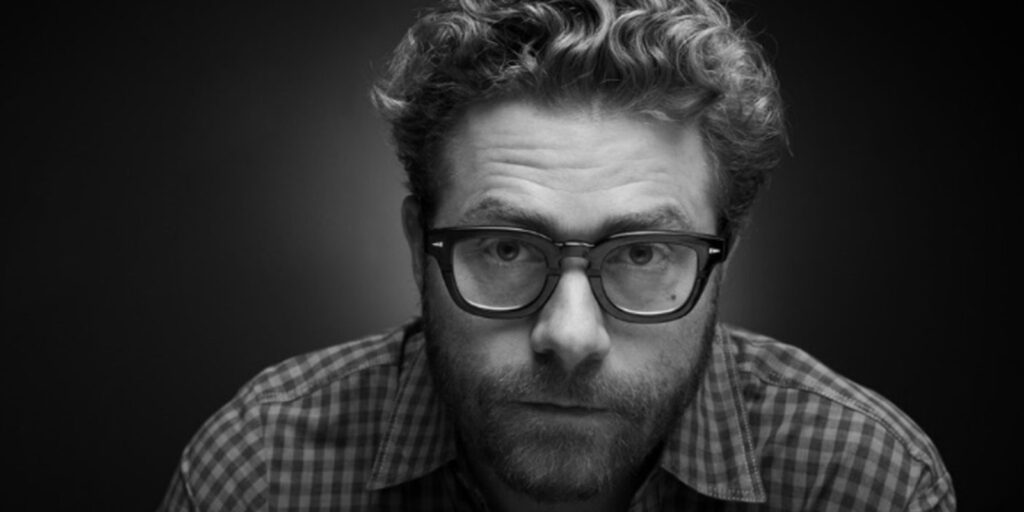
“It was about riding that line between being striking and revealing everything we needed to see. The goal wasn’t just style—it was about isolating Bono in a way that matched the reflective and personal quality of his performance.”
Returning to world of monochrome also reinforced Messerschmidt’s love for the medium. “It simplifies things, but it also challenges you to think about texture, shape, and contrast in ways colour doesn’t. It can be very honest.”
The team’s hard work and dedication culminated when the film premiered at Cannes Film Festival in May, also marking the first time Messerschmidt has premiered a film at the festival. “It was extraordinary,” he says. “What an honour to show a film in front of an audience so passionate about cinema. The energy at that festival is unlike anything else; it felt incredibly special.”
The filmmakers are proud of the balance between restraint and spectacle the film conveys. Bono designed his live stage show to be minimal—offering a personal look into his life, family, activism, faith and journey as a musician—and to be a departure from U2’s renowned elaborate, large-scale productions. By introducing some of that grandeur through the use of light, screen design, but also adopting an intimate approach to the camerawork, they welcomed audiences into an honest and personal performance and immersive cinematic experience.