CHASING SUCCESS
Editor David Barker outlines how his collaboration with Josephine Decker led to success in Sundance Film Festival outing Chasing Summer.
At what point in the process did the film truly “find itself” in the edit and how different did it look from the version you imagined on set?
Once we began to create emotional space for the character which we did using archival material. Because the film was shot in just 19 days there wasn’t a lot of connective material or even simply shots of the main character not speaking. We needed to create emotional space that would allow the audience to invest in the character and for emotions to be absorbed, and we found a way to do that using archival material. In this case, because the character was supposed to have been working in disaster relief programmes around the world, we used storm footage to create a feeling of her interior space as she negotiate this new aspect of her life.
Was there a specific scene or sequence where the edit became the storytelling engine rather than the script or performances?
This is the sixth film I’ve edited with Josephine Decker, the director, and our approach is very edit-centred. She came from documentary and I came from an approach to editing that I learned from Jean-Pierre Gorin, who had directed seven films with Jean-Luc Godard. It was an approach where you really look at the material and figure out what the film is in the material rather than trying to make it make the script work. So from moment the assembly was finished, the edit was the storytelling engine overall, though some scenes were brilliantly staged by Josephine in single shots – and so in those cases editing took a back seat to performance and staging.
How did you manage rhythm and pacing when balancing emotional intimacy with narrative momentum in the edit?
In this case, the early cuts were too fast – there was no space to absorb emotions and for things to resonate with in the character. So, as I mentioned above, we created space for that to happen using archival material simply because there was no material do that with in the rushes.
With Josephine’s movies, I am always doing a lot of work on sound design at the same time
What role did archival, found, or non-traditional material play in shaping the structure of the film and how did you integrate it into a coherent timeline?
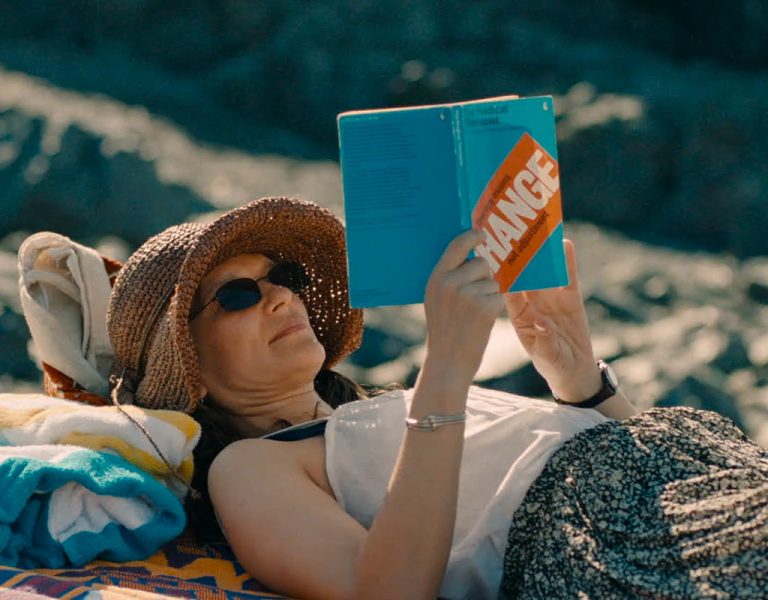
I talked about this above, but in terms of integrating it music plays a big role and carrying that over in occasionally voiceover the opening sequence has Jamie’s voice having an orgasm and it’s over storm footage and so we create a kind of strange question there of what the relationship is. Later on in the film will use music to bridge a moment of drama, where the feeling starts to go into Jamie’s interior and then have that carryover into the archival.
How early were editorial decisions influencing other post-production elements like sound design, music, or visual effects?
With Josephine’s movies, I am always doing a lot of work on sound design at the same time, because she works a lot with subjectivity in her films and that is often dramatised through sound. We like a lot to work with non-naturalistic sound as well. And as far as music goes, Josephine’s films always have a dance between music and what’s on the screen. In this case there were a couple important moments where we tried out a piece of music and it altered a scene in a way that really affected the whole film. There’s a fight scene at the beginning of the third act where we brought some very unexpected music into it and it proved very important not only to that scene but to the tone of the film.
Did the edit reveal anything unexpected about the characters or themes that wasn’t apparent during production?
For me an edit is a lot about trying to figure out what the film is about on a deeper level, and so when we got to a place where we understood that it was a film about a woman who is letting herself experience pleasure and have it all, that gave us a way to orientate the edit – and that came about half-way through the process.
Ultimately, difficult cuts are the director’s call, but we used weekly screenings to get a sense of how things were working
How did collaboration between editor and director evolve over the course of post-production, particularly when difficult cuts had to be made?
Well, this is our sixth film together, and so it was all hands on deck, both because of the short timeframe and because we’ve worked out a way of working together over the previous five films in which Josephine is deeply involved in the edit process. Ultimately, difficult cuts are the director’s call, but we used weekly screenings to get a sense of how things were working, and since we’ve worked together a lot we’ve come to trust each other’s instincts and input. It was a very difficult process in terms of the timeline, but a very easy process in terms of working together.
What were the biggest technical or creative challenges you faced in post and how did your editing tools help you work through them efficiently?
Because of the intense timeline there were sometimes several people working on the film at the same time and using Premiere Pro and LucidLink were very helpful for that. Sometimes we were in different cities and even in different countries and the LucidLink allowed us all to be synced up at all times without any conflict or need to email cuts back and forth.
Looking back, what’s one editorial decision you now see as pivotal to the film’s final emotional impact?
Because the script was written very quickly on a deadline to shoot the film the following month, there was not really an ending to the film when it was shot. When we got clear about what the film was about, Josephine had an idea for an ending for the film that worked by moving things around, repurposing some material and adding a bit of ADR. I like this ending quite a bit because it is both very true to the character and story, and came out of the rewriting aspect of editing which is very central to Josephine and my work together.