SERVING THE STORY
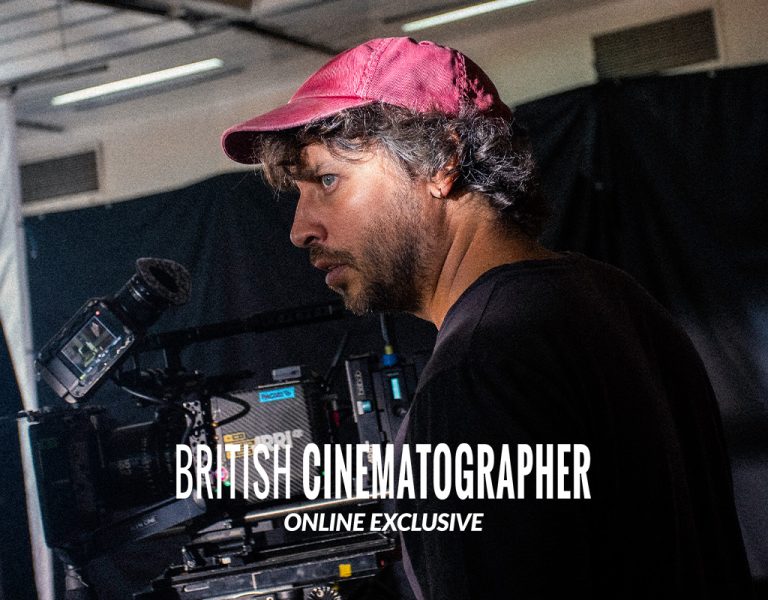
Andrew Butler explains how he used the atmospheric setting of Guernsey to bring a centuries-old tale to modern audiences with short film Albert.
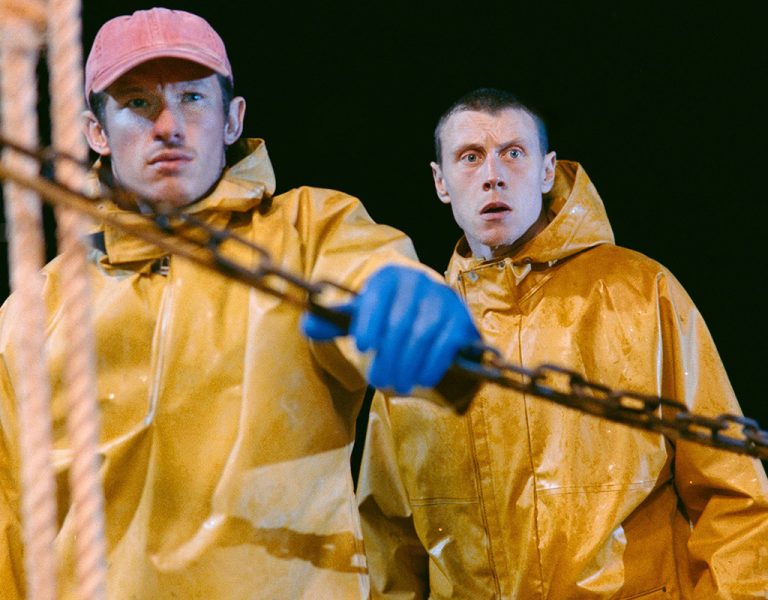
Set against the windswept cliffs and secluded beaches of 17th-century Guernsey, Albert follows the tale of Sarre, a reclusive man in possession of a forbidden grimoire: Le Petit Albert. Bound in secrets and superstition, the book holds a strange power that begins to weave its influence through Sarre’s life. When the island’s righteous rector learns of Sarre’s discovery, he urges him to renounce the book and seek salvation. But the book refuses to be cast aside. Burn it, bury it or drown it, still it returns, unleashing dark consequences and leaving Sarre with a choice to confront.
Can you give a précis of the production and how you got involved with it?
Director Josh Fletcher and I had collaborated on several projects before, and we were eager to dive into a narrative drama project together. Josh is originally from Guernsey, and was very keen to tell a Guernsey-centric tale that would showcase the island, as well as the creative talent that reside there/are from there originally. During lockdown, he came across Le Petit Albert, a forbidden 17th-century ‘grimoire’, which sparked the idea for a folklore-inspired story.
After Josh had drafted the first version of the script we travelled to Guernsey to scout the coastline, and I instantly fell in love with the island. On our first morning there, we walked to a clifftop at sunrise and were greeted by a hauntingly beautiful mist rolling in from the sea.
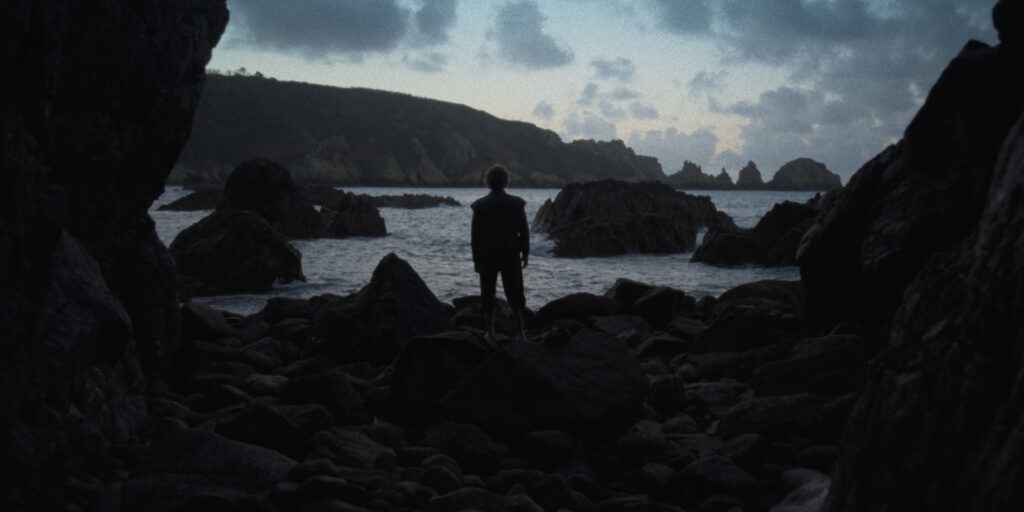
I had never worked on a period drama before, so I was excited by the chance to create something that truly felt “of its time” and deeply connected to its landscape. From the beginning we wanted the visual tone of the film to reflect both the harshness of the era and the elemental struggles faced by our protagonist. I’m a huge fan of Jarin Blaschke’s work, which I used as constant inspiration when creating moodboards and other visual references.
We’re looking to take the tone, visuals and lessons learnt from this shoot into longer form projects based on similar themes, and are currently exploring our next options.
Which cameras and lenses did you use and why?
Guernsey offered a stunning and atmospheric backdrop for Albert, but it also came with its share of logistical challenges that influenced our equipment choices. With no local rental houses available, every piece of kit had to be carefully planned from the outset.
All props, lighting and camera gear needed to fit into two transit vans for the eight-hour ferry crossing, so space and efficiency were paramount. We knew a large portion of the film would be shot outdoors, and with wet weather predicted, it was essential to bring two camera bodies in case of any technical issues; having a backup was non-negotiable.
We needed a camera that was lightweight, budget friendly, reliable, power efficient and capable of delivering cinematic results without needing to rely heavily on third-party accessories. After looking into a few different options, we decided to go with the Sony FX6. The camera packs a lot of features and an incredible picture into a small body. The compact size allowed us to stay agile on set which was crucial given our tight schedule and limited crew. We were able to pack two FX6 bodies, complete with handles and accessories, into one peli case. On a shoot where every case had to earn its place, that made a real difference.
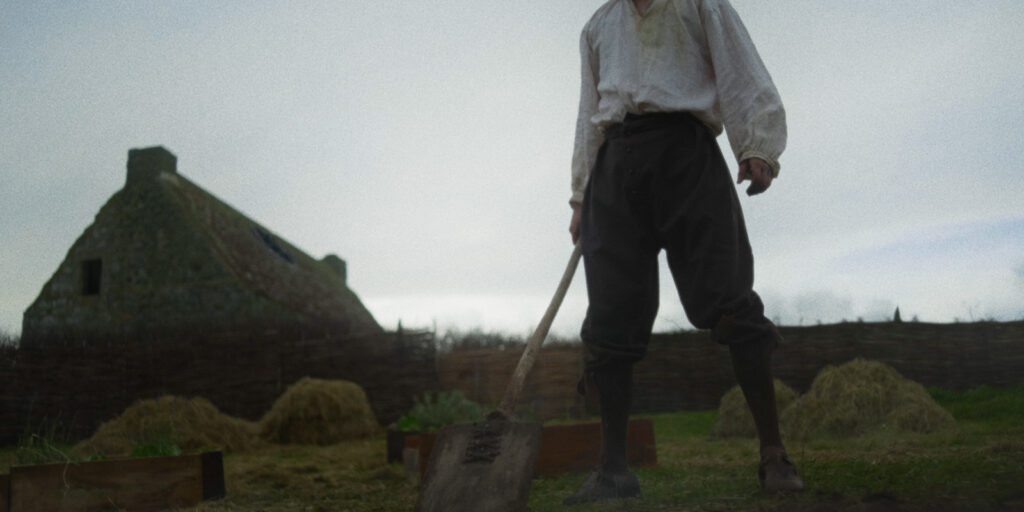
We paired the camera with Zeiss Contax lenses. Josh had used them for a previous commercial project and really liked them and was keen to use them on Albert. Their gentle softness and beautiful rendering of skin tones suited the period drama aesthetic perfectly, helping to give the film a distinctive visual character.
Can you give an example of a scene or sequence that was challenging and how you overcame it?
One of the key moments towards the end of Albert takes place at night, when the protagonist, Sarre, wakes to find an apple tree in his garden fully ablaze. Everything was going to plan, and we began shooting the scene at blue hour. I’d always wanted to retain a hint of colour in the sky, as the fading blue tones would contrast beautifully against the flames and add depth to the scene compared to shooting in total darkness.
Unfortunately, the prop tree didn’t burn in quite the way we had hoped due to wind and weather, and the gimbal shot we had planned to reveal the tree and Sarre’s reaction in a oner was not possible. We had to think on our feet and shoot several VFX plates whilst chasing the light, replicating fire flicker effects with our lighting. Through quick thinking on everyone’s part, we managed to get the VFX plates shot very quickly, and still had some beautiful blue hour light in the sky.
Several months later, via a chance encounter with his dog, I met VFX artist Wes Waldron. He had just moved to Brighton and had recently finished working on Severance – I mentioned Albert to him and (rather cheekily) asked whether he might be able to help us out. Thankfully Wes said yes and jumped on board to take care of the VFX side of things. He did an incredible job bringing the burning tree to life, along with other subtle VFX work throughout the film.
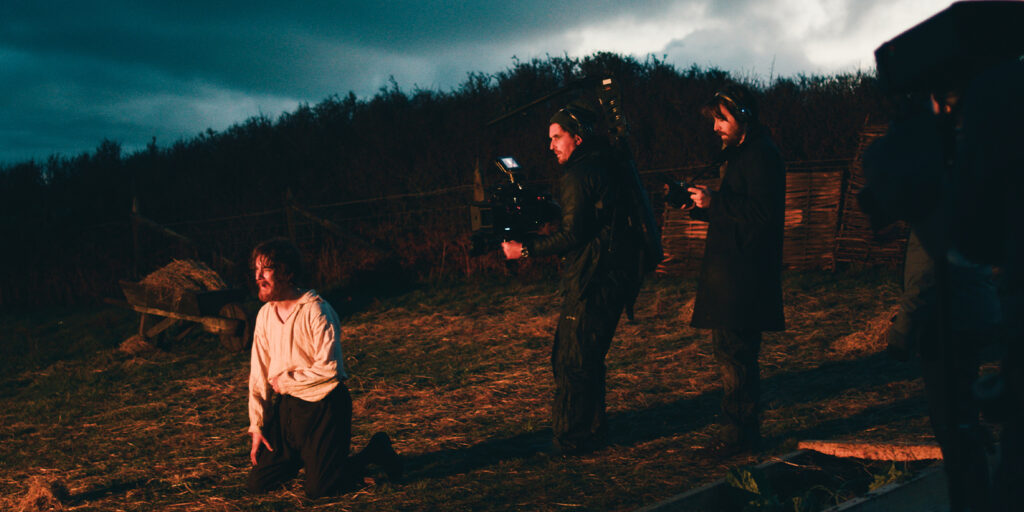
The tree scene is such a strong element to the film, and the way we achieved it shows how important adaptability and a bit of speculation is in filmmaking.
Which lights did you use and what informed that decision?
With Albert, we set out to create a dark, moody atmosphere that still felt grounded in naturalism. The story is set in 1655, a time when fire and daylight were the only available light sources, so capturing a sense of realism was central to the visual language of the film.
The cottage we shot in didn’t have power and a generator wasn’t practical or affordable, so our on-set power was limited to one 15A fused circuit from an old domestic cottage next door.
To utilise the power we had available to us, we used LED fixtures throughout. Inside the cottage, we had a long dolly shot that starts wide, moves into a medium close-up/close-up, and then pulls back to a wide again. Because of this camera movement, all lighting had to come from outside or be hidden within the ceiling.
We created a sense of daylight streaming in from outside using several Aputure 600Ds through diffused windows, and we tucked Aputure MC Pros behind the wooden ceiling beams to add subtle pools of light and delicate backlight accents.
Using open flame extensively wasn’t practical or safe, so we lit the night-time fireside scene with an Aputure F22C and around eight MC Pros that we hid all round the cottage to help extend and supplement the main fire flicker effect.
For exterior scenes, we relied mainly on natural light, shaping it with negative fill and bounce.
Which part of the production are you most proud of and why?
I’m really proud of how we stayed true to Josh’s vision and ethos for the film. Since it’s a Guernsey-based story, he was always passionate about involving local talent and people originally from Guernsey wherever possible. As a result, well over 50% of cast and crew were Guernsey born or based, including the entire lighting team.
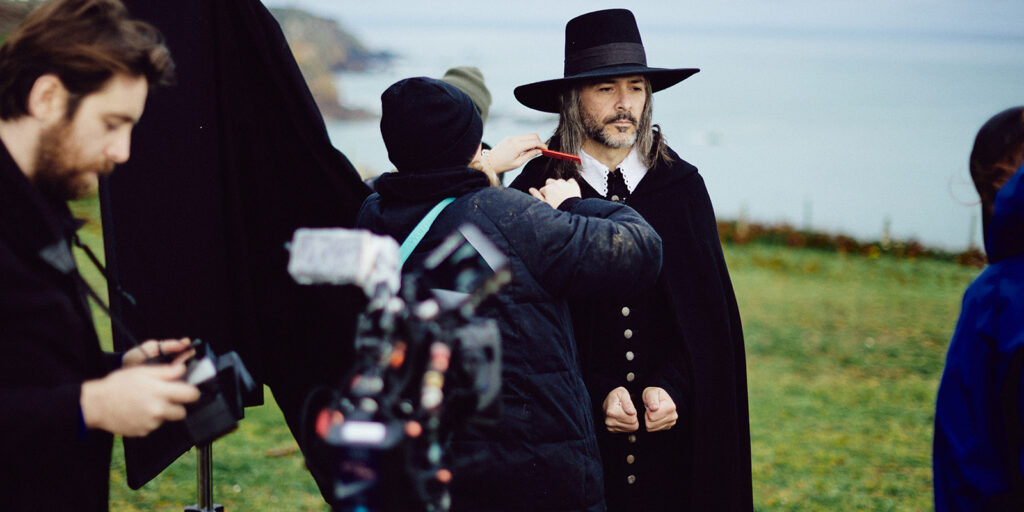
Our gaffer, Anthony Ford-Marsland, was someone who I hadn’t worked with previously, which can sometimes be a gamble, as we wouldn’t have time to meet in person or do any test shooting together before the shoot dates. As soon as we spoke over Zoom, it became clear he really knew his stuff and would be perfect for the role. He lead the entirely Guernsey based lighting team brilliantly, and I knew I was in safe hands with them throughout.
Creating a 17-minute period drama with a small crew on a small island was always very ambitious. The entire crew gelled immediately, and worked incredibly hard throughout some challenging weather conditions and tricky locations. The production design, art direction, costume and makeup all looked incredible and the performances were so strong that it made my job so much easier. Everywhere I pointed the camera looked great.
I feel we’ve managed to create a short film with visuals and production values that far exceed its modest budget.
What was the biggest learning curve for you on this production and what has it taught you going forward?
In recent years, I’ve focused more on the management side of cinematography, and that was a learning curve I continued to apply to this shoot. It’s one thing to strive to create engaging images, but without strong communication and leadership, those ideas can’t be realised.
No matter how much you prepare for a shoot, something will always change or go differently to how you planned, and Albert was no different. In these situations, making quick, confident decisions on set is vital. I really believe indecision is far worse than compromise and can quickly derail a schedule. Quick problem solving often determines whether you finish a scene or need to return for pickups. Every project will inevitably involve a trade-off somewhere down the line, so it’s about knowing what to prioritise and when to adapt. Building trust and fostering an atmosphere where everyone feels valued is key, especially on passion projects like this.