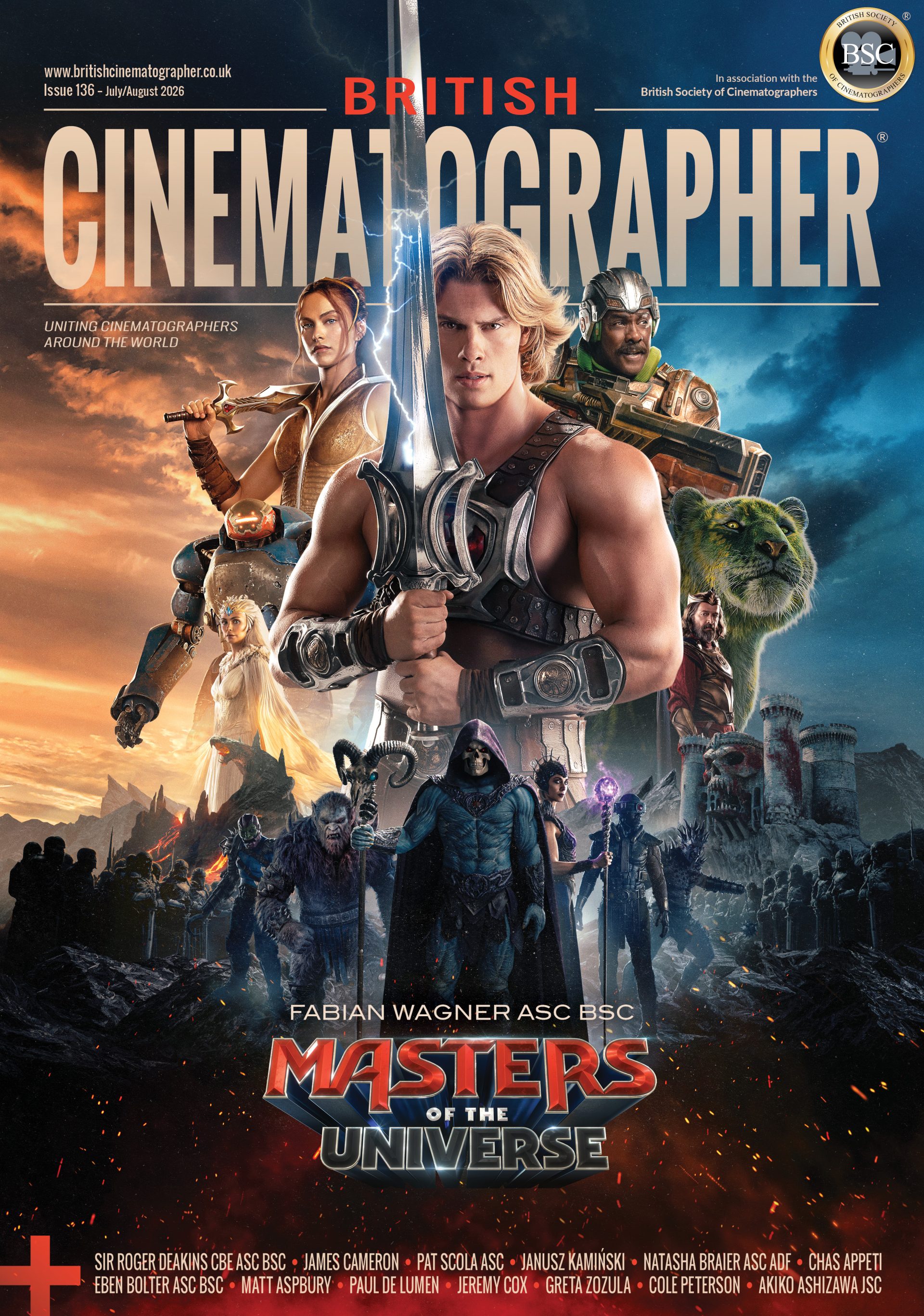

BY THE POWER OF GRAYSKULL
Almost four decades after Dolph Lundgren donned the Sword of Power, He-Man is back in live action with Masters of the Universe – which proved a dream come true for DP Fabian Wagner ASC BSC.
The words “dream project” are bandied around a lot in the film industry, but for Fabian Wagner ASC BSC, Masters of the Universe was exactly that. This latest outing for the world-famous He-Man, the second live-action adaptation after the Dolph Lundgren-led movie in 1987, is a coming-of-age tale that sees young “runt” Adam find his true power – the Power of Grayskull – and become the planet-saving hero he’s destined to be. It’s the latest in a franchise that began in comic book form over 40 years ago, with the German cinematographer a fan since pretty much day one.
“I had a personal connection to He-Man long before this project came along,” Wagner admits. “I was born in 1978, which meant I was exactly the right age when it first appeared – it really was my toy. In fact, it was pretty much the only toy I ever had. I didn’t really have Star Wars toys, I only experienced those through friends. He-Man was mine, I loved it.”
For many He-Man fans, this film – arriving almost four decades after the first and only other big-screen live-action outing – has been a long time coming. Yet that’s especially true for Wagner, whose professional involvement with He-Man first began almost 10 years ago. “The project first came onto my radar around 2018, at a time when it was at a different studio with a different director,” Wagner recalls. “They reached out about potentially getting involved, and my immediate reaction was, ‘This is a dream come true.’ I was very keen. But it didn’t quite get off the ground.”
By the time the project resurfaced, scheduling issues prevented him from signing back on. “About a year later, Masters of the Universe was at another studio, with plans to shoot in New Mexico,” he continues. “At that point, though, it just wasn’t feasible for me personally. My wife was just about to have a baby, and it simply wasn’t the right moment to take on something that would require being away on location for an extended period. So I had to step away, even though I very much wanted to do it.”
In a twist of fate, though, the project shifted form again, opening the door for Wagner to come on board – not only signing on to his dream movie, but doing so with a director who was equally passionateabout the franchise. “After I turned down the production, it moved forward, but then stopped again after a few months. After that, I didn’t hear anything for quite a while. Then, eventually, I heard that Travis Knight had come on board as director. I knew his work from animation – I’m a big fan of animation – and I really admired what he had done there. I hadn’t yet seen Bumblebee at that point, but I knew of it and knew it was well received.”
He continues, “I was shooting in Las Vegas at the time, so I reached out and suggested we meet. I flew over to Portland, and we sat down for a coffee. It was a really relaxed meeting. We talked a bit about the film, but mostly about family – he’s a family man, I’m a family man – and that was actually where we really connected. It felt very natural. A few weeks later, I got the call asking if I wanted to shoot the film. Of course, I said yes.”
Mastering the universe
So began a fruitful working relationship, with the pair’s shared love for the source material organically developinginto a shared vision for how to bring the world of He-Man to life.
“From the very beginning, it felt like Travis and I were on the same wavelength,” Wagner smiles. “That doesn’t always happen so quickly, but here it did. The project itself was incredibly exciting because it offered the opportunity to build something new – a world that audiences hadn’t seen for a long time.
“The film sits in an interesting place tonally. It’s partly a superhero film, but also a coming-of-age story, and something else besides. That gave us some freedom visually. We wanted something that could be colourful, cheerful and fun, but also emotionally engaging and visually sophisticated. It needed depth, but also energy. In a sense, it felt like creating a new playbook – defining what this cinematic version of He-Man could look like. Because we were aligned creatively from the outset, the process became quite organic. It evolved naturally through collaboration with the whole creative team.”
While creatinga “new” playbook, Wagner and Knight still “looked back quite extensively at what came before”, particularly the comics. “Revisiting them as an adult was fascinating because I had only really known them superficially as a child,” he muses. “Looking at them more closely, they became a rich source for colour, framing and composition. That became my main point of reference visually, while Travis anchored us in the broader mythology of the franchise, of which he was more knowledgeable than me. Together, that allowed us to honour what people love about He-Man while still creating something fresh.”
Constructing Eternia
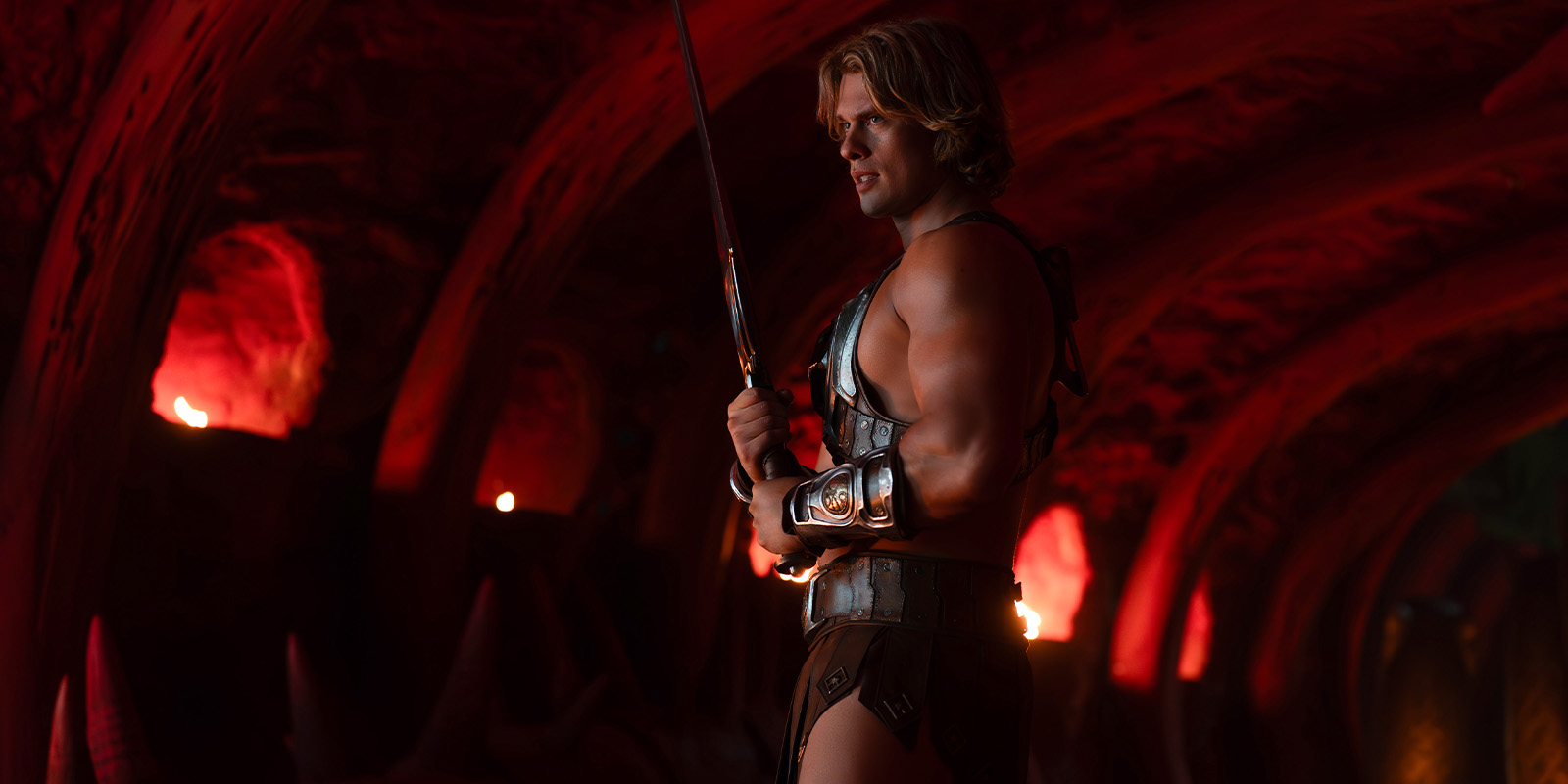
Key to building the visual language of Masters of the Universe was perfecting Adam’s world – the famous Eternia – which stands proudin the opening segment of the film, before an attack by Skeletor’s army unceremoniously razes it to the ground. Home of the iconic Castle Grayskull, a place that means so much to fans of the franchise, getting that right was essential – and as expected, colour played a huge role.
“A significant amount of preparation went into designing the different worlds, but the process itself was actually quite simple once we had defined the core ideas,” Wagner explains. “For me, it really started with the art department. There was a lot of discussion with the team about what colours we were using for pre‑destruction Eternia, what colours we were using for the post‑destruction version, and how those would contrast with the real world. Once we had those conversations and Travis was happy with the overall direction, we translated that into something practical.”
When fleshing out each of these worlds, what Wagner found “really enjoyable” was the “scale of variation” they managed. “We weren’t just designing one world, we were designing multiple,” he says. “We had the real world, which is where Adam grows up, and then we had Eternia before everything happens, which is this lush, vibrant place. Then we had the post‑destruction version, which becomes much darker, more ravaged. Being able to move between those spaces gave us a lot to play with visually.”
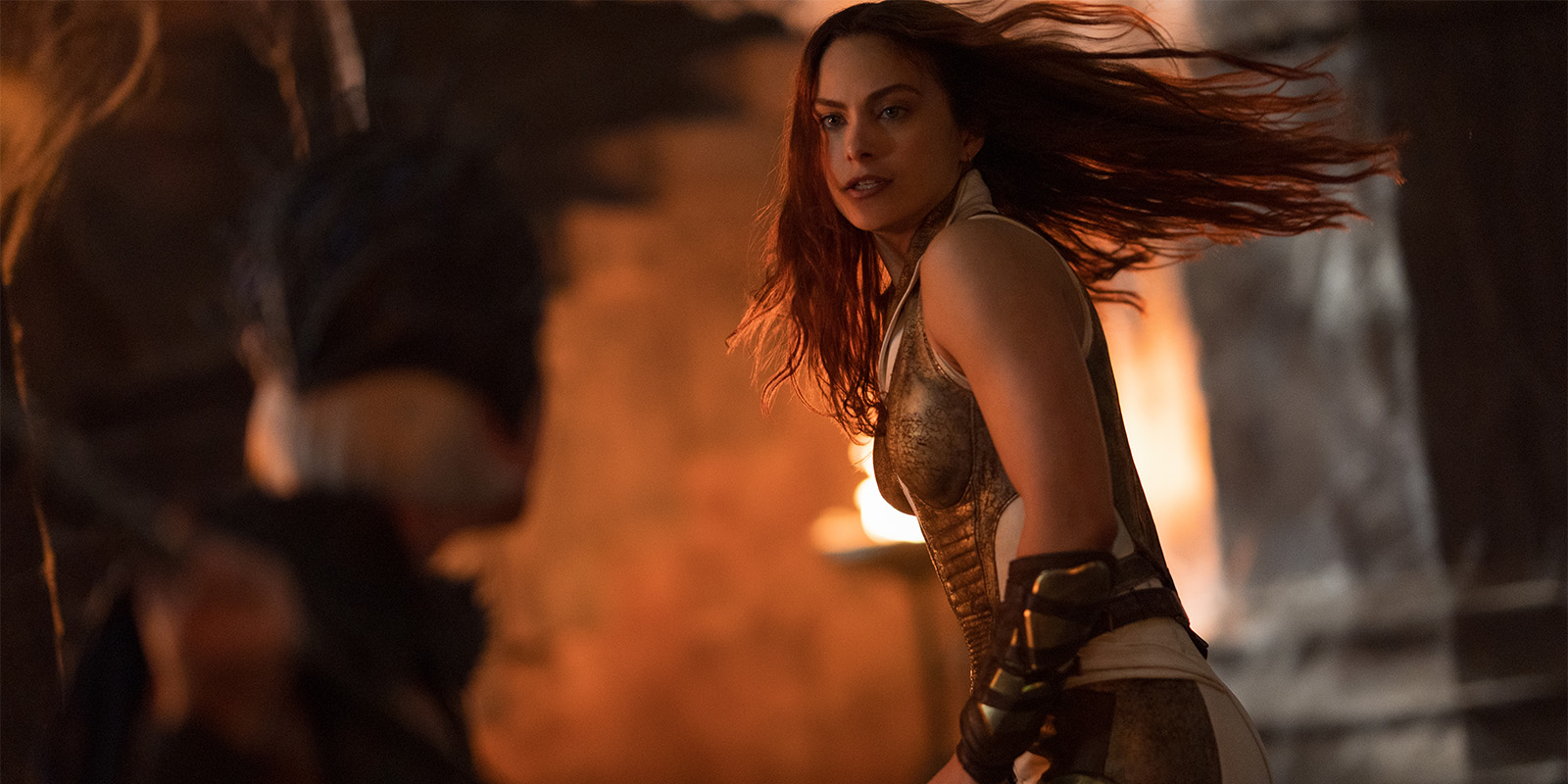
Relying on the Sony Venice 2 throughout the shoot, which offered “a lot of flexibility in terms of format and image quality”, LED lightingwas another core element in constructing Eternia. “In pre-destruction Eternia, we used so many different colours and we had so much interactive lighting,” Wagner explains, “so the controllability of LED was very helpful.” Then, for post-destruction Eternia, the environmental lighting was much darker, more “starved of colour”, with brightness more likely to come from the eyes of Skeletor or the staff of Evil-Lyn than the planet itself.
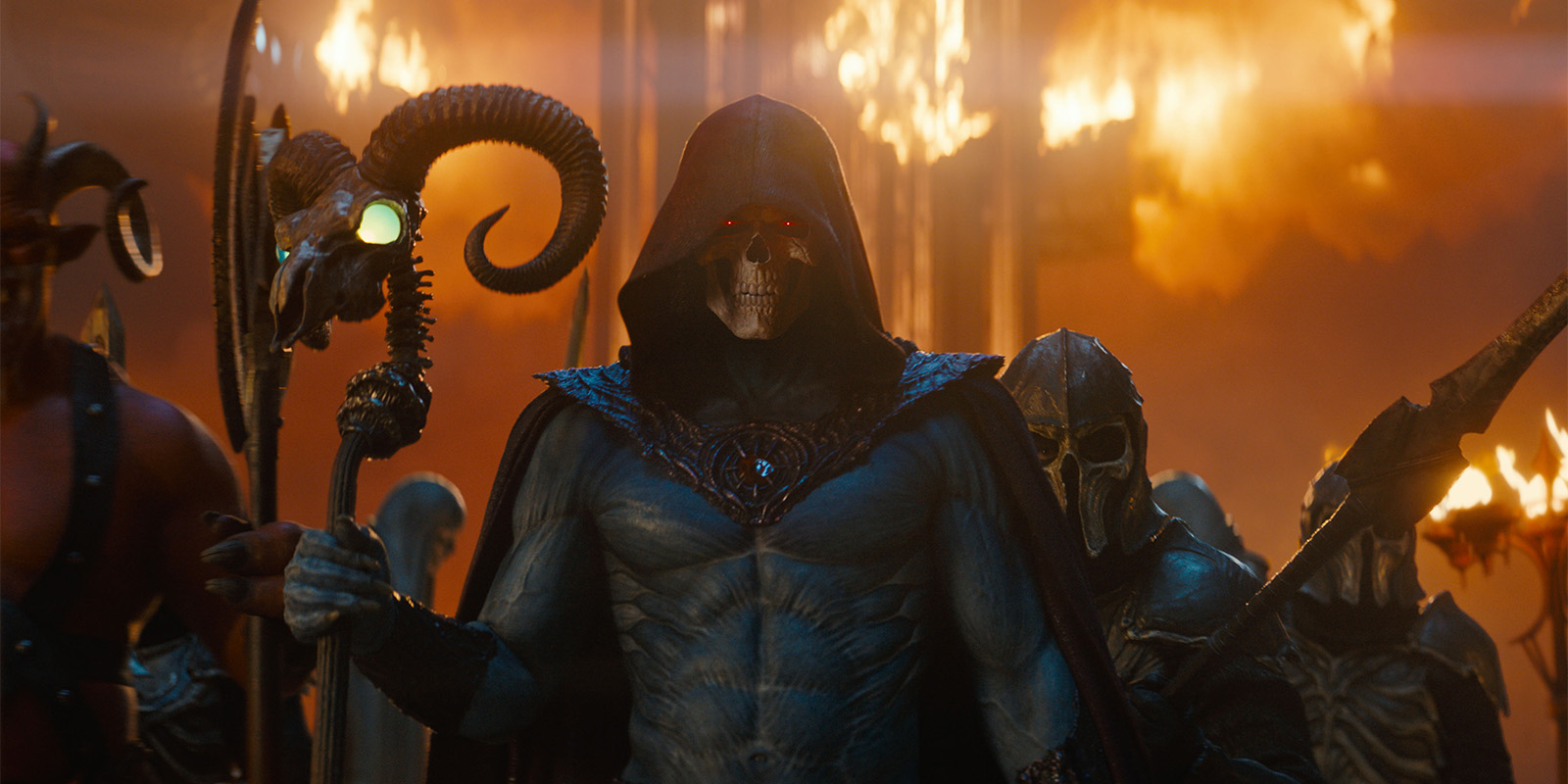
That contrast – which makes Eternia a completely different place without losing its core identity – was important not just visually, but narratively. In clearly outlining what Adam loses when his home planet is attacked, how it falls from utopia to dystopia, the stakes are raised for Galitzine’s lead character and for the audience.
Before Adam can fight back and reclaim his home, though, he has to find a way back there, after being banished to Planet Earth during Skeletor’s attack (unlucky, Adam). Spending his formative years physically in the US, but with his mind very much back in Eternia, it’s clear Adam hasn’t quite settled on Earth – constantly dreaming about his life before the banishment. Again, Wagner wanted to bring about a disparity between the euphoria of pre-destruction Eternia and this new, slightly less exciting planet.
“When it came to building the visual language of Earth, I was very conscious that it needed to sit in contrast to Eternia,” Wagner explains. “Earth is Adam’s reality for many years, but it’s also a place that feels slightly disconnected from who he really is. So visually, I always thought of it as something that should feel more subdued – almost a bit dull in comparison to Eternia. It lacks the vibrancy and colour of the place he feels drawn to but can’t quite remember.”
“Lighting played a big role in achieving that feeling,” Wagner continues. “On Earth, we leaned much more towards traditional sources – a lot more tungsten units which naturally gave us a softer, warmer, but also slightly more muted quality to the light.”
Wagner opted for JDC Xtal Xpress anamorphic lenses when filming the Earth scenes, “older lenses with a more vintage feel” that helped to add a sense of ambiguity to when the story takes place – with Wagner wanting those scenes to pass as “2026, 2015 or 2004”. “That combination of lower contrast lighting, more traditional tungsten sources and those older anamorphic lenses created a visual language for Earth that feels grounded but doesn’t have the same colour or clarity as Eternia.”
And… action!
While one very memorable action sequence takes place on Earth, as a monster hunts down the Sword of Power, pursuing Adam and his gang across a highway with destructive consequences, once Adam uses that sword to travel home, things reach a whole other level. Our protagonist evolves into a hero and steps up his assault on Skeletor and his motley crew, with the cartoonish action fully kicking into gear – yet even within a heightened environment, the fight scenesremain tangible, each superpowered punch reverberating through the screen. For Wagner, it was important to combine outlandish visualswith “a little bit of grit and a little bit of rawness”.
“Part of the excitement of the project was that we had the opportunity to create something that could exist somewhere between a superhero film and something else,” he muses. “It has that heightened, almost graphic-novel quality, but it also needed to feel grounded enough that the audience can connect to it. It can’t be overly stylised – you need a sense of weight and impact.”
In terms of the setup for these scenes, Wagner was “very fortunate” to have access to a wide range of tools, using whatever felt appropriate in the moment – Steadicam, cranes, handheld rigs, DJI Ronin setups – to add “a lot of variety” to the visuals. This allowed the team to “stay flexible and respond to the needs of the story” whenever thingswent down, with Wagner collaborating closely with Knight and stunt coordinator Liang Yang to design “some fantastic sequences”. “We weren’t trying to reinvent action filmmaking,” Wagner says, “but we did want to bring a slightly different flavour to it – something that feels unique within familiar conventions. We had great fun doing it.”
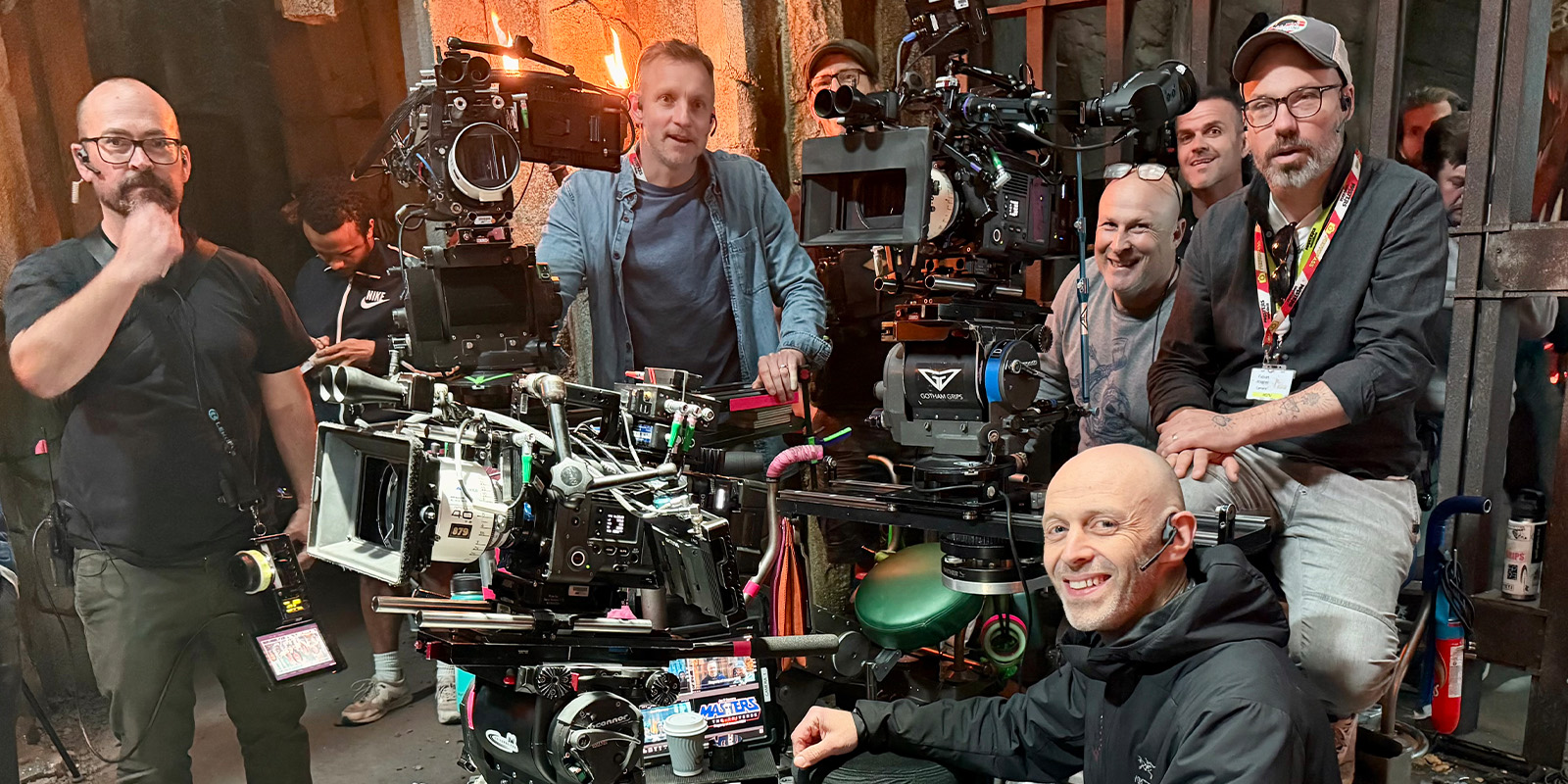
As well as action, Masters of the Universe leans into comedy, bringing plenty of light relief to proceedings, with Galitzine’s wide-eyed performance a perfect fit for the goofy tone that has made the He-Man world so enjoyable for so long. While Wagner didn’t “consciously approach” comedy from a cinematographic perspective, his instinctual collaboration with his star made sure big moments landed. “I haven’t done a huge amount of comedy in my career,” he admits, “but my instinct is always that the visuals should support the performance rather than dominate it. With comedic moments, that’s especially important – you don’t want the cinematography to get in the way of the joke.
“Working with Nick made that easier. He brings so much subtlety to the role, tiny facial expressions, small physical details. Often it’s just a matter of recognising what’s important in a moment. If it’s about body language, you go wider. If it’s about facial expressions, you move closer. It’s not something I consciously map out – it’s more instinctive.”
Making big steps
One thing Wagner did consciously map out, however, was the incorporation of First Steps Cinematography into the production process. Founded by the DP almost 15 years ago, the mentorship programme goes beyond traditional training, offering aspiring filmmakers a paid apprenticeship-like experience and pairing them with industry veterans who provide hands-on guidance.
Wagner aims to implement the scheme “into everything I do”, with Masters of the Universe’s producers and studio Amazon MGM “really, really behind” includingthe scheme in this shoot, allowing Wagner and his team to bring “several mentees” onto the set. “For the mentees, it’s an incredible opportunity,” he says, “to spend weeks on a large-scale production, learning directly from experienced crew members. It can be intimidating, but we try to create a supportive environment where they can learn and grow.
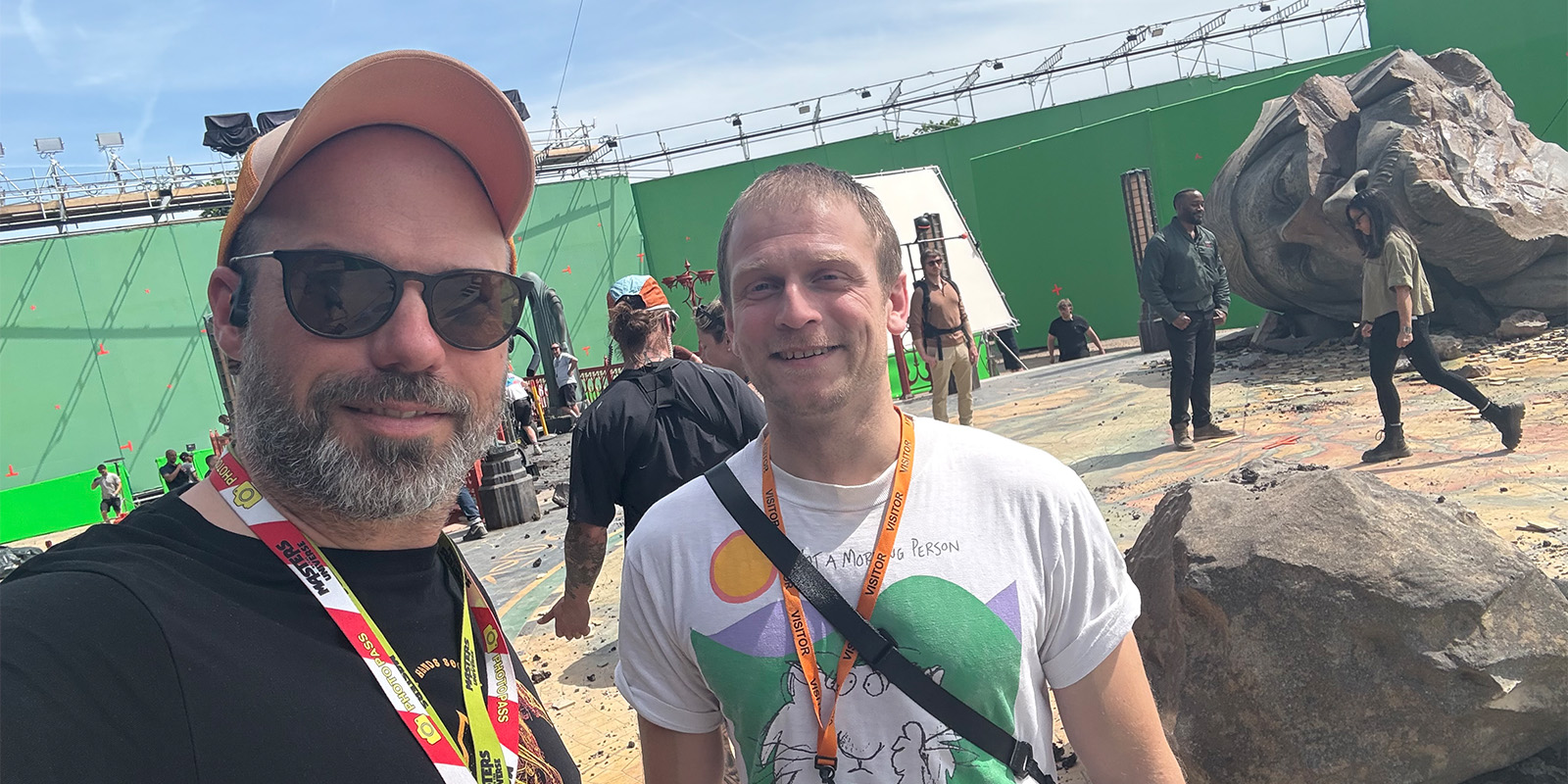
“We also introduced a DP shadowing programme, bringing in cinematographers from a range of backgrounds. Some were early in their careers, others were more experienced but looking to move into larger productions. They spent a few days observing the process, which offered valuable insight into how these films are made. That kind of exposure is incredibly valuable.”
Wagner’s team played a “huge role” in the success of the project on Masters. “There are people on set that I’ve worked with for a long time, and they understand how important the programme is to me. Because of that, they’re very supportive of it and they’re very supportive of the mentees. The goal is always to create a space where mentees feel comfortable asking questions and learning. That was definitely the case here.”
Expanding the programme further is “something I’m always working on”, Wagner asserts, “but it’s challenging. Maintaining a consistency in the experience across different productions is difficult, and it requires a lot of support from studios and crews. Still, it’s something I care deeply about and hope to continue developing.”