A WHOLE NEW WORLD
A pioneer of stop-motion filmmaking, there are few challenges Dave Alex Riddett BSC hasn’t overcome in the medium – but Boop, which drops a plasticine alien into a Lego world, offered something completely fresh for the DP.
Dave Alex Riddett BSC is a master of stop-motion storytelling. The English cinematographer has helped to lens some of the nation’s most beloved animated adventures, from Chicken Run to Wallace & Gromit: The Curse of the Were-Rabbit. But it turns out that even the masters can learn new tricks.
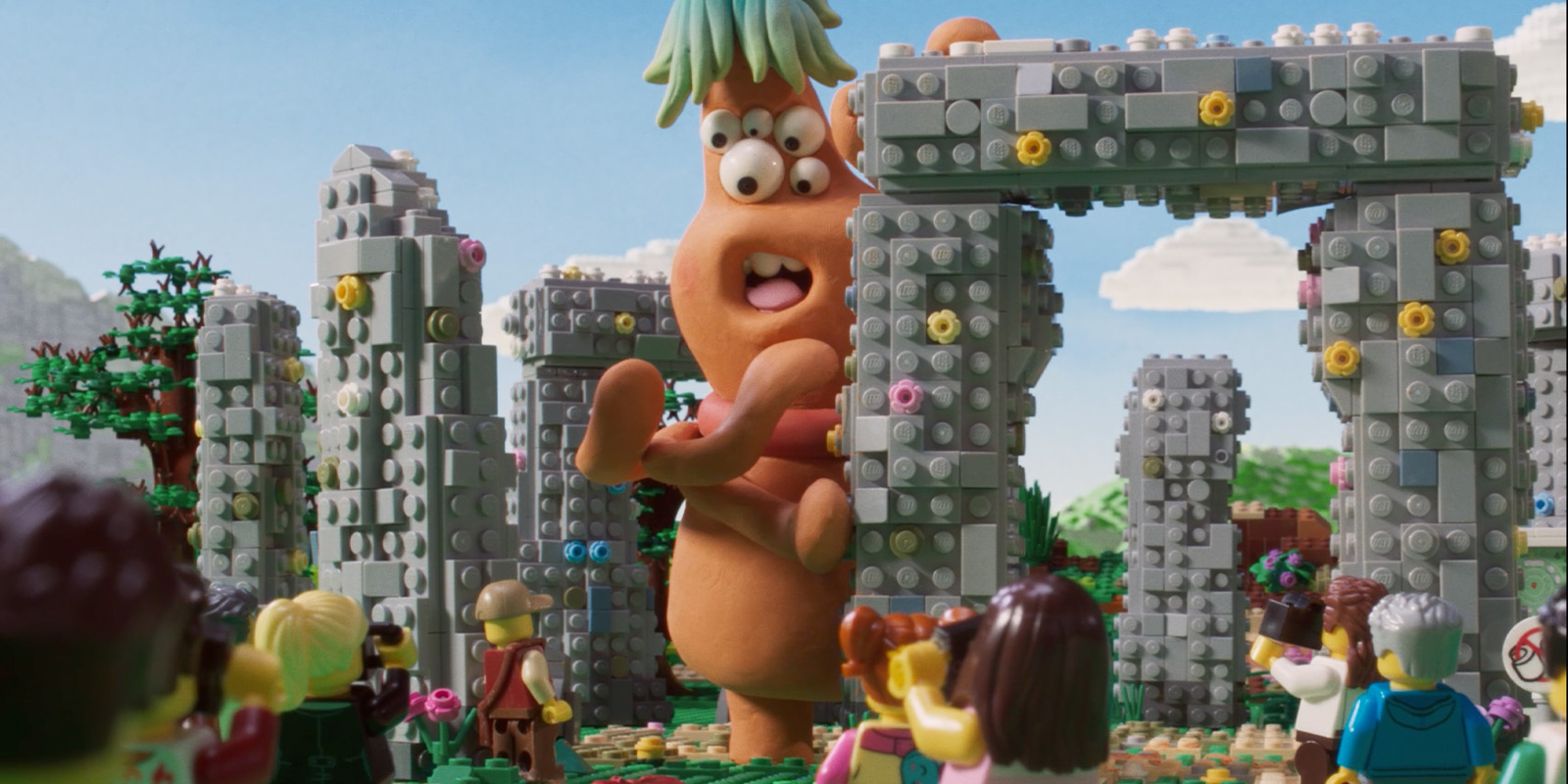
After asking Aardman Animations to“only contact me if you’ve got something interesting” in an effort to scale back his commitments, Riddett’s attention was grabbed by a proposed collaboration between the Bristol-based studio and another iconic institution– Lego. Planned as a groundbreaking crossover, short film Boop would centre around an alien of the same name – built from Aardman’s trademark plasticine – who finds himself entering an entirely Lego world.
For Riddett, the chance to try something freshproved too exciting to resist. “I jumped at the chance to get involved,” he admits, “because it was such an interesting project. I loved the idea of working with the traditional Aardman characters, plasticine characters, alongside Lego. I’m very used to working on a small scale with the likes of Wallace & Gromit, where the characters are around nine inches tall, but this was a chance to work in an even smaller environment.”
Lensing Lego
Like with Wallace & Gromit, Riddett was tasked with making the viewer “feel like they’re actually in that world”. But unlike with Wallace & Gromit, the DP found it difficultto get the camera into right perspectives for the tiny characters – characters almost 10 times smaller than everyone’s favourite bald inventor.
Enter, an impressive invention: Laowa Probe Lenses. “Obviously, we couldn’t get our usual camera – a DSLR with quite a large converted Nikon lens on it – into that perspective,” Riddett explains. “So I was lucky that I got to use Laowa Probe Lenses, which I’d only used a couple of times before. I used a straight probe, a 30-degree probe and a periscope probe, and they meant that I could keep the camera well away from the characters and get down pretty low into their perspective.”
Riddett paired the lenses with Animoko motion control equipment – a “godsend” – to execute a “handheld look of wandering through crowds of Lego characters” and “searching around their environment”. Mastermind Adam Cook, using an app developed by Mark Roberts, was able to “walk around in the real environment and film” according to the shooting script, scaling motion control data down to the scale of the characters and feeding that into the equipment to get some “remarkable little shots” from the point of view of Lego characters.
Making light work
While that was one complication solved, however, another emerged: the lighting. Whereas most Aardman projects centre around plasticine characters, which soften and soak up light, the Lego figurines’ shiny plastic materials posed some problemsfor Riddett and gaffer Nathan Sale. “It was interesting working with shiny objects,” he muses. “Lighting them is quite different to soft textures. We were constantly working out where to put the lights to avoid flare, and because these figures have cylindrical heads, a spot of light can easily become a line down their face. So placement of light became absolutely crucial.”
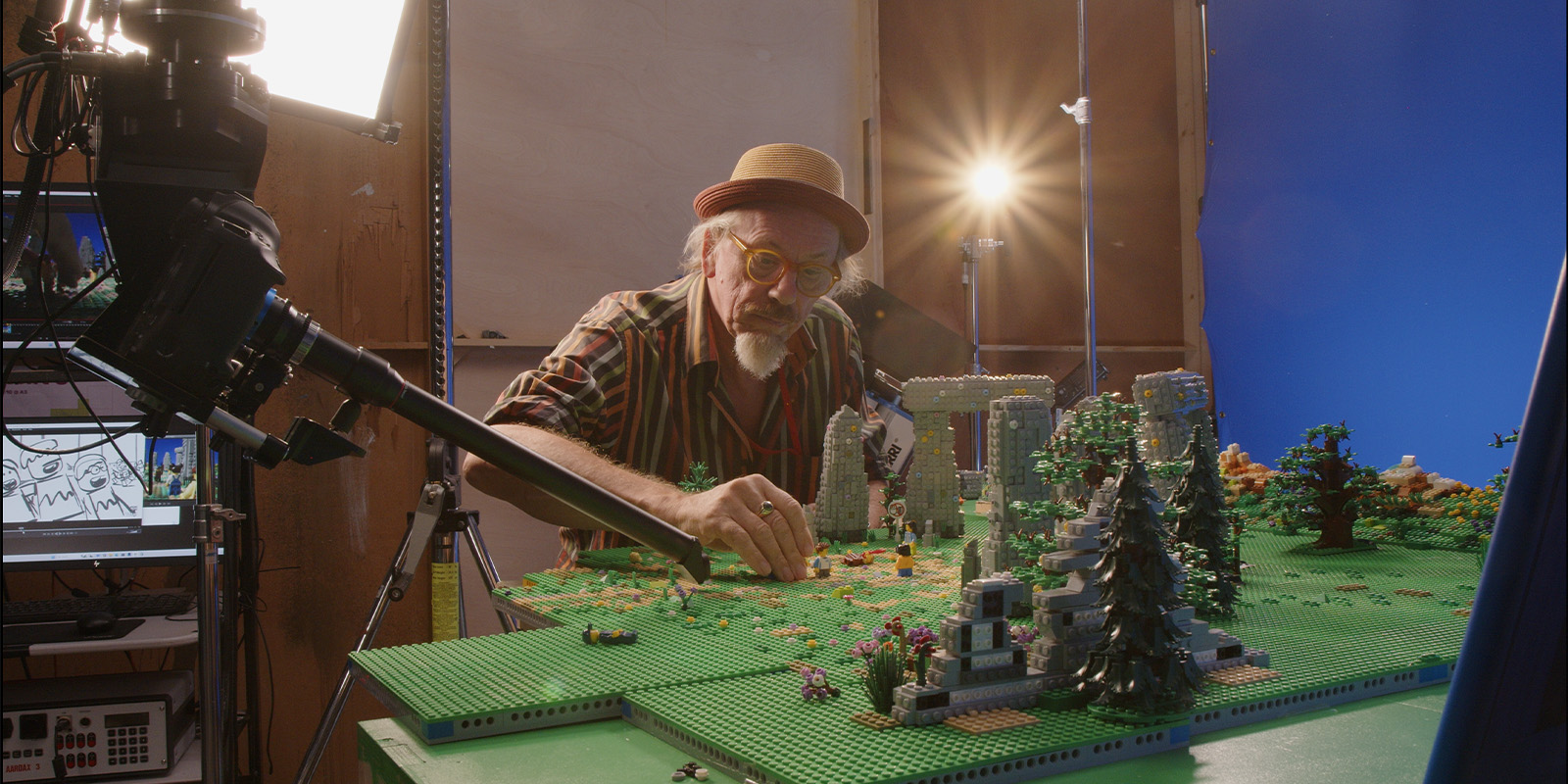
Despite the new challenge, Riddett often opted for an “old-fashioned approach” of relying on soft lighting, mixing Kino Flo Celeb Lights with bounced KTM 300s, ARRI 650Ws and 1kWs off “big poly boards”. Yet the DP also brought in Micro Ellipses, “little profile lamps” that enable efficient shuttering and focus, as direct light sources – ensuring careful placement to avoid “hefty kicks” off the Lego.
Thinking big
Riddett’s approach yields impressive results, crafting a sweet five-minute film that brings the trademark mix of emotion and humour that fans of Aardman have come to expect. Across these five minutes, Boop the alien stumbles across bustling metropolises, shadowy junkyards and a Lego Stonehenge, with each setting boasting gorgeous backgrounds and intricate builds from an extensive teamusing “a lot of Lego” sent over from Denmark, as director Magdalena Osinska’s bold vision comes to life through a blend of in-camera work and visual effects.
“It’s not a big-budget production but it had high aspirations,” he explains, “and Magda is a great director to work with. I’m always keen to get as much in camera as possible, and we largely did. But obviously with Lego characters, it’s very hard to move them around without rigs, and if we have Lego bricks flying around, they have to be on little wires which need editing out afterwards. So it was a real team effort, and that made it a satisfying project to work on.”
This short wasn’t just a bit of fun for the filmmakers, though, it had a bigger purpose – to inspire the next generation of creatives. Designed to encourage young people to begin their own animation journey, and even incorporating some of their submissions into the production design, Boop is the result of a direct collaborative process between fans and filmmakers. Riddett is confident it can prove a success. “Hopefully this film, and the accompanying behind-the-scenes video, will prove that it’s not a great mystery what we do,” Riddett laughs. “I think it looks cinematic enough to demonstrate that if you can master the little movements and basic storytelling, you can create something really special – all it takes is hard work and imagination.”