
DESCENT INTO IMMERSION
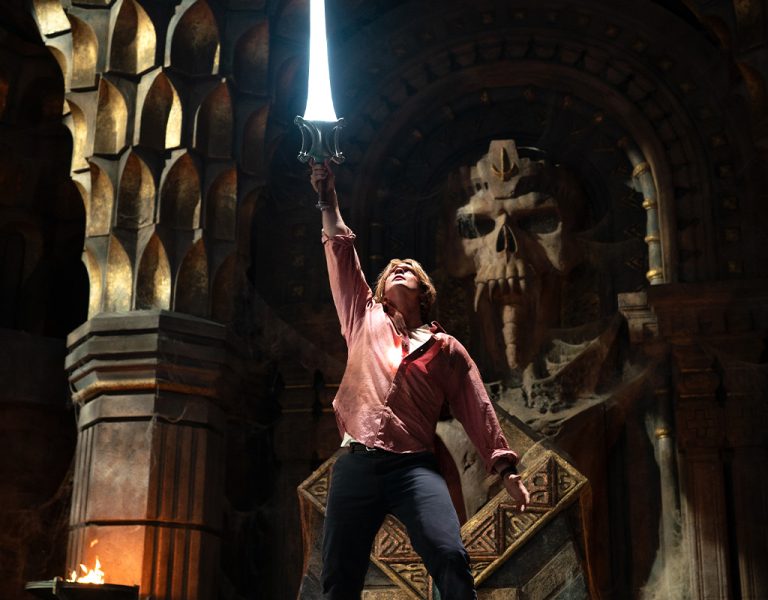
On Abandoned, writer, director and producer Joby Stephens built a new production grammar for horror. Combining Sony Venice 2 cinematics with a remotely controlled FX3 system running across a custom multi-point AP network, the film shifts from scale and beauty into something more immediate, unstable and lived in. The result is a British indie horror designed not simply to be watched, but endured.
For Stephens, Abandoned was never meant to use found footage as a disguise for limitation. It had to feel cinematic, controlled and emotionally grounded before surrendering itself to something more immersive. The idea was not simply to place a camera in a character’s hand, but to create a visual descent that begins with scale, atmosphere and friendship before abandoning the characters to their own cameras inside a maze of darkness, pressure and fear.
“At its emotional core, Abandoned is a cinematic into found footage hybrid that connects the audience with the characters via immersive one take shots,” says Stephens. “I wanted the film to start wide, epic and cinematic before going on a journey with the characters Adam and Jess. I wanted the camerawork to be that journey of descent into hell and pressured atmosphere.”
Stephens reunited with cinematographer Nathan Claridge, with whom he had previously pushed boundaries on British indie film School Fight, the first feature to shoot on Apple ProRes RAW. That earlier collaboration established a creative shorthand built on ambition and risk. On Abandoned, the challenge was to marry elevated cinema with found footage in a way that felt genuinely fresh for horror.
The opening and closing cinematic sections were captured on Sony Venice 2 in 5.8K 17:9 with Vantage One4 lenses, with Claridge operating camera. Those sections establish the emotional and visual promise of the film: countryside, remoteness, friendship and scale, before the film hands itself over to a different visual system.
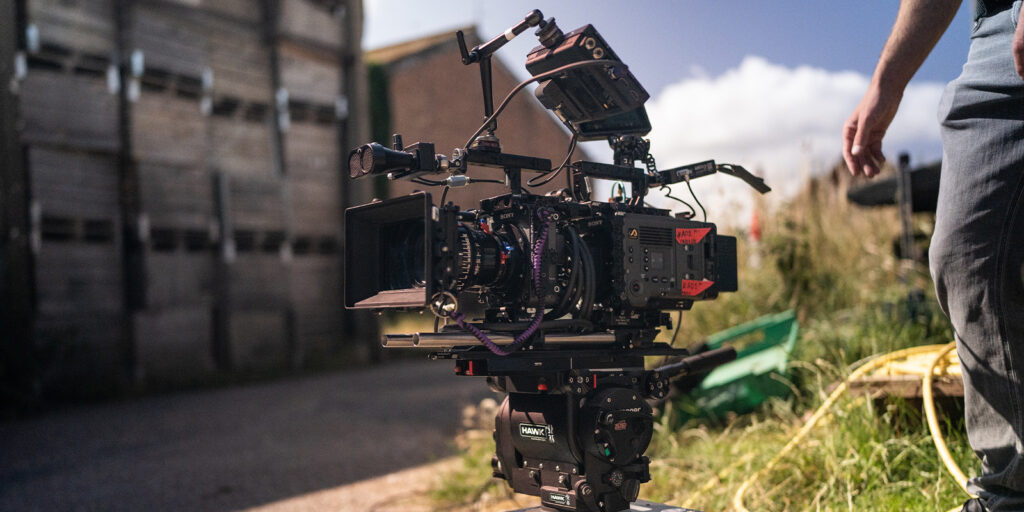
Once the characters enter the “Morbex” building, the principal hero camera becomes a modified Sony FX3 rig designed to reduce weight, supported by HAWK and refined by the camera team led day to day by Ernest Tu. An iPhone 16 Pro, shooting ProRes with a Moment adapter that widened the main lens from 24mm to approximately 18mm, became the secondary camera.
“Like this, the film abandons the characters to their own cameras,” Stephens says.
Points made
The real innovation, however, was the infrastructure behind it. Stephens and the team built a 20-point AP 5G network throughout a decaying complex spanning three floors, tunnels and basement spaces. More than 500 metres of cable were run through a 200-year-old building and 400-year-old tunnels, using facade, vents, windows and openings to create a temporary but robust system. The goal was to allow the crew to monitor and control the cameras remotely, while the actors moved hundreds of feet away through walls and floors.
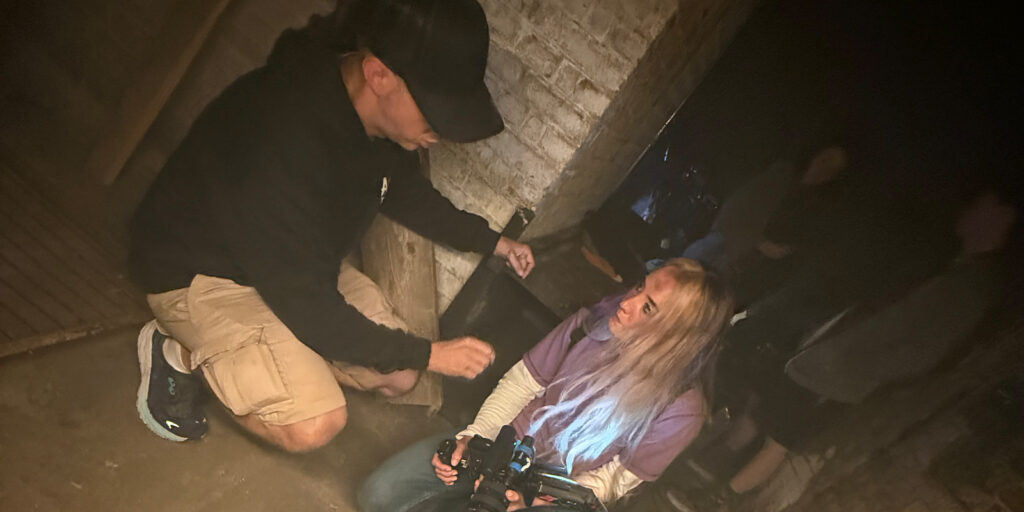
Sony’s Monitor & Control software became the backbone of the process. “I don’t think there has ever been a more insane use for this software,” Stephens says.
The result was a silent video village that behaved less like a conventional monitor set-up and more like mission control. Multiple split screen monitors, camera builds and a network engineer sat at the centre of an operation in which the cast could move through the building with freedom while the crew retained invisible control. The actors wore backpacks with hidden antenna boosters inside, effectively becoming walking audio signal extensions.
The found footage interior was ultimately structured into four major blocks, with long sustained takes designed to let tension build in real time. Block one alone ran to roughly 38 minutes per take. There is only one stitch cut in the finished film, inserted to address a technical issue. Otherwise, the interior sections unfold as sustained scenes.
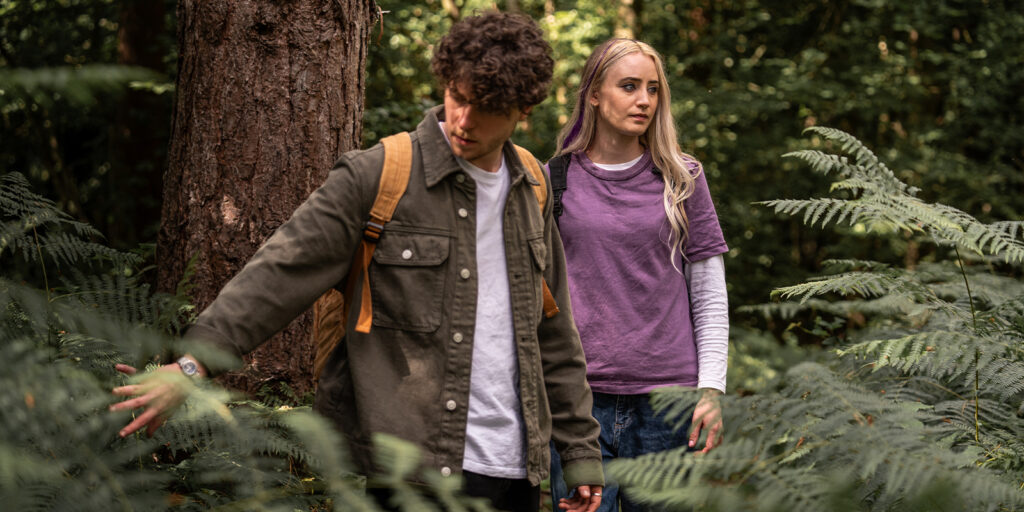
“Because I needed the characters to become real. Without cuts,” Stephens explains. “I wanted it to feel real to them, to embrace the uniqueness of the location and their stories.”
That required exhaustive preparation for a small indie team. Months before filming, the cast rehearsed away from the building, worked over Zoom, spent time together on other scripts and improvised in character. On set, however, much remained hidden. Scripts were redacted. Scare beats, performer movement and shadow cues were withheld. Doors were sealed behind the actors live inside takes.
This commitment to preserving uncertainty shaped the atmosphere of the performances. “The screams are real. The darkness is real,” says Stephens. “The atmosphere and emotions were very real.”
Strengthened by performance
The film’s physical horror language was also strengthened by performers including Sofie Dossi and Ashlee Montague, whose exceptional movement control and screen presence brought a distinctive intensity to key sequences. Their work demanded that the camera do more than simply record action. It had to create the right tension, framing and atmosphere for physical performance itself to become part of the fear.
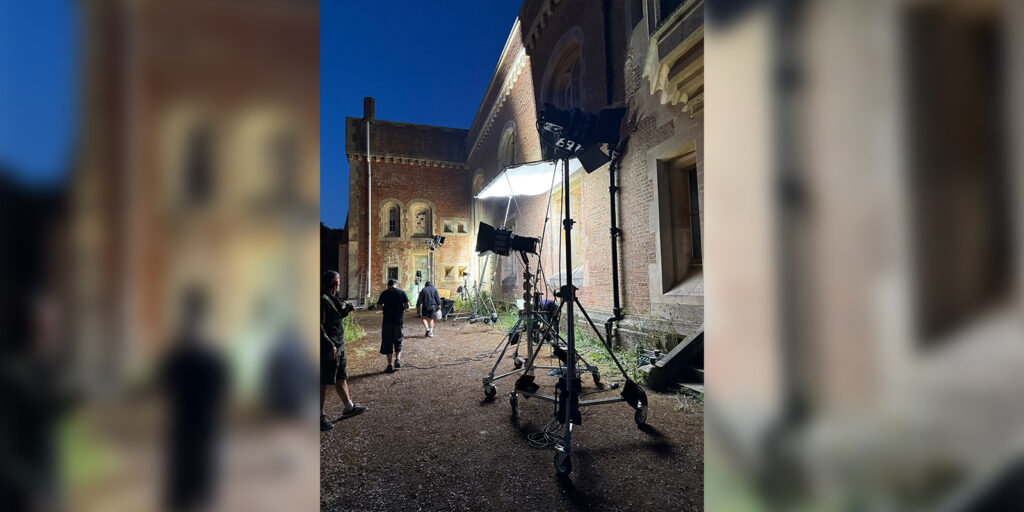
The lighting strategy played directly into that philosophy. Gaffer Amir Moulfi and a compact team of sparks were tasked with shaping a huge building at night, often in live changing conditions. The approach was environmental rather than actor led. The remains of daylight initially give the building an inviting quality. Once the characters go too far, power appears to reactivate, plunging spaces into pitch black and triggering installed lighting, strobe, flashes and haze. SHL’s support was central, allowing the production to stage most of its lighting work after dark and treat the building itself as a reactive organism.
Low light was not just an aesthetic preference but part of the film’s emotional design. In the tunnels, the only light source was often the monitor on the camera itself and a torch mounted to the rig. Fourteen different torches were tested for quality and feel. Full frame capture mattered here, giving the filmmakers more room in post to manage an increasingly black image while retaining control and depth.
“What did darkness reveal in Abandoned? Fear,” Stephens says.
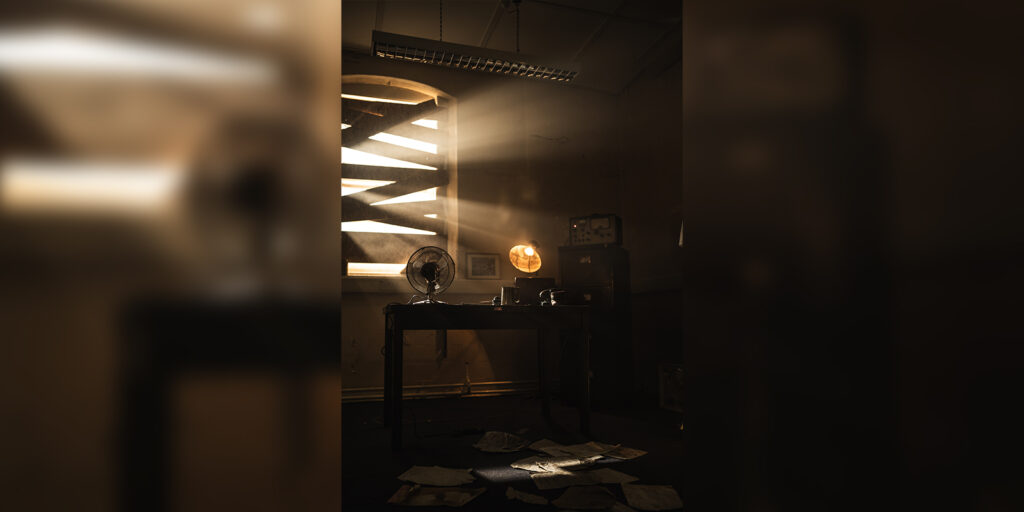
That immersion extended beyond image into sound. Because found footage cannot rely on score in a conventional sense, sound design became part of the film’s thinking from script stage. Stephens and producer Joe Bird worked closely with the team at Jumbuck, drawing on horror games such as Resident Evil, Silent Hill and Phasmophobia, as well as stranger references including submarine moans and pressure noises. The ambition was to give the building an internal life. “The sound gives the building its organ, a heartbeat that breaks and moans,” Stephens says.
Post-production support from The Look helped carry the image language forward, with Andrew Daniel on the grade and the wider team supporting testing, colour space development and finishing. To keep costs sustainable, the entire crew stayed on site in a disused prison, converting cells into bedrooms – a reminder that despite the scale of the ambition, this remained a fiercely independent production. Entirely self-funded by Stephens, Abandoned was built through conviction as much as craft, with the ambition from the outset to create a British independent horror that felt far larger, bolder and more immersive than its budget would normally allow.
Now in post-production, Abandoned looks ahead to its premiere later this year. Produced by Anything That Scares You Ltd, the film marks the start of a wider ambition to support future filmmakers with similarly bold cinematic horror ideas. In that sense, the production method behind Abandoned is not just a story of technical invention, but a statement of purpose for what comes next.