
THE LENS AS THRESHOLD
While building a world that blends visual languages, Swarnim Gawade found inspiration in 12mm for Cyclops.
When director Stefanos Papageorgiou and I began building the visual language of Cyclops, our central challenge was world-building. The film moves through several distinct psychological realities: the cramped, grimy hideout of the criminals in an abandoned building; the unsettling domestic order of the Cyclops’s house; and finally, the hypnotic state where the Cyclops begins to exercise his power over each of them.
The question I kept returning to was how to signal that a character has crossed into another state of consciousness without leaning on the obvious tools. My first instinct was colour. Panos Cosmatos’s Mandy was one of our references throughout pre-production, and I had been thinking about the way he uses the colour red to gradually consume the frame until it overtakes reality entirely. I asked Stefanos whether he’d want something similar when the hypnosis begins. He said no. He wanted the shift to feel more interior, more psychological.
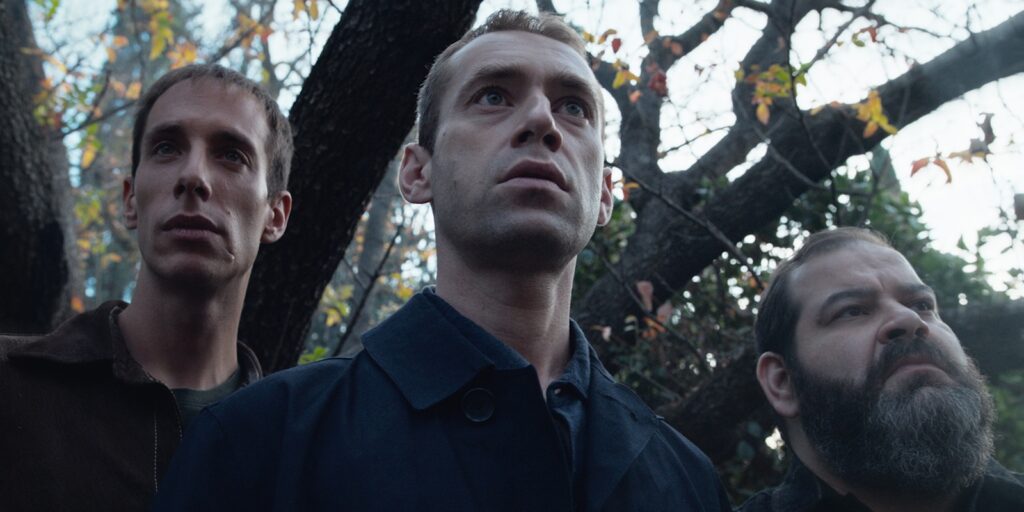
We were building toward a world that sat somewhere between Cosmatos’s sensory intensity, David Lynch’s refusal to explain what is and isn’t real, and Yorgos Lanthimos’s clinical distance from characters who have already lost the plot.
The solution
Laowa 12mm Zero-D on large format. We were shooting on the ARRI Mini LF with a Leitz Summilux C set. The Summilux C lenses are a Super 35 format kit, so pairing them with the Mini LF’s full frame sensor produces a subtle vignetting at the edges of the frame. Rather than correcting for this, we embraced it (also because the vignetting wasn’t major after 25mm and upwards).
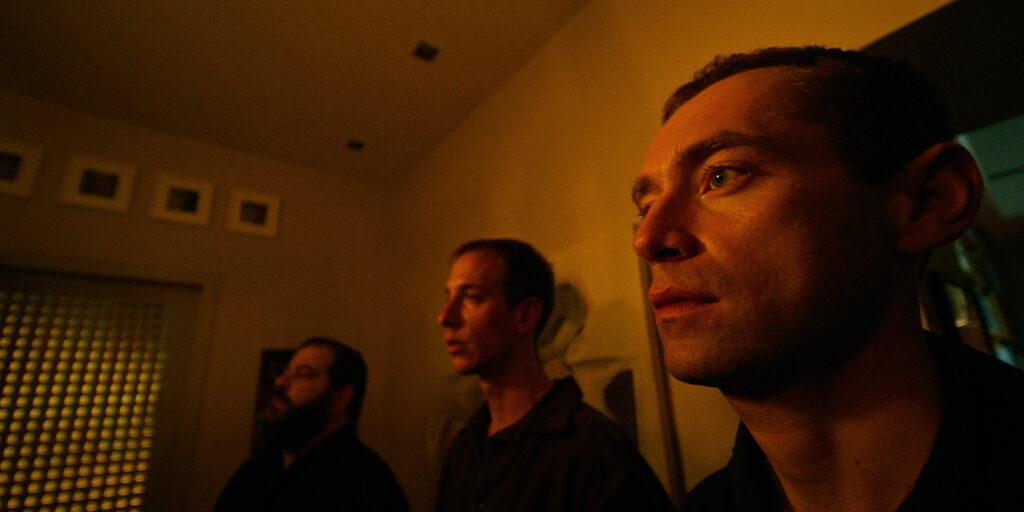
But it was the 12mm that became the film’s most expressive tool. In the first two acts of Cyclops, the 12mm lives entirely in the world of geography. Wide shots in tight interiors, giving cramped rooms a sense of compressed scale. It shows up quietly, doing functional work, and then disappears. It’s not in your face. Then the hypnosis begins. The moment the Cyclops exerts his power, we moved the 12mm onto faces.
We did not want it to look comedic, so we were relieved to find that this lens at close range on a large format sensor doesn’t caricature a face the way most ultra wides would. Instead, something stranger happens. The face fills the frame completely, with a presence that feels almost too close, too large, but without any single feature being exaggerated. That’s what we were after. Something that neither the eye nor the brain can fully settle.
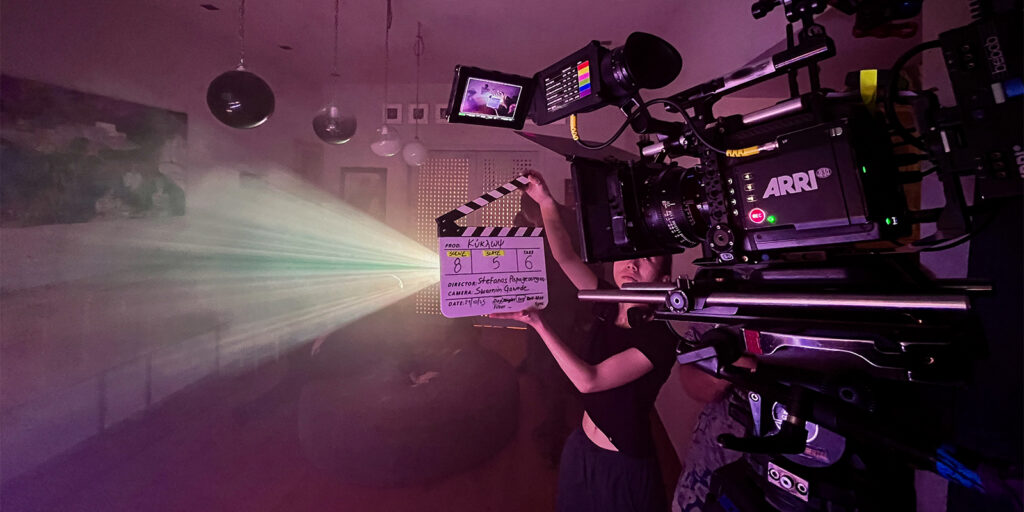
Because the 12mm had only ever been a spatial and expository lens up to that point, seeing it pressed against a human face for the first time creates a quiet rupture in the film’s own logic. The rules break without announcing themselves. Which is, I think, exactly what hypnosis does to a person.
I come back to something I learned early in film school: Good cinematography isn’t about beautiful images. It’s about helping the director tell their story. If the audience feels what they’re supposed to feel in that moment, then my job is done.