CHILD’S PLAY
Made for a mere £4,500, Kid premiered in competition at the BAFTA/BIFA-qualifying Manchester Film Festival and is out now on streaming services. Filmmaker Ryan J. Smith tells us about his unique shooting process.
The attic in Kid plays a huge part in the story. There’s an overwhelming feeling throughout the movie of burdens and dreams being hidden away – the attic became a physical manifestation of that idea. Things being left behind somewhere old and dusty for future generations to discover when they themselves are gearing up to grow up and “put their toys away”.
If this were any other production, the attic would have been a set build. But for me, it’s always better to just use the real thing. It’s me shooting the movie, too, so I’m OK with breaking my back crawling along spider-riddled floors and cracking my head on beams – but I wouldn’t put a crew through that (too much complaining). I feel that logic translates to other photographic ideas, too; if I want to shoot a movie on certain lenses which are going to be hard to defend, for example, if it’s only my head on the block, it’s no big deal. I’m not precious at all when it comes to filmmaking, I’m not interested in things looking clean and technically perfect, I just want to get in and tell the story, then get out. For clarity: Kid was shot on the BlackMagic Pocket 4K with vintage stills lenses (old and cheap Soviet stuff from a car boot sale somewhere).
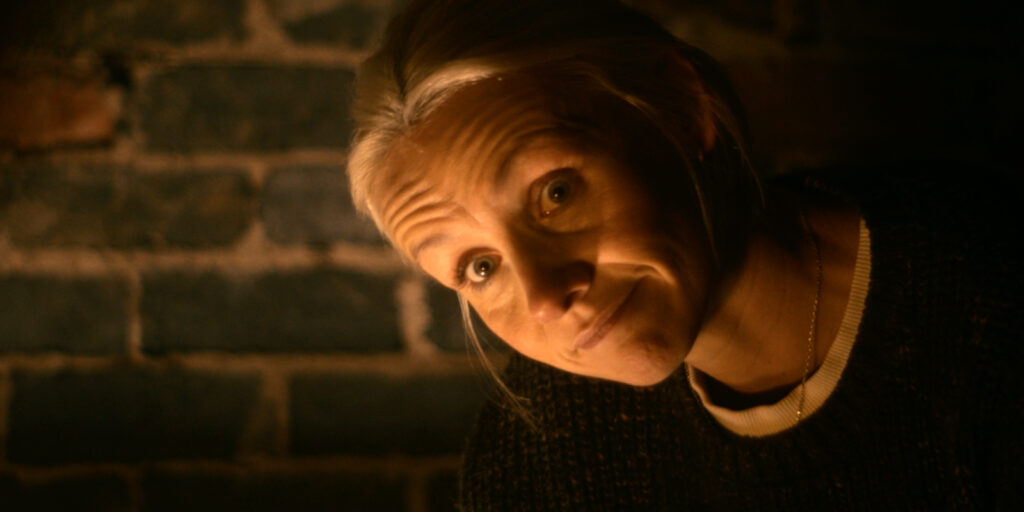
Practicals were the way to go shooting in the attic. Purely logistically – where the hell would we have put “movie lights”, anyway? Keeping the lighting character-led with a practical camping torch also reflected the sense of exploration in the scenes. I love any time you can have characters handling practicals on-screen – it always helps me out shooting on the go and the actors have more fun doing something interactive with the camera.
The only non-practical light was a cheap makeup ring light pointed upward into the hatch to create a square of white light coming from the hallway. I added this to provide a bit of kick on the actors’ faces who weren’t dealing with the practical, but also to add some separation to the image.
The one thing that’s always bugged me is people “lighting for dark”. If it’s dark, just shoot it dark and get on with it. In fact, most of the conversations about cinematography bug me as being time-wasting. I know now I fall more into the “documentary style” camp of filmmaking. My film school grad project was a documentary feature shot on location in Amsterdam touring concerts – I really cut my teeth on that one and learned to not be precious about anything. That experience and ethos helped me create a fast and efficient workflow on features with minimal crew – a lot of the time just myself and my dog for company.
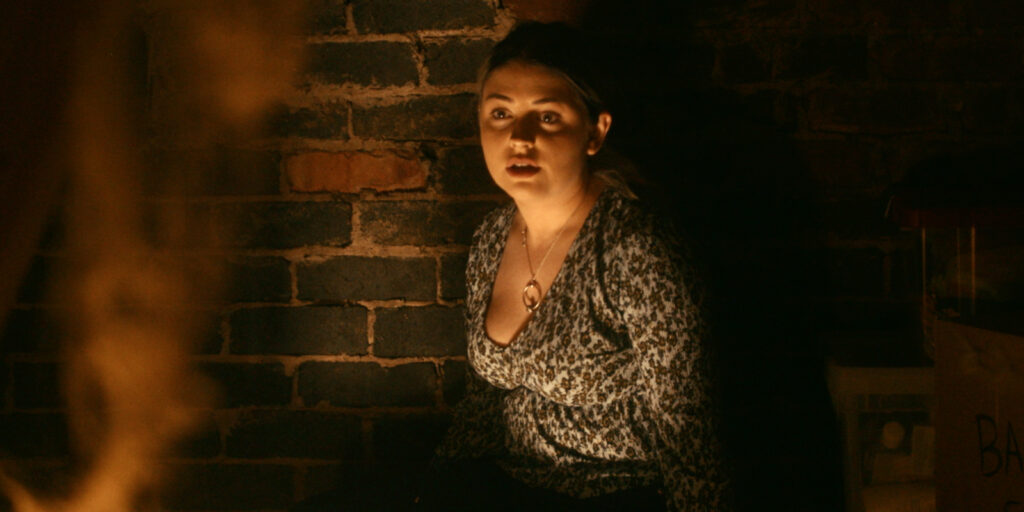
Aside from the guitar and a few boxes, the key light (practical) is the main prop in the attic scenes. There was a lot of “mist in a can” sprayed around, as well as fake cobwebs.
I really made it hard for myself ducking and weaving through an orchestrated mess of Christmas trees, suitcases, wooden beams and spiders – but I’m happy with the result. I shot the movie myself as well as everything else. I recorded the sound during those attic scenes whilst running camera, too. This one is one-part efficiency and one-part not having the room for others.
What makes me happy is knowing first-hand that consumer equipment is enabling independent filmmakers to be very, very selective about how they make films and with whom. My goal has been to create a workflow that feels no different to making movies with my friends when I was 13. Keep it fat-free and fun.