
CONNECTION TO THE CRAFT
Filmography so far (project title, director, year released)
Feature films:
Finding The First South Asian Lioness (Dir. Abbey Monteiro, 2025)
Demon (Dir. George Louis Bartlett, 2021)
Short films:
Rock, Paper, Scissors (Dir. Franz Böhm, 2024)
The Test (Dir. Hsieh Meng Han, 2025)
Bubble Boy (Dir. Cameron Carr, 2024)
All Girls (Dir. Anastasia Bruce-Jones, 2022)
We Choose To Go (Dir: Marlene Emilia Rios, 2020)
When did you discover you wanted to be a cinematographer and what inspired you to follow this career path?
I remember it so clearly. I was in a studio watching a gaffer transform a single set from sunny and breezy to rainy and thunderous, all with lighting. It hit me then—this was what I wanted to do. To be part of the decision-making process, using visuals to convey humidity, pressure, and emotion. That’s when it all clicked.
Where did you learn your craft?
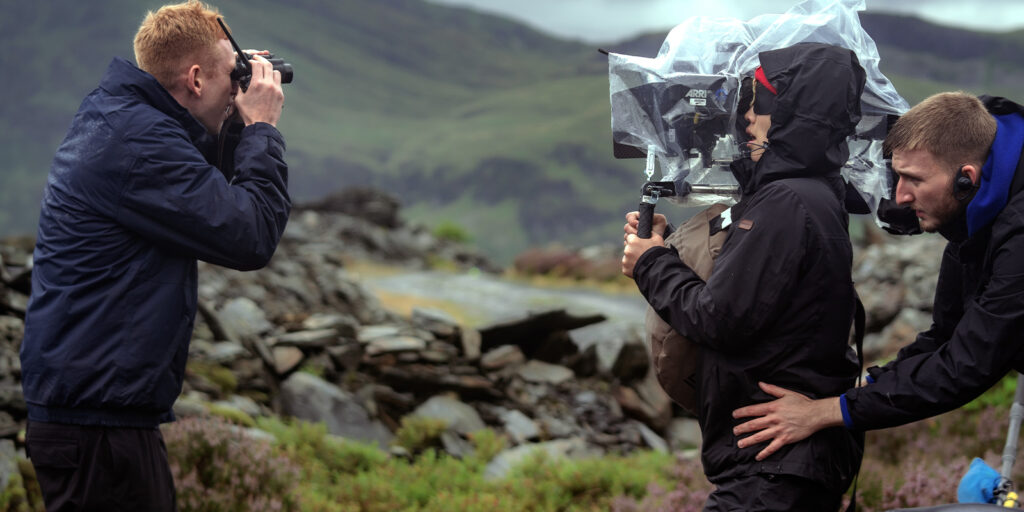
I studied filmmaking at the London Film School where I learned my craft and was inspired by friends that I cherish every day. I went on to study cinematography at the National Film and Television School to expand my network and strengthen my skills, but most importantly, to be on set as much as possible!
What are your favourite films, and what makes them stand out to you?
Old Boy. The way Chung Chung-hoon ASC used camera movement and composition to position the audience as a witness, complicit in the crime whilst simultaneously forced to empathise with the characters’ pain.
The Last Emperor (Cin. Vittorio Storaro ASC AIC). The film portrays profound loneliness and unspoken sorrow through bold use of colour, contrast, and composition. Despite its historical distance, it feels intimate and emotionally resonant.
Who in the film world inspires you?
I’m deeply influenced by Park Chan-wook and Chung Chung-hoon ASC. Their use of production design and cinematography turns every frame into visual poetry. Their images are both harmonious and unsettling, guiding the viewer emotionally without words.
What’s the most useful advice you’ve received and from whom?
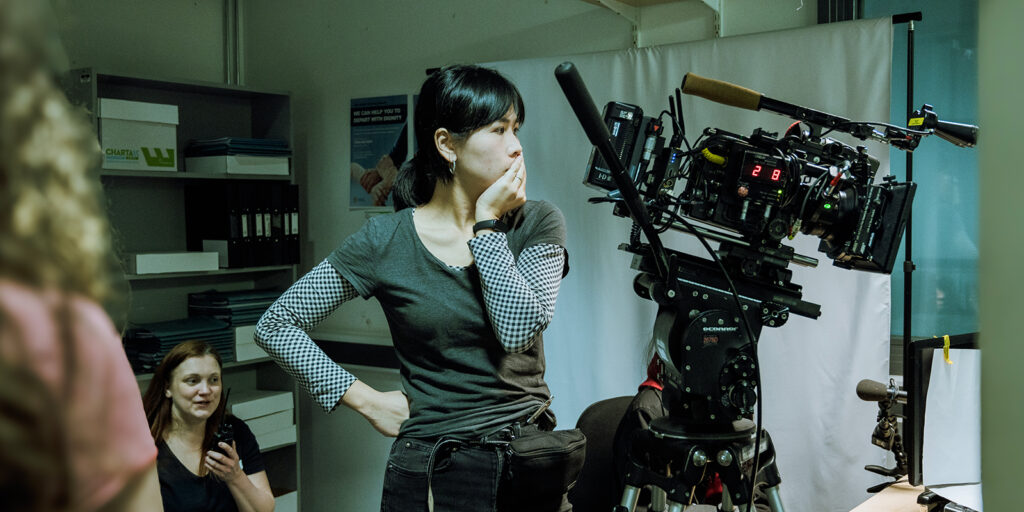
I’ll never forget our first lesson with Oliver Stapleton BSC. He told us to start practicing Tai Chi and to keep playing music. Music, he said, teaches rhythm and Tai Chi improves balance and core strength for operating.
What advice would you give someone considering becoming a cinematographer?
Be persistent, be creative, be you.
What have been your greatest triumphs and disasters on set?
They were actually the same event. On this one shoot I found the limit of how much my body can carry physically and mentally. Even though it took me a few months to recover, the triumph is knowing my limits and strengthening myself to keep creating!
What lights your fire outside of work?
Surrounding myself with likeminded friends, speaking out our worries, knowing that we are never fighting alone. That’s what I treasure about living in London!
What has been the biggest challenge in your career and how did you overcome it?
The biggest challenge for me was transitioning from sparking to becoming a cinematographer. I got told in an interview that I would never become a cinematographer as I am a technician not an artist.
I know my work will end up speaking for itself. That’s why frame matters to me and making each film better than the last became my focus.
What piece of kit could you not live without?
My back brace and kneepads. They’ve supported my body through the ups and downs, especially operating at weird angles and in tight corners.
Which film would you love to have shot?
I would love to have shot Georgia Oakley’s Blue Jean. The film is lensed by Victor Seguin AFC who carefully utilises different colour and quality of light sources to show the conflicted emotions under the skin on 16mm film.
It reminded me of Wong Kar-wai’s films, which use images to convey the humidity of Hong Kong, the immense pressure of that society and the visceral attraction between people.
Which productions are you most proud to have lensed, and why?
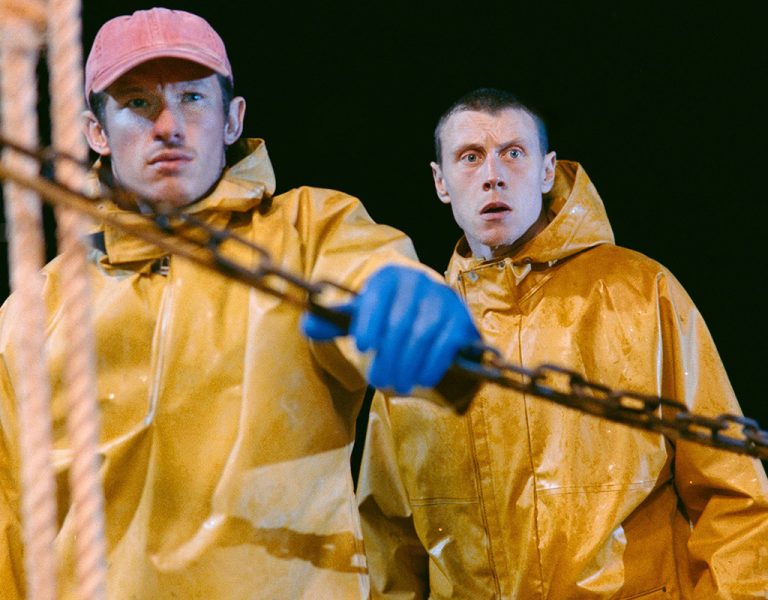
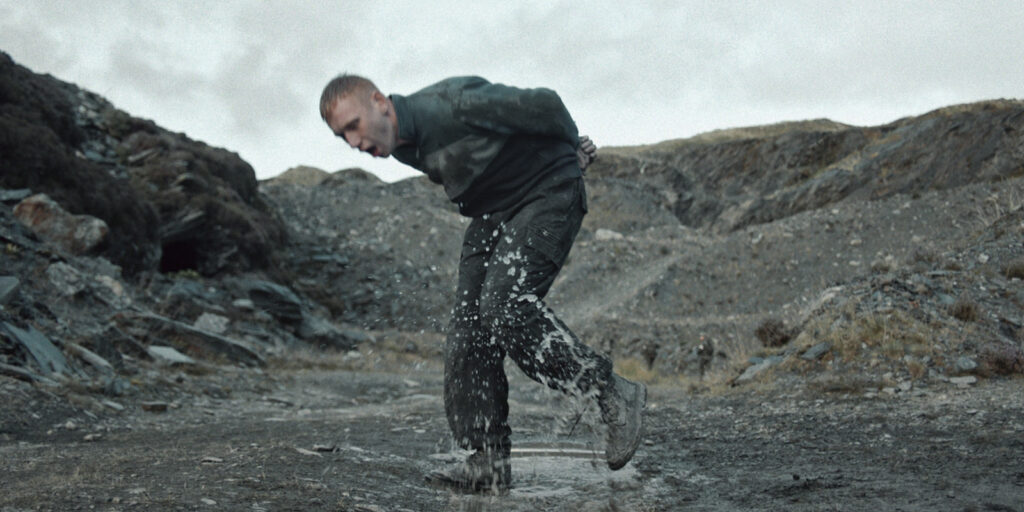
Rock, Paper, Scissors is a BAFTA-winning short based on a true story from the Ukrainian frontline. It was all handheld, so every operating and focus decision had to be planned in pre-production. The editor, Carmela Schönenberger, deserves a huge shoutout—she and I worked closely with the director to craft the film’s visual rhythm.
A Moonlit Night follows a monk learning to collect moonlight. It was a massive lighting challenge—we had to figure out how to create and “collect” moonlight on a lake within a tight budget. It was a beautiful collaboration with the production designer and gaffer to create a magical, distant world.
What’s the best and worst thing about your job?
Being a cinematographer is the best job for me on set! I have the opportunity to be a detective, building a relationship with the director and discovering the visual language for each project, bringing them to life from paper to an actual world in camera. On the other hand, I have to learn how to care for myself and those around me. This journey can be long and intense, so staying healthy and connected is essential.
How would you best describe your approach to cinematography?
My approach is always story-driven. I focus on how best to support the director’s vision and bring their long-developed ideas to life visually.
What are your aspirations for the future?
To keep collaborating with passionate filmmakers and telling stories that resonate with people and even shift the audience’s perspectives. My mother once told me, “Life is full of regrets, but cinema can make dreams come true—and go back in time.”
What do you think are the industry’s biggest challenges?
Supporting bold, diverse stories. There are so many unique perspectives out there, but they’re often overlooked or underfunded.