EARNED SUCCESS
Cinematographer Mattias Troelstrup explains how he and his team created emotional and atmospheric visuals in overcast Manchester and sunlit southern France for The Stolen Girl.
How did you get involved with your project and what appealed to you about the story being told?
Eva Husson, the director, reached out to me to discuss the possibility of reuniting and collaborating on a new project. We previously worked together on Bang Gang and Girls of the Sun, which competed for the Palme d’Or. I have always appreciated her aesthetic approach, and the project interested me right away. As a parent, reading a script about a lost child deeply resonates, as we all must gradually let go of our children and trust that we are making the right decisions.
What was it about lensing this that appealed to you as a DP?
I’m drawn to personal stories that explore life’s challenges, especially those where trust is uncertain and characters are truly tested. This project, set against the contrasting backdrops of rainy, overcast Manchester and the bright, sunlit landscapes of southern France, presents an exciting opportunity to work with dual tones and colour palettes that reflect the emotional and atmospheric shifts in the story.
Tell us about your initial conversations with your director about the look and mood for the series. What was their vision and what new perspectives did you bring?
Working with a director like Eva is always a pleasure. Her work is vibrant and rich with detail, and she has an exceptional eye for both composition and nuance. We often have in-depth conversations about how she envisions the project, drawing inspiration from the work of still photographers and painters. Sometimes it’s a subtle detail in a painting — like the framing, the play of light, or the overall mood — that sparks a creative direction.
From these discussions, Eva creates a comprehensive lookbook that serves as a visual bible for the show. It’s a tool she’s always used, and it’s incredibly valuable to have on set, especially for aligning the vision among key members of the team.

What creative references did you and the director exchange about the series’ visuals?
Eva is very focused on avoiding references from other movies. Instead, we drew inspiration from the work of painters and still photography. We looked to Adam Caldwell for his surreal paintings that resemble photographs, and to Ivana Lena Besevic for her ability to portray people in emotionally charged situations.
For our scenes filmed in France, we referenced The Talented Mr. Ripley, particularly how the film embraced the sunlight. Although I often feel that sunlight is challenging to work with, their approach to utilising it provided excellent inspiration.
When was prep, how long was it and what did it entail?
We prepped both locations in Manchester and France, with much of the early groundwork led by our art director, Carly Reddin, in close collaboration with Eva. Having worked together before, they had already developed a strong foundational vision for the look and feel of the locations.
When I joined the team, we were still finalising a few key spots. Fortunately, we discovered an incredible villa in France, which became one of our primary locations. It was a fantastic collaboration — Carly’s input was especially valuable in shaping the show’s colour palette.
The first few weeks of prep are especially important to me. As filming draws closer, time with both the director and art director becomes more limited, so I always try to make the most of those early days to align creatively and lock in our visual approach.
Can you run us through the locations? How involved were you with scouting?
We knew from the beginning that we would be shooting in real locations instead of creating any sets. Our story begins in Manchester, UK, which includes both the suburbs and the city centre. We then moved to Marsden, a countryside location where we utilised the small town and the beautiful landscapes of the nearby roads. The story concludes in the south of France, where we found a stunning old villa and its picturesque surroundings. When we secured the villa, we also looked for nearby locations to save time during filming. I was involved in selecting these locations and worked closely with Carly, our art director.
Which location was the most challenging to shoot at?
Our main house in Manchester posed some challenges due to its large windows and very small rooms. The windows were difficult to manage; they were positioned in a way that made it hard to control the changing weather conditions typical of Manchester. We had to creatively adapt several locations for various scenes: a school doubled as a police station, a small village represented a cult, and an empty space was transformed into a news office. A big thanks to Carly, our art director, for successfully turning all these locations into what we needed for the story.
Tell us about your camera package. Which camera(s) and lenses did you use and why?
We chose the ARRI Alexa 35 because we really wanted to take advantage of the camera’s latitude. Shooting in the South of France, with its bright sun and the shade inside the houses, required this capability. For lenses, we opted for a rehoused set of K35s. Our story revolves around the idea that there are cracks in every person’s life, and we wanted to reflect this theme through a set of lenses that display some imperfections and unique characteristics in their behaviour.
What was your approach to camera movement in your series, especially to create tension and atmosphere?
We decided early on not to use handheld for this project. Instead, we selected a camera package that allowed us to be close and fluid with the characters as needed. The distance will be determined by the emotional state of the character. For example, we will use wide shots for scenes with more distance, while we’ll rely on extreme close-ups (ECUs) when characters are feeling tormented. We used dolly and Steadicam as our primary tools for portraying the drama and following our characters throughout the episodes. When we did use a handheld camera it was to enhance the emotional impact and add dynamics to a scene. We used zoom as a tool to isolate characters within larger crowds and to emphasise feelings of loneliness. We filmed into mirrors and reflections to create a visual sense of disorientation and fragmentation of self.
What was your approach to framing and composition?
We discussed whose scene it was and aimed to build each moment around the character in focus. Most of the show was filmed using medium shots. Both Eva and I are fans of centre framing, a technique we’ve used in previous projects we’ve worked on together.
I worked closely with our Steadicam operator, Rob Hart, who was brought on early so we could study references and make sure we were in sync before filming began.
Were there any new tricks or techniques you used in lensing this series?
We relied more on tripods and a dolly than I’m used to; we only used handheld in very rare situations.
What was your general approach to lighting? What were the key pieces of kit you used? Were any special rigs created?
I’m a big fan of studying natural light during early visits to the set. I observe how it interacts with the environment and then work closely with my gaffer, Gavin Walters, to recreate that atmosphere. We began the show with a brighter, more natural tone, but as the cast grapples with the loss of their child and unravels emotionally, the mood gradually darkens and becomes more moody.
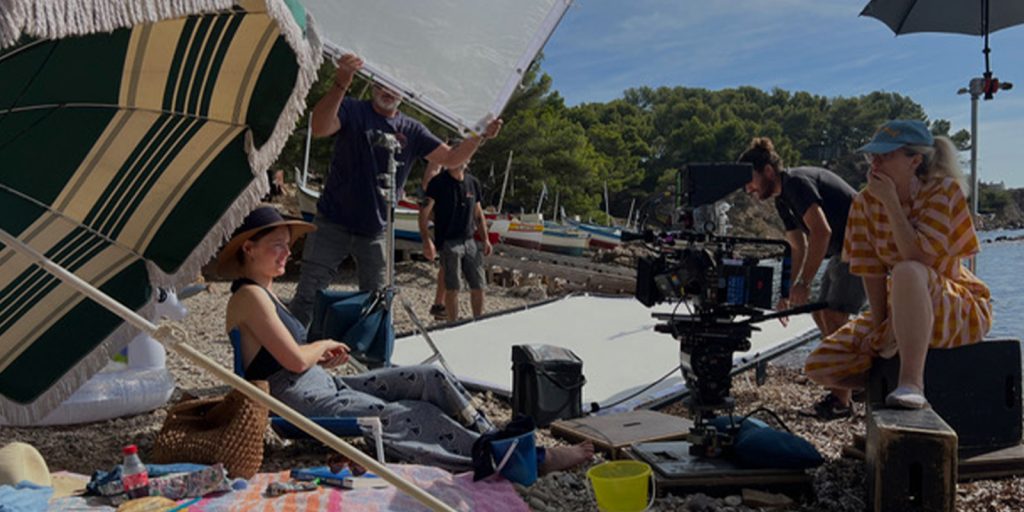
For the scenes in France, we embraced a brighter, sunnier aesthetic. We relied on larger HMIs and were fortunate to have a double crew, which allowed us to move the bigger lights efficiently and adapt quickly on set. Huge thanks to the French team — gaffer Gregory Fromentin and grip Pascal Delaunay — for their invaluable support.
What was the most challenging scene or location to light?
Our main house location in Manchester was probably the most challenging to shoot. It was a charming little house, originally part of a church but later converted into a residential home. The house had a kitchen on the ground floor with large windows, which would normally be a great asset.
However, the windows faced a direction that forced me to keep them behind the camera. This made it difficult to maintain continuity and to control the constantly shifting Manchester light, which kept changing from sunny to overcast.
As much as I loved the little house, it certainly presented its challenges. So never think this location is easy, it might surprise you.
Who did the grade and what was their brief? How much of the look was baked in versus realised in the grade?
Jamie Walsh, the colourist from Lipsync in London, was actually on board before I joined the project. Eva had worked with him on her last feature and really trusted his precise touch, especially when it comes to handling actors’ skin tones. Jamie and I worked together to create a LUT for the show, and honestly, it turned out great. We stayed pretty close to what we shot on set, to the final grade.
We added a bit of grain to soften the digital look, which helped the actors’ skin feel more cinematic and natural.
I’m not a big fan of crushed blacks, so we aimed for a rich look without hard contrast. I don’t believe our eyes perceive pure black, so I tend to ensure that we don’t push the blacks too far. In the end, we developed a look for Manchester that feels a bit more rainy compared to the sunny vibe of France.
What are you most proud of from your work on the series?
Working through the crazy weather changes — from the unpredictable rain in Manchester to the intense heat and bright sun in France — was quite the challenge. Most of the shoot involved working with children, which always means tight schedules and limited time to get scenes done. But I truly believe we made the most of every moment with them.
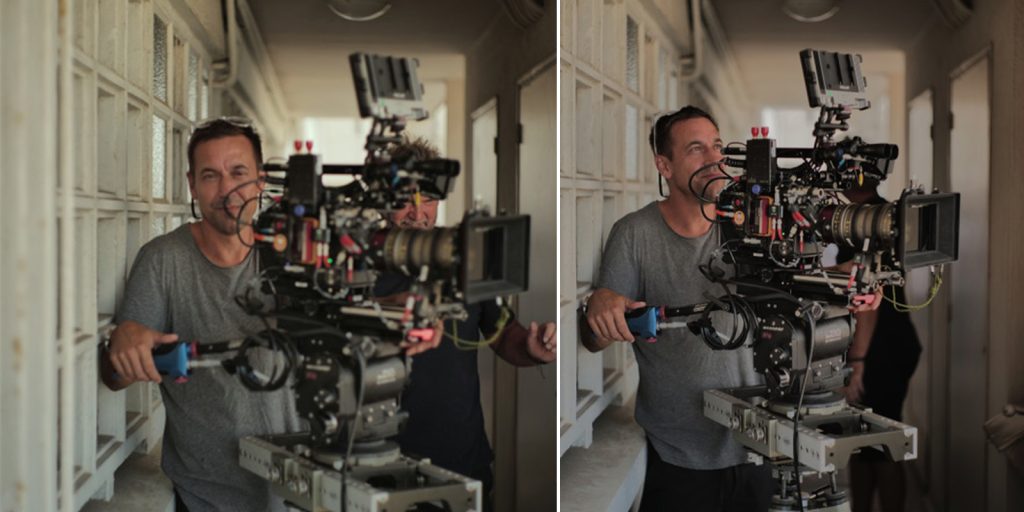
It had been several years since I last worked with Eva, so it was a real pleasure to collaborate with her again and help bring her vision to life.
Are there any lessons you learned on this production that you’ll take onto future shoots?
If something is bothering you, don’t hesitate to either address it yourself or ask someone for help. You’ll likely regret not taking action when you had the chance. Later, you might catch yourself thinking, “I should have done something about this when I had the opportunity.”
Are there any key crew members not yet mentioned that you’d like to mention?
I want to mention the hardworking and amazing team, both in Manchester and France. I want to thank all of them for being by my side. We became such a big crew because we were shooting in two countries.
Our wonderful producers — Nicola Shindler, Tanya Seghatchian, John Woodward, James Dean, Lisa Corkill, and Hannah Scott — thank you for the support from start to finish.
Special thanks to DP Niels Alpert, who stepped in and helped for part of the shoot. Niels did an amazing job — Niels, I owe you.
A special thanks to my operator Rob Hart, who also did the Steadicam work. To DIT Sam Okell and No Drama — thank you for letting me do all the tests needed to choose the right equipment. Thanks to Panalux for the support on the lights, and to costume designer Lynsey Moore. And Amanda Neal (1st AD) and her team — I couldn’t have done this without you.