FROM BOOK TO BIG SCREEN
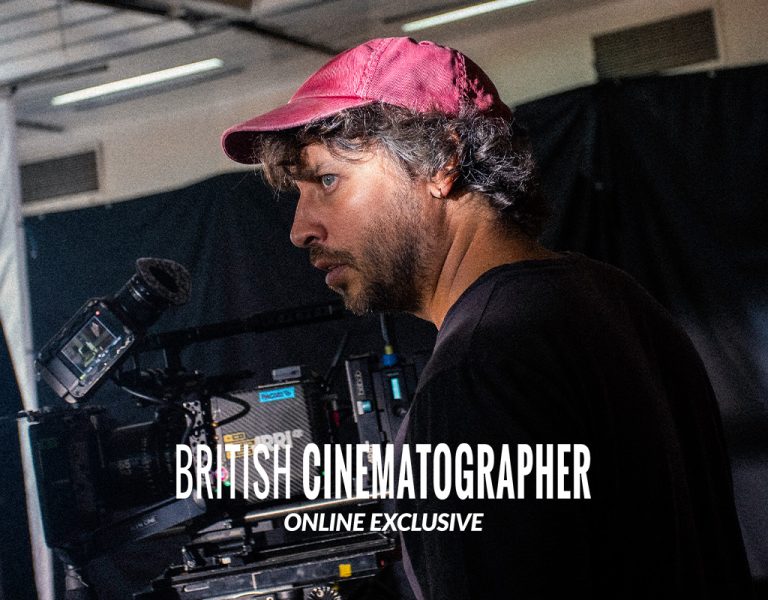
Chatting to British Cinematographer after being nominated for the European Cinematographer prize at the European Film Awards, director of photography Manu Dacosse explains how he worked with director François Ozon to adapt L’Étranger for the big screen – and why he simply had to do so in black-and-white.
The Stranger came to me through François [Ozon, director], who talked to me about the book. It’s really a famous book in both France and worldwide. I think I read it when I was a teenager, but at the time I didn’t like it. So my first step was to read the book again, and this time I really liked the story and the fact that it explores Algiers, which is an area that I didn’t know much about. I was also touched by how it described light. It’s always there, it’s always present.
I talked a lot with François. We would have a meeting every week, spending afternoons talking about the script. We’d exchange ideas about how we wanted to film the book, choosing which scenes would be wide angle and close-up and so on, and we decided on black-and-white over colour.
Why black-and-white felt right
I pushed for black-and-white, as I was excited to get the chance to make a black-and-white movie. Initially, the distributor was not too keen, as they thought it might put audiences off, but a lot of the images that we have from that time, the 1930s, are in black-and-white, and when we started to watch archive footage, that was also in black-and-white. So it just felt right to go for that approach.
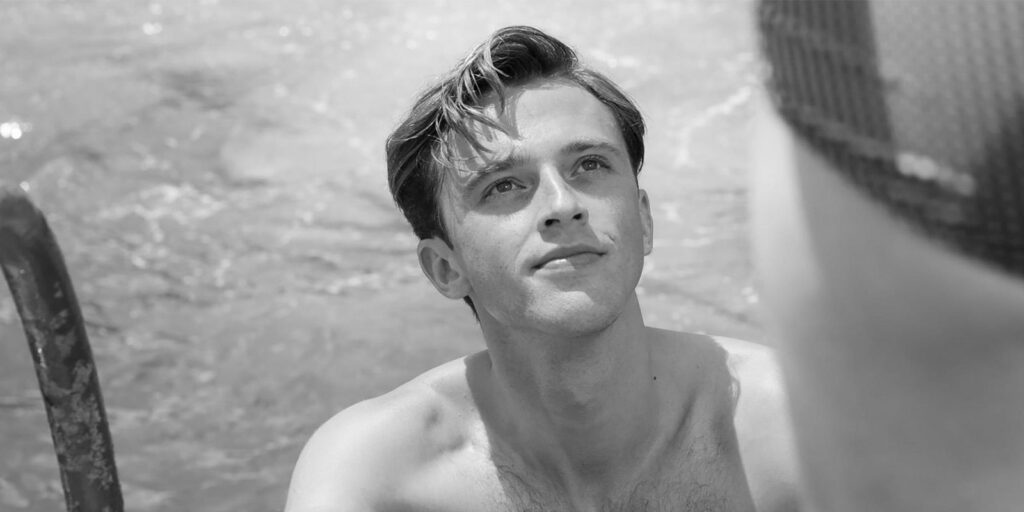
I watched a lot of black-and-white movies for inspiration. I’m a huge fan of Janusz Kamiński. What I like about his work is the really hard light and really high contrast. I felt this would work well for this story. So, I really pushed the hard light and I barely put any diffusion, which I wouldn’t have done if we went colour. There are maybe two scenes where there is some diffusion, because there was grey sky outside, so it seemed fake to use hard light in those moments. But other than that, I avoided using it.
Shooting black-and-white was largely easier for me. I come from a photography background, and I would use a lot of black-and-white imagery for that, and I still do. The move helped to convey the feeling of heat, which is a key theme throughout the book and the film, as it became easier to use light to create atmosphere.
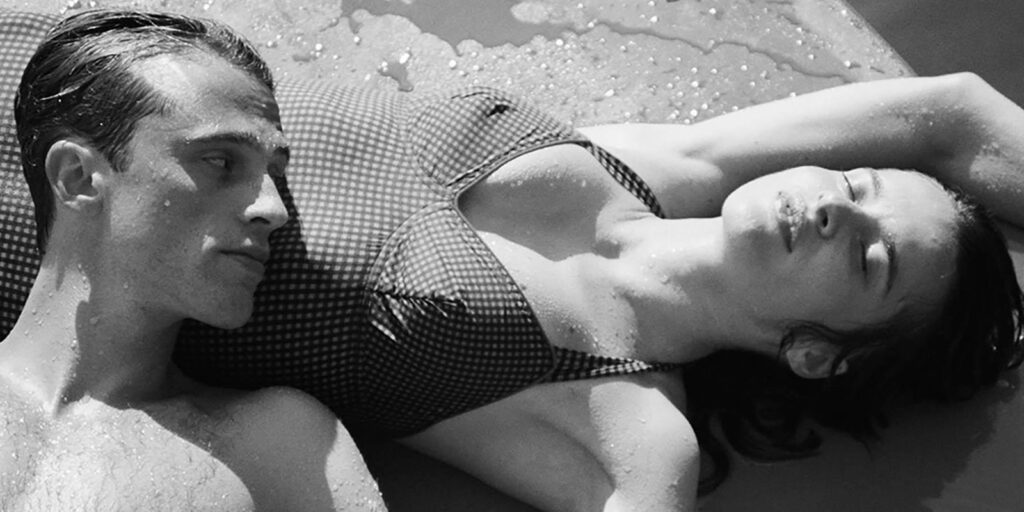
What was most challenging about not using colour was demonstrating the time of day. In colour, you can use a mix of blue and yellow, or blue and red, to show whether it’s dawn or dusk. In black-and-white, you lose that ability. So that was a more complex process, but again, it all came down to our use of light.
Going to Morocco
We were shooting in Morocco on location, doubling for Algiers, which was exciting. I’m from Belgium, and Belgium mostly has grey skies. So I thought we’d be able to go to Morocco and make use of the natural sunlight. I thought I’d play with the sun all the time, like in the book. But my gaffer, Florian Gomez, said to me, ‘Maybe take an 18k or a 9k. You never know.’ I owe him for that, because the first week, it was completely cloudy. At this time, we were shooting the apartment scenes, so I placed the 9k on the roof of the building opposite to recreate that feeling of sunlight.
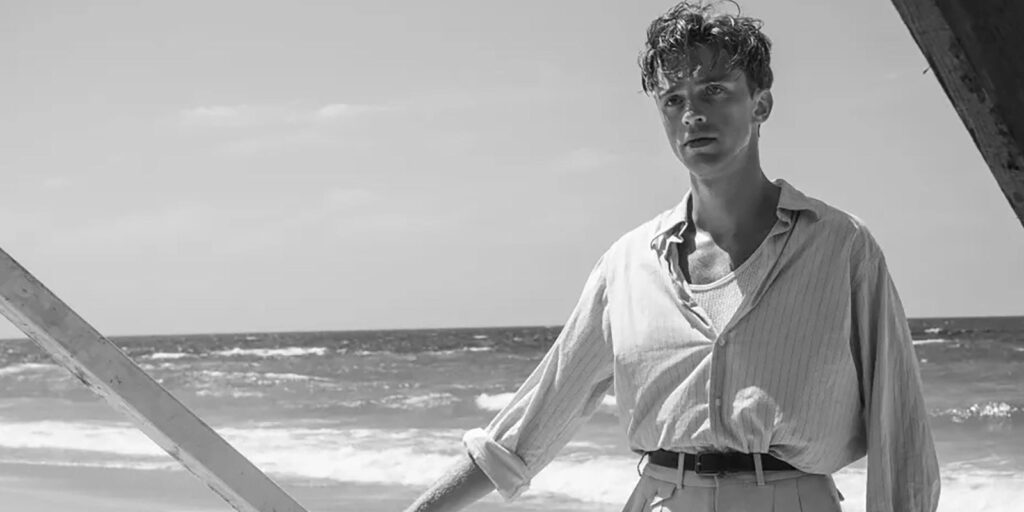
For the lenses, I had no choice but to use zoom, because François likes to use zoom lenses. He likes to be efficient, so he doesn’t want to waste time changing lenses. I used an old zoom, an Angenieux Optimo 17-80mm. As it’s old, the glass is not too sharp, which gives a nice look. For the Steadicam shots, we used a Cooke S4. And for the camera, it was my first time with ARRI Alexa 35. It was a really good choice for that movie because a lot of the time we have the sun in the frame, and I was really amazed at what you could shoot in the highlights. That really, really impressed me compared to the Mini. It’s a huge step. In the beginning, I was a bit lost, because you have less in the black and more in the highlights. It’s more like negative stock, so I changed my use and I decided to expose for one stop.
A creative collaboration
I really pushed François to use static shots, and we really worked on the composition. I’ve worked four times with François, and he’s a director who wants to work quickly. Sometimes, I would say, ‘Hey, let’s take the time,’ because for the first 20 minutes there’s almost no dialogue, so we had to be strong in the composition. It also immerses the audience in the location.
I love to work with François, because you know you’re going to have really great actors in front of the camera, great production designers. You’re always sure of that, because people come to the film for François, especially in France. I also like that he constantly shifts genres – in my previous films with him, we’ve done everything from comedies to journalistic dramas. So it always provides a new challenge, a new opportunity to learn.